
📊 Full opportunity report: The New Age Of Restaurant Food Safety: Vision-Model Inspection Solutions on IdeaNavigator AI — validation score, market gap, and execution plan.

Get monitors, keyboards and dev gear delivered free — and shop member deals
- Fast, free delivery on millions of items
- Access to Prime Big Deal Days deals on October 6–7
- Prime Video, Amazon Music and more included
TL;DR
A restaurant industry innovation is testing AI vision models to verify food safety inspections through photos. This could improve accuracy and accountability in kitchen checks, impacting operations and compliance.
Restaurant operators are beginning to test a new AI-powered vision-model solution designed to verify food safety inspections through photographs taken during daily walk-throughs. This development aims to address longstanding issues with manual checklists that often record only whether a task was checked, not whether it was properly completed. The technology is being piloted at a multi-unit restaurant group, marking a significant step toward more reliable, verifiable food safety compliance.
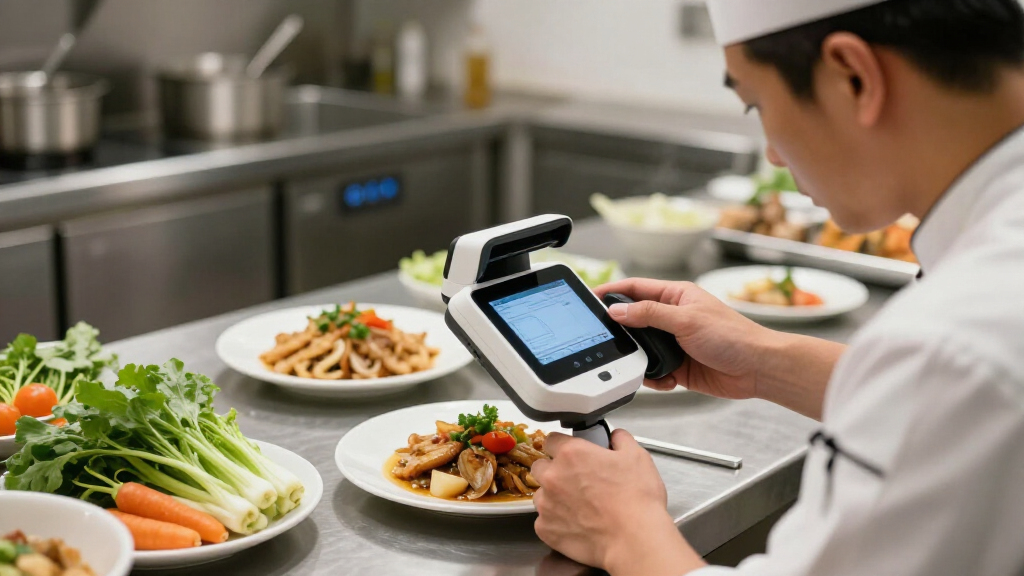
The vision-model inspection system involves managers capturing photos of key kitchen areas—such as prep stations, walk-in coolers, sinks, and storage areas—during morning walk-throughs. The AI analyzes these images in real-time to flag violations, assigning severity ratings and generating timestamped reports. These reports can then be used to track trends across multiple locations, providing a more accurate picture of compliance than traditional tick-box checklists.
This approach leverages existing smartphone cameras, eliminating the need for new hardware, and offers a scalable software-as-a-service model. The pilot program involves comparing the AI’s flagged violations with findings from a hired health-inspection consultant over a two-week period at five restaurant locations. The goal is to validate the system’s accuracy and reliability before broader deployment.
Restaurant intelligence / 2026 field report
The New Age of Restaurant Food Safety: Vision-Model Inspection Solutions
Restaurant operators are testing AI vision models that inspect photographs from daily kitchen walk-throughs—turning routine checks into timestamped, verifiable evidence of food-safety conditions.
Pilot footprint
5×
Restaurant locations
Validation window
2w
Side-by-side testing
New hardware
0
Existing phones provide input
Current role
AI+
Human verification tool
01 / Operating model
From kitchen image to actionable record
Managers photograph high-risk areas during morning walk-throughs. The model reviews each image in real time, identifies visible concerns, assigns severity, and creates a location-level compliance trail.
Capture
Photograph prep stations, sinks, coolers, doors, food containers, labels, and storage areas.
Analyze
The vision model examines visible conditions for patterns associated with safety violations.
Prioritize
Potential findings are flagged and assigned severity ratings for faster managerial response.
Document
Timestamped reports preserve evidence and surface compliance trends across multiple units.
02 / Visible capabilities
What the model is being trained to notice
The system focuses on conditions that can be evaluated from photographs. It does not replace temperature probes, laboratory tests, staff interviews, or professional judgment.
Food protection
Uncovered containers
Surfaces or ingredients left exposed during storage and preparation can be identified for review.
Access control
Propped doors
Open exterior or cooler doors may be flagged when they create pest, temperature, or security risks.
Traceability
Missing labels
Unlabeled containers and incomplete date-marking may be surfaced before a formal inspection.
Sanitation
Cleanliness concerns
Visible spills, debris, buildup, or disordered work areas can prompt targeted corrective action.
Storage
Placement issues
Images may reveal unsafe shelf organization, floor storage, or separation problems.
Operations
Cross-location trends
Repeated findings can expose training gaps, recurring risks, and inconsistent operating routines.
03 / Old record, new evidence
Why photographs change the inspection equation
Traditional checklists are easy to deploy but often document only that someone completed a check. Vision-assisted reviews add evidence of what the kitchen looked like at that moment.
| Inspection attribute | Manual checklist | Vision-model review | Human inspector |
|---|---|---|---|
| Timestamped visual evidence | ✗Usually absent | ✓Built into capture | ~Varies by process |
| Consistent daily coverage | ~Staff-dependent | ✓Repeatable workflow | ✗Periodic visits |
| Ambiguous context handling | ✗Limited detail | ~Still validating | ✓Professional judgment |
| Multi-location trend analysis | ~Manual aggregation | ✓Central reporting | ~Possible, slower |
| Deployment hardware | ✓None required | ✓Smartphone camera | ✓Inspector tools |
| Regulatory authority | ✗Internal record | ✗Verification aid | ✓Formal oversight |
04 / The proof phase
Validation comes before scale
At five locations, AI-flagged violations are being compared with findings from a hired health-inspection consultant over two weeks. Public performance results have not yet been released.
Current evidence maturity
Bars indicate reported project stage, not measured success rates. Accuracy, false-positive rates, and operational return remain unconfirmed.
Today’s position: a promising verification concept in active field testing—not yet a replacement for qualified human inspection.
05 / Key questions
What operators need to know
The near-term value lies in stronger documentation and earlier intervention. The long-term outcome will depend on accuracy, adoption costs, and regulatory confidence.
How it works
What happens during a walk-through?
Managers capture photos of key kitchen areas. The AI flags potential violations, assigns severity, generates reports, and tracks patterns over time.
Human oversight
Will AI replace inspectors?
No. The current system is intended to supplement human inspections and strengthen internal verification while its reliability is tested.
Operator value
What could restaurants gain?
More accountable checks, verifiable records, faster corrective action, streamlined reporting, and potentially fewer violations or penalties.
Unresolved risk
What remains uncertain?
Performance in complex scenes, false alerts, staff training, privacy, pricing, integration effort, and regulatory treatment remain open questions.
Possible timeline
When could wider availability begin?
If validation is successful, expanded testing or rollout could begin within the next year. That timing remains conditional, not a confirmed launch date.
The accountability chain
Potential Impact on Food Safety Monitoring and Compliance
This innovation could significantly improve the accuracy and accountability of food safety inspections in the restaurant industry. By providing verifiable, timestamped photographic evidence of conditions, the system reduces reliance on subjective checklists and minimizes the risk of overlooked violations. For restaurant operators, this means better compliance, fewer health violations, and potentially lower inspection penalties. For regulators, it offers a more consistent and transparent inspection process, enhancing public health protections.
smartphone food safety inspection camera
As an affiliate, we earn on qualifying purchases.
As an affiliate, we earn on qualifying purchases.
Current Challenges in Restaurant Food Safety Checks
Traditional food safety inspections often depend on manual checklists completed by staff or inspectors, which can be prone to oversight or intentional omission. These checklists typically record whether a task was checked, not whether conditions met safety standards. As a result, violations such as uncovered containers, propped doors, or missing labels may go unnoticed until a later inspection or incident. Recent advances in AI and image recognition have opened the door to automating and verifying these inspections more reliably, but widespread adoption remains in early stages.
“Using AI to analyze photos from daily walk-throughs can provide a more reliable record of food safety conditions without requiring new hardware.”
— an anonymous researcher
AI food safety inspection software
As an affiliate, we earn on qualifying purchases.
As an affiliate, we earn on qualifying purchases.
Uncertainties Around System Validation and Adoption
It remains unclear how accurately the AI will identify violations compared to human inspectors, and whether it can reliably handle complex or ambiguous situations. The pilot program is ongoing, and results have not yet been publicly released. Additionally, questions remain about the cost, staff training, and integration with existing operations for large chains.
restaurant kitchen safety monitoring app
As an affiliate, we earn on qualifying purchases.
As an affiliate, we earn on qualifying purchases.
Next Steps for Testing and Wider Deployment
The pilot program will continue with two weeks of photo analysis at five locations, comparing AI flagged violations with human inspector reports. If results are positive, the developers plan to refine the model and expand testing to more units. Broader adoption will depend on validation outcomes, regulatory acceptance, and integration with existing restaurant management systems.
verifiable food safety check tools
As an affiliate, we earn on qualifying purchases.
As an affiliate, we earn on qualifying purchases.
Key Questions
How does the vision-model inspection system work?
Managers photograph key kitchen areas during daily walk-throughs, and the AI analyzes these images to flag violations, generate reports, and track compliance trends across locations.
What types of violations can the AI detect?
The system is designed to identify issues like uncovered food, propped doors, missing labels, and cleanliness concerns, with severity ratings for each violation.
Will this replace human inspectors?
Currently, the system is intended as a verification tool to supplement human inspections, not replace them. Its accuracy and reliability are still being validated.
What are the benefits for restaurant operators?
Improved accuracy in compliance tracking, verifiable records, reduced risk of violations, and streamlined reporting processes.
When might this technology become widely available?
If validation is successful, broader rollout could occur within the next year, depending on regulatory approval and industry adoption.
Source: IdeaNavigator AI
Halloween Picks
halloween
As an affiliate, we earn on qualifying purchases.