
If you’re seeking the best NAS drives for home office storage, you’re looking for reliable, scalable, and easy-to-manage solutions. The Synology 2-Bay NAS DS223 stands out as the top overall pick with its user-friendly interface and solid performance. For those prioritizing value, the BUFFALO LinkStation 720 4TB offers hard drives included at a budget-friendly price. Meanwhile, the UGREEN NAS DXP2800 appeals to small teams needing enhanced connectivity and multimedia features. The main tradeoffs in this category often involve balancing capacity, ease of setup, and cost—read on for a detailed breakdown to find your best fit.

Get business pricing on monitors, keyboards and dev gear
- Business-only prices and quantity discounts
- Tax-exempt purchasing
- Multiple users, one account, clear invoices
Key Takeaways
- The top choices balance performance, ease of use, and value, with Synology leading as the best overall due to its user-friendly interface.
- Including hard drives in the package can offer significant savings, especially for beginners or those looking for quick setup.
- Advanced features like 4K HDMI output and AI photo management are more common in higher-end models, but they come with increased costs.
- Capacity varies widely—buyers should match their storage needs with scalable options, especially for larger data collections.
- Build quality and expandability remain key factors, with diskless models offering flexibility for future upgrades.


More Details on Our Top Picks
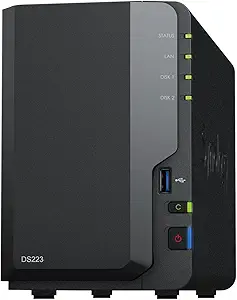
Synology 2-Bay NAS DS223 (Diskless)
The Synology DS223 stands out for its user-friendly interface and multi-platform support, making it ideal for those who want a reliable, easy-to-manage NAS without complexity. Compared with the BUFFALO LinkStation 720, which includes drives and offers straightforward setup, the DS223 offers greater flexibility with different drives, but this means an extra step in setup. Its built-in surveillance tools add value for home security, yet the limited two-bay configuration may not satisfy users with expanding storage needs. This pick makes the most sense for home offices seeking a balance of ease, security, and multi-device access—if you’re comfortable installing drives yourself.
Pros:- Easy file sharing and syncing across multiple platforms
- Flexible data backup options and surveillance features
- Supports multi-platform access for Windows, macOS, and mobile devices
Cons:- Requires separate hard drives to operate
- Limited to 2 bays, which may restrict total storage expansion
Best for: Home office users who want a flexible, reliable NAS with easy setup and data protection features
Not ideal for: Users needing large storage capacity or plug-and-play simplicity, as this requires separate hard drives and some setup effort
- Storage Bays:2
- Diskless:Yes
- Warranty:2 years
Bottom line: This is best suited for home offices that value flexibility and security without needing extensive capacity upfront.
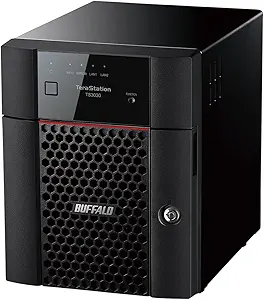
BUFFALO TeraStation Essentials 2025 4-Bay Desktop NAS 16TB with Hard Drives Included
The BUFFALO TeraStation Essentials 2025 offers a compelling combination of affordability and professional features, making it suitable for small home offices needing scalable storage. Unlike the UGREEN NAS DXP2800, which provides higher potential capacity and advanced hardware, the BUFFALO unit simplifies setup by including hard drives, making it a more straightforward purchase. Its 16TB capacity with RAID support is flexible enough for moderate data needs, but the fixed size limits expansion unless you replace or add drives. This model makes the most sense for small businesses or tech-savvy home users who want a ready-to-use, secure NAS with decent transfer speeds and RAID flexibility, without the need for extensive configuration.
Pros:- Includes hard drives, reducing initial setup time
- Fast data transfer with 2.5GbE port and RAID flexibility
- Supports cloud integration and drive encryption for security
Cons:- Limited to 16TB capacity unless RAID 0 is used, restricting scalability
- Basic features may not meet advanced enterprise requirements
Best for: Small home offices seeking a cost-effective, pre-configured 4-bay NAS with included drives
Not ideal for: Users with large or rapidly growing storage needs, or those who prefer custom hardware configurations
- Capacity:16TB
- Number of Bays:4
- RAID Support:RAID 0, RAID 5, RAID 6
Bottom line: Ideal for small offices or home users who want an easy-to-deploy NAS with included drives and flexible RAID options.
UGREEN NAS DXP2800 2-Bay Desktop All-Round NAS for Small Teams, Intel N100 Quad-core, 8GB DDR5, 2.5GbE, M.2 NVMe, 4K HDMI, Diskless
The UGREEN NAS DXP2800 excels for small teams or media enthusiasts who need high performance and broad device compatibility. Its robust hardware, including an Intel N100 quad-core processor and 8GB DDR5 RAM, surpasses the basic capabilities of the Synology DS223, especially for media and AI-powered photo management. Compared with the BUFFALO TeraStation, which offers a more straightforward, enterprise-oriented setup, the DXP2800 is more customizable but requires higher technical skill. Its 76TB maximum capacity and 4K HDMI output make it a strong choice for media-heavy environments, though drives are sold separately, adding cost and complexity. This makes the DXP2800 ideal for experienced users wanting high performance and media sharing.
Pros:- High storage capacity potential up to 76TB
- Fast data transfer with 2.5GbE and 4K HDMI output
- Advanced encryption and easy device compatibility
Cons:- Hard drives are sold separately, increasing total cost
- Requires technical knowledge to optimize setup and performance
Best for: Small teams or home users who want high-performance storage and media features with advanced encryption
Not ideal for: Beginners or users seeking a simple, plug-and-play NAS solution, as setup can be complex
- Processor:Intel N100 Quad-core
- RAM:8GB DDR5
- Max Storage Capacity:76TB
Bottom line: Best suited for tech-savvy users looking for a high-performance, media-capable NAS with extensive customization options.
UGREEN NASync DH4300 Plus 4-Bay Desktop NAS with 120TB Support, AI Photo Album, 8GB RAM, 2.5GbE, 4K HDMI, Diskless
The UGREEN NASync DH4300 Plus provides an excellent solution for users needing extensive storage, supporting up to 120TB with four bays. Its user-friendly interface and AI-powered photo organization features make it appealing for families and media-heavy home environments, especially compared to the Synology DS223 which offers more basic storage and features. While drives are sold separately, its support for remote access and multi-device compatibility makes it versatile for media sharing and backup. However, as an entry-level NAS, it lacks virtualization support and advanced enterprise features. This device makes the most sense for users wanting large, centralized storage with easy media management, but not for those needing high-end data processing or virtualization.
Pros:- Supports up to 120TB of storage, ideal for large media libraries
- AI photo management simplifies organization and duplication detection
- Easy setup with remote access and multi-device compatibility
Cons:- Disks are not included, adding to upfront costs
- Limited advanced features like virtualization or enterprise-grade security
Best for: Home users or families with large media libraries needing high capacity and simple management
Not ideal for: Power users requiring virtual machine support or enterprise-grade features, as this is more basic in capability
- Capacity:120TB
- Number of Bays:4
- RAM:8GB LPDDR4X
Bottom line: Perfect for large media collections and families seeking straightforward, high-capacity storage with smart organization tools.
BUFFALO LinkStation 720 4TB 2-Bay NAS Storage with Hard Drives Included
The BUFFALO LinkStation 720 offers a straightforward, plug-and-play solution for users who prioritize security and ease of use. Its included drives and simple setup make it attractive for those new to NAS, especially compared with the Synology DS223 which requires user-installed drives. While its 4TB capacity and RAID 1 support cater to basic backup needs, this limits its usefulness for larger media libraries or extensive data storage. Its performance, up to 7x faster than older models, enhances daily backup and media streaming. This device makes sense for smaller households or home offices that want secure, automatic backups with minimal fuss, but not for users with high capacity demands.
Pros:- Includes hard drives, enabling immediate use
- Easy setup and automatic backup features
- Supports cloud integration with Dropbox, Azure, and OneDrive
Cons:- Limited to 2TB usable capacity in RAID 1 mode, restricting storage
- Requires network for remote access, which may complicate setup for some users
Best for: Home users needing a simple, secure NAS with drives included for basic backup and media sharing
Not ideal for: Power users or media enthusiasts with large storage needs, due to limited capacity and basic feature set
- Capacity:4TB
- Number of Bays:2
- RAID Support:RAID 0, RAID 1
Bottom line: Ideal for small households or casual users seeking simple, secure backup with included drives and minimal configuration.
Seagate IronWolf 8TB NAS Internal Hard Drive HDD
The Seagate IronWolf 8TB NAS stands out for its optimized design for multi-user environments, making it a reliable backbone for a home office that shares data across devices. Compared with the BUFFALO LinkStation 720, which offers built-in storage and user-friendly setup, the IronWolf is geared toward those who need a dedicated, high-performance drive that can be swapped into existing NAS enclosures or custom setups. Its 7200 RPM speed and 256MB cache translate into faster data access, especially beneficial if multiple users access large files regularly. However, this focus on NAS performance means it’s not suitable for desktop or portable use, and it consumes more power than smaller drives, which could matter for energy-conscious setups. This drive is best suited for users who prioritize durability and sustained performance over simplicity or initial cost. Its 5-year warranty and health monitoring system help ensure long-term reliability in a demanding multi-user environment.
Pros:- Optimized for NAS environments with high performance
- Large 8TB capacity for extensive storage needs
- Long-term reliability with 5-year warranty
- Health monitoring system for proactive drive management
Cons:- Designed primarily for NAS, not for desktop or portable use
- Higher power consumption compared to smaller drives
Best for: Home office users with multi-user setups who need durable, high-performance storage that integrates into existing NAS systems.
Not ideal for: Individuals seeking portable, plug-and-play drives or those with limited power supply capacity, since the IronWolf requires continuous operation and consumes more power.
- Capacity:8TB
- Form Factor:3.5 Inch
- Interface:SATA 6Gb/s
- Rotation Speed:7200 RPM
- Cache:256MB
- MTBF:1 million hours
Bottom line: This drive is ideal for those who need a dependable, high-capacity NAS hard drive within a multi-user home office setup.
BUFFALO LinkStation 720 16TB 2-Bay NAS Storage with Hard Drives Included
The BUFFALO LinkStation 720 offers a straightforward, high-capacity solution for users who want to store and share large amounts of data easily. Compared to the Seagate IronWolf, which is a dedicated drive meant for NAS enclosures, the LinkStation comes as a complete system with pre-installed drives, simplifying setup for those who prefer a ready-to-use device. Its 16TB capacity, combined with RAID options, allows flexible data protection and expansion, making it suitable for households that need both redundancy and ample space. While the included drives and US-based support add value, the default RAID 1 setup halves usable capacity, which might be limiting for some. Also, it requires network configuration to maximize performance, and lacks mobile app support, which could hinder quick access from smartphones. This device is perfect for users seeking an all-in-one, user-friendly storage solution with substantial capacity.
Pros:- High-capacity 16TB storage with RAID options
- Includes hard drives, reducing initial setup hassle
- Fast performance with network speeds up to 7x faster than previous models
- Secure data management with encryption and access controls
Cons:- Limited to RAID 1 by default, reducing usable storage
- Requires network setup for optimal performance
- No dedicated mobile app support for quick access
Best for: Home users who want a large, secure, and easy-to-manage storage system for backups and media sharing, with minimal setup fuss.
Not ideal for: Tech-savvy users or those needing maximum flexibility or mobile app integration, since setup and access are more network-dependent and less app-oriented.
- Capacity:16TB
- Number of Bays:2
- RAID Support:RAID 1 (8TB usable) or RAID 0 (16TB)
- Compatibility:Windows, MacOS
- Performance:Up to 7x faster than LS 200
- Connectivity:Network (Ethernet)
Bottom line: This NAS is best suited for large-capacity storage needs with easy setup and secure sharing for typical home offices.

How We Picked
I evaluated these NAS drives based on a combination of performance, usability, build quality, and value. Priority was given to models that balance ease of setup with reliable operation, especially for home office environments. I also considered expandability, included features, and the overall cost-to-performance ratio. The rankings reflect how well each product meets typical home office needs—favoring user-friendly interfaces, reliable hardware, and future-proof features—while acknowledging tradeoffs like capacity limits or higher price points.Factors to Consider When Choosing Best Nas Drives For Home Office Storage
Choosing the best NAS drive for a home office involves understanding several key factors. While capacity is important, ease of use and setup often determine whether a solution is practical for everyday use. Compatibility with existing devices, scalability, and maintenance requirements also play roles. It’s vital to consider whether you need advanced features like media streaming or AI photo management, which tend to increase costs. Balancing these elements with your budget is essential to making a satisfying purchase.Capacity and Scalability
Assess your current data needs and future growth prospects. Many NAS drives come with fixed capacities, but models with diskless options allow upgrades over time. Think about whether you prefer a pre-filled drive or a flexible setup that can expand as your storage needs grow. Larger capacities often mean higher costs but provide peace of mind for long-term use, especially if you plan to store large files or backups regularly.
Ease of Use and Setup
For home office users, a NAS with a straightforward setup process and intuitive management software can save hours of frustration. Brands like Synology excel here, offering user-friendly interfaces and comprehensive support. Avoid overly complex models if you’re not technically inclined, as they can lead to frustration and underuse. Consider whether the device offers mobile apps or remote access features that enhance convenience for everyday use.
Performance and Reliability
Performance factors such as data transfer speeds and hardware robustness are vital for seamless operation. Look for NAS drives with gigabit Ethernet or higher, especially if multiple users access data simultaneously. Reliability is equally important; choose models with good reviews for durability and consistent uptime. Hard drive compatibility and the quality of components influence long-term stability and data safety.
Features and Expandability
Advanced features like media streaming, AI photo organization, or HDMI output are attractive but tend to increase costs. Consider whether these extras align with your specific needs. Expandability options, such as additional bays or support for larger drives, future-proof your investment. Diskless models provide flexibility but require additional purchase of drives, which can add to initial costs.
Cost and Value
Balance your budget with the features you need most. Pre-filled drives can be more convenient but tend to cost more upfront, while diskless models offer savings at the expense of assembly time. Don’t overlook ongoing costs like hard drives, which can significantly impact total expenditure. Investing in a slightly higher-priced, reliable model might save money on maintenance and replacements later.
Frequently Asked Questions
Should I buy a NAS with included hard drives or go with a diskless model?
Choosing between an all-in-one NAS with drives included and a diskless model depends on your comfort level with assembly and your budget. Pre-filled units provide immediate usability, which is ideal for beginners or those who want quick setup. Diskless options tend to be more flexible and cost-effective if you already own compatible drives or want to select specific capacities and brands. Consider your technical confidence and future upgrade plans when making this decision.How much storage capacity do I really need for a home office NAS?
The right capacity varies based on your data volume and growth expectations. For most home offices, 4 to 8TB is sufficient for documents, backups, and media. However, if you handle large files like videos or run multiple backups, opting for 16TB or more offers extra breathing room. Remember, some NAS models support expansion, so choose a system that can grow with your needs without requiring an immediate replacement.Are higher-performance NAS drives worth the extra cost?
Higher-performance models often feature faster data transfer speeds, better hardware, and additional features like media streaming or AI tools. If your workflow involves large files, multiple users, or multimedia tasks, investing in a faster, more capable NAS can improve efficiency. However, for simple backups or occasional access, a more basic model may provide all the performance you need at a lower price.What should I prioritize: ease of use or advanced features?
For most home office users, prioritizing ease of use simplifies daily operation and reduces setup time. User-friendly interfaces and automated maintenance features help ensure the NAS remains reliable without technical expertise. Advanced features are beneficial if you have specific needs, like media streaming or AI photo management, but they can complicate setup and maintenance. Consider your comfort level and long-term goals before choosing.Is it better to buy a compact NAS or a larger, more expandable model?
Deciding between a compact or larger NAS hinges on your current needs and future plans. Compact models save space and are easier to fit into a home environment, but they often have fewer bays and less scalability. Larger models with more bays and expansion options are suitable if you expect significant data growth or multi-user access. Think about your current storage demands and whether you anticipate expanding soon.Conclusion
For most home office users, the Synology 2-Bay NAS DS223 offers the best overall experience due to its simplicity, reliability, and software support. Those prioritizing value should consider the BUFFALO LinkStation 720 4TB, which includes drives at a budget-friendly price. If you want a premium setup with advanced features like media output and AI tools, the UGREEN NAS DXP2800 is worth the investment. Beginners will find the Synology model easiest to set up, while power users needing large storage capacity might lean toward larger, expandable options like the BUFFALO LinkStation 720 16TB. Your choice should reflect your current data needs, technical comfort, and future plans.Halloween Picks
halloween
As an affiliate, we earn on qualifying purchases.