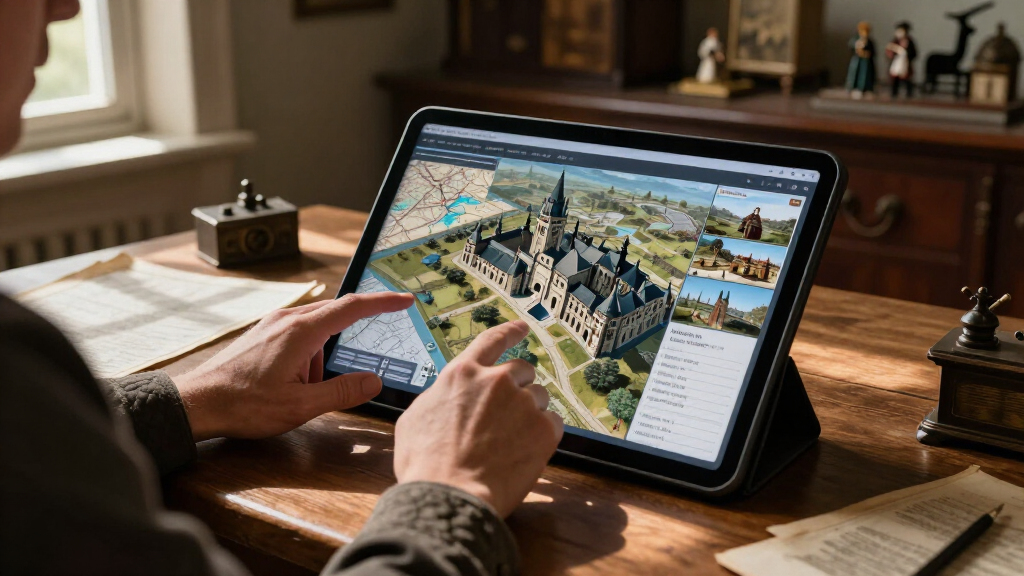

🔍 Read the full analysis: The Power Of AI In Visualizing Historic Sieges: La Citadelle, 1693 on ThorstenMeyerAI.com

Get business pricing on monitors, keyboards and dev gear
- Business-only prices and quantity discounts
- Tax-exempt purchasing
- Multiple users, one account, clear invoices
TL;DR
An AI-driven interactive exhibition has successfully recreated the 1693 siege of La Citadelle, using layered digital techniques to produce a cinematic, explorable experience. This innovation demonstrates AI’s potential in historical visualization and education.
An AI-powered digital exhibit has recreated the 1693 siege of La Citadelle, offering an interactive, cinematic visualization of the historic event. Developed through a layered, code-driven approach, the project aims to blend historical fidelity with artistic storytelling, demonstrating AI’s expanding role in digital history visualization. The exhibit is now live and accessible online, marking a significant step in immersive historical education.
The project, titled ‘La Citadelle — An Anatomy of Siege, 1693,’ employs a sophisticated combination of layered SVGs, CSS, and canvas elements to simulate the military movements and terrain of the 1693 siege of Montfaucon. For a detailed digital reconstruction, see the original analysis. Unlike traditional reconstructions, this exhibit relies solely on code—without embedded images—creating a scalable, high-fidelity cinematic experience. The entire visualization is orchestrated by AI-guided workflows, including iterative critique and approval stages, ensuring historical plausibility and aesthetic balance.
Developed by a team of digital artists and AI systems, the project follows a three-stage pipeline: initial construction, iterative critique driven by AI analysis, and final approval by an art director. The site features a restrained color palette reminiscent of archival documents, with typography combining monumental and clear fonts to enhance readability and gravitas. The signature interaction involves a multi-layered SVG siege map animated through JavaScript, depicting earthworks, artillery trajectories, and fortifications in real time. This creates a cinematic tableau that viewers can scroll through, experiencing the siege as if unfolding before their eyes.
According to Thorsten Meyer, the project exemplifies how AI can elevate digital history exhibits by enabling complex, layered visualizations that are both accurate and artistically compelling. The exhibit’s design manual emphasizes layered architecture, precise interactions, and emotional depth rooted in the fictional siege narrative. More about this innovative approach can be found in the original analysis. The site is fully responsive, optimized for multiple devices, and avoids static images, ensuring scalability and fidelity across platforms.
Revolutionizing Digital Historical Visualization
This project demonstrates AI’s capacity to transform how history is presented and experienced online. By creating a cinematic, explorable reconstruction of the 1693 siege, it offers an immersive educational tool that enhances understanding of military engineering, siege tactics, and historical terrain. Such visualizations can make complex historical events more accessible and engaging for a broad audience, potentially setting new standards for digital history exhibits and interactive storytelling.
Furthermore, this approach highlights the potential for AI to assist in creating highly detailed, accurate reconstructions without reliance on static images or traditional media assets. It paves the way for future applications in education, museum displays, and virtual reality experiences, where layered, code-driven visualizations can provide more dynamic and responsive learning environments. The project also raises questions about the role of AI in curating and verifying historical content, emphasizing the importance of rigorous critique and expert oversight.
interactive historical visualization software
As an affiliate, we earn on qualifying purchases.
As an affiliate, we earn on qualifying purchases.
Advances in AI and Digital History Exhibits
The use of AI in digital history projects has been growing, with recent developments focusing on interactive reconstructions and immersive storytelling. Prior efforts have often relied on static images, 3D models, or video reenactments. The 1693 siege of La Citadelle, a pivotal event in military history, has traditionally been studied through maps, engravings, and written accounts. This project marks a shift toward dynamic, layered visualizations that can simulate terrain, troop movements, and artillery fire in real time, creating a more visceral understanding of the event.
Developed by an AI-driven pipeline, the project builds on recent advances in SVG layering, CSS animations, and canvas rendering. It follows a structured workflow that includes iterative critique—driven by AI analysis—to ensure coherence, responsiveness, and historical plausibility. The approach aligns with broader trends in digital humanities, where AI tools are increasingly used to augment scholarly research and public engagement with history.
“This project exemplifies how AI can elevate digital history exhibits by enabling complex, layered visualizations that are both accurate and artistically compelling.”
— Thorsten Meyer
AI-powered digital history exhibit
As an affiliate, we earn on qualifying purchases.
As an affiliate, we earn on qualifying purchases.
Unverified Aspects of Historical Accuracy
While the exhibit claims to balance historical fidelity with artistic storytelling, it is not yet clear how thoroughly the reconstruction has been verified against primary sources. The reliance on AI critique aims to ensure plausibility, but independent scholarly validation remains pending. Additionally, the extent to which the visualization accurately reflects the terrain and military tactics of 1693 is still under review, and some details may be interpretative rather than definitive.
virtual reality historical siege experience
As an affiliate, we earn on qualifying purchases.
As an affiliate, we earn on qualifying purchases.
Future Developments in AI-Driven History Visualizations
The creators plan to expand the exhibit with more interactive features, such as detailed troop movement simulations and real-time user navigation. They also intend to collaborate with military historians and archaeologists to validate and refine the reconstruction. As AI tools evolve, similar techniques could be applied to other significant historical events, making digital history more immersive and accessible. The project team is also exploring integration with virtual reality platforms for even more engaging experiences.
digital reconstruction of La Citadelle 1693
As an affiliate, we earn on qualifying purchases.
As an affiliate, we earn on qualifying purchases.
Key Questions
How accurate is the reconstruction of the 1693 siege?
The exhibit aims for high fidelity based on available historical data, but full scholarly validation is still underway. It combines factual terrain data with interpretative elements guided by AI critique.
Can I interact with the visualization?
Yes, viewers can scroll through the animated siege map, experiencing the progression of events in a cinematic, explorable format.
What technologies power the exhibit?
The visualization relies solely on layered SVGs, CSS, and canvas elements, orchestrated by AI-guided workflows, without static images or external assets.
Will this approach be used for other historical events?
Potentially, yes. The success of this project demonstrates the viability of AI-driven layered visualizations for a broad range of historical reconstructions and educational tools.
Source: ThorstenMeyerAI.com
Halloween Picks
halloween
As an affiliate, we earn on qualifying purchases.