
📊 Full opportunity report: A Skill Is a Folder, Not a Prompt: What Anthropic Learned Running Hundreds of Them on ThorstenMeyerAI.com — validation score, market gap, and execution plan.
TL;DR
Anthropic has demonstrated that Skills for AI agents should be viewed as folders containing instructions, code, and assets rather than simple prompts. This approach enhances consistency, onboarding, and institutional knowledge. The company ran hundreds of Skills internally, emphasizing their value as evolving organizational assets.
Anthropic has introduced a new conceptual framework for AI agent Skills, defining them as folders containing instructions, scripts, and reference materials, rather than simple prompts. This shift aims to improve consistency, onboarding, and institutional knowledge within organizations using AI coding agents. The company shared its internal learnings, emphasizing that Skills are reusable, versioned assets that encapsulate how tasks are performed, not just static prompts.
In a recent publication, Anthropic explained that a Skill is best understood as a folder—a container that holds instructions, reference documents, scripts, templates, data, and configuration settings. This redefinition moves away from viewing Skills as mere text prompts, instead framing them as organized assets that can be discovered, read, and executed by AI agents.
Anthropic’s internal experiments involved running hundreds of Skills across its engineering teams, leading to three key benefits: output consistency regardless of who runs the agent, faster onboarding by encapsulating tribal knowledge, and a process of continuous improvement where Skills evolve through edge cases and refinements. The company considers Skills as assets that appreciate in value over time, justifying significant investment in their development.
The company identified nine categories of Skills, including library references, verification, data analysis, automation, code scaffolding, review, deployment, runbooks, and infrastructure operations. Among these, verification Skills—used to check code and workflows—are deemed the most impactful in improving output quality.
Technical insights emphasize that effective Skills should avoid restating obvious information, instead focusing on non-obvious, specific guidance. The description of a Skill acts as a trigger for the agent, matching user requests to the appropriate folder based on internal slang and phrasing. Bundling real code and helper functions within Skills further enhances their utility and robustness.
A Skill is a folder, not a prompt
Anthropic published what it learned running hundreds of Skills across its own engineering org. Read as a business memo, the point is bigger than a coding trick: this is how ad-hoc prompting becomes durable institutional capability — the SOPs your agents actually follow, versioned and shared.
“A Skill is just a clever markdown prompt you save in a file.”
A folder the agent can discover, read & run — instructions, scripts, references, templates, config & on-demand hooks.
The knowledge of how your organization actually operates can be captured, versioned, shared & executed — and the thing capturing it is a humble folder with a script and a gotchas list inside. For the builder, that’s context engineering with real tools attached. For whoever owns the budget, it’s the difference between AI that starts from zero every morning and an asset that compounds. Caveats: best practices are still evolving, checked-in Skills cost context, and curation beats accumulation. Start with one Skill, one gotcha, and the category that catches your mistakes.
Why Reframing Skills as Folders Changes AI Deployment
This approach shifts how organizations think about implementing AI agents, moving from ad-hoc prompting to systematic, reusable assets that encode tribal knowledge and operational procedures. It enables consistent outputs across teams, accelerates onboarding, and creates a foundation for continuous improvement. The concept of Skills as evolving, versioned folders turns AI deployment into a more reliable and scalable organizational capability, potentially transforming enterprise AI workflows.
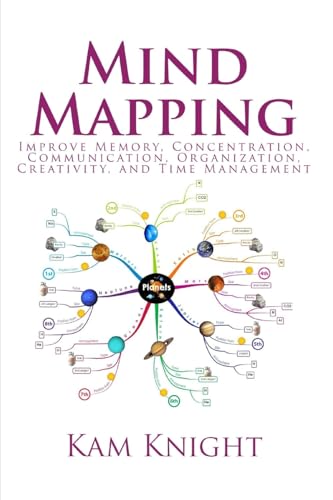
Mind Mapping: Improve Memory, Concentration, Communication, Organization, Creativity, and Time Management (Mental Performance)
As an affiliate, we earn on qualifying purchases.
As an affiliate, we earn on qualifying purchases.
Internal Practices and Broader Implications for AI Teams
Prior to this development, most teams relied on manually retyping prompts or maintaining static prompts stored in text files. Anthropic’s insight stems from running hundreds of Skills internally, which revealed that organizing instructions and assets into folders significantly improves reliability and knowledge retention. This aligns with broader industry trends toward modular, reusable AI components, but Anthropic’s emphasis on Skills as organized containers is a notable conceptual shift. The company’s focus on verification Skills highlights the importance of quality control in AI outputs, especially in enterprise settings.
While the concept is still being adopted, it signals a move toward more structured and maintainable AI workflows, where Skills serve as the building blocks of institutional knowledge and operational procedures.
“Viewing Skills as folders containing instructions and assets fundamentally changes how organizations design and maintain AI agents.”
— Thorsten Meyer, AI researcher

Agent-Based Spatial Simulation with NetLogo Volume 1
As an affiliate, we earn on qualifying purchases.
As an affiliate, we earn on qualifying purchases.
Unanswered Questions About Skills Implementation
While Anthropic’s internal results are promising, it is not yet clear how broadly applicable this approach is across different industries or AI platforms. The specifics of integrating Skills into existing workflows, managing version control at scale, and ensuring that Skills remain up-to-date as organizational knowledge evolves are still being explored. Additionally, the long-term impact on AI reliability and maintenance costs remains to be seen.
version control tools for AI skills
As an affiliate, we earn on qualifying purchases.
As an affiliate, we earn on qualifying purchases.
Next Steps for Adoption and Standardization
Organizations interested in adopting this approach will likely experiment with creating their own Skills folders, focusing on categories most relevant to their operations. Industry-wide, there may be efforts to develop standards for Skills description, versioning, and discovery mechanisms. Anthropic may also release tools or frameworks to facilitate broader adoption. Monitoring how these practices influence AI reliability and operational efficiency will be key in the coming months.
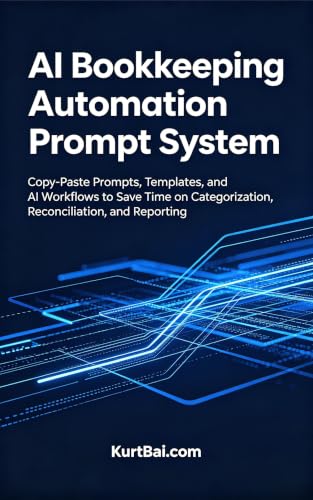
AI Bookkeeping Automation Prompt System: Copy-Paste Prompts, Templates, and AI Workflows to Save Time on Categorization, Reconciliation, and Reporting (AI Systems for Accountants Book 1)
As an affiliate, we earn on qualifying purchases.
As an affiliate, we earn on qualifying purchases.
Key Questions
How does viewing Skills as folders improve AI reliability?
It ensures that instructions, reference materials, and scripts are organized and versioned, reducing errors and inconsistencies in AI outputs.
Can Skills be reused across different AI models or platforms?
While Anthropic’s approach is tailored to their systems, the concept of organizing assets in folders can be adapted for other platforms with appropriate tooling.
What are the main benefits of this approach for organizations?
It enhances output consistency, accelerates onboarding, and creates a living knowledge base that improves over time.
What challenges might organizations face in implementing Skills as folders?
Managing version control, keeping Skills up-to-date, and integrating them into existing workflows could require significant effort and tooling development.
Source: ThorstenMeyerAI.com