
Finding the best 4 bay NAS for a home office involves balancing performance, ease of use, expandability, and budget. The Synology DiskStation DS925+ stands out as the overall best choice thanks to its robust features and user-friendly interface. For those seeking a budget-friendly option, the BUFFALO TeraStation Essentials 2025 offers solid storage with included drives. Meanwhile, the UGREEN NAS DXP4800 Pro delivers premium hardware for demanding users. Most buyers face tradeoffs between performance and cost, or simplicity and advanced features. Continue reading for a detailed breakdown of each model to find your best fit.

Get business pricing on monitors, keyboards and dev gear
- Business-only prices and quantity discounts
- Tax-exempt purchasing
- Multiple users, one account, clear invoices
Key Takeaways
- The top models combine strong hardware specs with user-friendly interfaces, making setup and management easier for home users.
- Diskless options often provide better value but require careful selection of compatible drives and additional setup time.
- Performance features like 10GbE support are more common in premium picks, but may be overkill for simple backup needs.
- Pre-installed drives simplify setup, but tend to be more expensive upfront; choosing diskless models can save cost but adds complexity.
- Build quality and noise levels vary significantly—compact, quiet designs are ideal for home office environments.




More Details on Our Top Picks
BUFFALO LinkStation 710 4TB 1-Bay NAS Network Attached Storage with HDD Included
This model stands out for its impressive performance, offering up to 7x faster speeds than the older LS 200, making it ideal for quick backups and media streaming. Compared with the BUFFALO LinkStation SoHo 220, it provides more robust speed and security features, though it’s limited to a single drive bay, which affects expandability. The included HDD simplifies setup, but users must accept that capacity expansion requires additional units. Its support for multiple OS and cloud integration makes it versatile for home and small office use, though it lacks mobile app support, which could be inconvenient for remote access on the go.
Pros:- Fast performance with up to 7x speed increase
- Secure data storage with SSL encryption and access controls
- Supports cloud integration with Dropbox, Azure, and OneDrive
- Includes HDD and comes with a 2-year warranty
Cons:- Limited to 1 drive bay, restricts capacity expansion
- Requires network setup for optimal use
- No mobile app support mentioned
Best for: Home office users who prioritize fast performance and easy setup with integrated storage.
Not ideal for: Users needing large, scalable storage solutions or multi-user access with high redundancy requirements.
- Capacity:4TB
- Number of Bays:1
- HDD Included:Yes
- Compatibility:Windows, MacOS 26
- Performance:Up to 7x faster than LS 200
- Warranty:2 years
Bottom line: This makes the most sense for those seeking quick, secure storage with minimal fuss and no need for expansion.
BUFFALO LinkStation SoHo 220 2-Bay Personal Cloud NAS with 4TB (2x2TB) Hard Drives
This NAS excels for small offices and home use thanks to its RAID options, offering either mirrored security with RAID 1 or maximum capacity in RAID 0. Compared with the BUFFALO LinkStation 710, it provides RAID flexibility, but its total capacity is limited to 4TB unless configured differently. Its included drives and user-friendly software make management straightforward, and 24/7 US support adds peace of mind. However, it supports only older macOS versions and needs network setup for remote access, which could be a hurdle for less tech-savvy users.
Pros:- RAID 1 for secure, mirrored storage
- Easy setup with included software
- Supports remote access and file sharing
- Includes hard drives and 3-year warranty
Cons:- Capacity fixed at 4TB unless reconfigured
- Limited to macOS 15 and earlier for some features
- Requires network setup for remote access
Best for: Small teams or households wanting flexible RAID options and reliable remote access without extra costs.
Not ideal for: Power users needing higher capacity or advanced virtualization features.
- Capacity:4TB (2x2TB drives)
- RAID:RAID 1 or RAID 0
- Connectivity:2.5 GbE Ethernet
- Compatibility:Windows and macOS (up to macOS 15)
- Included Drives:Yes
- Warranty:3 years
Bottom line: Ideal for those wanting a secure, manageable NAS with RAID flexibility for small-scale use.
UGREEN NASync DH4300 Plus 4-Bay Desktop NAS with 120TB Support, AI Photo Album, Remote Access, 8GB RAM, 2.5GbE, 4K HDMI (Diskless)
This NAS stands out for its massive 120TB capacity, ideal for users with extensive data needs like media libraries or backups. Its support for remote access, AI-powered photo management, and compatibility across many devices make it a versatile hub for home media centers. Compared with the Synology DS925+, it offers a more user-friendly setup, but being diskless, it requires additional purchase of drives, which adds to the total cost. Its focus on AI features and large capacity makes it less suitable for those with simpler storage needs or limited budgets.
Pros:- Enormous 120TB capacity for extensive data needs
- Supports remote access and multiple device compatibility
- AI photo recognition and duplicate removal
- User-friendly setup with app instructions
Cons:- Disks are not included, increasing initial investment
- Entry-level NAS with limited power features for advanced users
- Supports Docker but not full VMs
Best for: Home users with large media collections or extensive data archives needing AI management.
Not ideal for: Budget-conscious users or those seeking plug-and-play solutions without additional disk costs.
- Capacity:120TB (diskless)
- RAM:8GB LPDDR4X
- Network:2.5GbE
- Video Output:4K HDMI
- Support:Remote access, AI photo album
- Compatibility:Windows, macOS, Android, iOS
Bottom line: This is best for users with large, growing media libraries who want AI tools and remote access in a scalable package.
Synology 4-Bay DiskStation DS925+ (Diskless)
The Synology DS925+ offers high-speed data transfer with its dual 2.5GbE ports and impressive throughput, making it suitable for demanding small business or home office environments. Compared to the UGREEN NASync DH4300 Plus, it provides more advanced features like virtualization support and surveillance solutions, but it requires additional drives and a more complex setup. This NAS is best for tech-savvy users who need reliable, high-performance storage and are comfortable with configuration complexities, rather than plug-and-play simplicity.
Pros:- High data transfer speeds (522/565 MB/s)
- Dual 2.5GbE ports for redundancy and fast network access
- Supports virtualization and surveillance applications
- Three-year warranty for peace of mind
Cons:- Diskless, requires purchase of drives
- Setup can be complex for less experienced users
- Higher cost compared to simpler NAS solutions
Best for: Power users and professionals who need robust data management, virtualization, or surveillance capabilities.
Not ideal for: Beginners or users seeking a simple, ready-to-use NAS without additional drives or setup complexity.
- Drive Bays:4
- Network Ports:2 x 2.5GbE
- Sequential Read/Write:522/565 MB/s
- Warranty:3 years
Bottom line: This NAS is best for advanced users needing high performance and multiple application support in a home or small office setup.
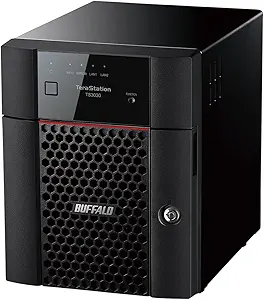
BUFFALO TeraStation Essentials 2025 4-Bay Desktop NAS 32TB with Hard Drives Included
The BUFFALO TeraStation Essentials 2025 stands out as the best overall option for home offices seeking a reliable, feature-rich NAS. Its pre-installed hard drives and user-friendly RAID setup make initial deployment straightforward, especially compared to diskless models like the UGREEN NAS DXP4800 Pro, which require additional drives. With a native 2.5GbE port, it offers high-speed transfer suitable for backups and media streaming. Its support for cloud integration and robust security features like 256-bit encryption add flexibility for hybrid cloud setups. However, its four-bay limit may restrict future expansion, and the RAID configurations could pose a challenge for less technically inclined users. This pick suits small to medium teams prioritizing ease of use, security, and balanced capacity without overcomplicating setup.
Pros:- Pre-installed drives simplify setup
- High-speed 2.5GbE network interface
- Supports hybrid cloud with easy integration
- Secure with 256-bit encryption
Cons:- Limited to 4 bays, restricting scalability
- RAID setup may be confusing for beginners
Best for: Small business owners or advanced home users who want a plug-and-play, secure storage solution with decent capacity.
Not ideal for: Power users needing maximum flexibility and expansion, or those requiring more than 32TB of storage in a compact form.
- Capacity:32TB
- Number of Bays:4
- Hard Drives Included:Yes
- RAID Support:RAID 0, 5, 6
- Network Interface:2.5GbE
- Warranty:3 years
Bottom line: This NAS is a balanced choice for users who want easy, secure, and reliable storage with moderate capacity.
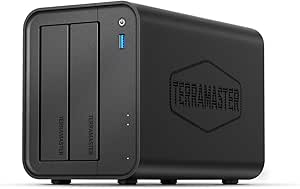
TERRAMASTER F2-425 2-Bay NAS Storage – Intel Quad-Core, 4GB RAM, 2.5GbE, Multimedia Server for Home
The TERRAMASTER F2-425 is tailored for home users focused on multimedia streaming, thanks to its powerful quad-core processor and 4GB RAM, which outperform simpler models like the BUFFALO LinkStation 720 in multitasking and transcoding. Its 2-bay design limits maximum storage to around 60TB, but it makes setup and maintenance easier for users comfortable with RAID. Its support for 4K transcoding and multiple media apps offers a seamless streaming experience, ideal for family entertainment. Yet, it lacks the scalability of four-bay models, and with only two bays, it might fall short for those needing extensive future expansion. This device makes sense for households or small offices prioritizing multimedia capabilities over maximum storage capacity.
Pros:- Powerful quad-core processor for multitasking
- Supports 4K transcoding and multiple media platforms
- Quiet operation at 19dB
- Easy to install drives without tools
Cons:- Limited to 2 drive bays, restricting scalability
- No included drives, needs additional purchase
- Requires technical knowledge for network optimization
Best for: Home users who want a simple, reliable media server with easy setup and good performance for streaming and backups.
Not ideal for: Users needing large-scale storage or future expandability beyond 60TB, or enterprise-grade features.
- Processor:Intel x86 Quad-Core
- RAM:4GB
- Max Storage:60TB
- HDD Bays:2
- Network:2.5GbE
- Noise Level:19dB
Bottom line: This NAS excels as a multimedia hub for home environments but isn’t suited for those needing large or expandable storage.
UGREEN NAS DXP4800 Pro 4-Bay Desktop NAS with Intel Core i3-1315U, 8GB DDR5, 128GB SSD, 10GbE, 2.5GbE, M.2 NVMe Slots, 4K HDMI, Diskless
The UGREEN NAS DXP4800 Pro packs enterprise-grade features into a desktop NAS, making it ideal for demanding workflows. Its Intel Core i3-1315U processor and 8GB DDR5 RAM outperform most home models, especially when multitasking or running virtual machines, unlike the BUFFALO TeraStation. Its 10GbE port ensures rapid data transfer, perfect for large data backups or media editing. Its diskless design offers maximum flexibility but requires users to purchase drives separately, which adds complexity and cost. With support for virtualization, Docker, and AI photo management, this device targets tech-savvy professionals rather than casual users. The higher price reflects its advanced capabilities, which aren’t necessary for simple backups or basic file sharing.
Pros:- Powerful multi-core processor with virtualization support
- Extensive expansion options, up to 144TB with M.2 caching
- Fast 10GbE connectivity for large data transfers
- Supports modern security and AI applications
Cons:- Requires additional drives, increasing initial setup cost
- Complex for users unfamiliar with enterprise features
- Higher price point for home users
Best for: Power users, small teams, and developers needing high-speed, flexible, and expandable storage.
Not ideal for: Casual home users or those seeking a straightforward, budget-friendly NAS without complex features.
- Processor:Intel Core i3-1315U
- RAM:8GB DDR5
- Storage:128GB SSD (diskless, supports 144TB with HDDs)
- Network Ports:10GbE, 2.5GbE
- M.2 Slots:2x NVMe
- Build:Unibody aluminum
Bottom line: This NAS is designed for professionals needing robust, high-performance storage with advanced features, not casual home use.
BUFFALO LinkStation 720 4TB 2-Bay NAS Storage with Hard Drives Included
The BUFFALO LinkStation 720 offers a simple, budget-friendly option for homes and small offices. Its included hard drives and straightforward setup make it appealing for users who want quick access to shared storage without fuss. Compared to four-bay models, its two-bay design limits maximum storage capacity to around 4TB in RAID 1, but this is sufficient for small-scale backups and media sharing. Its support for RAID 0 and 1 provides basic redundancy, and the inclusion of drives reduces initial costs. However, its limited capacity and simpler feature set make it less suitable for users with larger storage needs or those planning future expansion. This device fits users prioritizing affordability and ease of use over scalability.
Pros:- Pre-installed drives for immediate use
- Easy to set up with simple network sharing
- Supports RAID 0 and 1 for redundancy
- Includes 2-year warranty and US-based support
Cons:- Limited to 4TB total capacity in RAID 1
- Requires router for network access
- Basic feature set with no advanced multimedia options
Best for: Home users or small offices needing basic, reliable file sharing and backup with minimal setup.
Not ideal for: Users requiring large capacity or sophisticated features like multimedia transcodes or virtualization.
- Capacity:4TB
- Number of Bays:2
- RAID Support:RAID 0, 1
- Compatibility:Windows, MacOS
- Performance:Up to 7x faster than previous models
- Included Hard Drives:Yes
Bottom line: This NAS is ideal for those seeking simple, plug-and-play storage for small-scale needs without the complexity or cost of larger systems.
Synology 4-Bay DiskStation DS423 (Diskless)
The Synology DS423 stands out for its robust data protection and flexible surveillance support, making it an excellent choice for users prioritizing security. Unlike the UGREEN DXP4800, which offers high-end hardware but requires more technical setup, the DS423 provides a user-friendly interface with comprehensive backup options. Its ability to support up to 30 IP cameras (license needed) enhances home or small business security, yet the camera licenses come separately, adding to the initial cost. This model is less suited for users seeking plug-and-play simplicity or pre-installed drives, as it arrives diskless and needs configuration. Compared to the Yxk Zero1, it offers more advanced surveillance features but may be overkill for purely storage-focused needs. The DS423’s strengths include secure cloud sharing, snapshot backups, and versatile remote access, although setup complexity and additional licensing are drawbacks.
Pros:- Robust security features including snapshots and private cloud access
- Supports up to 30 IP cameras for surveillance
- Excellent data protection with backup and snapshot capabilities
Cons:- Camera licenses sold separately, increasing overall cost
- Requires technical knowledge for initial setup and configuration
Best for: Home users or small businesses needing secure storage and surveillance with customizable options.
Not ideal for: Beginner users who want a ready-to-use system without extensive setup or additional licenses.
- Number of Bays:4
- Diskless:Yes
- Warranty:2 years
- Surveillance Support:Up to 30 IP cameras (license required)
Bottom line: Ideal for security-conscious users who are comfortable with setup and want flexible surveillance options.
Yxk Zero1 2-Bay Desktop NAS (Maximum 60TB, Diskless, 4GB RAM, 2.5GbE, 4K HDMI, Silent, Home Storage)
The Yxk Zero1 offers a straightforward, quiet storage solution perfect for users who want up to 60TB of capacity without fuss. Compared to the Synology DS423, which is more feature-rich and security-focused, the Zero1 prioritizes simplicity and silent operation, making it ideal for media centers or personal backups in quiet environments. Its two-bay design limits total capacity and expansion options, which may be restrictive for those with growing storage needs. It requires purchasing drives separately, and initial setup may be slightly technical for less experienced users. The Zero1’s compact and silent design makes it less suitable for enterprise-level surveillance or heavy data protection, but it excels for media streaming or basic storage in a home setting. Its main advantages are its scalability, quiet operation, and ease of access, with the tradeoff being limited bays and capacity.
Pros:- Quiet and compact design suitable for living spaces
- Up to 60TB total capacity with scalable drive upgrades
- Easy remote access with secure permissions
Cons:- Limited to 2 drive bays, restricting maximum storage
- Requires separate purchase of drives and some technical setup
Best for: Home users seeking a quiet, expandable storage device for media and backups with minimal fuss.
Not ideal for: Power users needing large capacity or advanced security features like surveillance support.
- Maximum Capacity:60TB
- Drive Bays:2
- RAM:4GB
- Network Ports:2.5GbE
- Video Output:4K HDMI
- Design:Silent, compact
Bottom line: Perfect for media enthusiasts or small households wanting a silent, expandable storage option.
UGREEN NASync DXP4800 Plus 4-Bay Desktop NAS with Intel Pentium Gold 8505, 8GB DDR5 RAM, 128GB SSD, 10GbE & 2.5GbE, M.2 NVMe Slots, 4K HDMI, Diskless
The UGREEN NASync DXP4800 Plus caters to small offices or tech-savvy home users needing fast data transfer and virtualization support. Its powerful Intel Pentium Gold processor, 8GB DDR5 RAM, and 10GbE connectivity outperform most options like the Yxk Zero1, making it suitable for demanding tasks such as AI photo management or Docker containers. Compared to the Synology DS423, it offers more raw power and flexibility but requires more technical knowledge to set up and optimize. The system is diskless, so drives must be purchased separately, which adds complexity but allows for tailored configurations. Its hardware supports up to 136TB, making it a versatile choice for growing storage needs. This pick is less suitable for beginners or those seeking a plug-and-play experience, but it excels where speed and advanced features matter most.
Pros:- High-speed 10GbE and multiple USB ports for fast data transfer
- Supports virtualization, Docker, and AI photo management
- Large maximum capacity up to 136TB
Cons:- No drives included, requiring separate purchase and setup
- Requires technical expertise for setup and configuration
Best for: Small offices or home users needing high-speed data transfer, virtualization, and AI features.
Not ideal for: Less technical users or those seeking a simple, out-of-the-box storage solution.
- Processor:Intel Pentium Gold 8505
- RAM:8GB DDR5
- Storage:128GB SSD (diskless)
- Network Ports:1 x 10GbE, 1 x 2.5GbE
- M.2 NVMe Slots:2
- Maximum Capacity:136TB
Bottom line: Designed for power users and small offices needing speed, flexibility, and advanced data management features.

How We Picked
The products included in this roundup were selected based on their relevance to home office users needing reliable, flexible, and easy-to-manage storage. We prioritized models with four bays, as this size offers a good balance between capacity and complexity, suitable for most small-scale needs. Key evaluation factors included hardware performance (CPU, RAM, network interfaces), expandability, ease of setup, build quality, and value for money. We also considered user interface design, support options, and the availability of features like remote access and multimedia support. The ranking reflects a combination of these factors, emphasizing usability and real-world performance for home office environments.Factors to Consider When Choosing Best 4 Bay Nas For Home Office
Choosing the right 4 bay NAS for your home office involves considering several key factors beyond just raw specs. Getting the right balance can help you avoid costly mistakes and ensure your investment meets your current and future needs. Here are some of the most important considerations to keep in mind before making a decision.Performance and Hardware Specs
Look beyond advertised specs and focus on real-world performance. A faster CPU and more RAM will improve multitasking and file transfer speeds, especially if you plan to run apps or serve multimedia. For typical home office use, a quad-core processor and at least 4GB of RAM are advisable, but demanding users might prefer models with 8GB or more. Avoid models with underpowered CPUs if you expect heavy data processing or multiple users accessing the system simultaneously.
Network Connectivity and Speed
Most modern NAS units support Gigabit Ethernet, but models with 2.5GbE or 10GbE support can significantly boost transfer speeds, especially for large files or backups. Consider your current network setup—if you already have a 10GbE switch, investing in a NAS with 10GbE ports makes sense. However, for typical home setups, 1GbE or 2.5GbE support usually suffices and keeps costs lower, preventing overinvestment in unnecessary hardware.
Ease of Use and Management
Intuitive interfaces and good software support are vital for home users who may not be tech experts. Brands like Synology and Buffalo tend to offer more polished user experiences with comprehensive mobile apps and remote management. If simplicity is a priority, avoid models with complicated setup procedures or obscure management software. Also, check for community support and firmware update policies, as these can extend the useful life of your NAS.
Expandability and Future-Proofing
While four bays provide decent capacity, think about potential future needs. Some models support expanding storage via external drives or additional units, which can be a cost-effective way to grow. Diskless models offer flexibility but require buying drives separately, so ensure compatibility and consider the total cost of ownership. Also, assess whether the NAS can support additional features like SSD caching or upgraded network interfaces to future-proof your setup.
Build Quality and Noise Levels
Since a home office is likely a shared space, noise levels matter. Look for models with quiet fans and good thermal management. Compact, well-built units with metal enclosures often run cooler and quieter than plastic ones. Also, consider the physical size—smaller units may fit better in your workspace but might sacrifice some expandability or cooling capacity. Durability and warranty are additional factors that can save headaches down the line.
Frequently Asked Questions
Is a diskless NAS a better choice for home use?
Diskless NAS units typically offer better initial value because they are cheaper and allow you to choose your own drives, which can be tailored to your specific needs and budget. However, they require additional setup and compatibility checks, especially for drives. If you’re comfortable installing drives and managing hardware, a diskless model gives you flexibility for future upgrades. For beginners or those who want a plug-and-play solution, pre-installed drives might be more convenient despite a higher upfront cost.
How important is network speed support in a home office NAS?
Network speed support determines how quickly your data can transfer between the NAS and your devices. While Gigabit Ethernet is sufficient for most standard backups and file sharing, models supporting 2.5GbE or 10GbE can dramatically reduce transfer times when handling large files or streaming multimedia. If your home network infrastructure supports these higher speeds, investing in a NAS with faster Ethernet ports makes sense. Otherwise, sticking with 1GbE usually saves money without sacrificing typical home office performance.
Should I prioritize software features over hardware specs?
Software features greatly influence usability and functionality. A NAS with an intuitive management interface, robust app ecosystem, and reliable remote access can make everyday tasks much easier. Hardware specs are important but only matter if the software can leverage them effectively. For example, a powerful CPU is less useful if the device’s software is clunky or lacks essential features. Balance both aspects to ensure your NAS meets your needs without unnecessary complexity or expense.
Is it worth paying more for a premium NAS with extra features?
Premium NAS units often include faster processors, more RAM, higher network speeds, and additional features like SSD caching and advanced security. If your workflow involves large data transfers, multimedia editing, or running multiple apps, investing in a higher-end model can save time and enhance reliability. However, for basic file storage and backups, a mid-range or budget model often delivers sufficient performance at a lower cost. Consider your current needs and future plans before overpaying for features you may not use.
How do I choose between a NAS with pre-installed drives and diskless models?
Pre-installed drives offer convenience, making setup straightforward and quick, which is ideal for users who prefer a ready-to-go system. However, they tend to be more expensive upfront and limit your choice of storage capacity and quality. Diskless models give you the flexibility to select drives that match your performance and capacity needs, often providing better value. The tradeoff is that diskless units require some hardware knowledge for installation. Your decision should depend on your comfort level with hardware, budget, and long-term storage plans.
Conclusion
For most home office users, the Synology DiskStation DS925+ offers the best overall experience, blending performance, ease of use, and expandability. Those prioritizing affordability should consider the BUFFALO TeraStation Essentials 2025 for its included drives and straightforward setup. If you have a more advanced setup or require high-speed networking, the UGREEN NAS DXP4800 Pro provides premium hardware and future-proof features. Beginners will benefit from models with intuitive interfaces, while power users should look for units supporting higher network speeds and expandability. Match your choice to your current needs and future plans to get the best value and performance.