

QA testing automation tools have splintered into two camps in 2026: framework-centric skills built around Playwright, Selenium, and Cypress, and a fast-growing wave of AI-assisted testing where LLMs generate and maintain test code. My best overall pick is Hands-On Automated Testing with Playwright, because it teaches the framework most modern web teams are standardizing on while staying practical and project-driven. Two standouts challenge it: AI-Assisted QA and Software Testing with Claude Code for engineers who want to automate test generation with AI, and Stop Coding for career-changers who need results without learning to program. The main tradeoff you face is depth versus accessibility — deeply technical framework guides produce stronger engineers but demand coding maturity, while no-code and AI paths get you productive faster with less transferable depth. Keep reading for the full breakdown, including certification prep and framework architecture picks.

Get business pricing on monitors, keyboards and dev gear
- Business-only prices and quantity discounts
- Tax-exempt purchasing
- Multiple users, one account, clear invoices
Key Takeaways
- Playwright-focused resources dominated the top of this ranking because the framework now covers end-to-end, API, accessibility, and visual testing in one tool, making Playwright books the strongest single investment for web QA careers.
- AI-assisted testing books split into two types: those that bolt AI onto traditional frameworks (Selenium plus LLMs) and those built around AI-native workflows like Claude Code — and the AI-native approach ranked higher for forward-looking buyers.
- Selenium remains the safest bet for enterprise and legacy environments, but its books require Java skills, which makes them a poor first purchase for beginners despite the framework’s job-market staying power.
- No-code and affirmation-style books scored well for motivation and career switching but poorly for technical depth — they complement rather than replace a framework guide.
- The ISTQB certification study guide fills a niche none of the hands-on books touch: vocabulary, process, and exam readiness, which matters for European enterprise employers more than US startups.



| QA testing automation tool | Format | Audience Level | Prerequisites |
|---|---|---|---|
| AI Testing with Python: Build | Book (digital/kindle) | Intermediate to advanced | Python and testing fundamentals |
| Python API Automation Testing: | Book (digital) | Intermediate | Python fundamentals |
| Hands-On Automated Testing wit | Book (print/digital) | Intermediate to advanced | Testing concepts and programming basics |
| Automation Testing with Python | Book (digital) | Beginner to intermediate | Basic programming familiarity |
| Creating An End-To-End Test Fr | Book (digital) | Intermediate to advanced | Testing concepts and framework familiarity |
| Test Automation Fundamentals: | Print/digital study guide (book) | Advanced | — |
| Ultimate Web Automation Testin | Digital/print technical book | Intermediate to advanced | — |
| AI-Assisted QA and Software Te | Digital guide/courseware | Intermediate to advanced, AI-comfortable | Familiarity with AI coding tools and software testing basics |
| Software Testing Unlocked | Digital/print guide (book) | Beginner, no prior experience needed | — |
| Ultimate Selenium WebDriver fo | Print/digital technical book | Intermediate to advanced | Java programming and basic automation knowledge |
| Automation Awesomeness: 260 Ac | Book (digital/print) | — | — |
| All You Need to Know About Sof | Book (digital/print) | — | — |
| Web Automation Testing Using P | Book (English Edition) | — | — |
| Complete Guide to Test Automat | Book (print/digital) | — | — |
| Stop Coding: Learn to Test and | Course | — | No coding required |
More Details on Our Top Picks
AI Testing with Python: Build Intelligent Test Automation Using Python, Selenium, APIs, PyTest, LLMs & AI-Powered Testing Tools
This is the broadest pick in the lineup for testers who want AI woven into every layer of their automation stack. Where Python API Automation Testing narrows in on APIs, this one spans Selenium, PyTest, APIs, and large language models, making it feel like a full curriculum rather than a specialist manual. That breadth is the main draw — and the main compromise: chapters move faster than a beginner can absorb, so it works best for readers who already write tests and want to add AI capabilities. Compared with Automation Testing with Python & Selenium, this book trades depth in classic web automation for exposure to LLM-assisted test generation and intelligent tooling. Readers chasing AI-specific workflows will find it the strongest fit here.
Pros:- Covers the widest tool range in this batch: Selenium, PyTest, APIs, and LLMs in one place
- Practical Python and Selenium examples that translate directly into automation projects
- One of the few books that seriously addresses AI-powered testing rather than mentioning it as a footnote
- Serves as both a learning path and a reference for building an intelligent test framework
Cons:- Broad scope means some topics get shallow treatment compared with dedicated single-tool books
- Steep learning curve for readers without prior testing or Python experience
- Limited publication and edition details make it hard to gauge how current the tooling coverage is
Best for: Experienced QA engineers and developers who already know Python and want to add AI-powered testing techniques to their existing skill set
Not ideal for: Complete beginners — the book assumes prior testing and Python knowledge, so novices should start with a beginner-focused guide like Software Testing Unlocked
- Format:Book (digital/kindle)
- Primary Language:Python
- Tools Covered:Selenium, PyTest, APIs, LLMs, AI testing tools
- Focus Area:AI-powered test automation
- Audience Level:Intermediate to advanced
- Prerequisites:Python and testing fundamentals
Our verdict“Choose this if you already automate tests in Python and want the fastest route to layering AI into your framework.”
Python API Automation Testing: Requests, PyTest & AI for Real-World Projects (QA Testing Book 3)
API testing often gets a single chapter in generalist books, but this one gives it the full treatment. It pairs Requests and PyTest with AI-assisted techniques and grounds everything in real-world projects — a structure that mirrors what actual QA teams do day to day. Compared with AI Testing with Python, which spreads across UI, API, and AI topics, this book goes deeper on the API layer specifically, making it the stronger choice if backend testing is your priority. The tradeoff is obvious once you look for UI automation: there is none to speak of, so anyone testing web front ends should look at Hands-On Automated Testing with Playwright instead. The project-based examples are what justify its place here.
Pros:- Dedicated, in-depth coverage of API testing rather than a token chapter
- Real-world project examples that map to typical workplace testing scenarios
- Combines the standard Requests/PyTest stack with AI techniques for forward-looking workflows
- Part of a series, so readers can extend their learning path with companion volumes
Cons:- No coverage of UI or end-to-end browser testing
- Assumes working Python knowledge, which the book does not teach
- Sparse prerequisite and specification details for planning a learning path
Best for: QA engineers and backend-focused developers who need to build or improve automated API test suites in Python
Not ideal for: Testers whose work centers on browser UI automation — the API-only scope leaves them needing a second resource
- Format:Book (digital)
- Series:QA Testing Book 3
- Primary Language:Python
- Tools Covered:Requests, PyTest, AI-assisted testing
- Focus Area:API test automation
- Audience Level:Intermediate
- Prerequisites:Python fundamentals
Our verdict“The clear pick if API test automation in Python is your specific gap to fill.”
Hands-On Automated Testing with Playwright: Create Fast, Reliable, and Scalable Tests for Modern Web Apps with Microsoft’s Automation Framework
Among the browser-automation books in this roundup, this one stands out for betting on Playwright, the framework many teams are migrating to from Selenium. Compared with Automation Testing with Python & Selenium, it teaches a tool with better speed, reliability, and cross-browser support out of the box — a meaningful advantage for modern single-page applications. The hands-on framing emphasizes building tests that hold up as apps grow, which is where flaky, poorly designed suites usually fall apart. The compromise: Playwright adoption is not universal, so shops still committed to Selenium get less direct value, and the material skews toward readers who already understand automation concepts. Where Web Automation Testing Using Playwright covers similar ground, this book’s reliability and scalability focus makes it the better fit for teams scaling their suites.
Pros:- Focused on Playwright, one of the fastest-growing browser automation frameworks
- Strong emphasis on reliability and scalability — the areas where amateur suites fail
- Backed by a mainstream technical publisher with structured, hands-on content
- Directly relevant to modern web app architectures like SPAs
Cons:- Playwright skills transfer less readily to Selenium-based legacy environments
- Content assumes prior automation knowledge and moves quickly
- Single-framework focus means less breadth than multi-tool framework books
Best for: QA engineers and developers testing modern web applications who want to build fast, maintainable Playwright suites
Not ideal for: Teams locked into Selenium or Java-based stacks, and beginners who haven’t yet grasped core automation concepts
- Format:Book (print/digital)
- Primary Framework:Playwright (Microsoft)
- Focus Area:Web UI test automation
- Key Themes:Speed, reliability, scalability
- Audience Level:Intermediate to advanced
- Prerequisites:Testing concepts and programming basics
Our verdict“The strongest choice for teams modernizing their web test stack around Playwright.”
Automation Testing with Python & Selenium: Master Practical Skills for Real-World Automation
For learners who need the classic Python-plus-Selenium combination without detouring into AI or modern frameworks, this is the most direct route. Its practical, example-driven approach suits job seekers building portfolio projects, and it costs less than most publisher-backed alternatives while covering the stack still listed in the majority of QA job postings. The tradeoffs are real, though: compared with Hands-On Automated Testing with Playwright, the technology it teaches is older and slower, and compared with AI Testing with Python, it offers no forward-looking AI coverage. Sparse publication details also make it harder to verify how current the examples are. Still, as a budget-friendly foundation in web automation fundamentals, it earns its spot for readers prioritizing employability basics over cutting-edge tooling.
Pros:- Teaches Python and Selenium, the stack most commonly requested in QA job listings
- Practical, real-world examples suited to building a portfolio
- Accessible price point compared with publisher-backed technical books
- Focused scope makes it easier to finish than sprawling multi-tool guides
Cons:- Selenium-centric content lags behind newer frameworks like Playwright in speed and developer experience
- Minimal publisher, edition, and content-overview details available
- No ratings or community feedback yet to validate quality
Best for: Aspiring QA engineers and career switchers who want affordable, practical Python and Selenium skills for entry-level automation roles
Not ideal for: Engineers at modern startups or teams already on Playwright — Selenium-centric content will feel dated and less transferable
- Format:Book (digital)
- Primary Language:Python
- Primary Framework:Selenium
- Focus Area:Web UI automation fundamentals
- Audience Level:Beginner to intermediate
- Prerequisites:Basic programming familiarity
Our verdict“A sensible budget pick for mastering the Python/Selenium fundamentals that entry-level QA jobs still demand.”
Creating An End-To-End Test Framework: A Detailed Guide With Practical Examples From Playwright, Cypress, and Cucumber
Most books in this roundup teach you to use a tool; this one teaches you to design the framework those tools live inside. By walking through Playwright, Cypress, and Cucumber side by side, it lets readers compare architectural approaches rather than marry a single framework — a genuinely different proposition from the single-tool depth of Hands-On Automated Testing with Playwright or Ultimate Web Automation Testing with Cypress. That multi-tool perspective is exactly what tech leads and senior QA engineers need when deciding what to standardize on. The cost is breadth per tool: none gets the exhaustive coverage of a dedicated book, and prior testing knowledge is assumed throughout. For anyone responsible for building, refactoring, or standardizing a test framework, though, this architectural lens is worth the tradeoff.
Pros:- Multi-framework coverage (Playwright, Cypress, Cucumber) enables genuine tool comparison
- Focuses on framework architecture, a topic most tool-specific books skip
- Practical examples and best practices that apply to real team environments
- Well suited to standardization and migration decisions
Cons:- Shallower per-tool coverage than dedicated single-framework books
- Requires solid grounding in testing concepts before it’s useful
- Broad scope can overwhelm readers who just want to learn one tool well
Best for: Senior QA engineers and tech leads who need to design, compare, or standardize an end-to-end test framework across teams
Not ideal for: Junior testers still learning individual tools — the framework-level discussion assumes concepts they haven’t built yet
- Format:Book (digital)
- Frameworks Covered:Playwright, Cypress, Cucumber
- Focus Area:End-to-end test framework design
- Key Themes:Architecture, best practices, practical examples
- Audience Level:Intermediate to advanced
- Prerequisites:Testing concepts and framework familiarity
Our verdict“The pick for engineers who need to architect an end-to-end framework, not just write tests inside one.”
Test Automation Fundamentals: A Study Guide for the Certified Test Automation Engineer Exam, Advanced Level Specialist, ISTQB® Compliant
Among all the options in this roundup, this is the only one anchored to a formal credential, which changes its purpose entirely. Where Ultimate Selenium WebDriver for Test Automation teaches hands-on framework building, this guide is built around passing the ISTQB® CTAE advanced-level exam, so it emphasizes vocabulary, methodology, and structured test automation strategy over code samples. That makes it a certification-focused reference rather than a workbook you’d keep open beside your IDE.
The tradeoff is real: readers who already hold the certification will find little practical material here, and anyone expecting runnable examples like those in the Cypress or Playwright titles will be disappointed. This pick makes the most sense for QA professionals whose next career step depends on a recognized credential rather than another tool tutorial.
Pros:- Directly aligned with the ISTQB® CTAE advanced-level syllabus
- Covers test automation strategy and methodology, not just tool syntax
- Strong reference for interviews and formal QA career progression
- Written for advanced-level specialists rather than general audiences
Cons:- No hands-on coding exercises or framework walkthroughs
- Content becomes dated as the ISTQB syllabus revisions roll out
Best for: Experienced QA engineers preparing specifically for the ISTQB Certified Test Automation Engineer advanced exam
Not ideal for: Self-taught testers who want hands-on coding practice — this is exam material, not a framework-building tutorial
- Format:Print/digital study guide (book)
- Certification Target:ISTQB® Certified Test Automation Engineer, Advanced Level Specialist
- Compliance:ISTQB® compliant
- Audience Level:Advanced
- Focus:Test automation fundamentals, strategy, and exam preparation
- Hands-On Content:Conceptual rather than code-heavy
Our verdict“Buy this only if the ISTQB CTAE exam is on your roadmap; otherwise the framework-focused books in this roundup offer more day-to-day value.”
Ultimate Web Automation Testing with Cypress: Master End-to-End Web Application Testing Automation to Accelerate Your QA Process with Cypress
Cypress has become the default choice for modern JavaScript teams, and this guide leans into that strength. Compared with Ultimate Selenium WebDriver for Test Automation, which targets Java shops and cross-browser grid setups, this book focuses on the developer-friendly end-to-end workflow that makes Cypress popular — fast feedback loops, time-travel debugging, and tests that run in the same browser context as your app.
The practical examples are the selling point: readers walk away with test suites they can adapt to real projects, something the certification-focused Test Automation Fundamentals guide deliberately avoids. The catch is the steep on-ramp. This material assumes comfort with JavaScript and modern web architecture, so it sits firmly on the intermediate-to-advanced end of this lineup, well above beginner titles like Software Testing Unlocked.
Pros:- Deep, practical coverage of a single in-demand tool rather than scattered overview material
- End-to-end examples translate directly into production test suites
- Cypress’s debugging and re-run features genuinely accelerate QA cycles
- Well matched to modern JavaScript-heavy web apps
Cons:- Requires solid JavaScript and web development fundamentals
- Locked into Cypress — knowledge doesn’t transfer cleanly to Playwright or Selenium stacks
Best for: Frontend and JavaScript developers who need reliable end-to-end coverage for modern single-page web applications
Not ideal for: QA beginners or teams on Java stacks — the JavaScript prerequisites and narrow tool focus will slow them down
- Format:Digital/print technical book
- Tool Covered:Cypress
- Testing Scope:End-to-end web application testing
- Primary Language:JavaScript
- Audience Level:Intermediate to advanced
- Includes Examples:Yes, practical end-to-end scenarios
Our verdict“The clear choice for JavaScript teams standardizing on Cypress, but redundant if your stack runs on Java or Python.”
AI-Assisted QA and Software Testing with Claude Code
This is the most forward-looking entry in the roundup. Instead of teaching a single framework the way Ultimate Web Automation Testing with Cypress does, it shows how an agentic AI coding assistant can generate and maintain unit, integration, and end-to-end tests — a workflow that didn’t exist when most Selenium and Cypress books were written. For teams already experimenting with AI pair programming, the productivity angle is compelling: less boilerplate test code, faster coverage of regressions.
The risk matches the reward. Because the approach depends on Anthropic’s tooling, it evolves faster than any printed framework guide can track, and workflows may shift under you. It also presumes comfort with AI tooling and prompt-driven development, which puts it out of reach for readers still working through Software Testing Unlocked. This pick makes the most sense for early adopters who accept some instability in exchange for being ahead of the curve.
Pros:- Covers unit, integration, and end-to-end testing in one AI-driven workflow
- Automates repetitive test authoring that consumes most QA hours
- Early exposure to agentic AI testing techniques ahead of mainstream adoption
- Framework-agnostic principles that outlast any single testing library
Cons:- Requires familiarity with AI coding assistants and their limitations
- Tool behavior changes quickly, so specific workflows may become outdated
- Thin documentation and no established user community yet
Best for: Engineers on modern teams already using AI coding assistants who want to automate test generation across the full testing pyramid
Not ideal for: Traditional QA teams on stable, audited toolchains — the fast-moving AI dependency adds risk without adding control
- Format:Digital guide/courseware
- Core Technology:Claude Code (Anthropic agentic AI assistant)
- Testing Types Covered:Unit, integration, end-to-end
- Audience Level:Intermediate to advanced, AI-comfortable
- Prerequisites:Familiarity with AI coding tools and software testing basics
- Approach:AI-assisted test generation and workflow automation
Our verdict“A bet on where QA is heading rather than where it is — ideal for AI-curious engineers, frustrating for anyone wanting stable, documented processes.”
Software Testing Unlocked – A Beginner’s Guide to QA & Automation
Every roundup needs an entry point, and this is the most accessible on-ramp here. While Ultimate Web Automation Testing with Cypress assumes you can already write JavaScript, this guide structures the journey from zero to first QA job as a 20-step path, mixing testing fundamentals, quality assurance concepts, and introductory automation. That structure matters for career changers who don’t yet know what they don’t know.
The tradeoff is depth. Compared with the Selenium or Cypress titles, automation coverage here is necessarily introductory — readers who land their first role will outgrow this book within months. It also can’t match the credential value of Test Automation Fundamentals for anyone chasing ISTQB certification. This pick makes the most sense as a first purchase that tells you which specialized book to buy next, not as your only book.
Pros:- Structured 20-step curriculum removes guesswork for complete newcomers
- Covers QA concepts, testing basics, and automation in one accessible volume
- Explicitly oriented toward landing a first industry job
- No programming background required to start
Cons:- Automation coverage is introductory and quickly outgrown
- No advanced tooling, framework design, or certification alignment
Best for: Career changers and students preparing for their first QA role who need a structured path from fundamentals to basic automation
Not ideal for: Working testers — the fundamentals-heavy content will feel repetitive and the automation sections too shallow
- Format:Digital/print guide (book)
- Structure:20-step learning journey
- Topics Covered:Software testing, QA, introductory automation
- Audience Level:Beginner, no prior experience needed
- Career Focus:Preparing for a first QA job
- Coding Required:Minimal at entry
Our verdict“The right first book for someone starting from zero, provided you plan to follow it with a tool-specific title from this lineup.”
Ultimate Selenium WebDriver for Test Automation: Build and Implement Automated Web Testing Frameworks Using Java, Selenium WebDriver and Selenium Grid for E-Commerce, Healthcare, EdTech, Banking, and SAAS
Selenium remains the lingua franca of enterprise test automation, and this guide goes where most tutorials stop: framework architecture. Rather than teaching isolated commands the way a beginner guide would, it walks through designing scalable automated testing systems with Java, WebDriver, and Selenium Grid — the distributed setup that large organizations actually run. The industry-specific scenarios across e-commerce, healthcare, banking, edTech, and SaaS give the material relevance that generic Selenium primers lack.
Compared with Ultimate Web Automation Testing with Cypress, this is the heavier, more traditional route: more setup complexity, slower test execution, but far broader browser and ecosystem support. The barrier to entry is the honest drawback — solid Java skills are assumed, so anyone still at the Software Testing Unlocked stage will struggle. This pick makes the most sense for engineers whose job is building the framework an entire QA team depends on.
Pros:- Teaches framework architecture, not just WebDriver syntax
- Selenium Grid coverage enables distributed, parallel test execution at scale
- Industry-specific scenarios for banking, healthcare, e-commerce, and SaaS
- Selenium skills transfer across virtually every enterprise employer
Cons:- Assumes prior Java proficiency and automation experience
- Selenium setup and maintenance is heavier than modern alternatives like Cypress or Playwright
Best for: Java-literate automation engineers building scalable, cross-browser test frameworks for large or regulated organizations
Not ideal for: Junior testers or solo developers on quick projects — the Java prerequisites and framework overhead outweigh the benefits
- Format:Print/digital technical book
- Tools Covered:Selenium WebDriver, Selenium Grid
- Primary Language:Java
- Focus:Building scalable automated web testing frameworks
- Industry Scenarios:E-commerce, healthcare, EdTech, banking, SaaS
- Audience Level:Intermediate to advanced
- Prerequisites:Java programming and basic automation knowledge
Our verdict“The definitive choice for enterprise-scale framework work in Java, and overkill for anyone needing quick end-to-end tests for a single web app.”
Automation Awesomeness: 260 Actionable Affirmations to Improve Your QA and Automation Testing Skills
This is the odd one out in this lineup, and that’s exactly its role. While Every other pick here teaches hard skills, this one works on the psychological side: 260 affirmations aimed at building confidence in your QA and automation practice. Compared with All You Need to Know About Software Testing, it won’t teach you Selenium or CI/CD — it’s a supplement, not a curriculum. Where it earns a slot is for testers who already know the technical material but struggle with imposter syndrome or interview nerves. The tradeoff is real: thin documentation, no detailed content previews, and no indication of format or structure. If you want measurable skill growth, buy a technical book first and treat this as a motivational companion. It makes sense alongside a course like Stop Coding rather than instead of one.
Pros:- Large volume of affirmations (260) focused specifically on QA and automation
- Unique angle no other book in this roundup covers
- Lightweight and quick to consume alongside technical study
- Written for both testers and developers
Cons:- No technical instruction whatsoever — purely motivational content
- Very limited information available on structure, format, or supporting material
- Weak value if bought as a standalone learning resource
Best for: Testers and developers who already have technical training and want a confidence-building companion for interviews or daily practice
Not ideal for: Anyone seeking actual automation skills — this contains no coding instruction, tool walkthroughs, or frameworks
- Format:Book (digital/print)
- Content type:Affirmations and mindset exercises
- Number of affirmations:260
- Focus area:QA and automation testing confidence
- Audience:Testers and developers
- Skill level:All levels
- Technical depth:None — motivational only
Our verdict“Buy this only as a motivational add-on to a technical book — never as your primary automation learning tool.”
All You Need to Know About Software Testing: From Beginner to Job-Ready QA Engineer
Of everything in this roundup, this title has the broadest career-oriented scope: manual testing, automation, APIs, Selenium, Playwright, CI/CD, and even AI-assisted QA, all framed around one goal — becoming job-ready. Where Web Automation Testing Using Playwright goes deep on a single framework, this book trades depth for breadth, making it the strongest starting point for someone entering QA from scratch. The AI-assisted testing chapter also gives it a modern edge that older titles like Complete Guide to Test Automation lack. The tradeoff is that breadth costs you mastery — you’ll get working knowledge of Selenium and Playwright, not expert-level framework design. Publication details and supplementary materials are also thin, so don’t expect downloadable labs. For career switchers who need one book to orient the whole field, this pick makes the most sense.
Pros:- Spans manual testing, automation, APIs, CI/CD, and AI-assisted QA in one volume
- Explicitly structured around becoming job-ready, not just passing exams
- Covers both Selenium and Playwright, letting readers compare major frameworks
- Accessible to complete beginners
Cons:- Broad coverage means limited depth on any single tool
- No confirmed supplementary materials, code repos, or exercises
- Edition and publication details are unclear, so freshness of content is uncertain
Best for: Career changers and students who want a single wide-ranging book covering the full path from manual testing basics to job-ready automation skills
Not ideal for: Experienced automation engineers — the coverage of any single tool is too shallow to advance specialist skills
- Format:Book (digital/print)
- Topics covered:Manual testing, automation, APIs, Selenium, Playwright, CI/CD, AI-assisted QA
- Target outcome:Job-ready QA engineer
- Skill level:Beginner to intermediate
- Primary audience:Aspiring QA engineers and career changers
- Frameworks included:Selenium, Playwright
- Includes AI topics:Yes
- Supplementary materials:Not specified
Our verdict“The best single purchase for someone breaking into QA who needs the whole landscape mapped before specializing.”
Web Automation Testing Using Playwright: End-to-end, API, accessibility, and visual testing using Playwright (English Edition)
This is the deepest single-framework resource in the batch. Unlike All You Need to Know About Software Testing, which touches Playwright briefly, this book dedicates itself entirely to Microsoft’s framework — and goes beyond the usual end-to-end basics into API testing, accessibility testing, and visual regression, three areas most Playwright titles ignore. Compared with Hands-On Automated Testing with Playwright from elsewhere in this guide, the differentiator is that accessibility and visual coverage: teams facing WCAG compliance or UI drift issues will find that material genuinely hard to source elsewhere. The tradeoff is steepness. This option stands out for developers and testers who already write code; a true beginner would be better served by a generalist title first. Pricing and community feedback are also hard to find, which makes it a leap of faith at checkout. Specialists, though, rarely get this level of focus.
Pros:- Complete Playwright coverage: end-to-end, API, accessibility, and visual testing in one place
- Accessibility testing guidance is rare among competing Playwright books
- Framework-specific depth that generalist QA titles can’t match
- Written for both developers and testers working on modern web apps
Cons:- Steep learning curve for anyone new to automation or JavaScript/TypeScript
- No visible pricing or reader ratings to validate quality before buying
- Locked to one framework — irrelevant if your team uses Cypress or Selenium
Best for: Developers and mid-level testers already committed to Playwright who need advanced coverage of API, accessibility, and visual testing
Not ideal for: Beginners with no coding background — the technical depth will be overwhelming before a generalist book is completed
- Format:Book (English Edition)
- Framework:Playwright
- Testing types covered:End-to-end, API, accessibility, visual
- Skill level:Intermediate to advanced
- Primary audience:Developers and testers
- Framework lock-in:Playwright only
- Pricing/ratings availability:Limited public information
Our verdict“The definitive deep-dive for Playwright-committed teams, provided you already have solid coding fundamentals.”
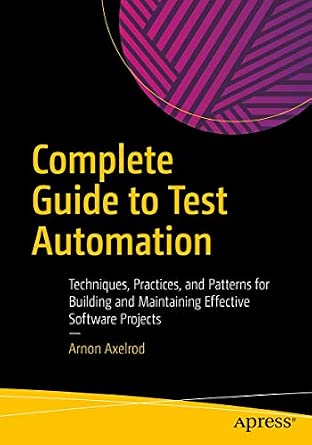
Complete Guide to Test Automation: Techniques, Practices, and Patterns for Building and Maintaining Effective Software Projects
Where most entries in this roundup teach you a tool, this one teaches you how to think about automation — the techniques, practices, and architectural patterns that keep test suites maintainable years after launch. That’s a different job than Web Automation Testing Using Playwright does, and honestly a harder one. Frameworks change; the patterns here — test design, maintainability, reliability — outlast any specific tool. This pick makes the most sense for engineers who’ve already shipped automated tests and watched them rot into flakiness, because that pain is exactly what this book addresses. It’s also one of the few titles usable by both beginners and veterans, though beginners may want a hands-on companion like Automation Testing with Python & Selenium for concrete code. The drawbacks: no pricing transparency, and the description hints at thin worked examples, so expect conceptual depth over copy-paste scripts.
Pros:- Framework-agnostic patterns that survive tool migrations
- Focuses on the maintenance problem most testing books ignore
- Scales from beginners to senior engineers
- Strong foundation for designing test strategy across projects
Cons:- Few concrete code examples relative to hands-on titles
- No price information readily available
- Can feel abstract for readers who learn by building
Best for: QA leads and experienced developers who need sustainable test architecture and maintainable suites rather than another tool tutorial
Not ideal for: Hands-on learners who want step-by-step code exercises — this is strategy-first, not a cookbook
- Format:Book (print/digital)
- Focus:Test automation techniques, practices, and patterns
- Framework specificity:Framework-agnostic
- Skill level:Beginner to experienced
- Primary audience:Developers and QA engineers building test strategies
- Emphasis:Sustainability and maintainability
- Code examples:Limited per description
Our verdict“Buy this once you can automate tests and start asking why they keep breaking — it’s the strategy layer no tool tutorial provides.”
Stop Coding: Learn to Test and Automate Without Coding to Land an Automation Testing Job
This course takes the most contrarian position in the lineup: that you can land an automation testing job without learning to code. Compared with Web Automation Testing Using Playwright or Automation Testing with Python & Selenium, which assume programming comfort, this option targets the exact audience those books exclude — career changers, manual testers, and non-technical professionals who want into automation via codeless tools and recorded workflows. That accessibility is its entire value proposition, and for the right buyer it removes the single biggest barrier to entry. The tradeoffs are worth stating plainly: codeless automation has a career ceiling, since senior automation roles expect scripting, and the course description is vague about duration, format, and which specific tools are taught. If your goal is an entry-level automation role quickly, this is a legitimate on-ramp; if you want to grow into a framework architect, Complete Guide to Test Automation will matter more later.
Pros:- Removes the coding barrier that blocks most automation career changers
- Directly oriented toward landing an automation testing job
- Beginner-friendly with no prerequisites
- Practical, tool-based approach rather than theory
Cons:- Codeless skills carry a real career ceiling in automation engineering
- Vague documentation of course content, duration, and format
- Less credibility with employers than demonstrated scripting ability
Best for: Manual testers and career changers with zero programming background who want the fastest path into an entry-level automation role
Not ideal for: Engineers aiming at senior automation or framework-design roles — those jobs require real coding skills this course skips
- Format:Course
- Prerequisites:No coding required
- Target outcome:Entry-level automation testing job
- Skill level:Absolute beginner
- Primary audience:Non-coders and career changers
- Approach:Codeless automation tools and concepts
- Course duration/format:Not specified
Our verdict“A sensible on-ramp for non-coders chasing a first automation job — just plan to learn scripting eventually.”

How We Picked
I evaluated each entry through the lens a working QA buyer actually uses: tool relevance in 2026, depth of practical examples, coding prerequisites, and whether the material translates into portfolio-worthy projects. Books that teach a single framework deeply outranked broad surveys, because hiring managers increasingly test for specific tool fluency — Playwright, Cypress, or Selenium — rather than general testing knowledge. I also weighted how honestly each entry handles maintenance, flaky tests, and CI integration, since those are where automation projects fail in practice.
The ranking order reflects a progression from most versatile modern skill (Playwright) through AI-augmented and enterprise paths, down to motivational and exam-prep supplements. Price-to-depth ratio separated mid-tier picks: a $25 guide with runnable code beats a $60 book of theory. Finally, I penalized entries that promise job-readiness without framework practice, because that claim repeatedly disappoints buyers in this category.
| QA testing automation tool | Audience Level |
|---|---|
| AI Testing with Python: Build | Intermediate to advanced |
| Python API Automation Testing: | Intermediate |
| Hands-On Automated Testing wit | Intermediate to advanced |
| Automation Testing with Python | Beginner to intermediate |
| Creating An End-To-End Test Fr | Intermediate to advanced |
| Test Automation Fundamentals: | Advanced |
| Ultimate Web Automation Testin | Intermediate to advanced |
| AI-Assisted QA and Software Te | Intermediate to advanced, AI-comfortable |
| Software Testing Unlocked | Beginner, no prior experience needed |
| Ultimate Selenium WebDriver fo | Intermediate to advanced |
| Automation Awesomeness: 260 Ac | — |
| All You Need to Know About Sof | — |
| Web Automation Testing Using P | — |
| Complete Guide to Test Automat | — |
| Stop Coding: Learn to Test and | — |
Factors to Consider When Choosing QA Testing Automation Tools
Choosing among QA automation resources is less about finding the “best” tool and more about matching a tool to your current skill level, target job market, and tolerance for coding. These are the factors that most often decide whether a purchase pays off.Match the Tool to the Job Market You’re Targeting
Before buying anything, scan twenty job postings in your target market and count which frameworks appear. Playwright demand is climbing fastest among product companies, while Selenium still dominates banking, insurance, healthcare, and government contracting because of legacy Java stacks. Cypress holds strong in JavaScript-heavy startups. A common mistake is learning whichever tool a favorite YouTuber promotes, then discovering local employers want something else entirely. If your market splits between two frameworks, buy the deeper book for one and rely on free docs for the second, since cross-framework fluency comes cheaply once you understand one tool well.
Decide Honestly Where You Stand on Coding
The biggest wasted purchase in this category is an advanced framework book bought by someone who cannot yet write a loop. No-code and beginner paths exist for a reason, and buying them first is not a concession — it sequences your learning. That said, be skeptical of any resource claiming coding is permanently unnecessary; AI-assisted testing still requires you to read, debug, and review generated code. My rule of thumb: if you cannot modify a Python function comfortably, start with a beginner guide or no-code book, then graduate. If you can, skip beginner material entirely — it will bore you and teach habits you’ll have to unlearn.
Weight AI Skills as a Layer, Not a Replacement
Every serious QA career conversation in 2026 includes AI, but the resources approach it very differently. Some books teach you to prompt an LLM to generate and maintain tests, while others integrate AI into a traditional pipeline. Both are legitimate, but buyers often mistake AI fluency for testing fundamentals. An AI that writes tests still needs a human who understands test oracles, boundary conditions, and what actually warrants automation. The best purchasing pattern I found pairs one solid framework book with one AI-focused title, rather than expecting a single book to cover both. Budget accordingly — this is the one area where buying two resources genuinely beats buying one.
Prefer Project-Based Over Survey-Style Material
Books structured around a single evolving project — an e-commerce site, an API suite, a full framework build — consistently produce better outcomes than chapter-by-chapter topic surveys. The reason is simple: interviews probe for portfolio work, and a finished project you can demo beats ten half-understood chapters. When a product description mentions runnable code repositories, real application domains, or framework construction from scratch, that is a strong signal. When it lists broad topic coverage without artifacts, expect to do the synthesis work yourself. This distinction mattered more in my ranking than page count or price.
Consider Certification Only If Your Market Rewards It
ISTQB certification divides the industry sharply: enterprise employers in Europe, India, and large consultancies often filter candidates by it, while Silicon Valley-style startups rarely mention it. Certification study guides teach vocabulary and process, not hands-on skill, so they should never be your first or only purchase. If your target employers list the credential, buy the exam guide early and treat it as parallel study alongside a practical framework book. If they don’t, spend the money on deeper automation practice instead. Buyers who skip this market check frequently over-invest in exam prep that hiring managers ignore.
Watch for Currency and Maintenance Realities
Automation tools move quickly, and a book written against a three-year-old framework version can teach APIs that no longer exist. Check publication dates, edition numbers, and whether the author maintains a companion code repository with updates. Playwright and Cypress resources age faster than general testing theory, so freshness matters more for them. A related trap: books that never address flaky tests, parallel execution, or CI pipelines leave you with demos that collapse in real environments. The strongest entries in this category treat maintenance as a first-class topic, and that alone justifies paying a few dollars more.
Frequently Asked Questions
Should I learn Playwright or Selenium first in 2026?
Learn Playwright first if you’re targeting modern web product companies, since it bundles end-to-end, API, accessibility, and visual testing into one framework and its adoption curve is still rising. Choose Selenium first if your local job market is dominated by enterprise Java shops — banking, insurance, and healthcare employers still run massive Selenium suites and hire for it heavily. The transferable concepts (locators, waits, page object patterns) move freely between the two, so your second framework takes a fraction of the time. The real mistake is bouncing between both simultaneously before either clicks. Pick based on job postings in your city, not on which framework has louder advocates online.
Do AI testing books actually help, or is AI testing hype?
AI-assisted testing is genuinely useful but not in the way marketing suggests — it won’t replace your understanding of what to test. The strong entries in this roundup teach you to use LLMs for generating boilerplate test code, converting manual cases into scripts, and summarizing failure patterns, which realistically saves hours per week. What AI can’t do is decide test strategy, identify which edge cases matter, or judge whether a generated test actually validates business logic. If you already understand testing fundamentals, an AI-focused book is a high-return purchase. If you don’t, it will teach you to generate tests you can’t evaluate, which is worse than knowing less.
Can I really get an automation testing job without learning to code?
Honestly, it depends on how you define “coding.” No-code and low-code tools like record-and-playback suites do exist in real workplaces, and some teams hire for them — but those roles are scarcer, pay less, and trap you when the tool hits its limits. The more realistic version of the no-code promise is that AI now lowers the coding bar: you need to read and tweak code, not write it from scratch. Resources aimed at career-changers work best when they treat minimal coding as a ramp rather than a wall. If a book claims coding is entirely unnecessary forever, read that claim skeptically and check whether its student outcomes actually support it.
Is a book still worth buying when frameworks have free documentation?
Free docs tell you what a tool can do; a good book tells you how to structure a project that survives contact with a real codebase. The documentation for Playwright and Cypress is excellent for API reference but thin on architecture decisions — when to use fixtures versus helpers, how to organize page objects at scale, how to eliminate flakiness in CI. Books earn their price by compressing years of practitioner mistakes into structured guidance and complete examples. That said, skip survey-style books that merely rephrase the docs chapter by chapter. Before buying, check whether the book ships runnable code and covers maintenance topics; if it does, it adds value docs can’t match.
Do I need ISTQB certification alongside hands-on automation skills?
Only if your target employers ask for it, and they’re easy to identify — search job listings in your region and see whether the acronym appears. In Germany, the UK, India, and large consultancies, ISTQB credentials often function as an HR filter, and in that case a compliant study guide is a smart parallel purchase. In startup-heavy markets, hiring managers overwhelmingly prefer a GitHub portfolio of working automation projects over any certificate. The two paths aren’t in conflict: the strongest candidates pair one certification with demonstrable framework skills. Just don’t make exam prep your first purchase — hands-on ability is what the certification is meant to validate, not replace.
Conclusion
After comparing all fifteen options, the right choice comes down to who you are today and which job you want next year. For best overall, Hands-On Automated Testing with Playwright delivers the most future-proofed skill set with genuinely modern coverage. The best value pick is Automation Testing with Python & Selenium, which packs practical, portfolio-ready material into an affordably priced package. For best premium, Ultimate Selenium WebDriver for Test Automation justifies its higher cost with domain-specific projects across e-commerce, healthcare, and banking that map directly to enterprise job requirements.
Best for beginners goes to Software Testing Unlocked, which builds foundations before touching automation, while Stop Coding serves career-changers who need results with minimal programming. For specific needs: choose AI-Assisted QA with Claude Code if you’re adding AI to an existing skill set, Test Automation Fundamentals if ISTQB certification gates your market, and Creating An End-To-End Test Framework if you’ve outgrown tutorials and need architecture-level depth. Whatever you pick, buy one, finish it, and build something demonstrable — in this field, a completed project beats a shelf of half-read books every time.
Fall Picks
fall essentials
As an affiliate, we earn on qualifying purchases.