
🔍 Read the full analysis: The Link Between Factory Protests And Bangladesh’s New Wage Board on ThorstenMeyerAI.com

Get business pricing on monitors, keyboards and dev gear
- Business-only prices and quantity discounts
- Tax-exempt purchasing
- Multiple users, one account, clear invoices
TL;DR
Bangladesh named a six-member board to set a new garment-industry minimum wage on Nov. 1, as worker protests disrupted production at 529 factories, according to the factory owners’ association. Workers are demanding 30,000 taka a month; the current minimum is 12,500 taka. Factories reopened the next day, but the board has not announced a meeting date or timetable for a wage decision.
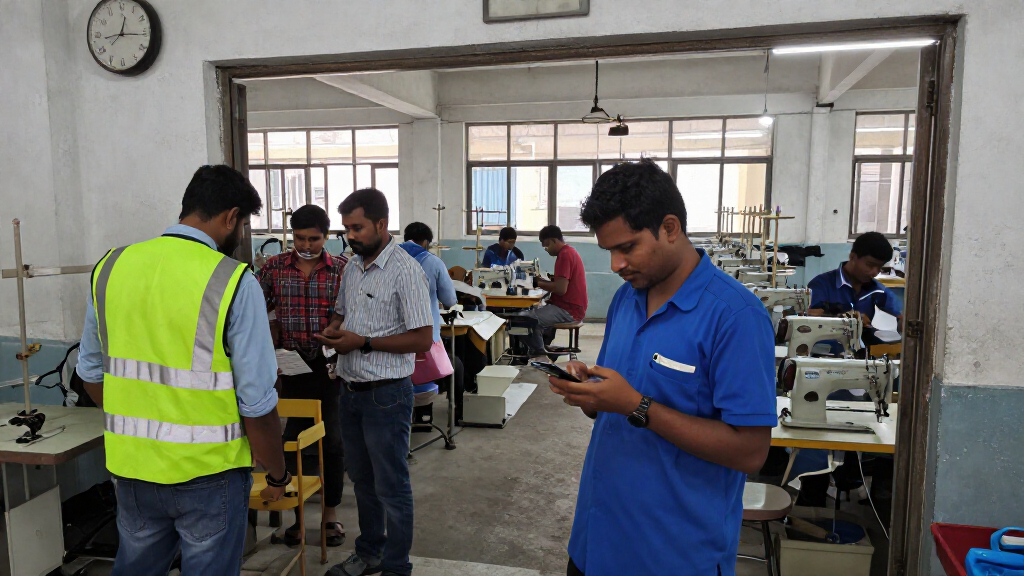
Bangladesh appointed a six-member garment wage board on Nov. 1 as protests over pay disrupted production at 529 factories, according to the Bangladesh Garment Manufacturers and Exporters Association (BGMEA). Workers are seeking a monthly minimum of 30,000 taka, more than twice the current 12,500-taka floor; factories reopened on Monday, Nov. 2, Reuters reported, but owners remained concerned about further unrest.
The BGMEA’s situation report, covering 2,134 factories in five industrial regions, said 987,190 workers left their workplaces on Nov. 1 and operations were disrupted at 529 factories. The Daily Star reported the association’s figures. The disruptions were concentrated in Gazipur and Mymensingh, where the report recorded 276 affected factories and 645,360 workers leaving, and in Savar, Ashulia and Jirani, with 185 factories and 290,205 workers. The report recorded no affected factories in Narayanganj or Chattogram.
The demonstrations followed weeks of labour unrest and escalated over the weekend. Reuters reported road blockades in Dhaka and Gazipur on Sunday, along with police use of tear gas and water cannon after bricks were thrown. Reuters also reported that a police vehicle and a police box were set alight and that Border Guard Bangladesh personnel were deployed. Police said clashes in Ashulia the previous day injured several people, including officers, according to Reuters and Al Jazeera.
The Ministry of Labour and Employment issued notifications establishing the board under the Bangladesh Labour Act, as amended in 2026, The Daily Star reported. It includes a chair, an independent member, two employer representatives and two worker representatives. The board is tasked with working out a minimum wage in consultation with its members. The current wage floor has been in effect since December 2023.
Wages, Orders and Export Risks
The dispute affects a major export industry and the workers who produce clothing for international markets. Labour Minister Ariful Haque Choudhury urged workers to return and warned that extended disruptions could delay export shipments and payments from foreign buyers, Reuters and Al Jazeera reported. Reuters said factories had reopened on Nov. 2, but reported that owners were still bracing for possible further unrest.
The wage dispute also puts pressure on the relationship between factories and the international brands that buy their products. Reuters reported that employers have argued the workers’ demand has no “logical or mathematical basis,” while workers say their current pay does not cover basic living costs. An ILO survey from 2016, cited in the source material, found that Bangladeshi suppliers said only 17% of their customers were willing to reflect minimum-wage increases in the prices they paid. That finding is historical; it does not establish how buyers will respond in this wage round.
Pay negotiations are also taking place amid concern about automation. Research cited by the Centre for Policy Dialogue has warned that automation could put up to 1.22 million garment jobs at risk. That is a projected risk, not a count of jobs already lost, but it adds another pressure to discussions about wages, production costs and the industry’s future workforce.
Products Worth Considering

Bose SoundLink Flex Bluetooth Speaker (2nd Gen), Waterproof, Dustproof, USB‑C, Up to 12 hr Battery, Black

Amazon Kindle Scribe (32GB) with Premium Pen, Tungsten
Apple Watch SE (2nd Gen) GPS 40mm with Starlight Aluminum Case and Sport Band (S/M)
As an affiliate, we earn on qualifying purchases.
A Wage Review After Protests
Workers’ concerns had been visible before the weekend escalation. The Daily Star reported on Oct. 21 that workers had been blocking roads since mid-October. It quoted protester Sharifa Begum saying workers wanted either lower prices for essential goods or higher wages. On Oct. 31, about 30 factories near Ashulia declared holidays, according to Mohammad Mominul Islam Bhuiyan, superintendent of the Ashulia Industrial Police, as reported by Reuters and Al Jazeera.
The workers’ demand of 30,000 taka a month is approximately $243 to $245, according to Reuters. The current minimum is 12,500 taka. Those figures describe the demand and existing wage floor; the new rate has not been set. The 2026 Labour Act amendment shortened the interval for minimum-wage reviews from five years to three, The Daily Star reported, meaning a review was due even without the latest protests.
The board’s members, as reported by The Daily Star and Reuters, are chair Sheikh Ashfaqur Rahman; independent member Professor Mosleh Uddin Ahmed of the University of Dhaka; employer representatives Asif Ayub of the Bangladesh Employers’ Federation and ABM Shamsuddin of BGMEA; and worker representatives Anwar Hossain and Babul Akhter. The ministry’s notifications followed discussions with worker and industry representatives, according to Labour Minister Ariful Haque Choudhury.
“After paying rent, there is very little left for food, our children’s education and other essential expenses.”
— Garment worker Mahin Hossain, speaking to Reuters
The Board’s Timetable Is Unknown
The board’s appointment is confirmed, but no first meeting date or wage-announcement deadline was included in the notifications, The Daily Star reported. It is not yet clear when the board will meet, how it will assess the competing wage positions or when a new wage structure might take effect.
The BGMEA figures document workers leaving workplaces and factories with disrupted operations; they do not describe factories locked by owners. The association’s report is an industry tally, and no independent verification of its total was provided in the source material. It is also not yet clear whether further protests will occur after factories reopened on Nov. 2, or how international buyers will respond to any increase in labour costs.
Negotiations and Factory Operations
The wage board is expected to consult its worker and employer members and work toward a revised minimum wage. The government has not published a timetable, so the next concrete milestone is the board’s first meeting or an announcement of its process. The final rate and its effective date remain undecided.
In the meantime, factory operations and workers’ response to the government’s appeal will be closely watched. Any renewed disruption could affect shipments and payments, the labour minister warned. Whether reopening holds, whether talks narrow the gap between the 30,000-taka demand and the current 12,500-taka minimum, and whether buyers contribute to the cost of a wage increase are all still unresolved.
Key Questions
Why did garment workers protest in Bangladesh?
Workers are seeking a monthly minimum wage of 30,000 taka, saying current pay leaves too little for rent, food, education and other basic expenses. The existing minimum is 12,500 taka.
How many factories were affected?
The BGMEA reported disruptions at 529 of 2,134 factories it covered on Nov. 1, 2026. It also reported that 987,190 workers left their workplaces. These are figures from the factory owners’ association, as reported by The Daily Star.
What is Bangladesh’s new wage board?
It is a six-member panel appointed by the Ministry of Labour and Employment to work out a garment-industry minimum wage in consultation with worker, employer and independent members.
When will the new wage be announced?
No announcement date or first meeting date was included in the ministry notifications, according to The Daily Star. The timetable and the eventual wage rate remain unknown.
Did factories reopen after the protests?
Reuters reported that factories reopened on Nov. 2, 2026. The report said owners remained concerned about further unrest; the longer-term status of operations was not established in the source material.
Source: ThorstenMeyerAI.com