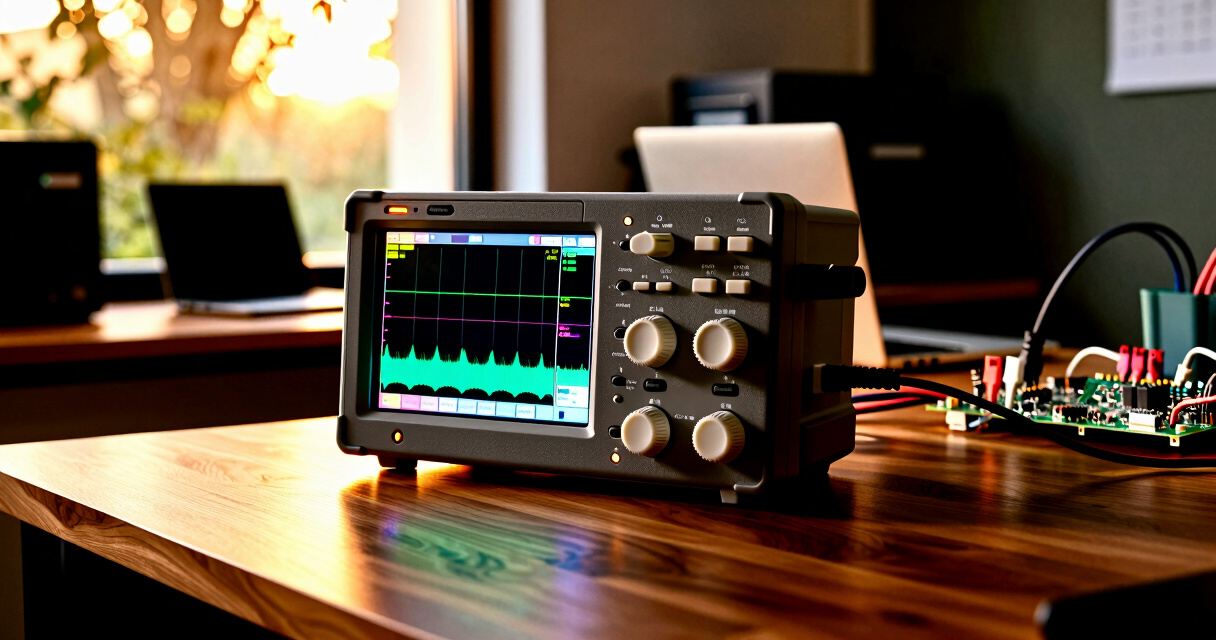

Choosing the best oscilloscope for embedded systems QA requires balancing performance, usability, and value. The Rigol DS1202X-E stands out as the overall top pick thanks to its 200 MHz bandwidth and user-friendly interface, making it suitable for detailed signal analysis in complex embedded projects. The Siglent SDS1202X-E offers similar performance at a slightly lower price, making it a strong contender for cost-conscious professionals. Meanwhile, the UNI-T UPO2204HD excels with its high-definition display and 200 MHz bandwidth, ideal for precise troubleshooting. These choices reflect the main tradeoffs: higher bandwidth and advanced features versus price and ease of use. Continue reading for a full breakdown of each option and what makes them ideal for embedded QA tasks.

Get business pricing on monitors, keyboards and dev gear
- Business-only prices and quantity discounts
- Tax-exempt purchasing
- Multiple users, one account, clear invoices
Key Takeaways
- Higher bandwidth oscilloscopes (200 MHz and above) are better suited to complex embedded systems with fast signals.
- Touchscreen interfaces and high-definition displays improve usability for detailed debugging sessions.
- Mixed signal oscilloscopes with digital channels are valuable for testing integrated digital-analog circuits.
- Portability varies widely; handheld models offer convenience but often lack advanced features needed for thorough embedded testing.
- Price correlates with feature set—more affordable models may omit key functionalities critical for comprehensive QA.




More Details on Our Top Picks
FNIRSI 2C53T Upgraded Handheld Oscilloscope, 50MHz Bandwidth, 3-in-1 Digital Oscilloscope Multimeter with DDS Generator
The FNIRSI 2C53T stands out for its multi-function design, combining oscilloscope, multimeter, and waveform generator in a portable package. Compared with larger bench models like the Rigol DHO804, it sacrifices some bandwidth but offers unmatched mobility and battery-powered operation—ideal for technicians needing quick diagnostics on the go. Its 50MHz bandwidth is sufficient for many embedded testing scenarios, but it falls short for high-frequency signals, limiting its use in RF or high-speed digital circuits. The small 2.8-inch display could challenge detailed waveform analysis, especially when compared to larger screens like the UNI-T UPO2204HD. Still, its rugged high-voltage protection and waveform storage make it a versatile tool for fieldwork. The main tradeoff involves balancing portability with limited bandwidth and display size.
Pros:- Multi-function device combining oscilloscope, multimeter, and signal generator
- Portable with built-in battery and high-voltage protection
- Supports waveform storage and export via Type-C
Cons:- Limited to 50MHz bandwidth, not suitable for RF or high-speed digital signals
- Small display size hampers detailed waveform review
- Battery life may be insufficient for extended field use
Best for: Technicians and hobbyists requiring a compact, multi-functional device for routine embedded diagnostics in the field.
Not ideal for: High-frequency developers or those needing detailed waveform analysis on complex signals, due to limited bandwidth and small display.
- Bandwidth:50 MHz
- Sampling Rate:250 MS/s
- Record Depth:1 Kpts
- Max Voltage:400 V
- Display:2.8 inch LCD
- Battery:3000 mAh, up to 6 hours
Bottom line: This handheld scope is perfect for field engineers and hobbyists who prioritize portability over ultra-high-frequency capabilities.
UNI-T UPO2204HD 12-Bit 2 to 4 Channel High Definition Oscilloscope, 200MHz, 10.1″ Touchscreen
The UNI-T UPO2204HD excels in delivering high-detail signal analysis with its 12-bit sampling and 200MHz bandwidth, making it a strong choice for complex embedded system debugging. Unlike the Siglent SDS1202X-E, which offers a simpler 2-channel setup, the UPO2204HD provides up to 4 channels, allowing more simultaneous signals for troubleshooting multi-signal circuits. Its large 10.1-inch touchscreen enhances usability, but this added complexity can introduce a learning curve for newcomers compared to the more straightforward FNIRSI 2C53T. The deep memory and fast waveform capture rate support detailed long-duration captures, essential for protocol and power integrity analysis. The main tradeoff involves its higher cost and the need for some training to maximize its advanced features.
Pros:- High-resolution 12-bit sampling for detailed signal fidelity
- Up to 4 channels for multi-signal analysis
- Large, intuitive touchscreen display
Cons:- Higher price point making it less accessible for hobbyists
- Complex interface requires some learning curve
- Overkill for simple testing needs
Best for: Embedded system developers and testers who need detailed, multi-channel analysis with protocol decoding in a professional setting.
Not ideal for: Casual hobbyists or those with limited technical experience, due to its complexity and cost.
- Channels:2 to 4
- Bandwidth:200 MHz
- Sample Rate:2.5 GSa/s
- Memory Depth:100 Mpts
- Display:10.1-inch touchscreen
- Protocols Supported:UART, RS-232, RS-422, RS-485, I²C, SPI, CAN, CAN-FD, LIN, FlexRay, SENT, Audio
Bottom line: This scope is best suited for professionals demanding high fidelity and multi-channel capabilities in embedded debugging.
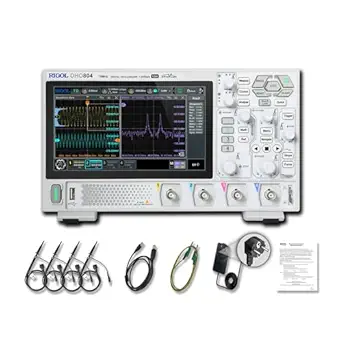
Rigol Digital Oscilloscope DHO804 70 MHz 4-Ch 1.25 GSa/s 12-bit 25 Mpts, 7″ Touchscreen, LAN/USB/HDMI, Web Control, SCPI
The Rigol DHO804 offers a solid balance of bandwidth, channels, and connectivity, making it well-suited for embedded systems troubleshooting involving power integrity and protocol decoding. Its 70MHz bandwidth slightly limits RF applications compared to the UNI-T UPO2204HD, but it compensates with four channels and versatile interfaces like LAN, USB, and HDMI, allowing remote control and easy data sharing. The 7-inch touchscreen simplifies operation, but the device’s complexity may challenge beginners, especially when compared with simpler models like the FNIRSI 2C53T. Its deep memory and SCPI support favor advanced users needing long recordings and scripting. The tradeoff involves balancing its broad feature set with ease of use for less experienced users.
Pros:- Four channels with 70 MHz bandwidth for multi-signal analysis
- Multiple connectivity options including LAN, USB, HDMI
- Web control and SCPI support for automation
Cons:- Limited bandwidth for high-frequency RF signals
- Steep learning curve for beginners unfamiliar with SCPI
- Relatively large and less portable
Best for: Embedded developers and engineers seeking multi-channel analysis with remote control and protocol decoding in a lab environment.
Not ideal for: Hobbyists or field technicians requiring ultra-portable equipment, due to its size and complexity.
- Frequency:70 MHz
- Channels:4
- Sampling Rate:1.25 GSa/s
- Memory Depth:25 Mpts
- Display:7-inch touchscreen
- Connectivity:LAN, USB, HDMI
Bottom line: Ideal for professional embedded system debugging where multi-channel and remote operation are priorities over portability.
Siglent Technologies SDS1202X-E 200 MHz Digital Oscilloscope, 2 Channels
The Siglent SDS1202X-E delivers strong performance with its 200MHz bandwidth and 1 GSa/s sampling rate, making it suitable for analyzing fast digital and power signals in embedded systems. Its 2-channel configuration is ideal for users focusing on single or dual signals, especially when combined with its support for serial protocols like I2C, SPI, UART, and CAN. Unlike the UNI-T UPO2204HD, which offers more channels, the SDS1202X-E excels in scenarios demanding high bandwidth and quick capture of transient events. Its user-friendly interface and support for standard protocols make it accessible for technicians with some experience. The primary compromise involves its limited channels, which may restrict complex multi-signal analysis in more advanced debugging tasks.
Pros:- High bandwidth of 200 MHz for detailed analysis
- Fast sampling rate of 1 GSa/s captures transient events accurately
- Supports common serial protocols for embedded debugging
Cons:- Limited to 2 channels, restricting multi-signal tests
- Requires some experience to fully utilize advanced features
- Less suited for RF applications beyond 200 MHz
Best for: Power and digital signal engineers needing high bandwidth and protocol decoding in embedded environments.
Not ideal for: Users requiring extensive multi-signal analysis or advanced multi-channel testing, due to its 2-channel limitation.
- Frequency:200 MHz
- Channels:2
- Sampling Rate:1 GSa/s
- Record Length:14 Mpts
- Serial Bus Support:I2C, SPI, UART, RS232, CAN, LIN
- Country of Origin:China
Bottom line: This scope offers a high-performance choice for professionals focused on high-speed digital and power signals in embedded systems.
FNIRSI DSO152 Handheld Digital Oscilloscope – 2.8″ TFT, 200KHz Bandwidth, 2.5MS/s, Portable
The FNIRSI DSO152 is a highly portable option, delivering basic waveform analysis with 200KHz bandwidth and 2.5MS/s sampling. Its simple interface and auto-setup make it accessible for beginners or quick field checks, but it cannot handle high-frequency signals or complex waveform nuances as effectively as the Rigol DS1102Z-E. Its small 2.8-inch display limits detailed review, which might hinder troubleshooting of intricate embedded signals. The long battery life and compact design make it a practical choice for educational environments and basic maintenance tasks, but serious embedded development or high-speed digital work should look elsewhere. The main tradeoff involves sacrificing bandwidth and display size for portability and ease of use.
Pros:- Very portable and lightweight for field use
- Easy to operate with auto-setup features
- Supports high voltage measurements up to 800 VPP
Cons:- Limited bandwidth of 200 KHz restricts high-frequency signals
- Small display size limits detailed waveform viewing
- Battery life may not support prolonged use
Best for: Students, hobbyists, and technicians performing simple troubleshooting or educational demonstrations in the field.
Not ideal for: Advanced engineers or professionals needing high bandwidth and detailed waveform analysis for complex embedded systems.
- Display:2.8-inch TFT LCD
- Bandwidth:200 KHz
- Sampling Rate:2.5 MS/s
- Voltage Measurement:Up to 800 VPP
- Battery:1000 mAh, approx. 4 hours
- Interface:Type-C
Bottom line: This scope provides a straightforward, affordable solution for basic embedded diagnostics and educational purposes.
Rigol Digital Oscilloscope DHO924S 250 MHz 4-Channel with 16 Digital Inputs, 1.25 GSa/s, 12-bit, 50 Mpts, UltraAcquire, Bode Plot, LAN/USB/HDMI, SCPI
The Rigol DHO924S stands out for its impressive 250 MHz bandwidth combined with a high 1.25 GSa/s sampling rate, delivering detailed waveforms essential for embedded systems QA. Its 12-bit resolution surpasses many competitors like the DS1102Z-E, providing clearer signals in complex debugging scenarios. The inclusion of features like UltraAcquire and Bode plot analysis makes it suitable for power and communication system testing, though it requires a separate digital probe (PLA2216) for digital channels, adding to setup complexity. Compared with the DS1054Z, it offers deeper analysis capabilities at a higher cost, but the setup is less user-friendly for beginners. This scope is best for QA teams needing comprehensive, high-fidelity analysis with automation support, and less so for those seeking a budget-friendly or portable solution.
Pros:- 250 MHz bandwidth with high sampling rate for detailed signal analysis
- Deep 50 Mpts memory for capturing long waveforms
- Multiple connectivity options support remote control and automation
- Advanced features like UltraAcquire and Bode plot analysis
Cons:- Requires a separate digital probe, increasing setup expense
- Complex interface may challenge beginners
- Limited to specific professional applications, less portable
Best for: Embedded systems QA professionals who require high-resolution, multi-channel analysis and advanced testing features.
Not ideal for: Hobbyists or small-scale developers with limited budgets or simpler testing needs, due to its complexity and cost.
- Frequency Range:250 MHz
- Channels:4 analog, 16 digital
- Sampling Rate:1.25 GSa/s
- Resolution:12-bit
- Memory Depth:50 Mpts
- Display:7-inch 1024×600 touch screen
- Connectivity:USB, LAN, HDMI
- Additional Features:Bode plot, SCPI, UltraAcquire
Bottom line: Ideal for QA teams needing high-fidelity, multi-channel analysis with automation, but less suited for beginners or budget-conscious users.
Rigol DS1102Z-E 100 MHz Digital Oscilloscope, 2 Channels, 1 GSa/s, 24 Mpts Memory, 7″ Display
The Rigol DS1102Z-E is a solid choice for those entering embedded systems QA, offering 100 MHz bandwidth paired with a 1 GSa/s sampling rate, which is enough for most digital signals in low to moderate frequency applications. Its 24 Mpts memory allows for detailed long captures, and its serial decoding features for UART, I2C, and SPI provide valuable troubleshooting tools. While it doesn’t match the higher bandwidth or resolution of models like the DHO924S, its affordability and user-friendly interface make it attractive for small teams or startups. Compared to the DS1054Z, it has less bandwidth but compensates with a higher sample rate and a more straightforward setup. This scope is best suited for educational institutions, hobbyists, or small QA teams focused on digital and power electronics testing on a budget.
Pros:- 100 MHz bandwidth with a high 1 GSa/s sample rate
- Deep 24 Mpts memory for long waveform recordings
- Supports multiple serial protocols for debugging
- User-friendly interface suitable for learners
Cons:- Limited to 100 MHz bandwidth, restricting high-frequency testing
- Basic resolution may miss fine signal details compared to higher-end models
- Display resolution is modest for detailed analysis
Best for: Beginners and small teams needing reliable, high-speed waveform capture without advanced high-frequency requirements.
Not ideal for: Power engineers or professionals testing signals above 100 MHz, as the bandwidth may be limiting.
- Frequency:100 MHz
- Channels:2
- Sample Rate:1 GSa/s
- Memory:24 Mpts
- Display:7-inch WVGA (800×480)
- Waveform Capture Rate:30,000 wfms/s
- Frame Recording:60,000 frames
Bottom line: A cost-effective scope ideal for entry-level embedded QA and educational purposes, where high bandwidth is not critical.
Hantek DSO2D15 Digital Storage Oscilloscope, 150MHz Bandwidth, 2 Channels, 1GSa/s, 8M Memory, Waveform Generator, High Voltage Probe
The Hantek DSO2D15 offers a balanced mix of performance and affordability, with 150 MHz bandwidth and a 1 GSa/s sampling rate, making it a practical choice for embedded systems QA and educational environments. Its included waveform generator and high voltage probe expand testing options, especially for student labs or troubleshooting power electronics. Compared with the DS1102Z-E, it provides slightly higher bandwidth but with less memory depth, which can limit long-record analysis. Its heavier package may affect portability, but its price makes it accessible for budget-conscious users. This scope is most suitable for educational settings, small-scale embedded projects, or initial debugging efforts where convenience and value matter more than high-end performance.
Pros:- 150 MHz bandwidth with 1 GSa/s sampling rate
- Includes waveform generator and high voltage probe
- Affordable price for versatile testing
- Supports multiple trigger modes and protocol decoding
Cons:- Limited memory depth at 8 Mpts for long recordings
- Heavier, potentially less portable for field use
- Bandwidth may be insufficient for high-frequency RF testing
Best for: Educational institutions, students, and small embedded projects needing versatile features at a lower cost.
Not ideal for: High-frequency power engineers or professionals requiring detailed high-speed analysis beyond 150 MHz.
- Bandwidth:150 MHz
- Channels:2
- Sample Rate:1 GSa/s
- Memory Depth:8 Mpts
- Waveform Generator:Yes
- High Voltage Probe:Included
Bottom line: A versatile, budget-friendly scope suited for educational and basic embedded applications, with some tradeoffs in memory depth and portability.
Rigol DS1054Z 50 MHz 4-Channel Digital Oscilloscope with UltraVision Display
The Rigol DS1054Z remains a popular choice for embedded QA with its four channels and 50 MHz bandwidth, offering a good balance of features for general debugging. Its 1 GSa/s sample rate and up to 24 Mpts memory allow for detailed signal captures, comparable to higher-end models like the DHO924S but on a more accessible scale. Its support for serial decoding (UART, I2C, SPI) makes it suitable for troubleshooting digital circuits and embedded protocols. The display, though modest at 7 inches, provides clear visualization, but its resolution may limit detailed analysis of complex waveforms. Compared to the DS1102Z-E, it provides similar functionality with a slight decrease in bandwidth but remains a staple for teaching and hobbyist debugging.
Pros:- Four channels for multi-signal analysis
- Supports serial decoding for common protocols
- High waveform capture rate for detailed recordings
- Affordable and reliable for educational use
Cons:- Limited 50 MHz bandwidth for high-frequency signals
- Basic display resolution limits detailed analysis
- Some features require familiarity with complex interface
Best for: Electronics educators, hobbyists, and small development teams focusing on multi-channel embedded debugging with a limited budget.
Not ideal for: High-frequency RF or power electronics testing where 50 MHz bandwidth is insufficient for accurate analysis.
- Frequency:50 MHz
- Channels:4
- Sample Rate:1 GSa/s
- Memory Depth:24 Mpts
- Display:7-inch 800×480
- Waveform Capture Rate:30,000 wfms/s
- Serial Protocols:UART, I2C, SPI
Bottom line: A dependable multi-channel scope for educational and hobbyist embedded debugging, balancing cost with core features.
Rigol MSO5104 Mixed Signal Oscilloscope 100 MHz, 4 Analog + 16 Digital Channels, 8 GSa/s, 256 Intensity, 450,000 Frames Recording, 9″ Touchscreen, Web Control
The Rigol MSO5104 offers a compelling mix of 100 MHz bandwidth and a remarkable 8 GSa/s sample rate, making it suitable for complex embedded system debugging involving both analog and digital signals. Its 16 digital inputs paired with 4 analog channels allow comprehensive mixed-signal analysis, an advantage over single-signal scopes like the DS1054Z. The extensive waveform and frame recording capabilities support deep troubleshooting, while the 9-inch touchscreen simplifies operation. Compared with the DHO924S, it sacrifices some bandwidth for a higher sampling rate and integrated digital channels, but this makes it more versatile for modern embedded QA. This scope best fits teams that require detailed mixed-signal analysis and remote operation, though its higher cost and complexity might overwhelm casual users.
Pros:- 8 GSa/s sampling rate for precise signal timing
- 16 digital channels plus 4 analog for mixed-signal analysis
- Large 9-inch touchscreen for easy operation
- Supports extensive waveform and frame recording
Cons:- Higher cost compared to simpler oscilloscopes
- Requires understanding of mixed-signal analysis
- Limited bandwidth may restrict high-frequency RF testing
Best for: Embedded QA teams needing high-speed mixed-signal analysis and remote control features for complex debugging.
Not ideal for: Small teams or hobbyists with limited budgets or primary focus on high-frequency RF testing, where bandwidth is more critical.
- Frequency:100 MHz
- Channels:4 analog + 16 digital
- Max Sample Rate:8 GSa/s
- Memory Depth:100 Mpts
- Display:9-inch touchscreen
- Waveform Capture Rate:≥500,000 wfms/s
- Recording Frames:450,000
Bottom line: Designed for advanced embedded debugging and mixed-signal analysis, ideal for professional QA teams but less suited for basic or budget applications.
FNIRSI 2D15P 100MHz Digital Oscilloscope Multimeter with DDS Signal Generator and Touch Screen
The FNIRSI 2D15P stands out for combining multiple testing functions into a single, portable device, making it ideal for field technicians who need versatility without carrying separate tools. Its 100 MHz bandwidth and 500 MS/s sampling rate provide detailed signal capture suitable for embedded systems diagnostics, but it falls short for high-frequency applications exceeding 100 MHz. Compared to the Rigol DS1104Z-S Plus, which offers more channels and higher memory, this device prioritizes portability and ease of use over sheer analysis depth. The touchscreen interface simplifies operation, though the learning curve for its advanced features might challenge beginners. Its long battery life supports extended use in the field, but the limited bandwidth might restrict use in high-speed digital or RF environments. This pick makes the most sense for embedded engineers who value mobility and multi-functionality in a compact form.Pros:- Integrated oscilloscope, multimeter, and DDS signal generator in one device
- High sampling rate and bandwidth enable detailed signal analysis
- Intuitive 4.3-inch touchscreen for straightforward operation
Cons:- Limited to 100 MHz bandwidth, not suitable for high-frequency RF or high-speed digital signals
- Complex features may require time to master, especially for beginners
Best for: Field technicians and embedded systems engineers needing a portable, multi-functional testing device
Not ideal for: High-frequency RF engineers or lab-based researchers requiring bandwidths above 100 MHz and extensive channel options
- Bandwidth:100 MHz
- Sampling Rate:500 MS/s
- TRMS Count:19,999
- Display:4.3-inch IPS touchscreen
- Waveform Types:9
- Memory Depths:10 K / 100 K / 1 M
- DDS Frequency:10 MHz
- Battery:5000 mAh lithium-ion
Bottom line: This device is best suited for embedded professionals who need a portable, multi-function tool for general diagnostics and signal analysis in the field.
Rigol DS1104Z-S Plus 100 MHz Digital Oscilloscope with 4 Channels and 16 Digital Channels
The Rigol DS1104Z-S Plus earns its spot by offering deep memory and a high waveform capture rate, making it ideal for embedded systems testing where complex signals and digital logic are prevalent. Its 100 MHz bandwidth is comparable to the FNIRSI 2D15P, but with the added advantage of 4 analog channels and 16 digital channels, enabling detailed digital-analog mixed signal analysis. Unlike the FNIRSI, which focuses on portability and all-in-one functionality, the Rigol’s design suits lab environments needing extensive signal capture and analysis capabilities. The included software bundle and features like UltraVision enhance usability, but its higher price point and complexity might overwhelm casual or beginner users. This scope makes the most sense for engineers working on intricate embedded projects that demand detailed waveform and digital logic analysis.Pros:- High waveform capture rate up to 30,000 wfms/s for detailed signals
- Large 24 Mpts memory supports complex, long-duration captures
- Includes comprehensive software bundle for advanced analysis
Cons:- Limited bandwidth of 100 MHz may restrict high-frequency testing
- Complex interface can be daunting for beginners, requiring some learning curve
Best for: Embedded systems designers and digital engineers requiring comprehensive mixed-signal testing
Not ideal for: Field technicians or hobbyists seeking portable, straightforward tools for simple diagnostics
- Bandwidth:100 MHz
- Channels:4 analog, 16 digital
- Signal Source Bandwidth:25 MHz
- Memory:24 Mpts
- Waveform Capture Rate:up to 30,000 wfms/s
- Features:Built-in software bundle, Digital Logic Connector, UltraVision
Bottom line: This scope is better suited for embedded professionals who need detailed, high-volume digital and analog signal analysis in the lab.
How We Picked
Each product was evaluated based on performance, build quality, usability, and value for embedded systems QA. Priority was given to bandwidth, sample rate, and channel count, as these directly impact the ability to analyze high-speed signals and complex digital signals. Ease of use, display quality, and connectivity options also played a role in ranking, ensuring the tools are practical in real-world QA environments. We aimed to include a range of options from budget-friendly to premium, ensuring that different buyer needs—whether for professional labs or field testing—are met. The final list reflects a balance between technical capability and user experience, highlighting which oscilloscopes excel in embedded applications versus those better suited for general electronics work.Factors to Consider When Choosing Best Oscilloscope For Embedded Systems Qa
Selecting the right oscilloscope for embedded systems QA involves understanding several key factors that influence usability, accuracy, and overall value. Beyond raw specs, how an oscilloscope interfaces with digital and analog signals, its reliability in demanding testing environments, and ease of setup can make a significant difference. Considering these factors carefully helps avoid common pitfalls like overspending on unnecessary features or choosing models that lack essential capabilities for embedded testing.Bandwidth and Sample Rate
Focus on the bandwidth and analog sample rate because these determine the maximum frequency signals the scope can accurately measure. For embedded systems, signals often include high-frequency digital pulses and analog signals, so a scope with at least 100 MHz bandwidth and a 1 GSa/s sample rate is recommended. Higher specs improve signal fidelity and help catch transient glitches, but they also come with increased cost and complexity. Balancing these specs against your typical testing needs ensures you don’t pay for unnecessary power or miss critical details.
Channel Count and Digital Inputs
The number of channels influences how many signals you can observe simultaneously, which is critical when debugging complex embedded circuits with multiple buses. Digital inputs or mixed-signal capabilities add further value by enabling integrated digital and analog analysis. However, more channels and digital features often increase cost and complexity. Buyers should match channel count to their specific circuit design—overbuying can lead to unnecessary expense, while underbuying risks missing correlated signal issues.
Usability and Display
An intuitive user interface, ideally with a touchscreen, reduces setup time and improves signal interpretation, especially during detailed debugging. High-resolution displays provide clearer waveforms, making it easier to spot subtle issues. However, overly complicated menus or small screens can hinder productivity, particularly in fast-paced QA environments. Prioritize models with straightforward controls and good display quality to streamline troubleshooting processes without sacrificing critical features.
Connectivity and Data Management
Modern oscilloscopes should offer versatile connectivity options such as LAN, USB, and HDMI to facilitate data sharing, remote control, and integration into test setups. These features are especially useful for embedded systems QA, where data logging and remote debugging are common. Keep in mind that more connectivity options can increase cost, so consider what’s essential for your workflow and avoid paying for unused features. Reliable firmware and SCPI compatibility also ensure long-term usability and integration with automation tools.
Portability and Power
Deciding between portable handheld models and benchtop oscilloscopes depends on your testing environment. Handheld devices offer convenience for field testing, but often lack the advanced features of larger scopes. Conversely, benchtop models provide more comprehensive analysis capabilities but are less flexible for on-the-go troubleshooting. Evaluate your typical testing locations and whether portability or power and expandability are more critical for your QA needs.
Frequently Asked Questions
Is a higher bandwidth scope always better for embedded systems QA?
Not necessarily. While higher bandwidth scopes can analyze faster signals more accurately, many embedded systems operate at lower frequencies where a 100-200 MHz scope suffices. Choosing a scope with excessive bandwidth can lead to unnecessary expense and complexity, especially if your signals are well within lower frequency ranges. The key is matching the scope’s bandwidth to your specific signal requirements—overspending on unnecessary power can be avoided with careful consideration.
How important is a digital or mixed-signal oscilloscope for embedded QA?
Digital or mixed-signal oscilloscopes are highly valuable because they allow simultaneous analysis of analog and digital signals, which is common in embedded systems. They simplify debugging by providing digital channels that can trigger on specific bus activity or decode protocols. However, they tend to be more expensive and complex, so if your QA work involves primarily analog signals or simple digital checks, a standard scope might suffice. For comprehensive embedded testing, investing in mixed-signal capabilities often pays off.
Should I prioritize portability over advanced features?
This depends on your testing environment. Portable handheld oscilloscopes are excellent for fieldwork and quick diagnostics, but they often lack the advanced bandwidth, digital channels, or large displays found in benchtop models. If most of your QA occurs in a lab or controlled environment, a full-featured benchtop scope provides better signal analysis capabilities. Conversely, if mobility is critical, choosing a portable model with sufficient specs ensures you don’t compromise on essential features.
What is the significance of connectivity options in an oscilloscope?
Connectivity options such as LAN, USB, and HDMI are vital for data sharing, remote control, and integration into automated testing setups. They streamline workflows by allowing easy data export and remote troubleshooting, which is especially useful in embedded systems QA where large datasets and continuous monitoring are common. An oscilloscope lacking these features may be less flexible, requiring manual recording and limiting automation potential, which can slow down testing cycles and reduce efficiency.
How much should I spend on an oscilloscope for embedded QA?
The right budget depends on your specific needs, but generally, investing in a scope with at least 100-200 MHz bandwidth, 1 GSa/s sample rate, and multiple channels is wise for reliable embedded testing. Basic models under $500 may suffice for simple tasks, but they often lack digital channels, high sampling rates, or advanced triggering. Higher-end models costing $1,000 or more provide detailed analysis tools, better build quality, and future-proofing, which can save time and reduce frustration in demanding QA environments. Evaluate your current and projected needs carefully to avoid overpaying or under-equipping your testing toolkit.
Conclusion
For those seeking the best overall performance, the Rigol DS1202X-E offers a balanced combination of high bandwidth, user-friendly design, and reliable features, making it suitable for most embedded QA tasks. Budget-conscious testers will find the Siglent SDS1202X-E provides excellent value without sacrificing critical capabilities. Beginners or those testing simpler circuits should consider the portable FNIRSI DSO152, which offers basic functionality in a compact form. For advanced users requiring integrated digital analysis, the Rigol MSO5104 stands out as a premium choice with extensive digital channels and automation features. Tailor your selection based on whether your priority is performance, portability, or budget to get the best fit for your embedded systems QA efforts.Halloween Picks
halloween
As an affiliate, we earn on qualifying purchases.