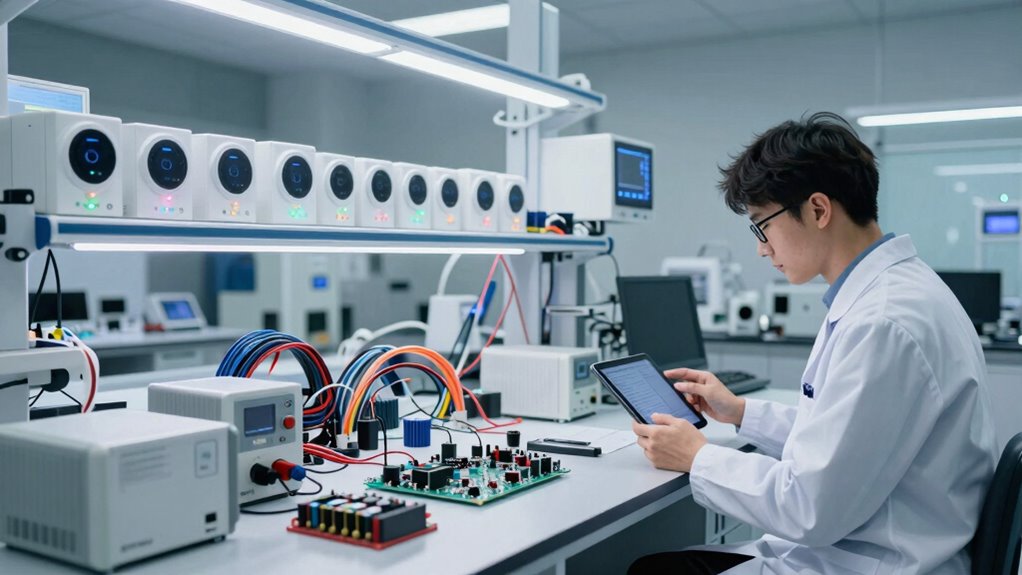

To prevent random failures in IoT testing, you need a well-designed lab that replicates real-world conditions. Set up diverse wireless protocols, environmental factors, and network variability to mimic actual device use. Automate tests for early bug detection and analyze data to identify flaws. Avoid common setup mistakes like insecure networks or unstable power. As your device inventory grows, scale and maintain your environment for long-term reliability. Explore further to learn how to build a resilient testing ecosystem.

Get business pricing on monitors, keyboards and dev gear
- Business-only prices and quantity discounts
- Tax-exempt purchasing
- Multiple users, one account, clear invoices
Key Takeaways
- Implement a comprehensive, well-designed network infrastructure with reliable power and secure communication protocols to ensure consistent device operation.
- Use real-world simulation tools that replicate environmental factors, interference, and network variability for accurate testing.
- Automate testing processes, including firmware updates and performance monitoring, to detect issues early and reduce human error.
- Regularly calibrate and maintain hardware components, monitoring device performance over time to prevent unpredictable failures.
- Incorporate data analysis and visualization to identify root causes quickly and address vulnerabilities proactively.
As an affiliate, we earn on qualifying purchases.
Common Challenges in IoT Testing and How a Proper Lab Helps
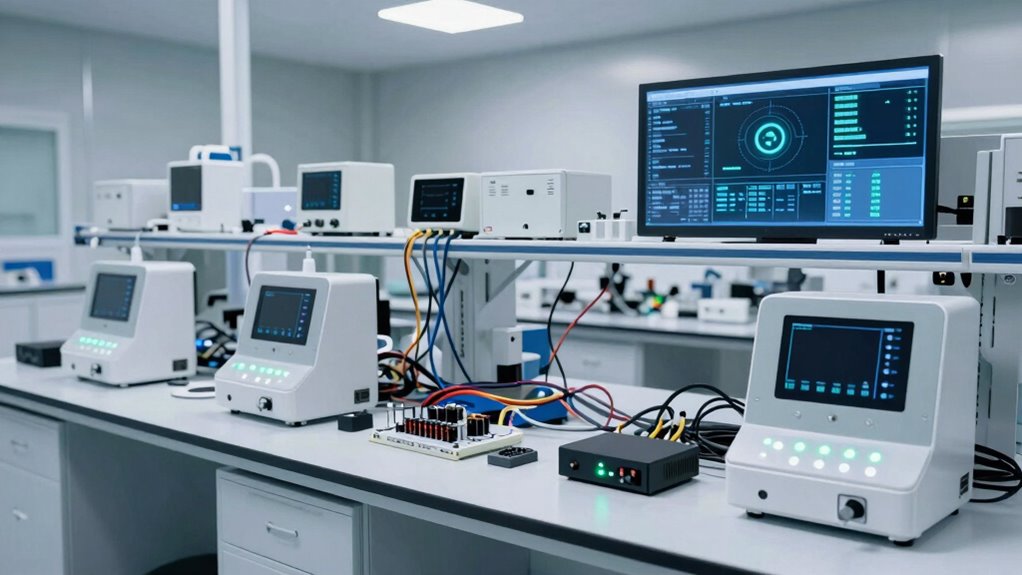
Testing IoT devices presents unique challenges because of their complexity and interconnected nature. You need to guarantee that wireless protocols work seamlessly across diverse environments, which can be tricky due to interference and signal variations. Data encryption adds another layer of difficulty, as you must verify that sensitive information remains protected without impacting performance. Without a proper lab setup, these issues can lead to unpredictable failures and security vulnerabilities. A dedicated lab provides controlled conditions for testing different wireless protocols, simulating real-world scenarios. It also allows you to validate encryption implementations thoroughly. Additionally, high refresh rates can enhance the performance of IoT devices in real-time applications. By replicating various network environments, your testing becomes more reliable, reducing the risk of failures once devices go live. This setup is essential for delivering secure, robust IoT solutions. Additionally, incorporating natural light in your lab space can enhance your focus and productivity, further supporting the testing process. Exploring new frontiers in digital content can enhance your understanding of the complexities involved in IoT research.
As an affiliate, we earn on qualifying purchases.
Essential Components of an Effective IoT Testing Environment
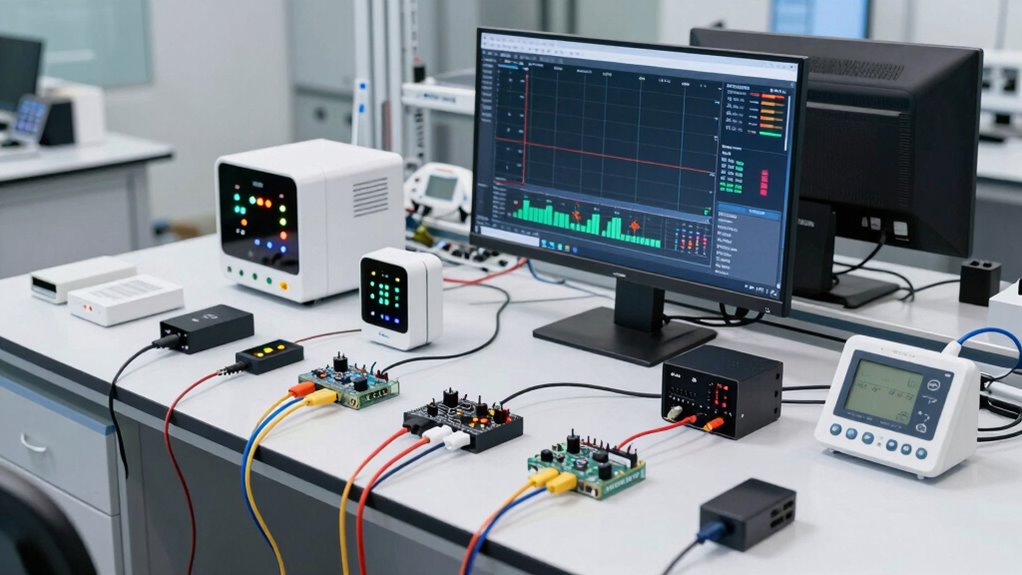
Creating an effective IoT testing environment requires carefully selecting key components that guarantee thorough and reliable evaluations. First, guarantee robust smart device integration, so all devices communicate seamlessly, mimicking real-world interactions. A well-designed network setup, including routers and switches, supports consistent connectivity and data flow. Equally important is implementing strong data security measures to protect sensitive information during testing. Use secure protocols, encryption, and access controls to prevent breaches and unauthorized access. Additionally, include versatile testing tools and hardware to simulate various device scenarios. These elements work together to create a controlled, realistic environment that helps identify vulnerabilities and performance issues early. By focusing on smart device integration and data security, you set the foundation for reliable, secure IoT testing. Furthermore, incorporating template compatibility testing ensures that all devices and software work cohesively, enhancing the overall effectiveness of your testing procedures.
IoT environmental simulation equipment
As an affiliate, we earn on qualifying purchases.
As an affiliate, we earn on qualifying purchases.
Simulating Real-World Conditions for Accurate IoT Test Results

To obtain accurate IoT test results, it’s crucial to replicate real-world conditions as closely as possible. This involves mimicking factors like network variability, device mobility, and environmental influences. For example, you should:
- Test across multiple wireless protocols to ensure compatibility and performance
- Simulate fluctuating signal strengths and interference sources
- Schedule firmware updates during test runs to evaluate update processes under normal conditions
- Incorporate real-world latency and packet loss scenarios to assess device resilience
automated firmware testing tools
As an affiliate, we earn on qualifying purchases.
As an affiliate, we earn on qualifying purchases.
Automating IoT Tests to Detect Bugs Early

Automating IoT tests allows you to catch bugs early in the development process, saving time and reducing costs. By implementing automated testing, you guarantee consistent checks for vulnerabilities in IoT security, preventing potential breaches before deployment. Automated tests also streamline cloud integration, verifying data flows, synchronization, and communication between devices and cloud platforms. This proactive approach helps identify issues related to device firmware, connectivity, and security protocols quickly. You can set up continuous testing pipelines to run tests after each change, ensuring ongoing reliability. Automation enhances your ability to detect bugs early, especially in complex IoT ecosystems where manual testing might overlook subtle security flaws or integration errors. Ultimately, it boosts your confidence in deploying robust, secure, and well-integrated IoT solutions. Supporting caregiver emotional health is crucial for maintaining focus and efficiency in such demanding environments. Additionally, understanding LPGA milestones can inspire innovation and resilience in technology development.
Using Network Emulators to Replicate Diverse Connectivity Scenarios

Automated testing helps identify bugs early, but ensuring your IoT devices perform reliably across different network conditions requires more than just code checks. Network emulators are essential tools for this purpose. They let you mimic real-world scenarios like fluctuating network latency and packet loss, helping you pinpoint potential failures. By simulating varied connectivity, you can observe how your devices respond under stress, ensuring robustness. Use network emulators to:
- Test device behavior during high latency periods
- Simulate packet loss to evaluate data integrity
- Recreate unstable network conditions for resilience checks
- Assess recovery times after connection drops
This approach gives you control over testing environments, helping you identify issues before deployment and improve your IoT system’s reliability across diverse network scenarios.
Testing Power Consumption and Environmental Limits of IoT Devices

To guarantee your IoT devices can handle real-world conditions, you need to accurately measure power consumption using specialized techniques. Simulating environmental factors like temperature and humidity helps reveal how your device performs under stress. Analyzing durability ensures your device remains reliable over time, even in challenging environments. Additionally, ensuring proper pet microchipping can help enhance safety and security, similar to how robust testing safeguards your IoT devices. Furthermore, maintaining indoor air quality is crucial, as it can significantly affect the performance and reliability of electronic devices in enclosed spaces. Utilizing appropriate straining techniques can help ensure that your devices are free from contaminants that might affect their operation. Moreover, understanding the importance of gelato quality can parallel the need for consistent performance in technology, as both require attention to detail and adherence to standards. Ultimately, incorporating ethical testing practices in your development process fosters a commitment to quality and consumer trust.
Power Usage Measurement Techniques
Ever wondered how to accurately measure the power consumption of your IoT devices? Precise measurement is key to improving power optimization and ensuring energy efficiency. To do this effectively, you should:
- Use a high-precision power analyzer that measures current and voltage in real-time
- Implement shunt resistors for detailed current sensing during different device states
- Log data over extended periods to identify power patterns and fluctuations
- Test under various operational loads to simulate real-world conditions
These techniques help you pinpoint energy drains and optimize device performance. Accurate power measurements allow you to fine-tune your IoT device’s power usage, reducing energy waste and enhancing longevity. This process supports reliable operation and sustainable device design. Additionally, consider incorporating eco-friendly practices to further enhance the efficiency and sustainability of your IoT solutions.
Simulating Environmental Conditions
Accurately measuring power consumption under real-world conditions requires more than just precise instruments; it demands the ability to simulate diverse environmental factors your IoT device will encounter. You need to create controlled settings that mimic temperature fluctuations, humidity levels, and exposure to dust or water. Using sensor calibration, you guarantee the environment’s conditions are accurate and repeatable, helping your tests yield reliable data. Data logging plays a crucial role here, capturing real-time responses of the device under different environmental stresses. By systematically adjusting these variables, you can observe how your IoT device performs under extreme conditions, guaranteeing it maintains functionality without excess power drain. This approach helps identify vulnerabilities and optimize your device’s resilience before deployment. Additionally, incorporating home improvement fundamentals into your testing setup can enhance durability and performance insights.
Analyzing Device Durability
Testing the durability of your IoT device involves pushing it to its limits to guarantee it can withstand both power demands and environmental stresses. You need to evaluate its power consumption to predict device lifespan accurately. Environmental testing reveals how materials degrade over time and under extreme conditions. Consider these key aspects:
- Measure power draw during typical and peak operation.
- Simulate temperature, humidity, and vibration extremes.
- Assess material degradation after prolonged exposure.
- Track device performance over extended cycles. Regular veterinary visits can also provide insights into preventive measures that prolong device longevity. Incorporating high-quality components in your IoT design can significantly enhance overall reliability.
Incorporating inclusive casting in testing protocols can help ensure that devices are designed to meet diverse user needs. Additionally, understanding how smart locks integrate into a secure environment can inform the durability requirements for IoT devices.
Analyzing Test Data to Find and Fix IoT Device Flaws
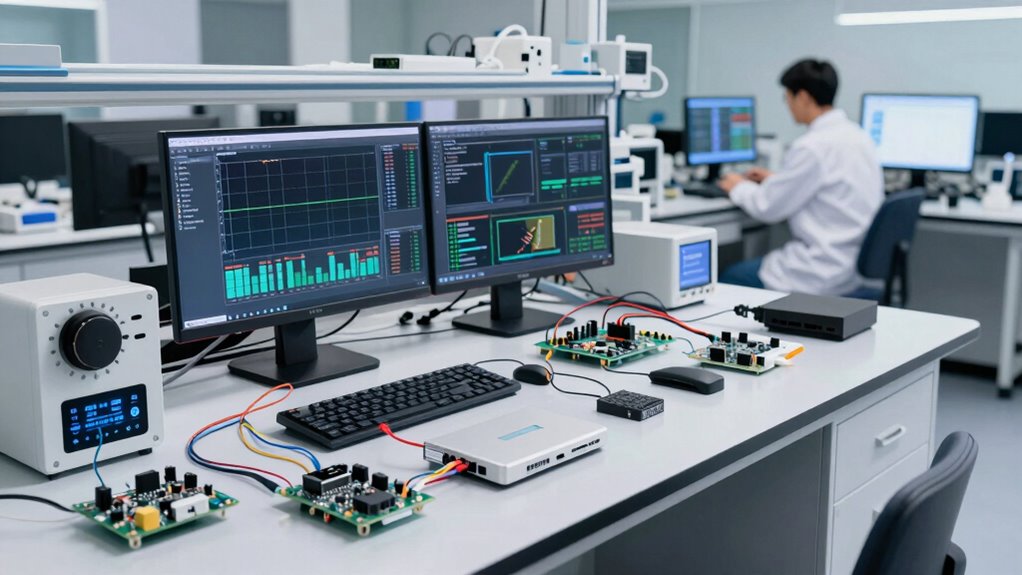
Analyzing test data effectively is essential for identifying and resolving flaws in IoT devices. You should leverage data visualization to spot patterns and trends quickly, making complex data easier to interpret. Visual tools help you pinpoint areas where devices behave unexpectedly or deviate from normal operation. Anomaly detection techniques are vital for uncovering irregularities that might indicate underlying issues. By setting thresholds and monitoring real-time data, you can catch faults early before they escalate. Focus on correlating different data points to identify root causes of failures. This systematic analysis allows you to prioritize fixes based on severity and frequency. Ultimately, thorough data analysis streamlines problem-solving, enhances device reliability, and reduces troubleshooting time, ensuring your IoT ecosystem remains robust and fault-free. Incorporating Bosu balance training can also improve your team’s focus and motivation during testing sessions.
Avoiding the Most Common IoT Lab Setup Mistakes
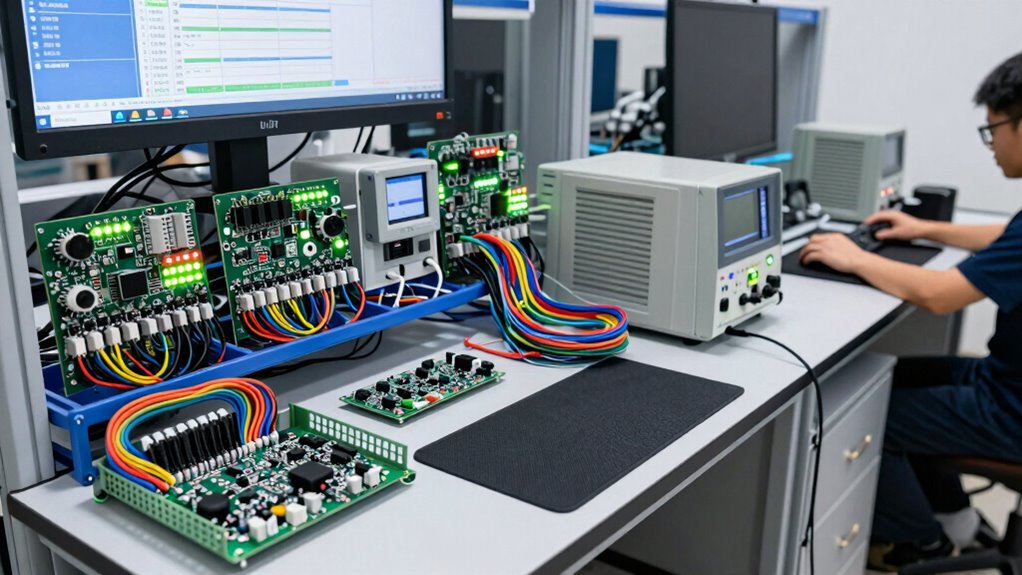
When setting up your IoT lab, make certain you’re managing power properly to prevent unexpected shutdowns or damage to devices. Additionally, implementing best practices can help ensure your power management is effective. You also need to guarantee network connections are secure to protect your data and devices from potential threats. Failing to address these common issues can lead to inaccurate test results and security vulnerabilities. Additionally, ensuring that your cabling solutions are properly installed can significantly reduce the risk of connectivity issues during testing. Incorporating hydrotherapy techniques can also promote better focus and relaxation, aiding in more effective testing sessions. Utilizing a reliable battery inverter generator can provide consistent power to your devices, minimizing the risk of interruptions during critical testing. Remember that drone insights can also enhance your understanding of how various devices operate in real-world scenarios.
Proper Power Management
Proper power management is crucial for reliable IoT testing, yet many labs fall into the trap of overlooking simple but essential setups. Ensuring power stability prevents random failures and maintains consistent test results. Focus on optimizing battery life and avoiding power fluctuations that can skew data.
Key steps include:
- Using high-quality power supplies to maintain steady voltage levels
- Incorporating uninterruptible power supplies (UPS) for backup during outages
- Regularly calibrating power sources to prevent voltage drops
- Implementing battery management systems for battery optimization and longevity
Secure Network Connections
Ensuring a stable power supply is just one piece of the puzzle; securing your network connections is equally essential to prevent vulnerabilities and data breaches during IoT testing. Use secure protocols like TLS or WPA3 to protect data in transit. Always establish encrypted channels to prevent eavesdropping and tampering. Avoid open Wi-Fi networks and default passwords that can be easily exploited. Segment your network to isolate IoT devices from your main infrastructure, reducing potential attack surfaces. Regularly update firmware and security patches to fix known vulnerabilities. Implement strong authentication measures, such as multi-factor authentication, to restrict access. Proper network security practices ensure your IoT lab remains safe from malicious actors, giving you confidence in your testing environment’s integrity and reliability. Moreover, consider integrating accessibility features for kids into your IoT devices to enhance usability and safety for all users.
Scaling and Updating Your IoT Testing Lab as Your Devices Grow
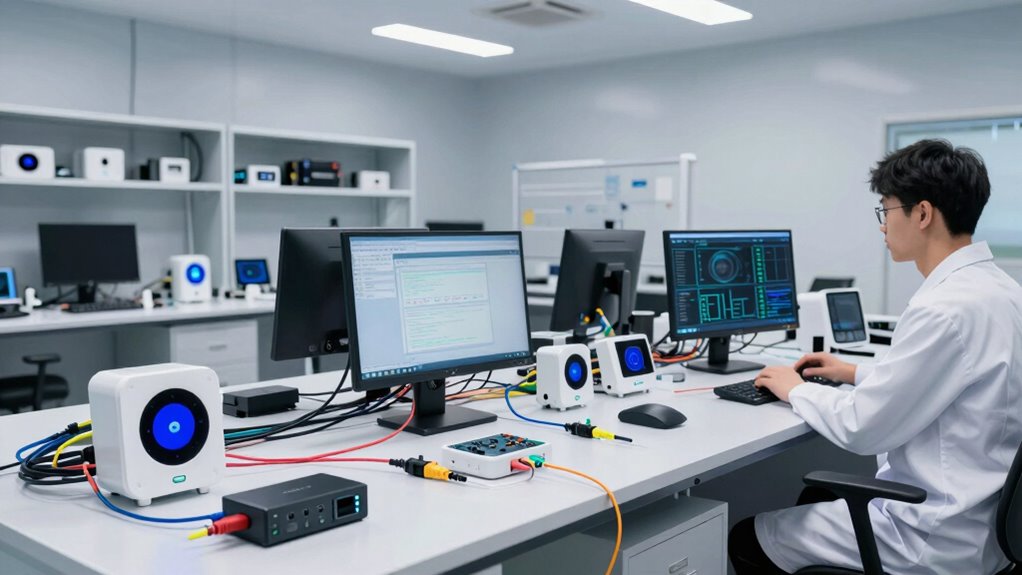
As your collection of IoT devices expands, it becomes important to scale and update your testing lab to keep pace with your growing ecosystem. To manage device scalability effectively, you need flexible hardware and scalable network architecture that can support more devices without bottlenecks. Regular firmware updates are vital to guarantee your tests reflect real-world conditions and keep devices secure. Consider these steps:
- Expand your device inventory with adaptable hardware setups
- Automate firmware updates to streamline deployment
- Incorporate virtualization for scalable testing environments
- Monitor device performance continuously to identify issues early
Maintaining Your IoT Testing Environment for Long-Term Reliability

To keep your IoT testing environment reliable over time, you need to focus on regular calibration and hardware maintenance. Automation and continuous monitoring help catch issues early and reduce manual effort. Staying proactive guarantees your environment remains consistent and dependable for ongoing testing. Additionally, implementing energy-saving tips can enhance the overall efficiency of your lab setup.
Regular Environment Calibration
Regularly calibrating your testing environment is essential to maintaining the accuracy and reliability of IoT device assessments over time. Consistent calibration guarantees environmental stability, preventing drift that could skew test results. You should establish a calibration frequency based on your lab’s conditions and device sensitivity. Regular checks help catch fluctuations in temperature, humidity, or power supply that might impact performance.
- Schedule calibration sessions at consistent intervals
- Use precise, calibrated tools for measurements
- Record calibration results for trend analysis
- Adjust environmental controls as needed based on findings
Implementing these practices keeps your environment stable, reducing random failures caused by unnoticed shifts. Maintaining a disciplined calibration routine ensures your tests reflect real-world conditions, not lab anomalies. This proactive approach safeguards long-term reliability and accuracy of IoT testing outcomes.
Consistent Hardware Maintenance
Maintaining your hardware components is key to ensuring consistent and reliable IoT testing results over the long term. Regular hardware calibration keeps sensors and devices operating within specified parameters, preventing drift that can skew data. Focus on evaluating component durability, replacing or repairing parts before failure occurs. Proper handling and storage extend the lifespan of your equipment, reducing unexpected downtime. Keep detailed maintenance logs to track calibration schedules and repairs. Consistent hardware upkeep minimizes variability, ensuring your test environment remains stable and trustworthy. By proactively managing calibration and component condition, you reduce the risk of random failures that compromise test accuracy. This disciplined approach guarantees your IoT testing environment stays dependable, supporting accurate results and smoother project progress.
Automation and Monitoring
Implementing automation and continuous monitoring is essential for sustaining a reliable IoT testing environment over time. Automated systems help detect issues early, saving you from unexpected failures. Use smart sensors to gather real-time data on device performance and environmental conditions. Data analytics then process this information, revealing patterns and potential problems before they escalate. To keep everything running smoothly, consider these practices:
- Automate routine tests and updates to reduce manual effort
- Continually monitor device health with smart sensors
- Analyze data trends to predict failures proactively
- Set alerts for anomalies or deviations in system behavior
This approach ensures your IoT setup remains stable, reliable, and ready to handle long-term challenges effectively.
Frequently Asked Questions
How Do I Choose the Right Hardware for My Iot Testing Lab?
You should select hardware that’s easy to calibrate and aligns with your testing goals. Prioritize devices that support network segmentation to isolate testing environments and prevent interference. Look for reliable, scalable options with thorough documentation and compatibility with your existing tools. This approach guarantees consistent results, reduces failures, and makes troubleshooting smoother, ultimately helping you build a robust IoT testing lab.
What Security Protocols Should I Implement in My Iot Testing Environment?
You must implement robust security protocols to safeguard your IoT testing environment. Start with strong encryption protocols to protect data in transit and at rest, preventing unauthorized access. Pair this with strict access control measures—limit user permissions and use multi-factor authentication. Stay vigilant, as vulnerabilities can emerge unexpectedly. Prioritize these layers of security to keep your tests safe, reliable, and immune to potential breaches.
How Can I Test Iot Device Interoperability Efficiently?
To test IoT device interoperability efficiently, focus on device compatibility and network simulation. You should set up a controlled environment where different devices can interact seamlessly, ensuring they meet standards and protocols. Use network simulation tools to mimic real-world conditions, stress testing various scenarios. This approach helps identify compatibility issues early, reducing failures and ensuring your devices work reliably across different platforms and networks.
What Are Cost-Effective Solutions for Small-Scale Iot Testing Labs?
To build a cost-effective small-scale IoT testing lab, focus on versatile wireless protocols like Wi-Fi, Bluetooth, and Zigbee, which cover diverse devices. Incorporate affordable power management solutions, such as rechargeable batteries and energy-efficient components, to extend device testing without high costs. Use open-source tools and simulation software to streamline testing processes. This approach helps you optimize resources, guarantee reliable performance, and conduct thorough tests without breaking the bank.
How Do I Ensure Data Privacy During Iot Testing Processes?
To guarantee data privacy during IoT testing, you should implement strong data encryption to protect sensitive information both at rest and in transit. Additionally, establish strict access controls so only authorized personnel can access testing data and devices. Regularly update security protocols and monitor for vulnerabilities. These measures safeguard your data, prevent unauthorized access, and maintain compliance, giving you confidence that your IoT testing process remains secure and private.
Conclusion
With a well-woven, wise, and well-maintained IoT lab, you’ll thwart tricky failures and tame testing troubles. By balancing basic benchmarks and embracing automation, you guarantee your devices perform perfectly in real-world domains. Keep your setup scalable and sturdy, and stay vigilant in your vigilance. With deliberate diligence, you’ll prevent pitfalls, promote precision, and produce perfect, problem-free products—powering your IoT innovations with confidence and clarity.
Halloween Picks
halloween
As an affiliate, we earn on qualifying purchases.