

Balancing prevention and correction costs is key to keeping quality high and expenses low. By investing in proactive measures like supplier evaluation and employee training, you reduce the chances of faults and avoid costly rework or recalls. While some mistakes may happen, focusing on prevention helps catch issues early, saving time and money. Learning how to manage this balance effectively can help you improve overall operations—keep exploring to discover how to master this crucial aspect.

Get business pricing on monitors, keyboards and dev gear
- Business-only prices and quantity discounts
- Tax-exempt purchasing
- Multiple users, one account, clear invoices
Key Takeaways
- Investing in prevention reduces long-term costs by avoiding expensive corrections, rework, and customer complaints.
- Effective quality control early detects issues, minimizing the need for costly corrective actions later.
- Balancing prevention and correction ensures resources are allocated efficiently, enhancing overall quality management.
- Over-reliance on correction increases expenses, damages reputation, and decreases customer trust.
- Proactive prevention strategies foster consistent quality, reducing reliance on reactive fixes and associated costs.
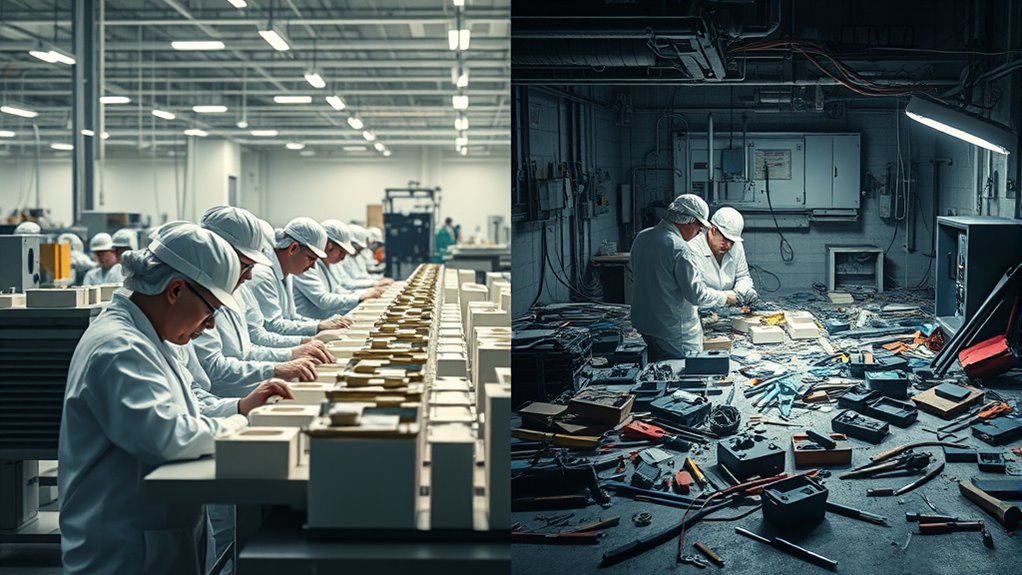
Have you ever wondered how much poor quality can really cost your business? It’s more than just the expense of reworking defective products or handling customer complaints. Poor quality can erode your profit margins, damage your reputation, and even lead to legal issues. That’s why understanding the balance between prevention and correction is essential. Prevention involves investing in proactive strategies like supplier evaluation and employee training. When you evaluate your suppliers carefully, you guarantee they meet your quality standards before materials even reach your facility. This reduces the chances of defective inputs that can cause downstream problems. Regular supplier assessments help you identify risks early, fostering better communication and accountability. Likewise, employee training plays a critical role. When your staff is well-trained, they understand the importance of quality standards and how their actions impact the final product. Proper training minimizes errors, increases efficiency, and instills a quality-first mindset across your team. It’s an upfront investment that pays off by reducing the need for costly corrections later. Implementing effective quality control measures during production can further catch issues before they reach the customer.
By focusing on these preventative measures, you shift from a reactive approach to a proactive one. Instead of constantly fixing issues after they occur, you work to prevent them altogether. This not only saves money but also boosts customer satisfaction by consistently delivering high-quality products. Furthermore, a well-structured supplier evaluation process creates a reliable supply chain. When you verify that your suppliers adhere to your quality criteria, you decrease the likelihood of receiving subpar materials that could cause delays or product failures. Training your employees on quality protocols ensures they recognize and address potential issues early, preventing defects from escalating. Balancing prevention with correction means you understand that some mistakes are inevitable, but they shouldn’t be the norm. When corrective actions become necessary, they tend to be costly—recalls, rework, and reputation management—all of which can be avoided or minimized with a strong prevention strategy. Investing in thorough supplier evaluation and ongoing employee training helps you catch problems before they leave your facility, saving money and protecting your brand. Ultimately, the key is to integrate prevention into your quality management system so that correction becomes a safety net rather than the primary approach. When you do so, you’re not just reducing costs—you’re building a resilient, efficient operation that consistently meets customer expectations.
As an affiliate, we earn on qualifying purchases.
Frequently Asked Questions
How Do Companies Decide Between Prevention and Correction Costs?
You decide between prevention and correction costs by performing a thorough cost analysis and evaluating risk management strategies. Prevention costs, like quality training, reduce defects upfront, saving money long-term. Correction costs, such as rework and scrap, happen after issues arise. By evaluating potential risks and costs associated with defects, you can allocate resources more effectively, minimizing overall quality-related expenses and ensuring product reliability.
What Industries Benefit Most From Investing in Prevention?
Think of industries like manufacturing and healthcare as gardeners tending to valuable plants. You benefit most from investing in prevention here because it boosts manufacturing efficiency and guarantees healthcare compliance. By planting seeds of quality upfront, you prevent weeds of errors and defects from growing. This proactive approach saves time and costs later, making your processes smoother and more reliable, much like a well-tended garden thriving with minimal trouble.
How Can Small Businesses Balance Quality Costs Effectively?
You can balance quality costs effectively by strengthening supplier relationships and investing in employee training. Building strong ties with suppliers ensures consistent quality and reduces defects, while thorough training equips your team to identify issues early. By focusing on prevention through these strategies, you minimize correction costs, improve product quality, and boost customer satisfaction. Regularly review and adjust your processes to maintain this balance and achieve sustainable growth.
What Are the Long-Term Impacts of Neglecting Prevention?
Neglecting prevention leads to costly failures over time, damaging your reputation and increasing expenses. Without proactive strategies, you risk more defects, customer dissatisfaction, and higher correction costs. You might face lengthy delays, rework, and lost sales, which hurt your bottom line. Investing in prevention now helps you avoid these long-term impacts, ensuring smoother operations, improved quality, and sustained growth for your business.
How Does Customer Satisfaction Influence Quality Cost Decisions?
Customer satisfaction is the compass guiding your quality cost decisions. When you prioritize listening to customer feedback, you steer your efforts toward prevention, which enhances your brand reputation. Satisfied customers are more forgiving of minor issues, but negative feedback can sink your reputation like a stone in a pond. Investing in prevention reduces costly corrections later, ultimately saving money and boosting loyalty, turning satisfied customers into your most powerful brand ambassadors.
As an affiliate, we earn on qualifying purchases.
Conclusion
As you balance prevention and correction, imagine catching a small leak early before it floods your entire house. Investing in quality upfront might seem costly, but it saves you from expensive repairs later. When you focus on prevention, you prevent costly corrections, creating a seamless flow of quality work. Coincidentally, just like a tiny drip can cause major damage over time, small proactive steps now prevent bigger problems down the road, ensuring your process runs smoothly and efficiently.
quality control inspection tools
As an affiliate, we earn on qualifying purchases.
As an affiliate, we earn on qualifying purchases.
preventive quality assurance software
As an affiliate, we earn on qualifying purchases.
As an affiliate, we earn on qualifying purchases.
Halloween Picks
halloween
As an affiliate, we earn on qualifying purchases.