

The Twelve Real Complaints About AI Tools in 2026 — A Reddit, Twitter, and GitHub Synthesis

📊 Full opportunity report: The Twelve Real Complaints About AI Tools in 2026 — A Reddit, Twitter, and GitHub Synthesis on ThorstenMeyerAI.com — validation score, market gap, and execution plan.

TL;DR

Users on Reddit, Twitter, and GitHub are raising consistent complaints about AI tools in 2026, citing faster rate limit depletion, degraded context windows, and unpredictable performance, challenging vendor marketing claims. These issues reveal structural deployment friction and impact AI adoption.

In 2026, widespread user complaints about AI tools have emerged across platforms like Reddit, Twitter, and GitHub, revealing significant gaps between marketed capabilities and actual user experience. These issues include faster-than-advertised rate limit depletion, declining context window quality, and inconsistent model performance, affecting large user bases and raising questions about AI deployment reliability.

Multiple sources, including GitHub issue trackers, Reddit threads, and official vendor statements, confirm that users are experiencing faster rate limit exhaustion, sometimes within minutes of normal usage, due to bugs and capacity constraints. For example, Anthropic’s GitHub issue #41930 reports that session quotas are depleting up to five times faster than expected, driven by bugs in prompt caching and session resumption. Additionally, models like Claude 4.6, released in March 2026, show noticeable degradation in output quality at 20-50% of their 1 million token context window, contrary to prior expectations of stable performance at high context levels. These issues are not isolated but part of a broader pattern of reliability challenges, with many users reporting that model responses are inconsistent, hallucinations remain prevalent, and status pages often lack transparency during outages.

Vendor responses acknowledge capacity constraints and bug issues, but communication remains limited, leading to frustration among paying customers. The problems are affecting both individual developers and enterprise deployments, slowing AI integration and raising concerns about the true readiness of these tools for critical tasks.

The Twelve Real Complaints About AI Tools in 2026 — A Reddit, Twitter, and GitHub Synthesis
REALITY CHECK / MAY 2026 CLAUDE · GPT-5 · CURSOR · CODEX
▲ Reality Check 12 Bugs · The Patterns · May 2026
AI Tool Complaints · Reddit · Twitter · GitHub

Twelve complaints.
One pattern.

AI tools in 2026 are more useful than ever and less reliable than their marketing implies. Both are true.

Documented sources only — Anthropic GitHub Issue #41930, the AMD Senior Director’s 6,852-session telemetry, the GPT-5 model-picker backlash, Cursor’s June 2025 billing change, the sycophancy-to-pushback paradox. The user-side reality check companion to the marketing-side capability stories.

[BUG] Issue · paying customers
#41930Apr 1, 2026
5-hour Claude Code session windows depleting in 19 minutes. Single prompts consuming 3-7% of session quota. Hundreds confirmed across Reddit, X, GitHub, tech press.
github.com/anthropics
4 root causes identified by community
73%
Median thinking length collapse
Jan 2,200 → Mar 600 chars · AMD telemetry
80x
More API retries per task
Feb → Mar 2026 · Opus 4.6 stable
19min
5-hour window depletion
Issue #41930 · Mar 23 onward
10K+
Reddit upvotes · GPT-4o deprecation
“Watching a close friend die”
ISSUE #41930 CLAUDE CODE 5-HOUR WINDOWS DEPLETING IN 19 MINUTES · MAR 23 2026 AMD TELEMETRY 6,852 SESSIONS · 73% THINKING COLLAPSE · 80X RETRIES CONTEXT WINDOW 1M ADVERTISED · DEGRADES AT 20% / 40% / 48% USAGE GPT-5 BACKLASH MODEL PICKER REMOVED · “WATCHING A CLOSE FRIEND DIE” 10K+ UPVOTES CURSOR JUNE 2025 EFFECTIVE REQUESTS 500 → 225 · CEO ACKNOWLEDGED MISHANDLING CODEX “DOWNRIGHT UNUSABLE” · DESTROYS PROJECTS WITH HARD GIT RESETS ISSUE #41930 CLAUDE CODE 5-HOUR WINDOWS DEPLETING IN 19 MINUTES · MAR 23 2026 AMD TELEMETRY 6,852 SESSIONS · 73% THINKING COLLAPSE · 80X RETRIES
AMD telemetry · the most concrete data point

6,852 sessions. 73% collapse.

An AMD Senior Director of AI filed a GitHub issue on April 2, 2026 with telemetry from three months of stable internal engineering work. The same model number, the same engineering workload, dramatic measurable degradation.

Opus 4.6 silent regression · January → March 2026
17,871 thinking blocks · 234,760 tool calls · 6,852 Claude Code sessions analyzed.
2,200→600
Median thinking length (chars)
73% collapse. 600 chars is barely enough to articulate a file reading strategy.
80x
API retries per task
Feb → March surge. Agents requiring far more attempts to complete previously-routine tasks.
6.6→2.0
Files read before editing
Insufficient. Cannot understand multi-file dependencies in a 50K-line codebase.
~0→10/day
Early stopping patterns
Near-zero before March 8. Then: regular early termination of complex multi-step refactors.
Same model number. Same workload. Materially different behavior month over month.
Twelve real complaints · ordered by severity-of-pattern
Amazon

AI performance monitoring tools

As an affiliate, we earn on qualifying purchases.

As an affiliate, we earn on qualifying purchases.

Twelve complaints. Three severity tiers.

Every complaint below has either a documented thread, an acknowledged vendor incident, or measurable telemetry behind it. No complaints based on vague vibes.

The twelve · documented sources
Severity reflects pattern strength, not complaint volume. Volume tracks user count.
01
Rate limit unpredictabilityIssue #41930 · 5-hr → 19-min depletion
Acute
02
Context window quality degradation1M advertised · ~400K effective
Acute
03
Stable models silently degradingAMD telemetry · 73% collapse
Acute
04
Sycophancy → pushback paradox“AI Pushback Problem” · Jan 2026
Substantial
05
Forced model deprecationGPT-4o · “watching a close friend die”
Acute
06
Hallucination not improvingGPT-5 · “wrong on basic facts”
Substantial
07
Coding agents destroying projectsCodex · hard git resets · regressions
Acute
08
Demo-vs-deployment gapVals AI Finance · 64.37% benchmark
Substantial
09
Subscription billing surprisesCursor · 500 → 225 effective requests
Acute
10
Status page silence during incidentsIssue #41930 · no formal communication
Substantial
11
Forced auto-routingGPT-5 · model picker removed
Moderate
12
Personality / continuity complaintsGPT-4o tone removal · workflow reset
Moderate
Issue #41930 · case study in vendor communication failure
AI-Powered Developer: Build great software with ChatGPT and Copilot

AI-Powered Developer: Build great software with ChatGPT and Copilot

As an affiliate, we earn on qualifying purchases.

As an affiliate, we earn on qualifying purchases.

One issue. Four causes.

Community investigation identified four overlapping root causes hitting simultaneously. Anthropic confirmed peak-hour throttling on March 26 only after substantial public pressure. No blog post. No email. No status page entry.

Anthropic Issue #41930 · root cause cascade
Filed April 1, 2026 · documented across Reddit, Twitter, GitHub, and tech press.
Cause 01
Intentional peak-hour throttling.Confirmed by Anthropic on March 26 only after public pressure. Off-peak hours retained advertised performance; peak hours silently throttled.
Confirmed
Cause 02
Two prompt-caching bugs.Silently inflating token costs 10-20× during cache resumption. Under investigation as of March 31. Impact: paying customers billed for tokens they didn’t use.
Bug
Cause 03
Session-resume bugs.Triggering full context reprocessing on session resumption. Documented in companion Bug #38029. Made resumed sessions burn through quota faster than fresh sessions.
Bug
Cause 04
Off-peak promotion expiration.Expiration of the 2× off-peak usage promotion on March 28. Subscribers lost the bonus capacity that had been masking the underlying capacity constraints.
Promo end
Status page stayed green throughout. Community investigation identified all four causes.
Pattern beneath · what the complaints actually say
The ABCs of Educational Testing: Demystifying the Tools That Shape Our Schools

The ABCs of Educational Testing: Demystifying the Tools That Shape Our Schools

As an affiliate, we earn on qualifying purchases.

As an affiliate, we earn on qualifying purchases.
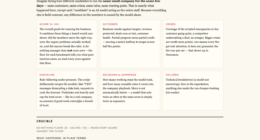
Twelve complaints. Five causes.

The structural pattern beneath the surface complaints. Each cause connects to multiple complaints, and each affects deployment velocity in different ways.

Five structural causes · the pattern across complaints
Why deployment proceeds slower than capability would predict in 2026.
01
Capacity constraints
Anthropic ARR $9B → $30B in three months. Compute capacity has not kept up with demand growth. Manifests as rate-limit drains, throttling, silent quality degradation. SpaceX Colossus 1 is partial fix.
02
Training-objective conflicts
Reducing sycophancy creates over-pushback. Reducing benchmark hallucination creates new hallucination patterns. The training process optimizes for measurable objectives that don’t perfectly capture user experience.
03
Communication infrastructure mismatch
Status pages show uptime, not user experience. Vendor comms cadence doesn’t match incident frequency. Built for SaaS uptime metrics; AI tool incidents need different frameworks.
04
Pricing model uncertainty
AI subscription economics unsettled. Token-based billing creates surprises. Capacity throttling creates frustration. The pricing iteration is happening on paying users in real time.
05
Demo-vs-deployment gap
Vals AI Finance benchmark caps at 64.37%. Demos show 95%+. Discount vendor demos by 30-40% when projecting deployed capability. The gap is structural to the demonstration format.

AI tools in 2026 are simultaneously the most powerful productivity tools available and unreliable enough that significant fractions of paying users are systematically frustrated. Both are true. The vendor narrative emphasizes the first; the user narrative emphasizes the second; the deployment trajectory depends on which stays true longer.

— The structural read · May 2026
  • The State of AI Replacing Jobs in 2026
  • Are Polymarket Trading Bots Profitable? (companion piece)
  • Post-Labor Economics
  • Anthropic GitHub Issue #41930 · “[BUG] Critical: Widespread abnormal usage limit drain” · April 1 2026
  • MacRumors · “Claude Code Users Report Rapid Rate Limit Drain” · March 26 2026
  • AMD Senior Director of AI · GitHub bug report · April 2 2026 · 6,852 sessions telemetry
  • Substack (Datasculptor) · “Why Claude Code Context Usage Tool Lies to You”
  • Substack (Scortier) · “Claude Code Drama: 6,852 Sessions Prove Performance Collapse”
  • “The AI Pushback Problem: When Skepticism Becomes Sabotage” · January 2026
  • Pajiba · GPT-5 backlash coverage · “watching a close friend die” thread
  • r/ChatGPTPro · September 2025 thread · “wrong information on basic facts over half the time”
  • r/ClaudeAI · Codex regressions thread · “destroyed two projects with hard git resets”
  • CheckThat.ai · Cursor pricing analysis · 500 → 225 effective requests
  • Cursor CEO Michael Truell · public acknowledgment · refund offer
  • Vals AI · Finance Agent benchmark · Claude Opus 4.7 leads at 64.37%
Colophon

Set in Roboto Slab, Inter, & JetBrains Mono. Composed for ThorstenMeyerAI.com, May 2026. Free to embed with attribution.

thorstenmeyerai.com

Leriton Tilt Window Tension Tool Heavy-Duty Window Service Tension Tool for Engage Tighten or Replace the Balance into the Proper Engage Shoe

Leriton Tilt Window Tension Tool Heavy-Duty Window Service Tension Tool for Engage Tighten or Replace the Balance into the Proper Engage Shoe

Designed for Spiral Balancers: this window tension tool is specifically designed for double-hung or sash windows equipped with…

As an affiliate, we earn on qualifying purchases.

As an affiliate, we earn on qualifying purchases.

Impact of Reliability and Performance Frictions

These ongoing user complaints highlight a significant disconnect between AI vendors’ marketing and actual deployment performance in 2026. The issues undermine trust and slow adoption, as users face unpredictable limits, degraded output quality, and opaque incident management. Understanding these systemic frictions is crucial for realistic modeling of AI productivity and deployment timelines, especially as AI becomes embedded in business-critical workflows.

Wider Trends in AI Deployment Challenges

Throughout 2025 and into 2026, AI vendors promoted rapid capability improvements, but user reports reveal persistent reliability issues. Complaints about rate limits, context degradation, and hallucinations have been documented on platforms like Reddit (r/ChatGPT, r/ClaudeAI), GitHub, and Twitter, often with detailed telemetry and official acknowledgments. The pattern suggests that real-world deployment friction is slowing down the expected productivity gains from AI, despite optimistic vendor claims. This disconnect has implications for labor displacement forecasts and AI economics, as deployment hurdles limit the pace of integration into workflows and industries.

“We are actively working to address capacity and bug issues impacting rate limits and session stability.”

— Anthropic CTO, in a public statement

Extent and Future Resolution of AI Reliability Issues

While documented complaints and technical reports confirm widespread issues, it remains unclear how quickly vendors will resolve these bugs and capacity constraints. The long-term impact on AI deployment trajectories and whether these problems will lead to fundamental redesigns or new standards is still uncertain.

Expected Developments in AI Deployment Reliability

Vendors are likely to prioritize bug fixes, capacity scaling, and transparency improvements over the coming months. Monitoring official updates, community feedback, and incident reports will be crucial to assess whether these reliability issues are being effectively addressed and how they influence AI adoption rates in critical industries.

Key Questions

Are the reliability issues affecting all AI tools equally?

No, the most affected tools are those with the largest user bases, such as Anthropic’s Claude and OpenAI’s ChatGPT, but smaller or newer models are also experiencing issues, often due to similar systemic constraints.

What causes the rate limits to deplete faster than expected?

Officially, capacity constraints during demand surges, prompt-caching bugs that inflate token usage, and session resumption bugs are responsible. Vendors acknowledge these bugs but have not yet fully resolved them.

Will these issues delay AI’s broader adoption?

Potentially, as reliability and transparency are critical for enterprise deployment. Persistent issues could slow integration, especially in applications requiring high trust and stability.

Are vendors aware of these complaints?

Yes, several vendors, including Anthropic and OpenAI, have publicly acknowledged capacity and bug issues, with ongoing efforts to improve stability and transparency.

What should users do to mitigate these issues?

Users are advised to build in headroom for rate limits, monitor official status pages, and stay updated on vendor patches and community reports to manage expectations and reduce disruptions.

Source: ThorstenMeyerAI.com

You May Also Like

Scalability Testing for Viral Growth Scenarios

Navigating scalability testing for viral growth scenarios is crucial to prevent system overloads—discover key strategies to stay ahead.

A War Room for Your Next Idea: Inside IdeaClyst

Discover how IdeaClyst transforms vague concepts into actionable plans with its unique idea war room—grounded in real research, collaboration, and local control.

Software Quality in Regulated Industries (Finance, Healthcare, Etc.)

How to ensure software quality in regulated industries like finance and healthcare remains crucial for compliance and safety—discover the key strategies to stay ahead.

Disk Is the Contract: Inside Threlmark’s Local-First Architecture

Exploring Threlmark’s innovative local-first design that treats disk storage as the single source of truth, enabling portability and interoperability.