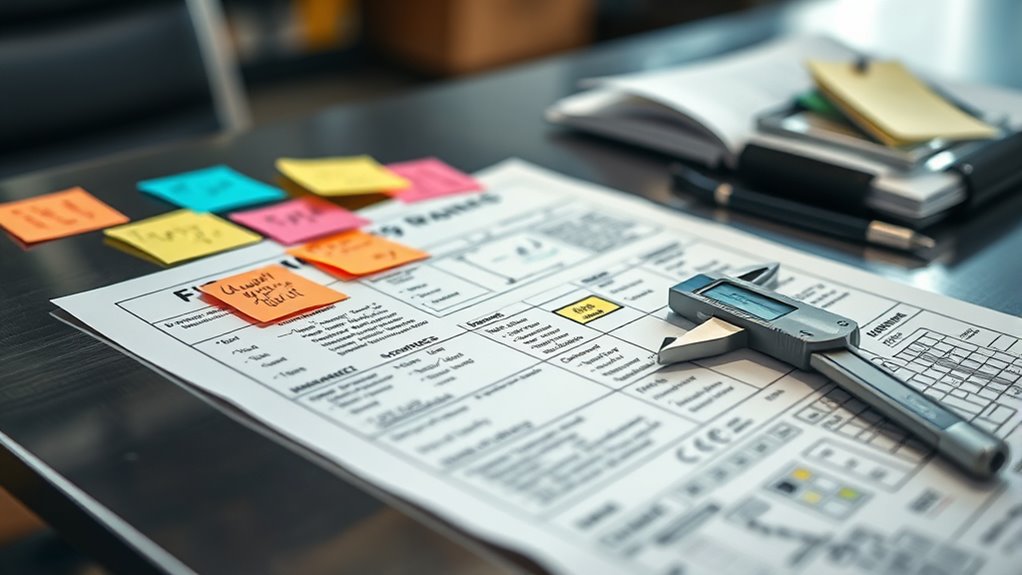

Failure Mode and Effects Analysis (FMEA) in Quality Assurance is a proactive approach that helps you identify and evaluate potential failure modes before they happen. By analyzing risks based on severity, likelihood, and detectability, you can prioritize issues and develop targeted strategies to prevent defects. Implementing FMEA encourages continuous improvements, enhances product reliability, and reduces costly mistakes. Exploring further reveals how this powerful tool can systematically strengthen your quality processes and safeguard your outcomes.
Key Takeaways
- FMEA systematically identifies potential failure modes to evaluate risks early in the process.
- It uses RPN scores to prioritize issues based on severity, likelihood, and detectability.
- FMEA promotes proactive improvements, reducing costly defects and safety hazards before they occur.
- The methodology encourages continuous risk assessment and mitigation through iterative reviews.
- Implementing FMEA enhances process reliability, quality standards, and cross-departmental communication.
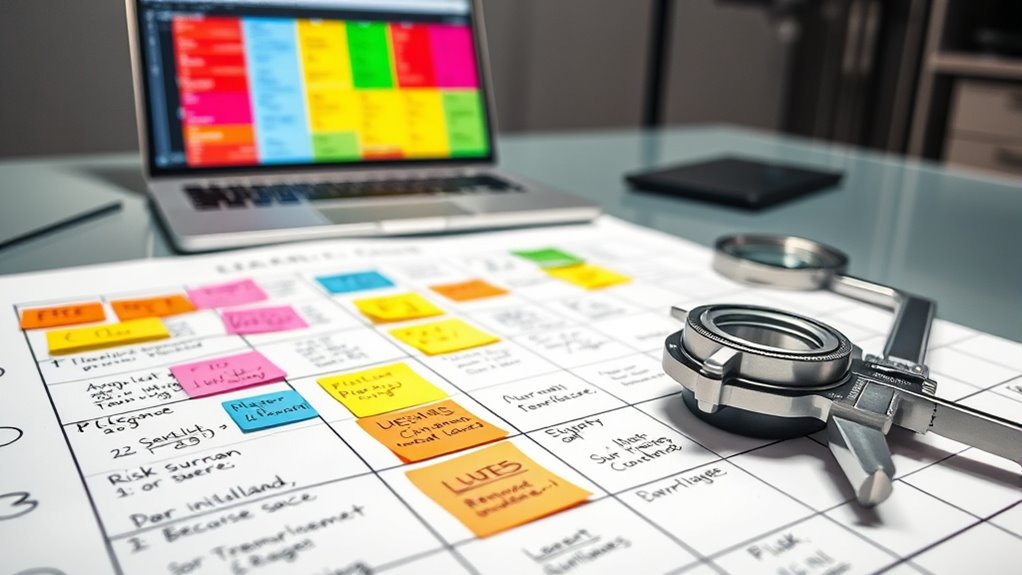
Have you ever wondered how organizations anticipate and prevent potential failures in their processes? That’s where Failure Mode and Effects Analysis (FMEA) comes into play. It’s a systematic approach that helps you identify potential failure modes in a process or product before they happen. By evaluating risks early, you can prioritize issues based on their severity, likelihood, and detectability. This process isn’t just about identifying problems; it’s about taking proactive steps to improve overall quality and reliability. When you perform FMEA, risk prioritization becomes central—you focus on the failure modes that pose the greatest threat to your operations or customers. This targeted approach ensures that your resources are allocated efficiently, tackling the most critical issues first. As a result, you can markedly reduce the chances of costly defects or safety hazards slipping through.
Implementing FMEA enhances your process improvement efforts by providing a clear roadmap for action. Once potential failures are identified, you can develop targeted mitigation strategies to eliminate or diminish their impact. For example, if a specific component is prone to wear and could cause system failure, you might select more durable materials or add preventive maintenance steps. This continuous cycle of identifying, evaluating, and addressing failure modes fosters ongoing process improvement. It allows you to catch weaknesses early, rather than reacting after a failure occurs, saving time, money, and reputation. Additionally, FMEA encourages a team-based approach—bringing together different perspectives to uncover hidden risks that might otherwise go unnoticed. Recognizing the importance of risk assessment in this process can further enhance the effectiveness of your analysis.
Risk prioritization in FMEA is driven by calculating the Risk Priority Number (RPN), which combines the severity of the failure’s impact, its likelihood of occurrence, and how easily it can be detected. This numerical scoring helps you objectively rank failure modes, making it easier to decide where to focus your improvement efforts. Over time, as you implement corrective actions, you can reassess and refine your risk scores, fostering a culture of continuous process improvement. FMEA also promotes transparency, encouraging teams to document their findings and share insights, which enhances communication and accountability across departments. By systematically addressing potential failure points, you don’t just react to problems—you prevent them from arising in the first place.
In essence, FMEA empowers you to proactively manage risks, streamline processes, and elevate quality standards. It’s a crucial tool in ensuring that your products and services meet customer expectations while minimizing failures. By integrating risk prioritization into your process improvement initiatives, you create a resilient system that adapts and improves over time. This proactive mindset not only safeguards your operations but also boosts confidence in your ability to deliver consistent, high-quality outcomes.
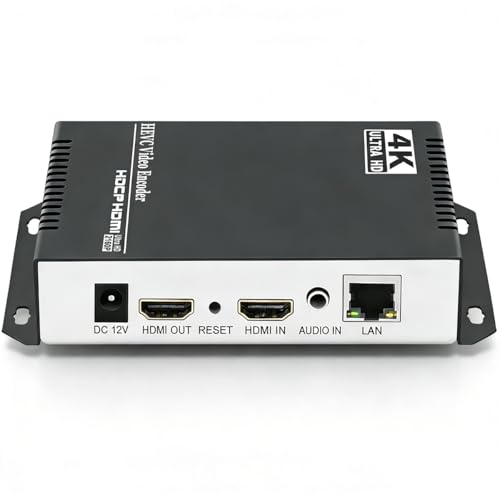
HEVC H265 H264 AVC 4K 1080P HDMI to Ethernet IP Video Audio Encoder Hardware Supports RTSP RTMPS HLS UDP SRT HTTP FLV MP4 WebRTC TRTC ICECAST, for Live Stream on YouTube Facebook OBS and other Servers
【Innovative Product with Leading Technology】- Equipped with an advanced H.265 /H.264 dual encoding chip, supports 4K UHD (3840x2160)...
As an affiliate, we earn on qualifying purchases.
Frequently Asked Questions
How Does FMEA Integrate With Other Quality Management Tools?
You integrate FMEA with other quality management tools by using risk prioritization to identify critical issues and guide your improvement efforts. It promotes cross-functional collaboration, ensuring teams from different departments work together to address potential failures. This synergy helps you streamline processes, enhance product reliability, and prevent issues early on. Combining FMEA with tools like control charts or root cause analysis creates an all-encompassing approach to maintaining high quality standards.
What Are Common Pitfalls When Implementing FMEA?
When implementing FMEA, watch out for risk complacency, where you might overlook potential failure modes, reducing effectiveness. Inadequate documentation is another common pitfall, leading to gaps in analysis and difficulty tracking issues. You should guarantee thorough, detailed records and regularly review your findings to prevent these problems. Staying vigilant and maintaining all-inclusive documentation will help you maximize FMEA’s benefits and avoid costly mistakes.
How Often Should FMEA Be Reviewed and Updated?
Think of FMEA like tending a garden; you need to check on it regularly. You should review it through periodic reviews—perhaps quarterly or after major changes—and make continuous updates as new risks emerge. This keeps your risk management fresh and effective. Regularly updating guarantees you catch potential failures early, just like pruning dead branches keeps your garden healthy and thriving.
Can FMEA Be Applied in Service Industries?
Yes, you can definitely apply FMEA in service industries. It helps you identify potential failure modes in service processes, allowing you to improve service customization and boost customer satisfaction. By analyzing risks early, you can prevent issues before they happen, ensuring smoother service delivery. FMEA’s proactive approach makes it a valuable tool for enhancing quality and reliability in various service sectors.
What Training Is Required to Effectively Conduct FMEA?
Think of yourself as a detective preparing for a case—you need proper training to uncover potential risks. To conduct FMEA effectively, you should undergo team training that covers risk assessment techniques, root cause analysis, and prioritization methods. This education guarantees you identify failure modes accurately, evaluate their effects, and implement solutions. Continuous learning and practice are essential, so invest in workshops or courses led by experienced professionals to sharpen your skills.

ORIVISION H.265/264/MJPEG Ultra Mini HDMI 1080P Video Encoder with HDMI loopout, HTTP, RTSP, RTMP/RTMPS, SRT, HLS, FLV, Compatible with ONVIF, Multicast IPTV Encoder for YouTube Facebook Twitch Live
【Upgrade Notice】Please kindly note that this mini video encoder EH1201 has been upgraded to EH1211 from the stock...
As an affiliate, we earn on qualifying purchases.
Conclusion
By now, you see how FMEA acts like your trusty sidekick in quality assurance, helping you spot potential pitfalls before they become a full-blown disaster—kind of like having a crystal ball in the age of dial-up internet. Embracing this proactive approach means you’re not just fixing problems after they happen but preventing them, ensuring your processes run smoother than a well-oiled machine. In the end, FMEA keeps you ahead of the game, no flux capacitor needed.

DDMALL Mini H.265 H.264 HDMI Encoder for Live Stream, 1080P 1080i HDMI Video Encoder SRT RTMP RTMPS RTSP HLS, Hardware 2K Encoder Support Cloud Control for YouTube, IPTV (AVC-2K)
【Low-Power Portable HDMI Encoder】Ultra-mini size (75x32x22mm), ultra-light weight (32g) and ultra-low power consumption (2.4W). This HDMI video encoder...
As an affiliate, we earn on qualifying purchases.

HEVC MPEG4 H.265 H.264 HDMI to IP Network Video Encoder, 1080P HD Digital Video Audio Encoder Hardware Supports RTSP RTMPS UDP HLS SRT, for IPTV, Live Streaming, YouTube, Facebook, OBS, NVR, etc.
【Innovative Product with Leading Technology】- Equipped with an advanced H.265/H.264 dual encoding chip, supports 1920x1080 resolution input and...
As an affiliate, we earn on qualifying purchases.