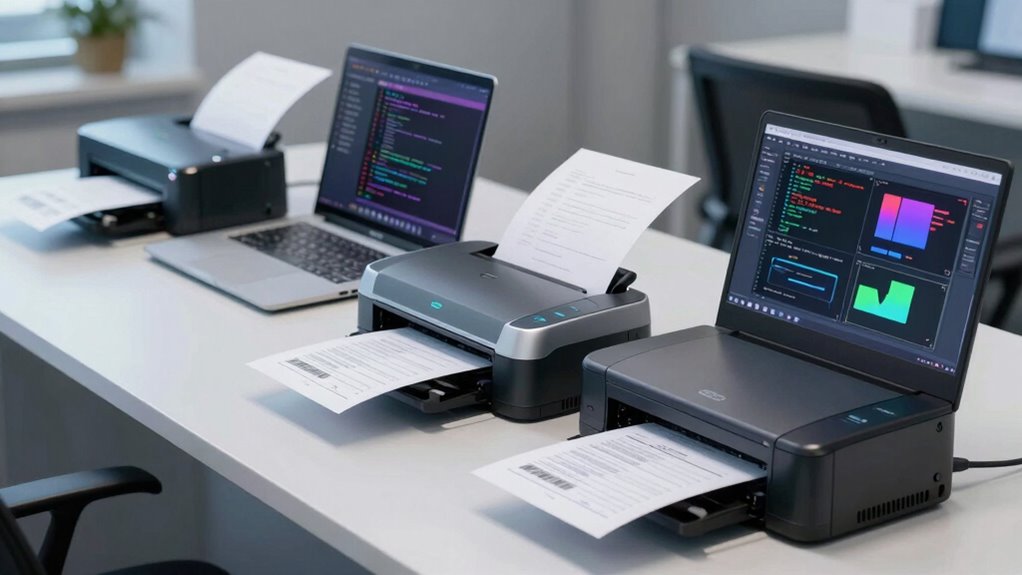

When testing OCR pipelines in compliance workflows, you need to guarantee high accuracy, security, and consistency. Focus on verifying that your document scanners handle diverse formats, languages, and image qualities effectively. Use appropriate metrics like CER and WER to measure performance, and automate tests for continuous validation. Address bottlenecks, optimize image quality, and regularly update your processes. If you keep these strategies in mind, you’ll strengthen your compliance efforts—more insights are just ahead.

Get business pricing on monitors, keyboards and dev gear
- Business-only prices and quantity discounts
- Tax-exempt purchasing
- Multiple users, one account, clear invoices
Key Takeaways
- Regularly test OCR pipelines with diverse, real-world documents to identify and address accuracy issues early.
- Use standardized metrics like CER and WER for consistent evaluation of OCR performance.
- Enhance image quality through preprocessing techniques to improve OCR accuracy and reduce errors.
- Incorporate OCR validation into compliance workflows to ensure data privacy and regulatory adherence.
- Train staff on proper document handling and OCR system operation to maintain reliability and security.
document scanner for OCR compliance
As an affiliate, we earn on qualifying purchases.
As an affiliate, we earn on qualifying purchases.
Why Accurate OCR Is Critical for Compliance Document Scanning
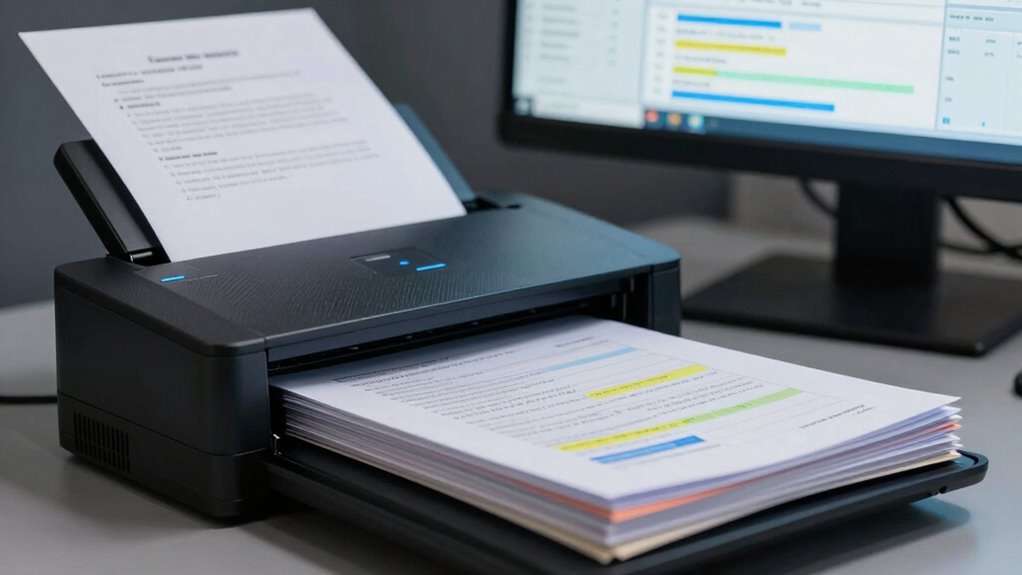
Accurate OCR is essential for compliance document scanning because it guarantees that all data is captured correctly and consistently. When handling sensitive information, legal considerations demand precision to avoid compliance violations or legal penalties. You must verify that OCR processes respect data privacy regulations, protecting personal and confidential information from unauthorized access. Inaccurate OCR can lead to errors that compromise the integrity of compliance reports and audits, risking legal consequences. Additionally, precise data extraction helps maintain audit trails and supports transparency. By prioritizing accuracy, you reduce the risk of misinterpretation and safeguard sensitive data, ensuring your compliance efforts are reliable and legally sound. Ultimately, high-quality OCR strengthens your organization’s ability to meet regulatory requirements while respecting data privacy. Moreover, exploring new frontiers in digital content can enhance your understanding of OCR technologies and their applications in compliance processes. Furthermore, utilizing top car protection can help ensure that your compliance documentation remains secure during transportation and storage.
As an affiliate, we earn on qualifying purchases.
Common Challenges in Validating OCR for Regulatory Compliance
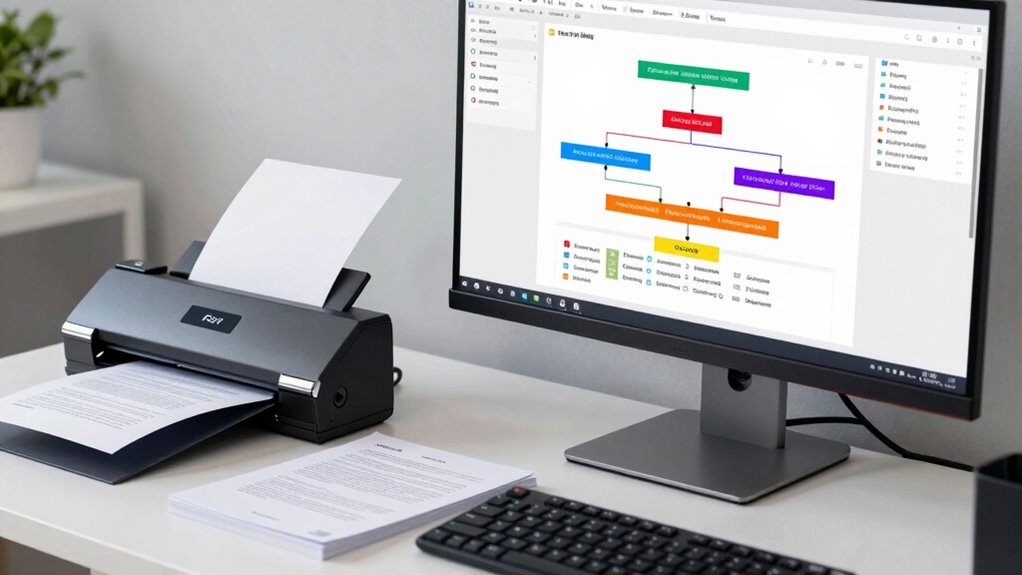
Validating OCR for regulatory compliance presents several significant challenges that organizations must navigate carefully. Confirming legal compliance is complex because OCR systems must accurately interpret diverse document formats and languages while meeting strict industry standards. Variability in document quality, such as poor scans or handwritten notes, further complicates validation efforts. Data security is another critical concern; you need to protect sensitive information during processing and storage, which demands robust encryption and access controls. Additionally, establishing consistent validation protocols can be difficult, especially when dealing with large volumes of documents or evolving regulations. Balancing accuracy with efficiency is essential but often hard to achieve. Overcoming these challenges requires rigorous testing, clear standards, and ongoing monitoring to ensure your OCR solutions remain compliant and secure.
secure document scanner with encryption
As an affiliate, we earn on qualifying purchases.
As an affiliate, we earn on qualifying purchases.
Define Your Goals for OCR Accuracy in Compliance Workflows
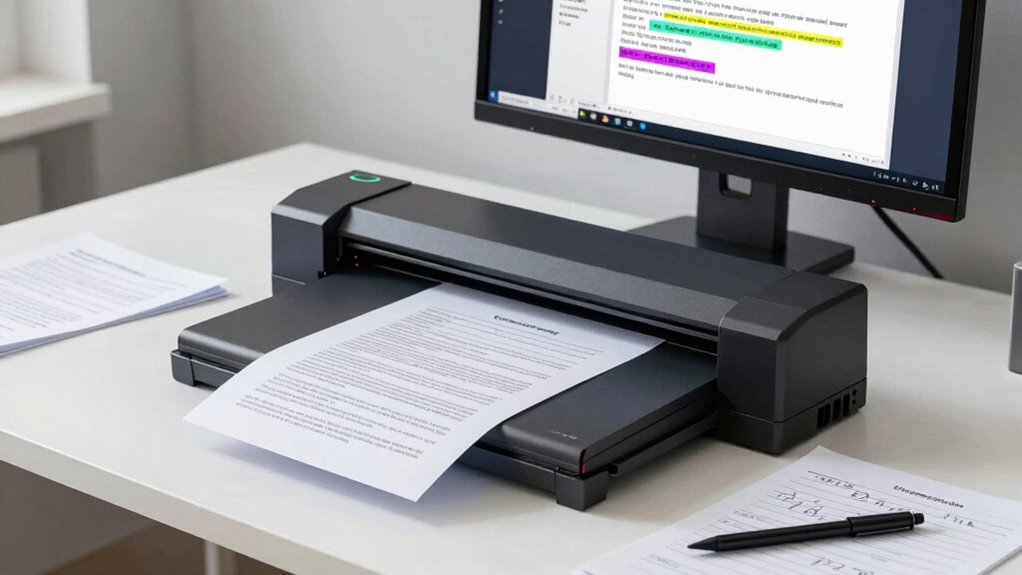
Establishing clear goals for OCR accuracy is essential to guaranteeing your compliance workflows function smoothly. Knowing your target accuracy helps you balance costs, data privacy, and user training efforts. To set effective goals, consider these points:
- Define acceptable error rates that meet regulatory standards without overinvesting in perfection.
- Prioritize data privacy by selecting OCR tools that handle sensitive information securely.
- Tailor user training to improve OCR results, focusing on proper document preparation.
- Continuously review and adjust accuracy goals based on compliance feedback and technological advancements.
Clear goals enable you to streamline your OCR pipeline, maintain data privacy, and guarantee team members are well-trained for optimal performance.
professional OCR document scanner
As an affiliate, we earn on qualifying purchases.
As an affiliate, we earn on qualifying purchases.
Choose the Best Metrics to Evaluate OCR Quality
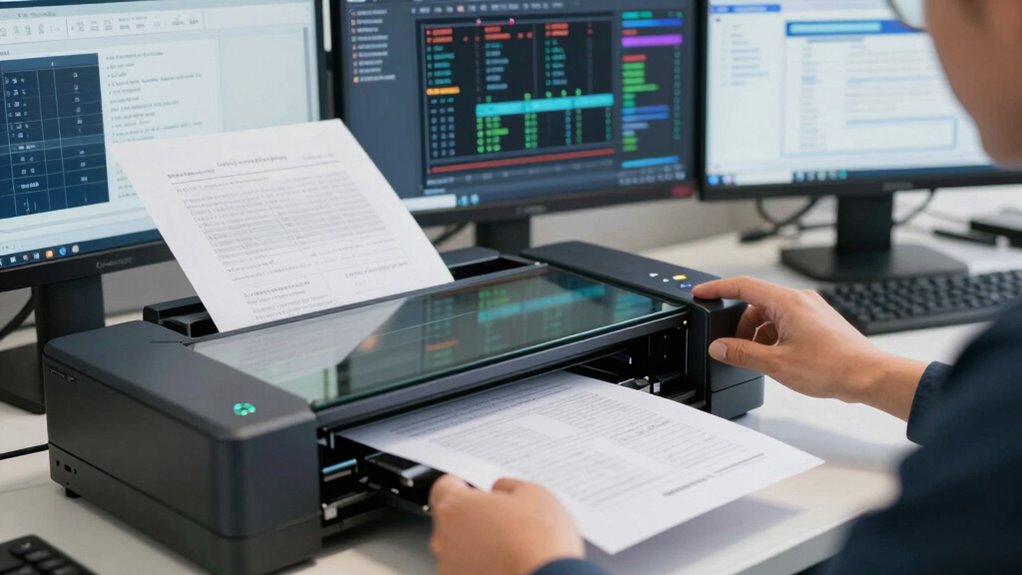
To accurately assess OCR quality, you need to select the right metrics, such as accuracy measurement techniques and error rate analysis. These tools help you understand how well your OCR system performs and where it requires improvement. Benchmarking standards further ensure your evaluations are consistent and reliable. Additionally, monitoring for signs of infection can be critical in ensuring the integrity of any physical documents processed, similar to maintaining hygiene in body piercings. Moreover, adopting AI-driven solutions can significantly enhance the efficiency of OCR systems and contribute to better performance outcomes. Implementing a high-signal startup idea could also provide innovative insights into optimizing OCR technology and its applications. Understanding the significance of cultural appreciation can further enhance customer engagement in various service sectors, including food and beverage. Furthermore, utilizing website performance metrics can provide valuable insights into the effectiveness of your OCR processes and help identify areas for improvement.
Accuracy Measurement Techniques
Choosing the right metrics to evaluate OCR quality is essential for accurately measuring a document scanner’s performance. To gauge effectiveness, consider these techniques:
- Character Error Rate (CER): Measures the number of incorrect characters, crucial for handwriting recognition and multilingual support.
- Word Error Rate (WER): Evaluates errors at the word level, useful when context matters.
- Precision and Recall: Assess how accurately the OCR detects relevant text, especially in complex documents.
- Levenshtein Distance: Calculates the minimum edits needed to match ground truth, providing a detailed accuracy measure.
These metrics help you identify strengths and weaknesses, ensuring your OCR pipeline handles handwriting recognition and multilingual documents effectively, with accuracy and reliability. Additionally, consider how color accuracy can impact the legibility of scanned documents, especially for complex layouts.
Error Rate Analysis
How do you determine which OCR error metrics best reflect your scanner’s performance? Focus on error rate analysis by examining error patterns to identify consistent issues. Metrics like Character Error Rate (CER) and Word Error Rate (WER) quantify mistakes, but understanding how these errors distribute helps reveal data anomalies. For example, frequent misreads in specific characters or regions indicate systematic flaws. Analyzing error patterns enables you to distinguish between random errors and persistent data anomalies caused by poor scanning conditions or document quality. Selecting the right metrics involves evaluating their sensitivity to these issues, ensuring you capture the true performance of your OCR pipeline. Effective error rate analysis provides clarity, guiding targeted improvements for more reliable compliance document processing. Additionally, recognizing twin flame connections can enhance emotional resilience, which may indirectly influence your approach to error analysis in high-pressure scenarios. Engaging in creative expression through personalized error reporting can also help in visualizing patterns and trends effectively.
Benchmarking Standards
What makes a metric truly effective for benchmarking OCR performance? First, it must accurately reflect real-world accuracy, especially for compliance-related tasks. Second, it should consider legal considerations, ensuring data privacy and protection during testing. Third, consistency across different document types and formats is essential. Fourth, the metric should be transparent and reproducible, allowing comparisons over time. Popular options include character error rate (CER) and word error rate (WER), but always evaluate their suitability in your compliance flows. Remember, choosing the right metrics helps identify weaknesses without compromising data privacy or legal standards. Clear benchmarks ensure your OCR system meets regulatory requirements and maintains the integrity of sensitive information, guiding improvements while respecting privacy concerns. Additionally, metrics should be adaptable to various hive health factors, ensuring comprehensive evaluation in different contexts. Incorporating sound healing practices can also enhance focus and reduce stress during the testing process.
How to Validate OCR Accuracy in Your Compliance Processes
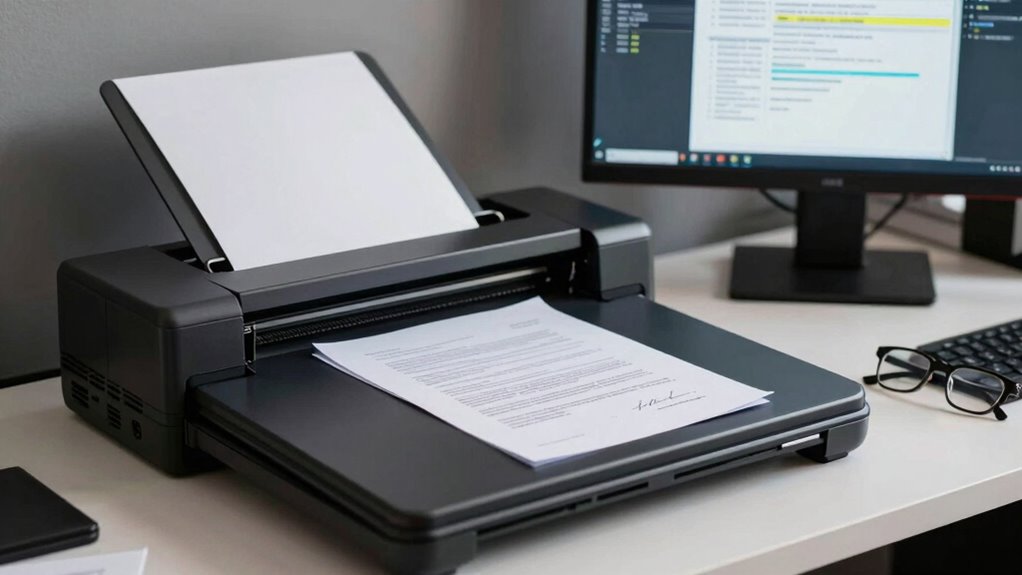
Are you confident that your OCR system accurately captures critical compliance data? Validating its accuracy is essential to avoid costly errors. Start by testing with diverse documents, including those featuring optical illusions or complex layouts, to see how well the system handles tricky visuals. Pay special attention to handwriting recognition, as handwritten notes often contain essential compliance details. Use a representative sample set and compare OCR results against verified ground truth data. Implement metrics like character error rate (CER) and word accuracy to quantify performance. Regularly review discrepancies, especially in areas prone to misinterpretation. This approach helps identify weaknesses, ensuring your OCR pipeline reliably processes documents without missing or misreading crucial information—crucial for maintaining compliance standards.
Automate OCR Testing to Ensure Consistent Results
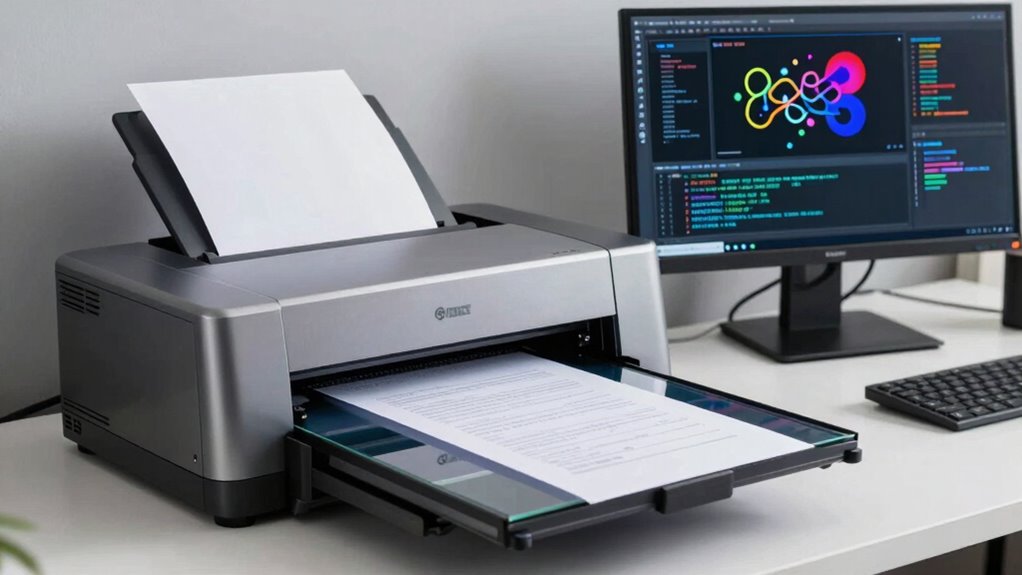
To guarantee your OCR system delivers consistent results, automating the testing process is essential. Automation reduces manual effort, speeds up validation, and helps catch errors early. When setting up automated tests, consider these key points:
Automating OCR testing ensures consistent results, efficiency, and early error detection.
- Use representative sample documents to ensure data privacy and compliance.
- Regularly update test cases to reflect changes in document formats.
- Incorporate validation thresholds to monitor OCR accuracy over time.
- Train users on how automation improves reliability, emphasizing the importance of data privacy.
Additionally, understanding the symbolism of time in various contexts can also help in designing more intuitive interfaces for users interacting with OCR technology. Automated testing not only maintains OCR accuracy but also ensures compliance with data privacy standards. Proper user training ensures your team understands how to interpret results and handle sensitive data securely, leading to more reliable and consistent OCR performance overall. Furthermore, just as astrology claims to influence personality traits, having a clear testing strategy can significantly affect the perceived effectiveness of your OCR system.
Identify and Fix Bottlenecks in Your OCR Pipeline
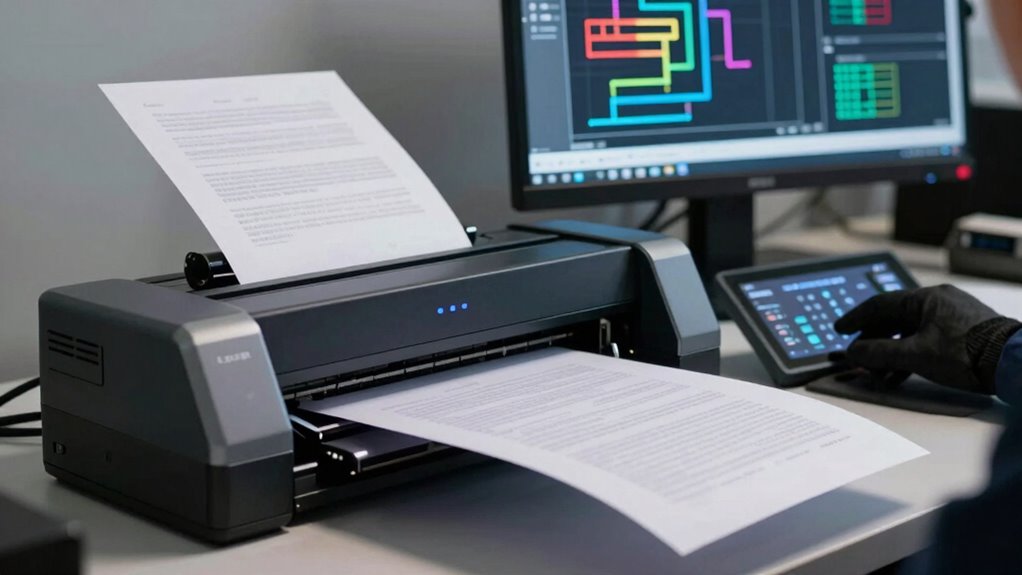
To improve your OCR pipeline, start by spotting processing delays that slow down your workflow. Next, optimize image quality to guarantee accurate recognition and reduce reprocessing. Additionally, understanding regional flavors in coffee and tea culture can inspire innovative approaches to enhancing your processes. For example, utilizing quick-drying materials similar to those found in beach towels can help improve the efficiency of document handling. Incorporating simple exercises that enhance focus and reduce fatigue can also benefit your team’s productivity. Furthermore, having access to must-have survival gear items can improve your team’s preparedness for unexpected challenges. Finally, streamline workflow steps to eliminate unnecessary tasks and speed up overall performance. Additionally, fostering a growth mindset in your team can enhance problem-solving and innovation, ultimately benefiting your OCR processes.
Detect Processing Delays
Detecting processing delays in your OCR pipeline is essential for maintaining efficiency and accuracy. Delays can obscure bottlenecks, reducing detection accuracy and slowing overall throughput. To identify issues:
- Monitor processing times for each step to spot unexpected delays.
- Use logging tools to track timestamps and pinpoint slowdowns.
- Analyze error rates and retries, which may signal processing delays.
- Compare performance metrics over time to detect recurring bottlenecks. Incorporating high-protein breakfast options can energize teams, allowing them to tackle challenges effectively. Furthermore, understanding active ingredients in different workflows can enhance efficiency and streamline processes.
Addressing these delays ensures your OCR pipeline remains reliable and precise. Continuous monitoring helps you react quickly to issues, preserving detection accuracy. By systematically tracking and analyzing performance, you minimize processing delays that could compromise compliance flow. Additionally, maintaining good indoor air quality is crucial, as it can affect overall system performance. Ultimately, proactive detection sharpens your ability to optimize the entire OCR process. Additionally, incorporating performance parts can enhance system capabilities and streamline operations.
Optimize Image Quality
Improving image quality is essential for guaranteeing your OCR pipeline functions efficiently and accurately. Focus on image enhancement techniques to sharpen details, remove noise, and improve clarity. Proper color correction helps guarantee text contrast is ideal, making characters easier to recognize. Address issues like poor lighting, skewed scans, or faded ink before processing. Use software tools that automatically adjust brightness, contrast, and sharpness to standardize input images. Additionally, nail biology indicates that even subtle variations in image quality can affect recognition accuracy, highlighting the importance of meticulous adjustments. Eliminating these bottlenecks prevents misreads and reduces false positives. Consistent, high-quality images streamline downstream processing, saving time and improving overall accuracy. By proactively refining image quality through targeted enhancements, you guarantee your OCR pipeline operates at peak performance, minimizing errors and maintaining compliance standards. Additionally, consider product roundups to identify the best tools for image enhancement to further boost your results.
Streamline Workflow Steps
After enhancing image quality, the next step is to analyze your OCR workflow for potential bottlenecks. You need to identify stages that slow down processing or compromise security.
- Check if document encryption is slowing down file transfer or storage, and optimize encryption methods without sacrificing security.
- Guarantee user authentication is seamless, preventing delays while maintaining strict access controls.
- Streamline data validation steps to avoid redundant checks that cause delays.
- Automate repetitive tasks, like data extraction and classification, to improve flow efficiency.
Maintain OCR Performance Over Time With Best Practices
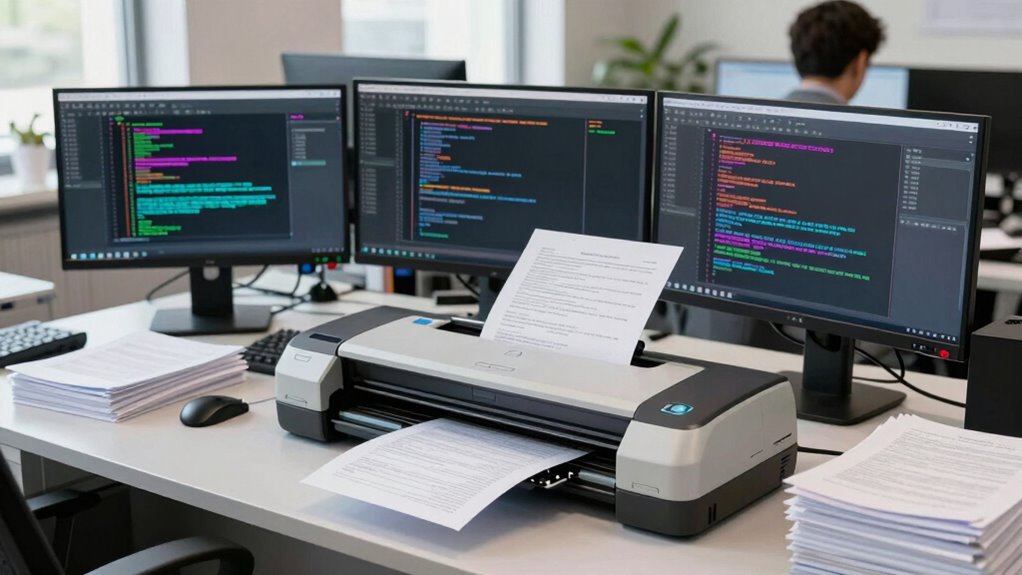
Maintaining OCR performance over time requires ongoing attention and regular updates to your scanning processes. As AI advancements emerge, they can improve OCR accuracy and efficiency, making it essential to stay current with the latest tools and techniques. Consistently monitor your OCR results to identify potential issues early and adjust settings accordingly. Investing in user training ensures your team understands best practices, reducing errors caused by improper handling or misconfiguration. Regular calibration of scanners and testing of OCR pipelines help sustain high accuracy levels. By combining technology updates with well-informed staff, you create a resilient system that adapts to evolving document types and quality challenges. This proactive approach guarantees your OCR remains reliable, compliant, and effective over time.
Integrate OCR Testing Into Your Overall Compliance Strategy
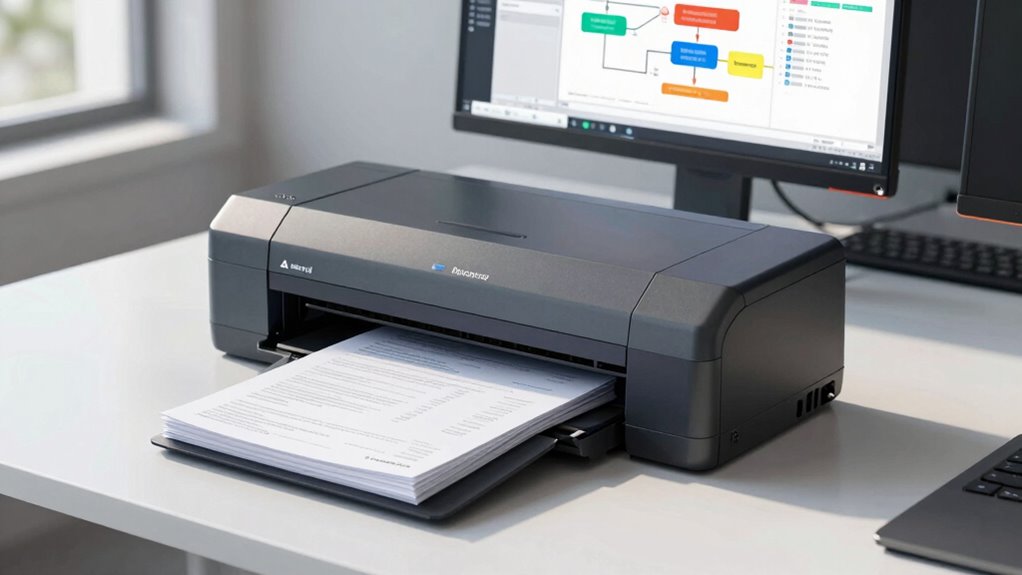
Integrating OCR testing into your overall compliance strategy guarantees that document processing remains accurate and reliable across your operations. To make sure of this, focus on:
- Embedding OCR validation in your compliance workflows to catch errors early.
- Prioritizing data privacy by testing OCR pipelines for secure handling of sensitive information.
- Conducting regular user training to keep staff aware of OCR performance standards and data privacy protocols.
- Continuously monitoring OCR output to identify issues that could impact compliance, accuracy, or security.
Frequently Asked Questions
How Often Should OCR Accuracy Be Re-Evaluated in Compliance Workflows?
You should re-evaluate OCR accuracy regularly, especially when implementing real-time monitoring. Set error thresholds that trigger reviews when accuracy drops below acceptable levels. Frequent checks, such as weekly or monthly, help catch issues early and guarantee compliance. If your workflows experience significant changes or increased document volume, increase the frequency. Consistent re-evaluation maintains high OCR performance, reduces errors, and keeps your compliance processes reliable.
What Are Common OCR Errors That Impact Regulatory Compliance?
You might encounter subtle issues like handwriting recognition errors or challenges with multilingual processing that can impact regulatory compliance. These errors often lead to misinterpretation of critical data, causing compliance risks. Handwriting recognition mistakes can overlook handwritten notes, while multilingual processing errors may misread documents in different languages. To stay compliant, you should regularly review and refine your OCR systems to handle diverse handwriting styles and multiple languages effectively, reducing potential errors.
How Does Document Quality Affect OCR Performance in Compliance?
You’ll find that document quality, especially image resolution and formatting, greatly influences OCR performance in compliance. Higher image resolution guarantees clearer text, reducing errors, while consistent document formatting helps the OCR engine recognize patterns accurately. Poor resolution or inconsistent formatting can lead to misreads and data inaccuracies, risking compliance issues. To improve OCR results, always aim for high-quality scans with clear, well-formatted documents, making the OCR process more reliable and compliant.
What Tools Are Best for Automating OCR Validation?
Think of automating OCR validation like using an AI-powered security system that spots every breach. You need tools like ABBYY FlexiCapture or Tesseract with AI integrations, which automate data extraction and validation, saving time. These tools often include data encryption features, protecting sensitive information. They streamline your workflow and guarantee accuracy, giving you confidence that your compliance data is reliable and secure without manual checks.
How Can OCR Testing Adapt to Different Regulatory Standards?
You can adapt OCR testing to different regulatory standards by incorporating checks for digital signatures and data encryption. Confirm your OCR pipeline verifies that sensitive data remains encrypted during processing and that digital signatures are validated for authenticity. Regularly update your test cases to align with evolving regulations, and automate these checks to maintain compliance. This approach guarantees your OCR system consistently meets diverse regulatory requirements while safeguarding data integrity.
Conclusion
By rigorously testing and refining your OCR pipelines, you guarantee compliance accuracy and avoid costly errors. Think of it like a well-tuned engine—you can’t just set it and forget it. Regular validation, automation, and continuous improvement are your best tools. When you treat OCR validation as an ongoing part of your compliance strategy, you’ll stay ahead of challenges and keep your workflows smooth, reliable, and audit-ready every time.
Halloween Picks
halloween
As an affiliate, we earn on qualifying purchases.