
📊 Full opportunity report: Data processing agreement tracker for micro SaaS teams on IdeaNavigator AI — validation score, market gap, and execution plan.

Get business pricing on monitors, keyboards and dev gear
- Business-only prices and quantity discounts
- Tax-exempt purchasing
- Multiple users, one account, clear invoices
TL;DR
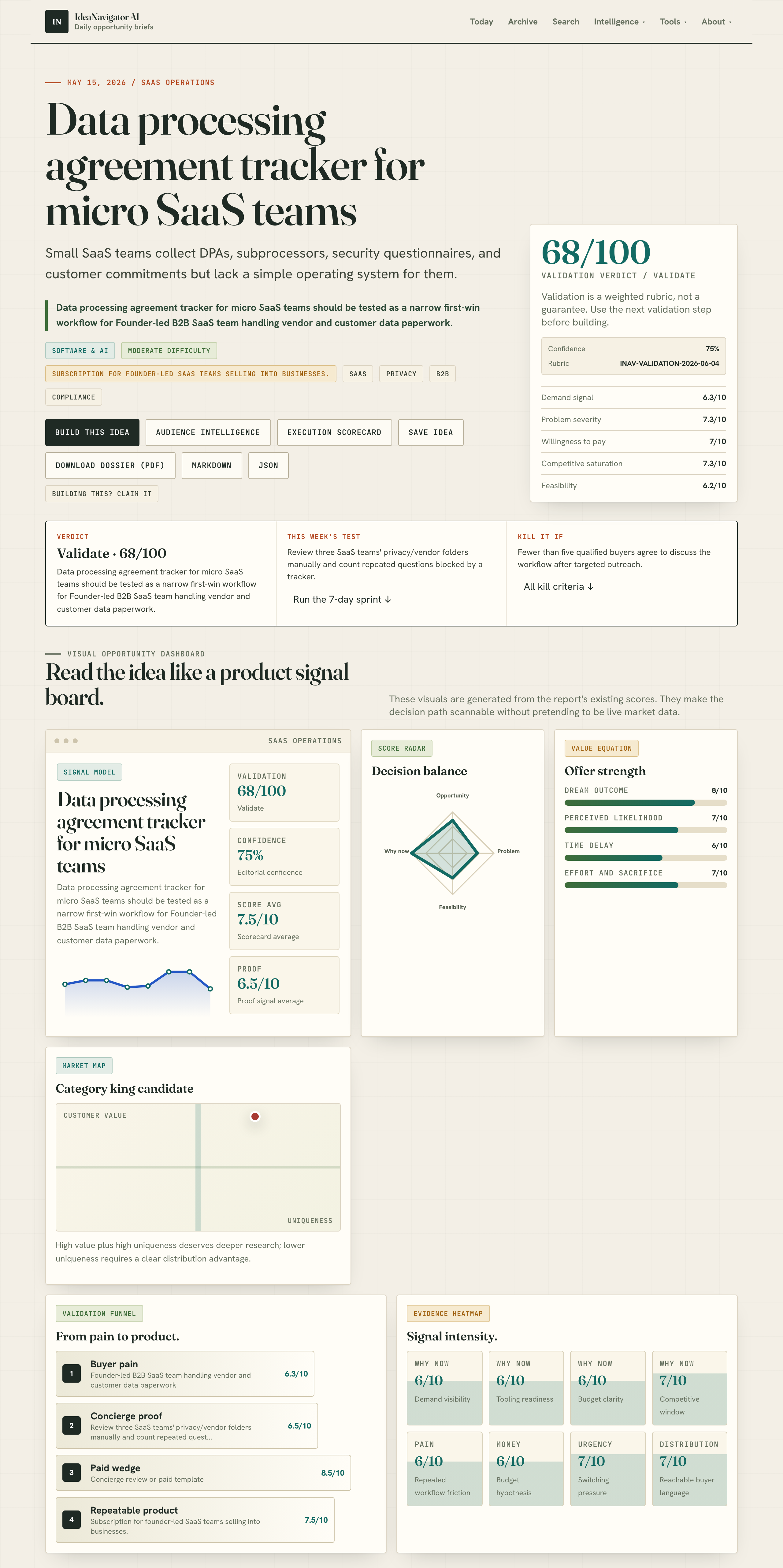
A prototype data processing agreement (DPA) tracker designed for small SaaS teams is entering testing. It aims to simplify managing privacy and vendor documentation, a growing need for early-stage SaaS companies.
A new data processing agreement (DPA) tracker tailored for founder-led micro SaaS teams is entering a testing phase, aiming to address the lack of simple tools for managing vendor and customer data documentation amid rising privacy compliance expectations.
The proposed DPA tracker is designed specifically for small SaaS teams that handle vendor agreements, customer privacy commitments, subprocessors, security questionnaires, and renewal clauses. It offers a centralized platform with features such as tracking clause statuses, source document links, and renewal dates, intended to streamline compliance workflows.
According to sources familiar with the development, the tracker is being tested with three SaaS teams by manually reviewing their privacy and vendor folders. The goal is to measure whether the tool reduces repetitive questions and manual effort in managing data paperwork, which is often fragmented and inefficient in small teams.
This initiative responds to the increasing pressure on smaller SaaS companies to meet privacy and security standards early in their sales process. As privacy regulations like GDPR and CCPA become more prominent, even small teams face mounting documentation and compliance requirements, creating a market opportunity for specialized tools.
Why a DPA tracker matters for small SaaS teams
This development addresses a critical gap for founder-led SaaS teams that lack dedicated legal or compliance departments. By simplifying the management of data processing agreements and related documentation, the tracker can reduce operational overhead and help small teams demonstrate compliance more efficiently. This is particularly relevant as privacy expectations and vendor review processes become more rigorous, even for early-stage companies.
Implementing such tools could lead to faster sales cycles, improved trust with customers, and reduced legal risks. The tracker’s success could also influence broader adoption of specialized compliance management tools tailored for small teams, shaping the future of SaaS operations management.
Products Worth Considering

Bose QuietComfort True Wireless Earbuds with Active Noise Cancellation, Black

LG 34GX90SA-W 34-inch Ultragear WQHD OLED Curved Gaming Monitor

Logitech MX Mechanical Wireless Illuminated Keyboard, Tactile Quiet, Graphite
As an affiliate, we earn on qualifying purchases.
Growing compliance demands in the SaaS startup ecosystem
Over recent years, privacy regulations like GDPR (enacted in 2018) and CCPA (implemented in 2020) have increased the compliance burden for SaaS companies, regardless of size. While larger firms typically have dedicated legal teams, smaller SaaS startups often manage compliance informally or with minimal resources.
As privacy and vendor review expectations tighten, even early-stage SaaS teams are required to maintain detailed documentation of their data processing activities, subprocessors, and security measures. Currently, many rely on manual, ad hoc methods, leading to inefficiencies and potential compliance gaps. The proposed DPA tracker aims to fill this gap by providing a lightweight, focused tool tailored for these teams.
Market research indicates a growing demand for simple, effective compliance tools among founder-led SaaS teams, especially as they scale sales into larger organizations with stricter vendor vetting processes.
“Small SaaS teams often lack a straightforward system to manage their privacy and vendor documentation, which can lead to repeated questions and inefficiencies.”
— an anonymous researcher
Uncertainties surrounding tracker adoption and effectiveness
It is not yet clear how widely the tracker will be adopted by other SaaS teams or how effectively it will reduce manual effort in practice. The testing phase is ongoing, and results are not yet available. Additionally, questions remain about the scalability of the tool beyond initial pilot teams and how it will integrate with existing compliance workflows.
Next steps for validation and potential market rollout
The development team plans to complete the testing phase with the initial SaaS teams within the coming months, gather feedback, and refine the tracker. If successful, a broader beta release could follow, with plans to incorporate user feedback and expand features. Further validation will involve measuring time savings, question reduction, and user satisfaction.
Market entry will likely depend on early user adoption, pricing strategies, and integration capabilities with popular SaaS management tools. Monitoring these developments will indicate whether the tracker can become a standard part of small SaaS compliance workflows.
Key Questions
What is a data processing agreement (DPA)?
A DPA is a legal document that outlines how data is processed between a data controller and processor, ensuring compliance with privacy laws like GDPR and CCPA.
Who is the target user for this tracker?
The tracker is designed for founder-led SaaS teams handling vendor and customer data documentation without dedicated legal resources.
How will the tracker improve compliance management?
It centralizes tracking of clauses, renewal dates, and source documents, reducing manual questions and effort, thereby streamlining compliance workflows.
When will the tracker be available for wider use?
The current testing phase is ongoing, with a potential broader release planned after initial validation and feedback collection, expected within the next few months.
Will this tool integrate with existing SaaS platforms?
Integration plans are not yet confirmed, but future versions may include compatibility with common SaaS management and compliance tools.
Source: IdeaNavigator AI