🔍 Read the full analysis: 7 Processors To Compare For A Desktop That Games And Gets Work Done on ThorstenMeyerAI.com

Get business pricing on monitors, keyboards and dev gear
- Business-only prices and quantity discounts
- Tax-exempt purchasing
- Multiple users, one account, clear invoices
TL;DR
This buying guide compares seven AMD desktop processors for gaming, productivity and system upgrades; it is not a report of a new product launch. The Ryzen 7 9800X3D is the source’s gaming-first pick, while the Ryzen 9 9950X3D is positioned for buyers balancing gaming with demanding multi-threaded work. Platform compatibility, workload, cooling and budget can change which choice makes sense.
A buying guide from ThorstenMeyerAI.com compares seven AMD desktop processors for gaming, productivity and upgrades, naming the Ryzen 7 9800X3D its gaming-first choice and the Ryzen 9 9950X3D a stronger match for demanding mixed workloads. The comparison matters because the chips span two motherboard platforms and different core counts, so the right pick depends on a buyer’s existing system and applications—not just a ranking.
The guide covers the Ryzen 7 9800X3D, Ryzen 9 9950X3D, Ryzen 5 9600X, Ryzen 7 7800X3D, Ryzen 9 5900XT, Ryzen 7 5800X3D and Ryzen 5 5500. It weighs gaming-oriented cache, core count, platform generation, cooler inclusion and the practical demands placed on cooling and the motherboard.
The source recommends matching a processor to the work actually performed. Gaming and everyday use may favor a different balance than rendering, compiling or encoding, which can make more cores useful. It also cautions that a high core count does not automatically improve a build if the graphics card or software is the limiting factor.
The roundup separates AM5 options from AM4 options. The older-platform chips may be sensible upgrades for owners of compatible systems, while a new build should account for the motherboard and memory required by the chosen platform. Buyers are advised to check the motherboard maker’s CPU support list and BIOS requirements before purchasing.
The 7 picks
- 1
 AMD Ryzen 9 9950X3D 16-Core Desktop ProcessorView on Amazon →
- 2
 AMD Ryzen 7 9800X3D 8-Core, 16-Thread Desktop ProcessorView on Amazon →
- 3
 AMD Ryzen 7 7800X3D 8-Core, 16-Thread Desktop ProcessorView on Amazon →
- 4
 AMD Ryzen 7 5800X3D 8-Core, 16-Thread Desktop ProcessorView on Amazon →
- 5
 AMD Ryzen 9 5900XT 16-Core, 32-Thread Unlocked Desktop ProcessorView on Amazon →
- 6
 AMD Ryzen 5 9600X 6-Core, 12-Thread Unlocked Desktop ProcessorView on Amazon →
- 7
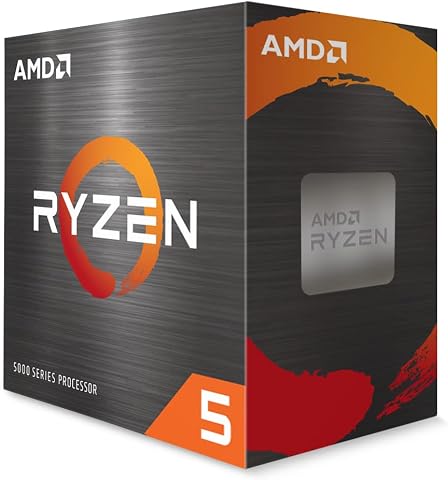 AMD Ryzen 5 5500 6-Core, 12-Thread Desktop Processor with Wraith Stealth CoolerView on Amazon →
Choosing Between Gaming and Work
The seven-chip comparison highlights a common desktop-building tradeoff: gaming-focused cache and strong game performance do not necessarily make a processor the best choice for every productivity program. Buyers who regularly run heavily threaded workloads may value core count more, while a gaming-focused system may not benefit from paying for cores it rarely uses.
Platform choice can also change the full cost of an upgrade. An AM4 processor may reuse an existing compatible motherboard and memory, but moving to AM5 may require new platform components. Cooling and case airflow add further costs, particularly for sustained workloads. The guide’s rankings are therefore best read as use-case recommendations, not universal performance results.
AM4 and AM5 Shape the Choices
The guide places processors from two AMD desktop platforms side by side. AM4 models, including the Ryzen 9 5900XT, Ryzen 7 5800X3D and Ryzen 5 5500, can appeal to owners seeking an upgrade without replacing a compatible platform. The newer-generation options in the roundup use AM5, which buyers should evaluate as part of a broader system decision rather than a chip-only purchase.
The source’s selection method considers gaming, content creation, everyday computing and existing-system upgrades. It gives the 9800X3D the lead for gaming-focused use, places the 9950X3D high for mixed workloads, and describes the 5500 as an entry-level option with an included Wraith Stealth cooler. It does not provide benchmark tables or quantified performance comparisons.
“The AMD Ryzen 7 9800X3D [is] the best overall pick for a gaming-focused build.”
— ThorstenMeyerAI.com buying guide
Benchmarks and Compatibility Details
The supplied material does not include specific benchmark results, tested games, software versions, prices or a publication date. It also does not specify motherboard models, BIOS versions or exact cooling requirements for each processor. The stated rankings are recommendations from the guide, not independently verified claims of superiority across all systems or workloads.
Performance differences may vary with the graphics card, memory, resolution, software and power or cooling settings. Buyers should confirm that a specific motherboard supports their selected CPU and check current prices and product specifications before ordering.
Check Your Build Before Buying
The next step for buyers is to identify their main workload, confirm their motherboard socket and CPU support, and compare current benchmarks for the games and applications they use. They should also budget for any required motherboard or memory replacement and verify whether the processor’s cooling needs fit their case and noise preferences.
No follow-up test, product launch or further development is specified in the source. The practical decision remains a system-by-system comparison of performance, compatibility and total build cost.
Key Questions
Which processor does the guide recommend for gaming?
It names the Ryzen 7 9800X3D as its gaming-focused pick. The source does not provide benchmark data to show how it compares in particular games or system configurations.
Which pick is aimed at gaming and demanding work?
The guide highlights the Ryzen 9 9950X3D for demanding mixed workloads that combine gaming with substantial productivity tasks.
Can I use an AM4 processor in an AM5 motherboard?
The guide treats AM4 and AM5 as separate platforms. Check the motherboard manufacturer’s CPU support list; socket compatibility and any BIOS requirements must be confirmed before buying.
Does a processor with more cores always make a better gaming PC?
No. The guide says gaming may benefit more from per-core performance and gaming-oriented cache than from cores that go unused. Core-heavy workloads such as rendering or encoding can make additional cores more useful.
Does the Ryzen 5 5500 include a cooler?
According to the source, the Ryzen 5 5500 includes a Wraith Stealth cooler. Whether it suits a buyer’s noise and temperature preferences depends on the system and workload.
Source: ThorstenMeyerAI.com
Halloween Picks
halloween
As an affiliate, we earn on qualifying purchases.