
TL;DR

Get business pricing on monitors, keyboards and dev gear
- Business-only prices and quantity discounts
- Tax-exempt purchasing
- Multiple users, one account, clear invoices
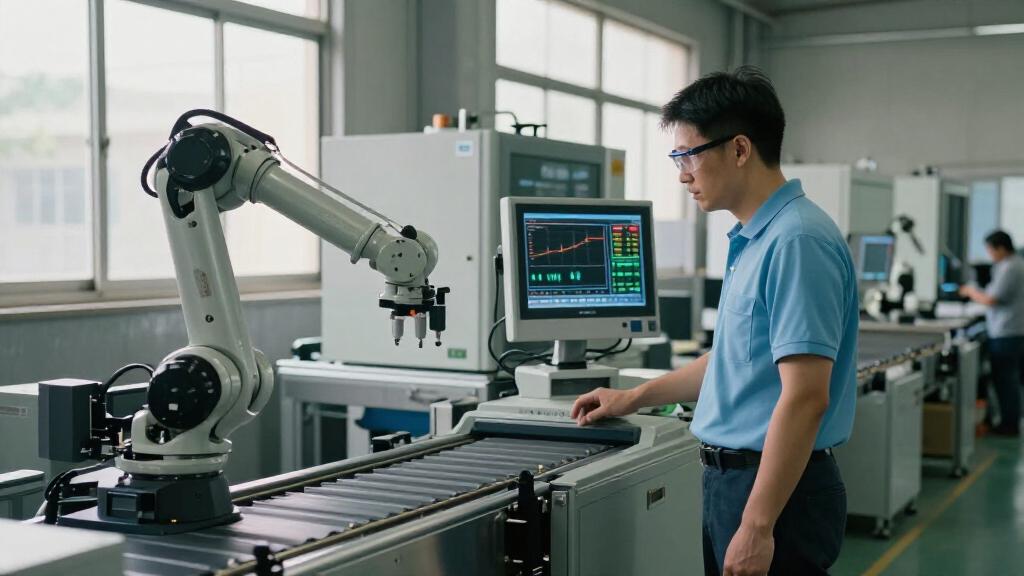
Siemens announced a major investment in industrial AI, partnering with NVIDIA to create a platform that embeds AI across manufacturing processes. This move aims to leverage proprietary data and domain expertise to revolutionize factory automation and design, with the first AI-driven factory launching in 2026.
Siemens has announced a strategic partnership with NVIDIA to develop an Industrial AI Operating System, designed to embed AI across the entire manufacturing lifecycle, starting with a fully AI-driven factory in Erlangen, Germany, in 2026. This initiative aims to leverage Siemens’ extensive industrial data and domain expertise, marking a significant shift toward physical-world AI applications in manufacturing.
The core of Siemens’ strategy is the Industrial Foundation Model (IFM), a specialized AI model trained on 3D models, engineering drawings, sensor telemetry, and automation logic. Siemens claims this model will optimize engineering and automation processes, differentiating itself from general-purpose large language models that are less effective in physical environments.
Siemens’ partnership with NVIDIA focuses on GPU-accelerated simulation, physics-based AI models, and generative digital twins. The companies are developing tools like Digital Twin Composer and generative simulation platforms, with the goal of creating digital twins that actively engineer and optimize physical systems in real time. The first fully AI-driven, adaptive manufacturing site is planned for the Siemens Electronics Factory in Erlangen, with other projects involving clients such as PepsiCo and Audi.
Implications of Siemens’ Industrial AI Investment
This development signifies a major shift in manufacturing towards physical AI applications, emphasizing the value of proprietary industrial data and domain expertise. Siemens’ approach could set new standards for factory automation, digital twins, and predictive maintenance, potentially leading to increased efficiency and reduced costs across the industry. The partnership also highlights the growing importance of AI infrastructure and simulation tools in industrial settings, with implications for competitors and global supply chains.
As an affiliate, we earn on qualifying purchases.
Background on Siemens’ Industrial AI Strategy
Siemens has long been a leader in industrial automation and digitalization, with a history spanning 175 years. Its announcement builds on previous efforts, such as the Hannover Messe 2025 reveal of the Industrial Foundation Model. The company’s focus on domain-specific AI contrasts with the broader trend of general-purpose models, asserting that real value in manufacturing lies in models trained on proprietary, physical-world data.
Recent collaborations with NVIDIA and other tech firms aim to accelerate simulation and digital twin capabilities, with Siemens positioning itself as a key player in the emerging industrial AI ecosystem. The launch of a fully AI-driven factory in 2026 is seen as a milestone in this strategy.
“Industrial AI is no longer a feature; it’s a force that will reshape the next century.”
— Roland Busch, Siemens CEO
As an affiliate, we earn on qualifying purchases.
Unconfirmed Aspects of Siemens’ Industrial AI Deployment
While Siemens has announced ambitious plans, specific hardware configurations, deployment timelines, and performance metrics for the AI platform remain undisclosed. The effectiveness of the Digital Twin Composer and generative simulation tools in real-world settings has not been independently validated, and the adoption pace within the industry is uncertain due to long sales cycles and existing customer commitments.
As an affiliate, we earn on qualifying purchases.
Next Steps for Siemens’ Industrial AI Initiatives
Siemens plans to launch its first AI-driven factory in Erlangen in 2026 and roll out Digital Twin Composer and industrial copilots to other clients shortly thereafter. Monitoring the performance of these implementations and their impact on manufacturing efficiency will be critical. Additionally, the company will likely expand its partnerships and refine its models based on early results, aiming to solidify its leadership in physical-world AI applications.
GPU-accelerated simulation hardware
As an affiliate, we earn on qualifying purchases.
As an affiliate, we earn on qualifying purchases.
Key Questions
What is Siemens’ Industrial Foundation Model?
The Industrial Foundation Model (IFM) is Siemens’ specialized AI model trained on industrial data, including 3D models, drawings, and sensor telemetry, designed to optimize engineering and automation processes.
How does Siemens’ partnership with NVIDIA enhance its AI capabilities?
The partnership provides GPU-accelerated simulation, physics-based AI models, and generative digital twins, enabling Siemens to develop active, real-time engineering tools for manufacturing.
When will the first fully AI-driven factory be operational?
The first factory, at Siemens’ Electronics Factory in Erlangen, Germany, is scheduled to launch in 2026, serving as a blueprint for future implementations.
What are the main challenges Siemens faces in this AI push?
Key challenges include validating performance metrics, integrating new AI tools into existing industrial workflows, and overcoming long sales cycles typical of mission-critical manufacturing systems.
Why does this development matter for the manufacturing industry?
This initiative could significantly improve factory efficiency, predictive maintenance, and design processes, setting a new standard for industrial automation driven by proprietary physical-world AI models.
Source: ThorstenMeyerAI.com
Halloween Picks
halloween
As an affiliate, we earn on qualifying purchases.