TL;DR

Get business pricing on monitors, keyboards and dev gear
- Business-only prices and quantity discounts
- Tax-exempt purchasing
- Multiple users, one account, clear invoices
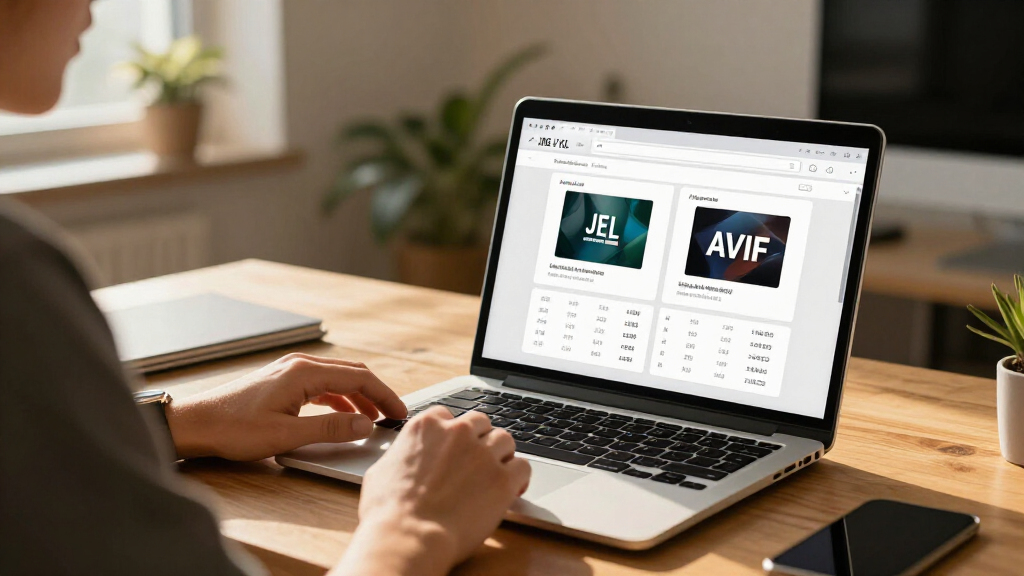
A 2026 comparison of current encoders finds AVIF generally produces smaller lossy web images and decodes faster, particularly for screenshots, illustrations and transparency. JPEG XL performs better for lossless images and can match or beat AVIF on individual files, so the author recommends testing both when file size is unusually high.
A 2026 comparison of JPEG XL and AVIF finds that AVIF usually produces smaller files for lossy web images and decodes faster, while JPEG XL is the stronger option for lossless images and can win on particular images. The findings give web developers a practical basis for choosing formats, but the author says results depend on the image and encoder and recommends testing real assets.
In the report by Jake Archibald, JPEG XL files were typically 15–25% larger than equivalent AVIF files for lossy photos at default effort settings. At maximum effort, the gap narrowed to 6–20%. These are typical results from the report’s test set, not a guarantee for every image: some outliers came close to AVIF or beat it.
The difference was larger for screenshots and illustrations. JPEG XL files were reported as 30–90% larger at default effort and 20–70% larger at maximum effort. For images with transparency, the tested libjxl encoder produced files 31–44% larger at default effort and 61–70% larger at maximum effort. The report says JPEG XL encoder choice also matters: jixel often produced smaller files than libjxl, but its lossless handling of transparency could make files two to three times the size of AVIF.
AVIF was generally faster to decode, with JPEG XL taking two to three times as long at medium quality in the tested cases. For lossless images, JPEG XL had the advantage: lossless WebP was 9–17% larger for photos, and lossless AVIF was 30–120% larger in the report’s comparisons. The author cautions that lossless images are rarely necessary for typical web delivery.
How Image Choices Affect Web Delivery
Image format affects more than download size. Smaller files can reduce the data visitors need to download, while decode time and memory use can affect how quickly images appear and how much work a device must do. The comparison finds AVIF is usually the better default for lossy delivery, especially for graphics and images with transparency, while JPEG XL can be useful where lossless quality or a particular image’s compression result is the priority.
The figures should not be treated as universal savings. They reflect a selected set of images and specific encoder versions and settings. A site’s own photographs, product images, screenshots and illustrations may behave differently. Developers weighing format changes should compare file size, visual quality, encoding cost and decode performance on representative assets rather than relying on one headline percentage.
As an affiliate, we earn on qualifying purchases.
The Test Setup and Browser Support
Archibald’s report says JPEG XL had reached all major browsers by the time of publication, prompting a comparison with other formats. Its progressive-preview support was described as available in Chrome and Firefox; Safari displayed the completed image rather than progressive previews. AVIF progressive rendering was described as Chrome-only at the time, with Firefox support in progress.
The benchmark used released versions available when the tests were run: avifenc 1.4.2, libjxl 0.12.0 and jixel 0.4.2, alongside cwebp 1.6.0 for lossless WebP comparisons. The report’s script encoded a selection of images at different settings; most were resized to 1,598 pixels wide. These version numbers and results describe the tested implementations, not an immutable ranking of the formats.
As an affiliate, we earn on qualifying purchases.
Where the Results May Differ
The comparison does not establish that AVIF will make every image smaller. The author reports outliers favoring JPEG XL, and notes that the choice of JPEG XL encoder can materially change results. The reported percentages also come from a particular test set, settings and software versions; they may shift as encoders and browser decoders change.
Some areas remain unsettled. The report says JPEG XL gain maps are not supported by browser decoders, while its encoding process for that HDR feature is experimental or unclear. It also says AVIF progressive rendering was still limited in browser availability. The article’s HDR comparison found that two quality metrics disagreed substantially, so its file-size results for non-gain-mapped HDR should be read with that limitation in mind.
As an affiliate, we earn on qualifying purchases.
Test Assets as Encoders Change
For current web projects, Archibald recommends starting with AVIF in 4:4:4 mode and using a high effort setting where the encoding cost is acceptable. If AVIF produces an unusually large file, the author suggests trying JPEG XL with jixel and comparing the output. The report warns against treating AVIF’s 4:2:0 mode as an automatic default: it says that mode rarely reduces file size in the tests, although it can encode and decode more quickly.
The next practical step for developers is to benchmark representative site images with current tools and check both visual output and browser behavior. The author notes that AVIF and JPEG XL implementations have improved recently, so the relative results and recommendation could change as new versions arrive.
As an affiliate, we earn on qualifying purchases.
Key Questions
Which format usually makes smaller lossy web photos?
In the report’s tests, AVIF was usually smaller. JPEG XL was typically 15–25% larger at default effort settings and 6–20% larger at maximum effort, though some images were exceptions.
Is JPEG XL better for lossless images?
In the report’s comparisons, JPEG XL produced smaller lossless files than lossless WebP and AVIF for the tested photos. The author says lossless formats are rarely needed for ordinary web images.
Should a website use AVIF 4:2:0 by default?
The report recommends AVIF 4:4:4 as the starting point. It says 4:2:0 rarely reduced file size in the tests and made higher quality harder to reach, although it encoded and decoded faster.
Will AVIF always beat JPEG XL?
No. The report describes individual images where JPEG XL came close to or beat AVIF. Results vary with image content, encoder, settings and software version, so testing a site’s own assets remains useful.
Source: hn
Fall Picks
fall essentials
As an affiliate, we earn on qualifying purchases.