🔍 Read the full analysis: Exploring AI-Generated Watercolours With TRL And OpenEnv Tools on ThorstenMeyerAI.com
TL;DR
An engineer has published a complete open reproduction of Surya Narreddi’s viral watercolour AI model, utilizing TRL and OpenEnv. The project includes datasets, training scripts, and trained models, enabling community follow-up.
An independent engineer has released a complete, open-source reproduction of Surya Narreddi’s viral watercolour-painting language model, built with TRL and OpenEnv on Hugging Face infrastructure. This project includes datasets, training scripts, and trained models, making the entire pipeline accessible for community research and development.
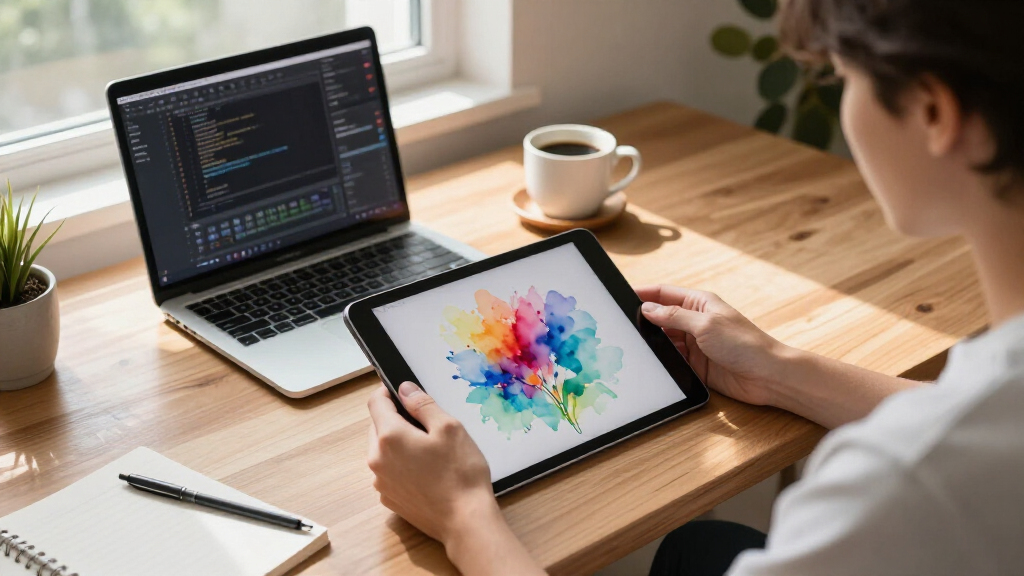
The reproduction follows Narreddi’s original concept, which trains a language model to generate JavaScript code that creates watercolour-style paintings using the p5.brush library. The project tests whether reinforcement learning can optimize aesthetic preferences, rather than factual correctness, by rewarding style qualities such as translucence, soft edges, and washes.
All artifacts—datasets, scripts, reward configurations, and trained models—are openly available on Hugging Face. The pipeline uses a reward mix that combines code correctness, code length, human preference scores from HPSv3, and a pairwise style judge based on Qwen3-VL-30B-A3B. The training process involves 110 steps, 240 episodes per step, and eight generations per episode, run via Hugging Face’s infrastructure.
According to the author, this open release aims to enable further exploration of reinforcement learning over aesthetic taste, a relatively novel approach compared to traditional RL tasks with verifiable answers. For more details, see the original analysis on Thorsten Meyer’s coverage. The project also emphasizes the interpretability of generated code, allowing users to see and edit each brushstroke decision.
Implications of Open Watercolour AI Reproduction
This project demonstrates the feasibility of using reinforcement learning to optimize artistic style based on human aesthetic preferences, rather than objective correctness. It challenges the convention of AI training solely on verifiable metrics, opening new avenues for creative AI applications.
By releasing all components openly, it lowers barriers for researchers and artists to experiment with aesthetic-driven AI, potentially influencing future generative art tools and models. The approach also highlights the importance of interpretability in AI-generated art, as code output allows direct inspection and modification of artistic decisions.
The work arrives at a moment when mainstream image models tend to produce highly polished, statistically average images. The looser, more handmade style of Narreddi’s watercolours offers a contrast that may appeal to audiences seeking authenticity and imperfection in AI art.
As an affiliate, we earn on qualifying purchases.
Historical Roots and Technical Foundations of AI Watercolours
The project situates itself within the lineage of early generative AI art, including DeepDream (2015), Edmond de Belamy (2018), and neural-network portraits by artists like Mario Klingemann. These works explored the medium’s potential and pushed artistic boundaries through neural networks and GANs.
In parallel, artists like Anna Ridler curated datasets by hand, training models on carefully labeled images, exemplifying a human-in-the-loop approach. Narreddi’s work echoes this tradition by curating a reference pool of paintings and training a model to generate watercolour-style code, guided by a reward that emphasizes artistic style over strict correctness.
The original project by Narreddi used text prompts to generate images, but the current reproduction focuses on code-based output, allowing more detailed inspection and editing of each artistic decision.
“This open reproduction aims to empower the community to explore aesthetic reinforcement learning, making the process transparent and adaptable.”
— Thorsten Meyer, project creator
digital art brushes for watercolor style
As an affiliate, we earn on qualifying purchases.
As an affiliate, we earn on qualifying purchases.
Unverified Aspects and Pending Technical Details
While the reproduction provides comprehensive artifacts, it is not yet clear how closely the generated watercolours match the quality and style of Narreddi’s original viral videos. The project does not include a quantitative comparison or user study to evaluate aesthetic similarity.
Additionally, the full technical report promised by Narreddi has not yet been published, leaving some details of the original reward design and training process unconfirmed. The effectiveness of the different reward mixes remains to be systematically assessed.
It is also uncertain how the community will adopt and extend this open reproduction, as real-world artistic validation and further experimentation are still to come.
artificial intelligence art creation tools
As an affiliate, we earn on qualifying purchases.
As an affiliate, we earn on qualifying purchases.
Future Developments and Community Engagement Opportunities
The next step involves the release of Narreddi’s full technical report, which will clarify the detailed methodology and results. Community members are encouraged to experiment with the open artifacts, modify the reward functions, and compare outputs against the original viral videos.
Further research may include user studies to assess aesthetic preferences, refinement of the reward models, and application of the approach to other artistic styles. The open-source pipeline also offers potential for integration into creative software and educational tools.
Monitoring community feedback and collaborative projects will be key to understanding the broader impact of this approach on AI art and reinforcement learning research.
As an affiliate, we earn on qualifying purchases.
Key Questions
What is the main innovation of this open reproduction?
The project fully reproduces the watercolour AI using open datasets, scripts, and models, enabling community experimentation with reinforcement learning over aesthetic taste, rather than objective correctness.
How does the reward system influence the generated art?
The reward combines style scoring based on human preferences, code correctness, and length, guiding the model toward more aesthetically pleasing watercolour-like outputs through reinforcement learning.
Can I modify the generated watercolours or training process?
Yes, all artifacts—including code, datasets, and trained models—are openly available, allowing users to customize reward functions, training parameters, and artistic styles.
What are the limitations of this reproduction?
It is not yet confirmed how closely the outputs match the original viral videos in style or quality, and the full technical methodology from Narreddi is still pending publication.
What impact could this have on AI art development?
This approach demonstrates that reinforcement learning over aesthetic preferences is feasible and could inspire new AI tools that prioritize artistic expression and interpretability.
Primary source: Hugging Face · via ThorstenMeyerAI.com