TL;DR
Listen free for 30 days with Audible
Thousands of audiobooks and originals — cancel anytime.
Start your free trialAs an affiliate, we earn on qualifying purchases.
New phone apps now enable users to measure tooth shade objectively at home using camera technology and guided lighting. These tools aim to improve the accuracy of teeth whitening tracking, with validation against dental standards underway.
Phone apps that measure tooth shade using smartphone cameras and guided lighting are emerging as a promising tool for at-home teeth whitening tracking, according to recent developments. These applications aim to provide users with an objective way to monitor their whitening progress, addressing a common challenge in home dental care.
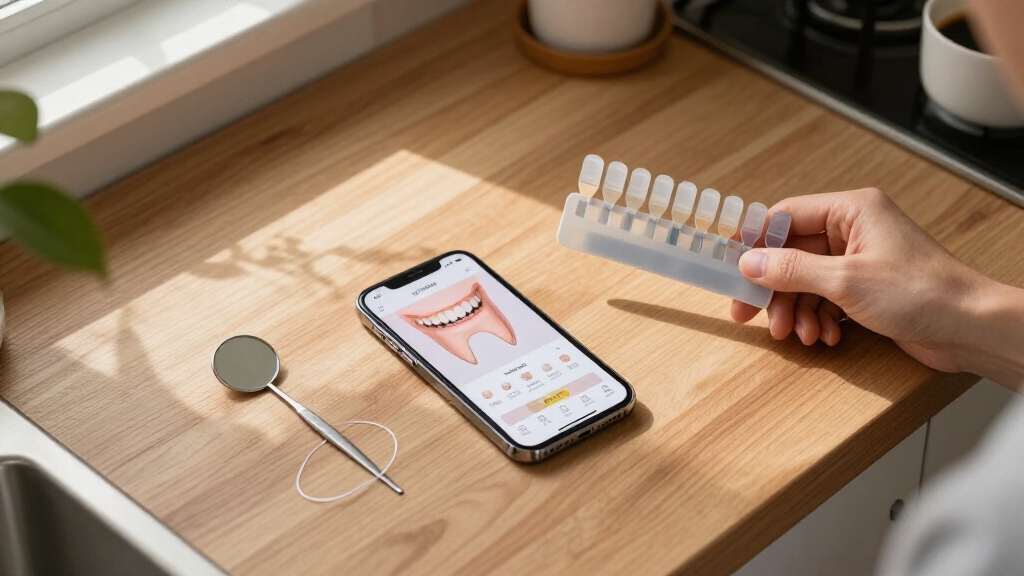
The concept involves leveraging smartphone camera technology combined with guided lighting to capture accurate images of teeth, which are then analyzed against the dental shade scale. This approach seeks to replicate the calibrated shade readings typically performed by dentists, offering a more precise alternative to visual assessment in the bathroom mirror.
Developers are working on a minimum viable product (MVP) that guides users through a photo flow, scores the tooth color, and plots the results over time. The app will also compare individual progress to data from similar users and recommend products based on their effectiveness in moving the shade score. Validation efforts include benchmarking app results against dentist-standard VITA shade readings for approximately fifty users, with early indications of strong correlation.
This innovation is targeted at consumers engaged in home whitening routines, who currently rely on subjective judgment and often cycle through multiple products without clear measurement of effectiveness. By offering an objective, easy-to-use measurement tool, the apps aim to improve user confidence and optimize whitening outcomes.
Potential Impact on Home Teeth Whitening Practices
Introducing phone apps capable of objectively measuring tooth shade could significantly change how consumers approach at-home whitening. Currently, most users rely on visual assessment, which is subjective and inconsistent. An accurate, accessible measurement tool can help users track their progress more reliably, reducing frustration and unnecessary product cycling.
Moreover, this technology could foster a more data-driven market, where product effectiveness is validated through user-shared results. Subscription models and affiliate revenue based on proven product efficacy could also emerge, incentivizing brands to develop and promote effective whitening solutions.
As an affiliate, we earn on qualifying purchases.
Advances in Smartphone Technology Enable Shade Measurement
Recent improvements in smartphone camera quality and guided-lighting systems have made it feasible to approximate dental shade readings outside clinical settings. Traditionally, shade matching has been performed using calibrated dental devices like the VITA shade guide, which are not practical for home use.
This development builds on prior research indicating that with proper lighting and calibration, smartphone cameras can reliably capture color data. The market for consumer oral-care and beauty tech is increasingly receptive to integrating measurement tools that enhance product effectiveness and user engagement.
Developers are now testing these concepts through pilot programs, aiming to validate the correlation between app scores and professional dental readings before broader rollout.
“By guiding users through a standardized photo process, we can approximate dental shade readings with high accuracy, making home whitening more objective.”
— an anonymous developer
at home teeth whitening progress tracker
As an affiliate, we earn on qualifying purchases.
As an affiliate, we earn on qualifying purchases.
Validation and Accuracy of Phone-Based Shade Measurements
While early testing shows promise, it is not yet confirmed how closely app scores will match professional dental shade readings across diverse users and lighting conditions. The correlation strength from initial benchmarks remains under evaluation, and broader validation is ongoing.
It is also unclear whether the app’s recommendations will reliably improve whitening outcomes or if user variability in camera handling and lighting will impact accuracy.
As an affiliate, we earn on qualifying purchases.
Upcoming Validation Studies and Market Adoption
Developers plan to complete validation against dental standards within the next few months, with results informing further refinement. Successful validation could lead to wider app availability, subscription services, and partnerships with whitening product brands. Consumer education on proper photo techniques will also be a key step in ensuring effective use.
As an affiliate, we earn on qualifying purchases.
Key Questions
How accurate are these phone apps compared to dentist shade matching?
Initial testing indicates a strong correlation, but full validation is ongoing. Results from validation studies will determine how closely app scores match professional dental readings.
Can these apps help me choose the best whitening product?
Yes, once validated, the apps will compare your shade progress with data from other users and recommend products proven to move the shade score effectively.
Are these apps easy to use at home?
Developers are designing guided-lighting photo flows to simplify the process, aiming for a user-friendly experience suitable for non-professional users.
Will I need special equipment or lighting to use these apps?
Most apps will use your smartphone’s camera combined with guided lighting within the app, eliminating the need for additional devices.
When will these apps be widely available?
Validation results are expected within the next few months, after which wider deployment and updates are anticipated, possibly within six months to a year.
Source: IdeaNavigator AI
NFL season / tailgating Picks
team gear
As an affiliate, we earn on qualifying purchases.