

📊 Full opportunity report: Memory Stopped Being a Commodity on ThorstenMeyerAI.com — validation score, market gap, and execution plan.
TL;DR
Micron has announced long-term, take-or-pay contracts covering 20% of its memory output, with customers pre-funding capacity and locking in prices. This marks a shift from memory as a commodity to a strategic, contracted input, impacting supply dynamics and pricing.
Micron has revealed it has signed 16 long-term “take-or-pay” contracts that cover about 20% of its DRAM and NAND memory output, with commitments extending through 2030. These agreements, which include roughly $100 billion in guaranteed revenue, mark a significant shift in the memory industry, where demand is now pre-funded and locked in years in advance. This development signals that memory is no longer primarily a volatile commodity but has become a strategic input with contracted demand, impacting pricing and supply chain dynamics.
Micron’s Strategic Customer Agreements run mainly from 2026 to 2030, with some automotive deals lasting three years. These are take-or-pay contracts, requiring customers to buy a set volume or pay regardless, effectively pre-paying for capacity. The contracts cover about 20% of Micron’s DRAM and one-third of NAND over the period, with most priced within a band set near current market prices, ensuring Micron’s gross margins stay above previous cycle peaks.
Remarkably, these agreements include $22 billion in customer deposits and commitments, paid upfront and held on Micron’s balance sheet. Customers are effectively financing the capacity—a stark departure from the traditional industry model where memory manufacturers bore the capacity risk and buyers waited for prices to fall. The contracts are designed to protect Micron against market downturns while providing customers with secured supply at near-peak prices.
Memory stopped being a commodity
Micron just locked up a fifth of its DRAM and a third of its NAND through 2030 with binding take-or-pay contracts — and collected $22 billion in deposits from the customers, up front. The boom-bust cycle that always brought cheap RAM back is being contracted away.
A dream deal for Micron — near-peak prices, margin floors above any past peak, customer-funded fabs. Insurance for the buyers who signed — real protection against a real shortage, bought dear. And for everyone else, a forecast: don’t expect cheap memory back soon. The structure is also a large, leveraged bet on AI demand holding to 2030 — and floors get tested in a genuine downturn. The contracts run to 2030; the test arrives sooner.
Implications of Memory Contracts on Industry Power Dynamics
This shift signifies a transformation where memory is no longer a simple commodity subject to boom-bust cycles. Instead, it has become a strategic resource with pre-arranged demand, giving Micron and similar companies greater pricing power and stability. For buyers, especially large tech firms and AI infrastructure providers, this means locking in supply at high prices, effectively pre-paying for capacity in a competitive market. The move could reshape supply chain strategies and market behavior, reducing volatility but increasing the importance of contractual relationships.
However, this also introduces new risks: if demand for memory drops significantly, buyers may be stuck with expensive obligations. Conversely, Micron’s model offers a hedge against demand shocks, but it also signals a fundamental change in the industry’s economics, with implications for future pricing and supply management.
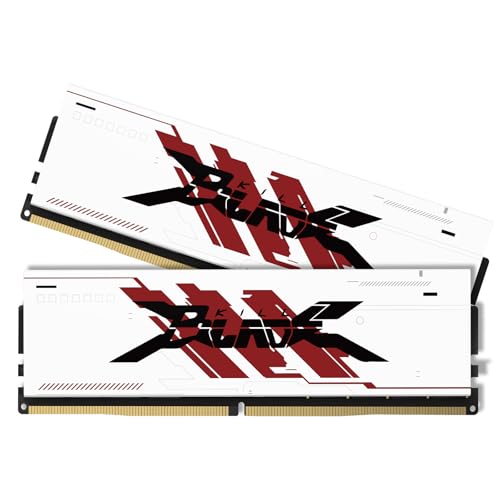
PUSKILL DDR4 3200MHz CL16 Desktop RAM Kit Heatsink, 32GB (2x16GB)
- High-capacity Memory: 32GB (2x16GB) for demanding tasks
- Fast 3200MHz Speed: Ultra-responsive multitasking and gaming
- Low Latency CL16: Tight timings for improved performance
As an affiliate, we earn on qualifying purchases.
As an affiliate, we earn on qualifying purchases.
Historical Industry Practices and Recent Market Shifts
For decades, the memory industry operated on a boom-bust cycle, with prices rising during shortages and crashing during gluts. Manufacturers like Micron relied on flexible supply and spot-market sales to adapt to fluctuating demand. Over time, shortages and excess capacity alternated, with prices swinging wildly. Recently, however, Micron’s record revenue, gross margins, and cash flow—driven by high demand from AI and data center markets—have enabled the company to negotiate long-term contracts that lock in demand and stabilize revenue streams. This marks a notable departure from the previous cycle of volatility and reflects a strategic shift toward supply pre-funding and price stability.
“These strategic agreements are transforming memory from a commodity into a strategic infrastructure component, ensuring stability for both suppliers and customers.”
— Micron CEO Sanjay Mehrotra

Crucial 32GB DDR5 RAM Kit (2x16GB), 5600MHz (or 5200MHz or 4800MHz) Laptop Memory 262-Pin SODIMM, Compatible with Intel Core and AMD Ryzen 7000, Black – CT2K16G56C46S5
- Memory Capacity: 32GB DDR5 RAM kit (2x16GB)
- Memory Speed: 5600MHz, 5200MHz, or 4800MHz options
- Performance Boost: Enhances multitasking and responsiveness
As an affiliate, we earn on qualifying purchases.
As an affiliate, we earn on qualifying purchases.
Unresolved Questions About Market and Demand Risks
It remains unclear how widespread this contractual model will become across the industry, as Micron has only secured agreements covering about 20% of its output so far. The long-term impact on memory prices, supply flexibility, and the traditional boom-bust cycle is still uncertain. Additionally, the actual demand trajectory for AI, 5G, and other applications could alter these dynamics, but the precise future market behavior remains to be seen.

Gigastone 【NAS Certified】 1TB High Endurance SSD (2-Pack) Up to 550MB/s TLC Flash with SLC Caching 24/7 Reliable for Gaming/PC/NAS SSD 5-Year Warranty 2.5" SATA Internal Solid State Drives RAID Disk
- High Endurance for Heavy Workloads: Reliable 24/7 NAS performance with high TBW
- Fast Data Transfer Speeds: Up to 550MB/s sequential transfer rate
- Designed for Creative Professionals: Ideal for video editing, virtualization, and database use
As an affiliate, we earn on qualifying purchases.
As an affiliate, we earn on qualifying purchases.
Future Developments and Industry Adoption of Contracted Demand
Micron aims to expand these long-term agreements to cover more of its production, potentially over half of its revenue. Industry observers will watch whether competitors adopt similar models and how this influences memory pricing, supply stability, and market volatility. Further negotiations and contract signings are expected as the industry adjusts to this new strategic framework, with the next few years critical in determining whether this model becomes standard practice.
As an affiliate, we earn on qualifying purchases.
Key Questions
Why is Micron’s move to long-term contracts significant?
It signals a shift from memory being a volatile commodity to a strategic, pre-funded resource, potentially reducing market volatility and increasing pricing power for suppliers.
How do these contracts affect memory prices?
Prices are now set within a band near current market levels, with guaranteed minimums, which could stabilize prices but also lock buyers into higher costs.
What risks do buyers face with pre-funding capacity?
If demand for memory drops, buyers may be stuck paying for capacity they no longer need, while Micron benefits from guaranteed revenue regardless of market conditions.
Will this change the industry’s boom-bust cycle?
It is uncertain. While contracts aim to smooth demand, the industry still faces uncertainties related to technological shifts and demand fluctuations, which could influence future market behavior.
Source: ThorstenMeyerAI.com