
Students shopping for software testing tools face a market crowded with legacy tool manuals, certification textbooks, and a fast-growing wave of AI-focused guides — and picking the wrong one can mean months spent on outdated material. My top pick overall is Full Stack Testing: A Practical Guide for Delivering High Quality Software in the Age of AI, because it covers the widest range of modern testing skills a student actually needs, from unit tests to AI-assisted workflows. For certification-focused learners, Foundations of Software Testing: ISTQB Certification remains the standard path to a resume-creditable credential, while AI Integrated Software Automation Testing with Java and Selenium stands out for students who want directly marketable automation code skills. The main tradeoff in this category is breadth versus depth: generalist guides open more doors but teach fewer hands-on skills, while tool-specific manuals build practical fluency faster but date themselves sooner. Cost is a second tension — classic tool encyclopedias are cheap used, but often cover tools employers no longer run. Keep reading for the full breakdown of all nine picks and who each one suits best.

Get business pricing on monitors, keyboards and dev gear
- Business-only prices and quantity discounts
- Tax-exempt purchasing
- Multiple users, one account, clear invoices
Key Takeaways
- AI coverage became the clearest dividing line in this roundup: the three guides built around AI-assisted testing ranked higher for career relevance than legacy tool manuals covering WinRunner and QTP, tools that most employers have retired.
- Selenium-based picks (AI Integrated Software Automation Testing and the Selenium WebDriver Training guide) offer the strongest portfolio payoff because students finish them with runnable automation projects, not just theory.
- The two Full Stack Testing editions overlap heavily — the Age of AI edition is the one worth buying, and students should not pay twice for near-duplicate content.
- ISTQB certification study remains the single most resume-visible credential path here, but its textbook teaches exam material rather than practical testing judgment, which is why it ranks as a targeted pick rather than best overall.
- Tool-encyclopedia style books (Software Testing Tools covering LoadRunner, JMeter, and TestDirector) are the cheapest entry points but carry the highest obsolescence risk, making them better as reference shelf material than primary learning texts.
| Software Testing Tools: Covering WinRunner, SilkTest, LoadRunner, JMeter, TestDirector, and QTP |  | Best Survey of Classic Tools | Format: Print book | Tools Covered: WinRunner, SilkTest, LoadRunner, JMeter, TestDirector, QTP | Tool Categories: Functional, performance, and test management | VIEW LATEST PRICE | See Our Full Breakdown |
| Full Stack Testing: A Practical Guide for Delivering High Quality Software in the Age of AI |  | Best for Career-Minded Students | Format: Book (digital/physical) | Focus: Full-lifecycle software testing | AI Coverage: Testing in AI-assisted development | VIEW LATEST PRICE | See Our Full Breakdown |
| AI Integrated Software Automation Testing with Java and Selenium |  | Best Hands-On Automation Path | Programming Language: Java | Frameworks: Selenium WebDriver, TestNG | AI Integration: GitHub Copilot | VIEW LATEST PRICE | See Our Full Breakdown |
| Foundations of Software Testing: ISTQB Certification, 4th Edition |  | Best for Certification Prep | Format: Print book, 4th edition | Certification Target: ISTQB Foundation Level | Content Type: Principles, techniques, and best practices | VIEW LATEST PRICE | See Our Full Breakdown |
| Elevating Software Testing with Artificial Intelligence |  | Best Big-Picture AI Read | Format: Book (digital/physical) | Focus: AI-enhanced software testing | Content Type: Methodologies, tools overview, and benefits | VIEW LATEST PRICE | See Our Full Breakdown |
| Software Test Design: Write comprehensive test plans to uncover critical bugs in web, desktop, and mobile apps | 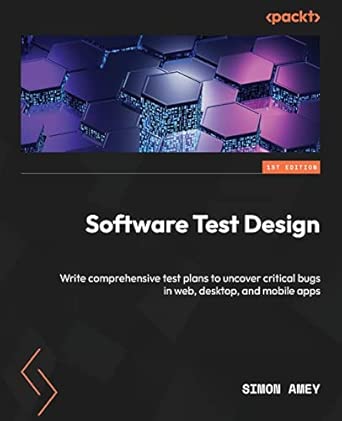 | Best for Multi-Platform Test Planning | Format: Print/eBook (Packt title) | Primary Focus: Test plan design | Platforms Covered: Web, desktop, mobile | VIEW LATEST PRICE | See Our Full Breakdown |
| Full Stack Testing: A Practical Guide for Delivering High-Quality Software |  | Best for Career-Focused Intermediates | Publisher: O’Reilly Media | Primary Focus: End-to-end testing strategy | Coverage: Unit, integration, UI, and delivery pipeline testing | VIEW LATEST PRICE | See Our Full Breakdown |
| A Practitioner’s Guide to Software Test Design |  | Best Classic Reference for Test Design Techniques | Publisher: Artech House | Primary Focus: Test design techniques | Key Topics: Decision tables, boundary value analysis, state-based testing | VIEW LATEST PRICE | See Our Full Breakdown |
| Selenium WebDriver Automation Tool Training with Java, Eclipse, TestNG, POM Framework, and Practical Tips |  | Best Hands-On Automation Starter | Format: Training guide / digital course material | Primary Focus: Selenium WebDriver automation | Technologies Covered: Java, Eclipse, TestNG, Page Object Model | VIEW LATEST PRICE | See Our Full Breakdown |
| software testing tools for student | Format |
|---|---|
| Software Testing Tools: Coveri | Print book |
| Full Stack Testing: A Practica | Book (digital/physical) |
| AI Integrated Software Automat | — |
| Foundations of Software Testin | Print book, 4th edition |
| Elevating Software Testing wit | Book (digital/physical) |
| Software Test Design: Write co | Print/eBook (Packt title) |
| Full Stack Testing: A Practica | — |
| A Practitioner’s Guide to Soft | — |
| Selenium WebDriver Automation | Training guide / digital course material |
More Details on Our Top Picks
Software Testing Tools: Covering WinRunner, SilkTest, LoadRunner, JMeter, TestDirector, and QTP
For students who want a single-volume tour of the industry’s legacy testing tools, this option covers the widest ground of anything in this roundup — six tools spanning functional, performance, and test management. Compared with Foundations of Software Testing, which builds deep conceptual understanding but stays tool-agnostic, this book answers the practical question of what each tool actually does. That breadth comes at a cost: several of the tools covered, like WinRunner, are largely obsolete, and the explanations lean survey-level rather than hands-on. A student pairing this with the Selenium WebDriver Automation Tool Training guide would get both historical context and a modern, usable skill. On its own, it works best as orientation, not training.
Pros:- Covers six distinct tools across functional, performance, and management testing
- Explains testing methodology alongside tool usage
- Useful historical context for understanding how QA evolved
- Breadth makes it easy to compare tool categories
Cons:- Several covered tools (WinRunner, SilkTest) are obsolete in modern workplaces
- Lacks detailed technical instructions or hands-on exercises
- No pricing or reader ratings available to gauge quality
Best for: Students who want a broad overview of legacy and commercial testing tools before committing to learning any single one
Not ideal for: Learners seeking job-ready modern skills, since several covered tools have faded from industry use
- Format:Print book
- Tools Covered:WinRunner, SilkTest, LoadRunner, JMeter, TestDirector, QTP
- Tool Categories:Functional, performance, and test management
- Audience Level:Introductory to intermediate
- Hands-On Exercises:Limited
- Includes Testing Methodology:Yes
Our verdict“A useful map of the testing-tool landscape for students who want context first, but not a path to employable skills on its own.”
Full Stack Testing: A Practical Guide for Delivering High Quality Software in the Age of AI
This pick makes the most sense for students aiming at a modern QA career, because it treats testing as a full-lifecycle discipline rather than a tool checklist. Where Software Testing Tools catalogs software, this guide addresses how testing fits into AI-assisted development workflows — exactly what entry-level job descriptions now ask about. Compared with Foundations of Software Testing, it is less exam-focused and more practice-oriented, which is both its strength and its weakness: students preparing for ISTQB certification will find the foundation book better aligned. The tradeoff for its forward-looking scope is depth — technical examples are thinner than dedicated hands-on resources like the Selenium WebDriver training guide.
Pros:- Covers the entire testing lifecycle, not just individual tools
- Directly addresses AI-era development practices
- Practical strategies students can apply to coursework and projects
- Aligns with what current QA job postings expect
Cons:- Too advanced for readers with no prior testing knowledge
- Lacks detailed technical examples and code walkthroughs
- Overkill for students who only need certification prep
Best for: University students or career-changers preparing for internships at modern software companies
Not ideal for: Absolute beginners with no testing background, who will find the full-stack framing overwhelming
- Format:Book (digital/physical)
- Focus:Full-lifecycle software testing
- AI Coverage:Testing in AI-assisted development
- Audience Level:Intermediate
- Practical Guidance:Strategies and best practices
- Certification Alignment:No
- Code Examples:Limited
Our verdict“The strongest choice for students who want to think like a working QA engineer, provided they already know the basics.”
AI Integrated Software Automation Testing with Java and Selenium
This option stands out as the most directly employable skill-builder in the batch, teaching Java, Selenium WebDriver, and TestNG together with AI assistance from GitHub Copilot. Compared with Elevating Software Testing with Artificial Intelligence, which discusses AI conceptually, this one puts AI to work in an actual automation stack — including machine-learning-based flaky test detection, a real problem students hit constantly in course projects. The tradeoff is commitment: it demands Java proficiency up front, whereas Software Testing Tools asks nothing of the reader. Students who already code will get portfolio-ready skills; those still learning programming fundamentals should build that base first.
Pros:- Teaches the exact Java + Selenium + TestNG stack employers use
- GitHub Copilot integration reflects real modern workflows
- ML-based flaky test detection addresses a genuinely common pain point
- Produces portfolio-demonstrable automation skills
Cons:- Requires existing Java proficiency
- No pricing information or user reviews available
- Narrower scope than full-lifecycle guides like Full Stack Testing
Best for: CS students comfortable with Java who want resume-worthy test automation and AI workflow experience
Not ideal for: Students without programming background, since Java and TestNG are prerequisites, not teaching subjects
- Programming Language:Java
- Frameworks:Selenium WebDriver, TestNG
- AI Integration:GitHub Copilot
- Machine Learning Features:Flaky test detection
- Prerequisites:Java programming knowledge
- Focus:Test automation
- Output:Hands-on automation skills
Our verdict“The best investment for students who can code and want job-market-ready automation skills rather than theory.”
Foundations of Software Testing: ISTQB Certification, 4th Edition
For students whose immediate goal is the ISTQB Foundation Level certification — a credential that genuinely strengthens internship applications — this is the clearest match in the lineup. Unlike Full Stack Testing, which teaches workplace practice, this book is structured around the certification syllabus, with clear explanations and worked examples of testing techniques. The tradeoff is that it is exam-oriented rather than tool-oriented: a reader will learn what test design means but not how to script it, which is where the AI Integrated Software Automation Testing guide picks up. Some sections run dense for total newcomers, so pairing it with lighter introductory reading helps.
Pros:- Aligned directly with the ISTQB Foundation syllabus
- Clear explanations with worked examples of testing techniques
- Builds vocabulary and fundamentals every other resource assumes
- Recognized credential pathway valued by employers
Cons:- Dense reading style can overwhelm complete beginners
- No hands-on tool practice or code
- No supplementary online resources included
Best for: Students preparing for the ISTQB Foundation Level exam who want a syllabus-aligned study text
Not ideal for: Hands-on learners who want to build automation projects, since this book stays conceptual
- Format:Print book, 4th edition
- Certification Target:ISTQB Foundation Level
- Content Type:Principles, techniques, and best practices
- Audience Level:Beginner to intermediate
- Hands-On Exercises:Worked examples, no tool labs
- Supplementary Resources:None included
Our verdict“The definitive pick if passing the ISTQB Foundation exam is the goal, and a solid vocabulary builder even if it is not.”
Elevating Software Testing with Artificial Intelligence
This entry serves students who want to understand where AI is taking QA without writing a line of code. It sits at the opposite end of the spectrum from the AI Integrated Software Automation Testing guide: that one teaches you to build AI-assisted tests, while this one explains the methodologies and business case for AI-driven testing. That perspective has real value for coursework, presentations, and interviews, where being able to discuss AI’s role in quality assurance sets a student apart. The tradeoff is practicality — it lacks technical specifications and hands-on depth, so readers wanting executable skills should treat this as a companion to, not a replacement for, tool-based learning.
Pros:- Clearly explains how AI changes testing workflows
- Accessible to non-programmers
- Great source material for coursework and interview talking points
- Broadens perspective beyond single tools
Cons:- No hands-on exercises or technical implementation details
- No pricing or reader ratings available
- Concepts may age quickly as AI tooling evolves
Best for: Students writing theses or presentations on AI in software quality who need conceptual grounding
Not ideal for: Practitioners wanting implementable techniques, since the content stays at the methodology level
- Format:Book (digital/physical)
- Focus:AI-enhanced software testing
- Content Type:Methodologies, tools overview, and benefits
- Prerequisites:None — non-technical friendly
- Hands-On Exercises:No
- Audience Level:Beginner to intermediate
Our verdict“A worthwhile conceptual companion for students curious about AI in QA, as long as skill-building happens elsewhere.”
Software Test Design: Write comprehensive test plans to uncover critical bugs in web, desktop, and mobile apps
Most testing books pick a lane — either mobile or web — but this one stands out for spanning web, desktop, and mobile in a single test-planning framework. That breadth matters for students working on varied course projects, since a capstone might involve a web frontend and a mobile app at the same time. Compared with A Practitioner’s Guide to Software Test Design, which digs deeper into individual design techniques, this book is wider rather than deeper: you get planning strategies that transfer across platforms instead of exhaustive technique walkthroughs. The tradeoff is that no edition details or reader reviews are available, so you’re betting on the publisher’s description rather than community validation — a real risk next to more established titles like the ISTQB Foundations text.
Pros:- Covers web, desktop, and mobile testing in one framework
- Teaches test plan writing, a skill most tutorials skip
- Practical focus on uncovering real bugs rather than theory alone
- Useful across multiple university project types
Cons:- No edition details or reader reviews to gauge quality
- Broader coverage means less depth per platform than specialized titles
Best for: Computer science students juggling course projects across web, desktop, and mobile who need one planning methodology that travels between platforms
Not ideal for: Students preparing for the ISTQB Foundation exam — this book isn’t aligned to that syllabus the way dedicated certification guides are
- Format:Print/eBook (Packt title)
- Primary Focus:Test plan design
- Platforms Covered:Web, desktop, mobile
- Target Audience:Aspiring testers and QA students
- Skill Level:Beginner to intermediate
- Certification Alignment:None
Our verdict“Pick this if your coursework spans multiple platforms and you need one transferable test-planning approach rather than exam prep.”
Full Stack Testing: A Practical Guide for Delivering High-Quality Software
This O’Reilly title earns its spot by treating testing as a whole-pipeline discipline — from unit tests through deployment — rather than a single phase you bolt on at the end. For students eyeing a QA or developer role after graduation, that mental model is what interviews actually probe. Compared with Selenium WebDriver Automation Tool Training, which teaches one toolchain in depth, Full Stack Testing teaches the strategy layer: when to test what, and which tools fit each gap. The tradeoff is real, though — the book assumes you already write code comfortably, so first-year students will struggle. If you’re still learning Java basics, start with the Selenium training title and return to this one once you can read test code without friction.
Pros:- Pipeline-wide view of testing strategy, not just one tool
- Written by experienced practitioners (O’Reilly imprint)
- Relevant to both developers and dedicated testers
- Directly applicable to internship and job interview scenarios
Cons:- Too advanced for students without solid programming foundations
- Strategy-heavy approach means fewer copy-paste-ready code examples
Best for: Final-year students and recent grads moving into dev or QA roles who need to reason about testing across an entire delivery pipeline
Not ideal for: Beginners still learning to code — the material assumes working development knowledge and moves quickly past fundamentals
- Publisher:O’Reilly Media
- Primary Focus:End-to-end testing strategy
- Coverage:Unit, integration, UI, and delivery pipeline testing
- Target Audience:Developers and testers
- Skill Level:Intermediate
- Certification Alignment:None
Our verdict“Choose this once you code comfortably and want the strategic breadth that distinguishes job candidates; skip it if you’re still on fundamentals.”
A Practitioner’s Guide to Software Test Design
Of the design-focused books in this roundup, this is the technique encyclopedia — decision tables, boundary analysis, state models — explained by an author who spent decades doing the work. Where Software Test Design (the Packt title) organizes itself around platforms, this book organizes itself around how you actually construct a test, which makes it the better companion for coursework that grades on technique rigor. Its age cuts both ways: the fundamentals haven’t changed, which is why it’s still assigned reading in many QA courses, but you’ll find nothing about modern tooling — pair it with the Selenium training title if you need automation alongside design theory. Some sections lean sparse on worked examples, so plan to practice the techniques on your own codebase.
Pros:- Authoritative treatment of core test design techniques
- Techniques remain relevant decades later
- Written by a long-time industry practitioner
- Strong foundation for ISTQB-style study
Cons:- Dated — no coverage of modern automation tools or frameworks
- Some sections lack detailed worked examples
Best for: QA-track students who need rigorous, technique-by-technique grounding in test design — especially for coursework with a theory component
Not ideal for: Students hunting for automation skills — this predates modern tooling and won’t teach you Selenium or CI pipelines
- Publisher:Artech House
- Primary Focus:Test design techniques
- Key Topics:Decision tables, boundary value analysis, state-based testing
- Target Audience:QA professionals and serious students
- Skill Level:Intermediate
- Certification Alignment:Supports ISTQB concepts (not an official guide)
Our verdict“This is the reference to buy for deep test-design theory; supplement it with a modern automation title rather than expecting it to cover tooling.”
Selenium WebDriver Automation Tool Training with Java, Eclipse, TestNG, POM Framework, and Practical Tips
Every roundup needs the pick that gets you writing runnable code on day one, and this is it. The training walks through Eclipse setup, Java integration, and the Page Object Model — the industry-standard structure for keeping automated tests maintainable. Compared with Full Stack Testing, which discusses strategy at a higher level, this goes step by step, which suits students who learn by doing rather than reading about concepts. The POM framework focus is the standout: it’s the pattern employers expect in any automation role, and most free tutorials never teach it properly. The main drawbacks are the absence of pricing transparency and customer ratings, so you can’t easily gauge value or community feedback — unlike the O’Reilly and Packt books, which carry publisher reputations behind them.
Pros:- Step-by-step tutorials with example test cases
- Covers the full toolchain: Java, Eclipse, TestNG
- Teaches the Page Object Model, an industry-standard framework pattern
- Includes practical tips drawn from real automation work
Cons:- No pricing information or customer ratings to judge value
- Purely tool-focused — no coverage of test design theory or strategy
Best for: Students who learn best by building — especially those targeting automation internships that list Selenium and Java as requirements
Not ideal for: Students without any Java background, and anyone wanting theoretical test-design foundations — this is tool training, not CS theory
- Format:Training guide / digital course material
- Primary Focus:Selenium WebDriver automation
- Technologies Covered:Java, Eclipse, TestNG, Page Object Model
- Target Audience:Automation beginners with basic Java
- Skill Level:Beginner to intermediate
- Includes:Step-by-step tutorials, example test cases, practical tips
Our verdict“If your goal is a portfolio of working Selenium automation projects rather than theory, this hands-on training is the most direct route in this lineup.”

How We Picked
I ranked these nine options against what actually determines value for a student: career relevance (does the material reflect tools and practices employers hire for in 2026), hands-on learning value (can a learner build a portfolio project from it), beginner accessibility (assumes no prior QA background), and longevity (how quickly the content will age). I also weighed cost per useful skill, since students typically buy on tight budgets and cannot afford to replace a $50 text every year. Guides that taught transferable concepts — test design thinking, automation fundamentals, AI-augmented workflows — scored higher on longevity than manuals tied to specific vendor tools.
The ranking order follows a simple logic: books that combine modern relevance with practical, buildable skills sit at the top; certification and specialization picks fill the middle because they serve narrower goals extremely well; and legacy tool encyclopedias land lower not because they are badly written but because their subject matter is steadily disappearing from industry use. Where two books overlapped heavily, I favored the more current edition and flagged the duplicate so students do not double-spend.
| software testing tools for student | Format |
|---|---|
| Software Testing Tools: Coveri | Print book |
| Full Stack Testing: A Practica | Book (digital/physical) |
| AI Integrated Software Automat | — |
| Foundations of Software Testin | Print book, 4th edition |
| Elevating Software Testing wit | Book (digital/physical) |
| Software Test Design: Write co | Print/eBook (Packt title) |
| Full Stack Testing: A Practica | — |
| A Practitioner’s Guide to Soft | — |
| Selenium WebDriver Automation | Training guide / digital course material |
Factors to Consider When Choosing Software Testing Tools For Students
Before committing to any single book or guide, it helps to understand the landscape of software testing education and where common buying mistakes happen. The nine picks above serve very different goals, and the wrong match usually stems from skipping the questions below.
Match the Purchase to Your End Goal
The most expensive mistake in this category is buying for the wrong destination. A student aiming for a QA analyst internship needs test design fundamentals and ISTQB vocabulary, while someone targeting an automation engineer role needs Selenium, Java, and framework-building practice — almost the opposite skill emphasis. Certification-driven learners should prioritize the ISTQB text and treat everything else as supplementary, because splitting focus across three books before an exam reliably lowers pass rates. Ask yourself whether your next twelve weeks are about passing a test, building a portfolio, or gaining general literacy, and buy only for that goal. Students who try to buy one book for all three goals typically end up with shallow coverage of each.
Prioritize Tools Employers Actually Use
A pattern I saw repeatedly in this comparison: older tool guides read like authoritative references but describe ecosystems that have largely vanished. Selenium, TestNG, JMeter, and CI-integrated testing dominate current job postings, while tools like WinRunner, SilkTest, and QTP appear mainly in legacy enterprise environments. A cheap used copy of a legacy manual feels like a bargain until you realize the skills are not interview currency. Before buying any tool-specific book, spend ten minutes searching entry-level QA job listings in your region and check which tools they name. That single search will tell you more about the right purchase than any table of contents — and it is free.
Weigh AI Content Carefully
AI-focused testing books are the fastest-growing segment, but quality varies enormously. Some genuinely teach AI-augmented test generation and maintenance; others bolt a thin AI chapter onto conventional material to chase a trend. Students gain the most from AI content when they already understand traditional testing — AI tools amplify existing judgment rather than replace it. If you are brand new, a conventional foundations book plus one well-chosen AI guide beats three AI-titled books with shallow coverage. Look for AI books that include working code examples and discuss limitations honestly; guides that only promise effortless automation usually underdeliver.
Hands-On Projects Beat Passive Reading
Across every strong pick in this roundup, the common thread was buildable exercises. Hiring managers respond to a GitHub repository with real automated tests far more than to a listed book title. When comparing two guides at similar prices, the one that walks you through building a Page Object Model framework or a complete test plan for a sample app delivers more interview value per dollar. Passive reference books still have a place on your shelf, but they should be your second or third purchase, not your first. A useful rule: if a book’s exercises cannot become portfolio artifacts, treat it as background reading and budget accordingly.
Watch for Edition Overlaps and Duplicates
This roundup surfaced a trap that exists across the category: multiple editions or near-identical titles from the same lineage, marketed separately. The two Full Stack Testing editions are the clearest example, and students who buy both effectively pay twice for overlapping chapters. Always check the publication date, table of contents, and reviews mentioning edition differences before checkout. Newer editions justify their price when they add current tool versions or AI content, not when they shuffle chapters. For certification texts especially, verify the edition matches the current exam syllabus — studying from an outdated ISTQB edition can mean missing newly weighted topics.
Budget Realistically Across Your Learning Path
A realistic student budget in this category is two to three books, not nine. A strong sequence looks like this: one foundations or certification text, one hands-on automation guide, and optionally one AI-focused supplement once the basics are solid. Free resources — official Selenium documentation, ISTQB sample exams, and open-source projects needing test coverage — can fill gaps that books charge for. Library access and institutional subscriptions frequently carry the certification texts at no cost, which frees budget for the practical guides you will mark up and keep. Spending everything on a single premium title leaves no room for the second book that most learners end up needing.
Frequently Asked Questions
Should I start with a certification book or an automation guide?
It depends on your timeline. If you have an ISTQB exam scheduled or are applying to roles that list the certification as a requirement, start with Foundations of Software Testing, because exam preparation rewards focused, single-source study. If you have a semester or more before job applications, start with an automation guide like the Selenium WebDriver Training book, because building a portfolio takes longer than passing a multiple-choice exam and compounds in value. The strongest student profiles have both: certification vocabulary gets you past HR screens, while hands-on projects carry you through technical interviews. A practical sequence is automation first, certification in the final months before applying.
Are the legacy tool manuals covering WinRunner, QTP, and LoadRunner still worth buying?
For most students, no — but with one exception. These tools have been retired or replaced at the majority of employers, so time spent learning WinRunner or SilkTest menus does not convert into interview skills. The exception is LoadRunner and JMeter performance testing: performance testing roles still exist, JMeter remains open-source and widely used, and those chapters retain real value. If you can find the book cheap used, the performance testing sections alone may justify the price. Otherwise, prioritize guides built around Selenium and modern CI pipelines, which is where entry-level demand actually sits.
Do I need to know Java before buying the Selenium-based guides?
You need basic Java, not mastery — roughly the level of variables, loops, methods, and simple classes, which most students acquire in a first programming course. Both Selenium picks in this roundup include Java refreshers, but they move quickly, and learners without any programming background tend to stall in the early chapters. If you have never coded, spend two or three weeks on a free Java fundamentals course first; the guides will then feel appropriately paced rather than overwhelming. Students fluent in another language like Python can usually adapt on the fly, since Selenium concepts transfer across languages. The bigger prerequisite is persistence: automation frameworks break constantly, and debugging patience matters more than syntax knowledge.
Which of the two Full Stack Testing editions should I buy?
Buy the Age of AI edition unless you find the earlier one at a steep discount. The core testing content overlaps substantially, but the AI edition adds coverage of AI-assisted test generation and contemporary delivery practices that the original predates, and that currency matters when you are citing the book in interviews or coursework. There is no reason to own both — the chapters you would gain do not justify the second purchase. One caution: if an instructor assigns the earlier edition specifically, follow their assignment, since page references and exercise numbering will not match across editions. Otherwise, the newer edition is the defensible default for a 2026 purchase.
How important is AI testing knowledge for a student entering QA in 2026?
Increasingly important, but as a layer on top of fundamentals rather than a replacement for them. Entry-level job postings now frequently mention familiarity with AI-assisted test tooling, and interviewers increasingly ask how you would use AI responsibly in a test workflow. What they do not want is a candidate who can prompt an AI tool but cannot explain boundary value analysis or write a locator strategy. That is why the AI guides in this roundup rank well for students who already have basics, but I would not recommend them as a first book. A reasonable target is foundational literacy first, then one dedicated AI testing guide in your second or third purchase — early enough to speak fluently about it by interview season.
Conclusion
The right choice here comes down to where you are in your learning path. For best overall, Full Stack Testing: A Practical Guide for Delivering High Quality Software in the Age of AI earns the top spot by covering the broadest slice of modern practice while staying practical and current. For best value, the legacy Software Testing Tools encyclopedia is the cheapest way to survey the field — especially its JMeter and performance chapters — provided you treat it as a reference rather than a curriculum. The premium choice is AI Integrated Software Automation Testing with Java and Selenium, which demands the most from you but returns directly marketable automation skills. For beginners, Foundations of Software Testing: ISTQB Certification provides structure, vocabulary, and a credential that hiring managers recognize by name. And for specific needs: the Selenium WebDriver Training guide for portfolio builders, Software Test Design and the Practitioner’s Guide for students who want deeper test-design theory, and Elevating Software Testing with AI for learners already past the basics who want to specialize. Whichever direction fits, buy for your next concrete goal — one well-chosen book finished and applied beats three skimmed.
Fall Picks
fall essentials
As an affiliate, we earn on qualifying purchases.