The best continuous integration platforms for most teams are GitHub Actions for projects already hosted on GitHub, GitLab CI/CD for an integrated source-control and pipeline workflow, and Jenkins for teams that need extensive control. These nine picks are books and learning guides about CI/CD tools and practices, not hosted platforms themselves. The right choice depends on your existing development environment, the complexity of your pipelines, and how much setup and maintenance your team can handle. I rank practical, platform-specific guidance above broad theory, while noting where beginner-friendly explanations or specialist coverage matter more. Read on for the full breakdown and help matching a guide to your needs.

Get business pricing on monitors, keyboards and dev gear
- Business-only prices and quantity discounts
- Tax-exempt purchasing
- Multiple users, one account, clear invoices
Key Takeaways
- The roundup compares learning resources, not software services: each title teaches CI/CD platforms or practices, so use it to guide tool selection rather than as a platform subscription recommendation.
- Platform fit is the clearest dividing line: the GitHub Actions book suits GitHub-centered projects, while the two GitLab titles address integrated GitLab pipelines at different levels.
- Jenkins has the broadest learning path here: three titles cover it, from beginner instruction to pipeline-building and a general CI introduction, but Jenkins also demands more setup and upkeep than a managed workflow.
- Beginner and advanced GitLab guides serve different readers: Mastering GitLab CI/CD is the practical entry point; Advanced GitLab CI/CD Pipelines is better for readers ready to work through pipeline complexity.
- Specialist and theory titles fill narrower gaps: the data-platform guide and Continuous Integration: Improving Software Quality and Reducing Risk address concerns that tool-specific tutorials may not cover.
| Learning Continuous Integration with Jenkins: A Beginner’s Guide to Implementing Continuous Integration and Continuous Delivery Using Jenkins 2, 2nd Edition |  | Best for Jenkins Beginners | Edition: 2nd Edition | Topic: Continuous integration and continuous delivery | Software: Jenkins 2 | VIEW LATEST PRICE | See Our Full Breakdown |
| Mastering GitLab CI/CD: A Practical Guide to Modern DevOps Pipelines |  | Best Practical GitLab Starting Point | Topic: GitLab CI/CD | Focus: Building and managing DevOps pipelines | Positioning: Practical guide | VIEW LATEST PRICE | See Our Full Breakdown |
| Advanced GitLab CI/CD Pipelines: An In-Depth Guide to Continuous Integration and Deployment |  | Best for Advanced GitLab Pipelines | Topic: Continuous integration and deployment | Platform: GitLab CI/CD | Focus: Advanced pipeline building and management | VIEW LATEST PRICE | See Our Full Breakdown |
| DevOps, DBAs, and DBaaS: Managing Data Platforms to Support Continuous Integration |  | Best for Database and Data-Platform CI | Topic: Managing data platforms to support continuous integration | Audience indicated by title: DevOps professionals, DBAs, and DBaaS users | Data focus: Data platforms and database services | VIEW LATEST PRICE | See Our Full Breakdown |
| Continuous Integration: Improving Software Quality and Reducing Risk |  | Best for CI Principles and Quality Practices | Topic: Continuous integration | Stated focus: Improving software quality and reducing risk | Series: Martin Fowler Signature Books | VIEW LATEST PRICE | See Our Full Breakdown |
| Azure DevOps for Beginners: Implement Continuous Integration and Delivery |  | Best for Azure DevOps Beginners | Format: Book | Topic: Continuous integration and delivery | Platform: Azure DevOps | VIEW LATEST PRICE | See Our Full Breakdown |
| GitHub Actions in Action: Continuous Integration and Delivery for DevOps | 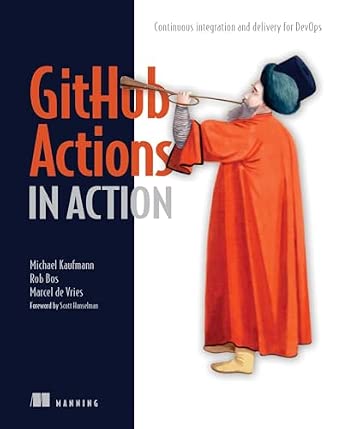 | Best for GitHub-Centered CI | Format: Book | Topic: Continuous integration and delivery | Platform: GitHub Actions | VIEW LATEST PRICE | See Our Full Breakdown |
| Building CI/CD Pipelines with Jenkins |  | Best for Agile Jenkins Teams | Format: Book | Topic: Continuous integration and continuous delivery | Platform: Jenkins | VIEW LATEST PRICE | See Our Full Breakdown |
| Learning Continuous Integration with Jenkins |  | Best for Jenkins Operations | Format: Book | Topic: Continuous integration and CI/CD | Platform: Jenkins | VIEW LATEST PRICE | See Our Full Breakdown |
| continuous integration platform | Topic | Format | ASIN | Platform |
|---|---|---|---|---|
| Learning Continuous Integratio | Continuous integration and continuous delivery | Not specified | — | — |
| Mastering GitLab CI/CD: A Prac | GitLab CI/CD | Not specified | — | — |
| Advanced GitLab CI/CD Pipeline | Continuous integration and deployment | Not specified | — | GitLab CI/CD |
| DevOps | Managing data platforms to support continuous integration | — | 1484222075 | — |
| Continuous Integration: Improv | Continuous integration | — | 0321336380 | — |
| Azure DevOps for Beginners: Im | Continuous integration and delivery | Book | B0F9KHL64Y | Azure DevOps |
| GitHub Actions in Action: Cont | Continuous integration and delivery | Book | 1633437302 | GitHub Actions |
| Building CI/CD Pipelines with | Continuous integration and continuous delivery | Book | B0GPB6SGBW | Jenkins |
| Learning Continuous Integratio | Continuous integration and CI/CD | Book | B0CQT1VMY5 | Jenkins |
More Details on Our Top Picks
Learning Continuous Integration with Jenkins: A Beginner’s Guide to Implementing Continuous Integration and Continuous Delivery Using Jenkins 2, 2nd Edition
This is the clearest fit for readers who want to learn CI and delivery through Jenkins 2 rather than a hosted platform such as GitLab CI/CD. Its beginner focus and coverage of both continuous integration and continuous delivery make it a more approachable starting point than Advanced GitLab CI/CD Pipelines, which is aimed at readers already tackling complex workflows. The tradeoff is that this is a guide to a particular Jenkins version, not a broad comparison of current CI platforms; readers choosing GitLab or GitHub Actions will need a different starting point. The available details identify the subject and audience, but do not establish how much hands-on material or platform coverage the book includes. I’d choose it to build foundational Jenkins knowledge, not to compare providers.
Pros:- A beginner-level entry point to Jenkins 2
- Addresses both continuous integration and continuous delivery
- Focuses on a named Jenkins version, giving the subject a clear scope
Cons:- Jenkins-specific material is less useful to teams selecting GitLab or GitHub Actions
- The supplied information does not establish how current its guidance is for later Jenkins releases
Best for: New developers or operations staff who want a beginner-oriented introduction to CI and CD using Jenkins 2.
Not ideal for: Teams committed to GitLab CI/CD, GitHub Actions, or a hosted platform who need guidance specific to those systems.
- Edition:2nd Edition
- Topic:Continuous integration and continuous delivery
- Software:Jenkins 2
- Skill level:Beginner
- Format:Not specified
- Publisher:Not specified
Our verdict“Choose this guide for an entry-level Jenkins 2 learning path; skip it if your team has standardized on another CI platform.”
Mastering GitLab CI/CD: A Practical Guide to Modern DevOps Pipelines
The title positions this guide as a practical route into GitLab CI/CD pipelines, making it a more natural fit for readers building or maintaining workflows in GitLab than Learning Continuous Integration with Jenkins. Its broad “mastering” scope may appeal to practitioners who want pipeline-building guidance rather than a beginner’s introduction to Jenkins 2. But the supplied product information gives no detail about chapters, prerequisites, examples, or GitLab versions, so I can’t judge how far beyond fundamentals it goes. That uncertainty matters when choosing a practical guide: the title promises modern DevOps pipelines, while the available evidence does not verify the depth or currency. I’d treat it as the GitLab-focused option to investigate, not as a proven substitute for platform documentation.
Pros:- Dedicated to GitLab CI/CD rather than CI concepts in general
- The title signals a practical pipeline-building orientation
- Targets modern DevOps pipeline work
Cons:- The supplied information does not identify its skill level or prerequisites
- No details are provided about examples, covered GitLab features, or version currency
Best for: Developers and DevOps practitioners whose repositories and build workflows already live in GitLab and who want a practical pipeline-focused guide.
Not ideal for: Beginners seeking a clearly described, version-specific curriculum or teams using Jenkins, GitHub Actions, or Azure DevOps.
- Topic:GitLab CI/CD
- Focus:Building and managing DevOps pipelines
- Positioning:Practical guide
- Skill level:Not specified
- GitLab version:Not specified
- Format:Not specified
Our verdict“Consider this for GitLab-based pipeline work, but verify its scope and version coverage before relying on it as a learning plan.”
Advanced GitLab CI/CD Pipelines: An In-Depth Guide to Continuous Integration and Deployment
This title is the most explicitly advanced option in the group, with its focus on in-depth GitLab CI/CD pipelines and continuous integration and deployment. That makes it a better match for experienced GitLab users than Mastering GitLab CI/CD, whose title suggests a practical guide but does not specify an advanced audience. The tradeoff is that advanced positioning can leave newcomers without the foundations they need, and the product details do not say which complex pipeline patterns or GitLab versions are covered. Nor does the description establish how much hands-on material the book contains. I’d place it ahead of introductory material for readers seeking depth in GitLab, while advising teams on Jenkins or GitHub Actions to choose platform-specific guidance instead.
Pros:- Explicitly aimed at advanced GitLab CI/CD pipeline work
- Covers continuous integration and deployment
- Its defined GitLab focus helps readers avoid platform-agnostic material
Cons:- Advanced framing may be unsuitable for readers who need introductory instruction
- The supplied information does not identify covered features, examples, or GitLab versions
Best for: Experienced developers or DevOps engineers who already work in GitLab and want an in-depth guide to CI and deployment pipelines.
Not ideal for: Newcomers to CI/CD or teams that need platform-neutral instruction or guidance for Jenkins and GitHub Actions.
- Topic:Continuous integration and deployment
- Platform:GitLab CI/CD
- Focus:Advanced pipeline building and management
- Skill level:Advanced
- GitLab version:Not specified
- Format:Not specified
Our verdict“Pick this over Mastering GitLab CI/CD when you already know the basics and want an explicitly advanced GitLab focus.”
DevOps, DBAs, and DBaaS: Managing Data Platforms to Support Continuous Integration
This book approaches CI from the data layer: its stated subject is managing data platforms in support of continuous integration. That gives it a distinct role beside Continuous Integration: Improving Software Quality and Reducing Risk, which is framed around software quality and development risk rather than database operations. For DBAs and teams integrating database services into delivery workflows, that specialization may address concerns a general CI guide leaves aside. The limitation is equally clear: the available description does not explain which platforms, tools, or implementation patterns the book covers. It is not presented as a guide to configuring Jenkins or GitLab pipelines, so buyers seeking platform setup instructions should look elsewhere. I’d choose it for the database side of CI, not as a complete CI platform manual.
Pros:- Centers data platforms as part of continuous integration
- Speaks directly to DBA and DBaaS concerns
- Adds a data-operations perspective missing from the Jenkins- and GitLab-focused titles
Cons:- The supplied description does not specify technologies or platforms covered
- It is not identified as a hands-on guide to configuring a CI platform
Best for: DBAs, data-platform engineers, and DevOps teams responsible for supporting CI workflows with managed or cloud-based data services.
Not ideal for: Developers who need step-by-step setup for a specific CI platform such as Jenkins or GitLab CI/CD.
- Topic:Managing data platforms to support continuous integration
- Audience indicated by title:DevOps professionals, DBAs, and DBaaS users
- Data focus:Data platforms and database services
- CI platform:Not specified
- Skill level:Not specified
- ASIN:1484222075
Our verdict“Choose this for the database and data-platform responsibilities around CI, not for instruction on building a Jenkins or GitLab pipeline.”
Continuous Integration: Improving Software Quality and Reducing Risk
Rather than naming Jenkins or GitLab, this book frames continuous integration around software quality and risk reduction. That makes it a different kind of choice from Learning Continuous Integration with Jenkins: the Jenkins title points beginners toward a specific tool, while this one foregrounds the reasons teams adopt CI. The broader framing can suit readers who want conceptual grounding before choosing or refining a platform. The tradeoff is that the supplied details do not confirm its tools, examples, or implementation steps, so buyers seeking current configuration instructions may find the scope too general. Its identification as part of the Martin Fowler Signature Books series and publication by Addison-Wesley provide bibliographic context, but not evidence of platform coverage. I’d select it for CI principles, not a tool-specific setup path.
Pros:- Centers CI’s role in software quality and risk reduction
- Offers a platform-neutral topic framing compared with the Jenkins and GitLab titles
- Identified as part of the Martin Fowler Signature Books series
Cons:- The supplied details do not establish which tools or implementation methods it covers
- No skill level, edition, or currency information is provided
Best for: Software engineers and technical leads who want to understand CI’s relationship to software quality and development risk before selecting platform-specific resources.
Not ideal for: Readers seeking hands-on instructions for configuring current Jenkins, GitLab CI/CD, or GitHub Actions workflows.
- Topic:Continuous integration
- Stated focus:Improving software quality and reducing risk
- Series:Martin Fowler Signature Books
- Publisher:Addison-Wesley
- CI platform:Not specified
- ASIN:0321336380
Our verdict“Choose this for a principles-led view of CI quality and risk; pair it with a platform-specific guide for implementation.”
Azure DevOps for Beginners: Implement Continuous Integration and Delivery
This beginner-focused guide is the clearest fit here for readers starting with Azure DevOps and looking to learn CI and delivery together. Its title signals an implementation-oriented introduction, rather than the broader operational treatment described for Learning Continuous Integration with Jenkins. That makes it a better match for someone seeking a first platform-specific learning path, while Jenkins readers may prefer material centered on a widely used automation server. The available product information is sparse, though: it does not specify chapters, supported Azure DevOps services, examples, or the author’s teaching approach. I would choose it for its clearly stated beginner and Azure DevOps focus, not on the assumption that it covers advanced pipeline design. Readers who need verified technical depth should compare its contents before choosing.
Pros:- Explicitly aimed at beginners, giving new Azure DevOps users a clear audience fit.
- Covers continuous integration and delivery in the same learning path.
- Focuses on implementing CI/CD rather than discussing software quality only at a conceptual level.
Cons:- Available product information does not identify specific Azure DevOps services, pipeline examples, or chapter coverage.
- The title does not indicate advanced operations, security, or resilience guidance like Learning Continuous Integration with Jenkins.
- Readers seeking GitHub Actions or Jenkins instruction will need a platform-specific alternative.
Best for: Software developers or junior DevOps practitioners beginning to implement CI and delivery with Azure DevOps.
Not ideal for: Experienced platform engineers seeking documented advanced examples, operational guidance, or detailed coverage of Azure DevOps components; those details are not provided here.
- Format:Book
- Topic:Continuous integration and delivery
- Platform:Azure DevOps
- Intended audience:Beginners
- Focus:Implementing continuous integration and delivery
- ASIN:B0F9KHL64Y
Our verdict“Choose this guide if you are new to Azure DevOps and want an introductory route into CI and delivery, but verify its contents if you need advanced implementation detail.”
GitHub Actions in Action: Continuous Integration and Delivery for DevOps
GitHub Actions in Action is the focused choice for teams that want CI and delivery instruction tied to GitHub Actions and DevOps workflows. Unlike Building CI/CD Pipelines with Jenkins, it centers on GitHub’s automation tool rather than Jenkins pipeline construction, so the platform match should drive the decision. Its stated scope covers both continuous integration and delivery, making it relevant to readers aiming to connect build automation with release workflows. The supplied information does not name specific features, examples, or required skill level, so I would not assume it covers advanced workflow patterns or production operations. That narrower platform focus is useful for GitHub-based teams, but a poor fit for organizations standardizing on Azure DevOps or Jenkins.
Pros:- Directly focuses on GitHub Actions rather than treating CI as platform-neutral.
- Connects continuous integration and delivery to DevOps workflows.
- Its platform-specific scope helps GitHub teams select learning material aligned with their tooling.
Cons:- The supplied product details do not describe specific workflow features, examples, or chapter contents.
- Its GitHub Actions focus offers limited relevance to Jenkins- or Azure DevOps-based teams.
- No experience level or operational depth is specified in the available information.
Best for: Developers and DevOps practitioners whose repositories and automation workflows are based in GitHub and who want platform-specific CI/CD instruction.
Not ideal for: Teams using Jenkins or Azure DevOps as their primary CI platform, or readers who need confirmed coverage of advanced operations and security practices.
- Format:Book
- Topic:Continuous integration and delivery
- Platform:GitHub Actions
- Context:DevOps workflows
- ASIN:1633437302
- Title identifier:ISBN-10 format identifier supplied as the ASIN
Our verdict“Pick this book when GitHub Actions is your team’s chosen CI platform; choose the Jenkins-focused titles instead if your pipelines run on Jenkins.”
Building CI/CD Pipelines with Jenkins
Building CI/CD Pipelines with Jenkins is the most directly team-oriented Jenkins option in this group: its stated focus is building pipelines to support continuous integration for agile development teams. That makes it a natural fit when the immediate goal is to connect Jenkins automation with an agile delivery rhythm, rather than study CI/CD operations broadly. Learning Continuous Integration with Jenkins has a wider stated remit, including security, resilience, and cost-effective operations; readers looking for those concerns may get a better match there. Product details for this title do not identify its examples, Jenkins version, or coverage of deployment and maintenance, so the pipeline-building promise is clearer than the depth. It is a focused candidate, but buyers should check the contents for the practices their team needs.
Pros:- Centers on building CI/CD pipelines with Jenkins.
- Explicitly connects pipeline work to continuous integration for agile teams.
- Its narrow focus can suit teams seeking practical pipeline construction rather than a general CI overview.
Cons:- Available details do not specify Jenkins version, pipeline examples, or implementation depth.
- Security, resilience, and cost-effectiveness are not stated areas of coverage, unlike Learning Continuous Integration with Jenkins.
- The Jenkins-specific focus does not serve teams standardized on GitHub Actions or Azure DevOps.
Best for: Agile development teams adopting Jenkins and seeking a book focused on building CI/CD pipelines to support their delivery process.
Not ideal for: Readers who need documented guidance on Jenkins security, resilience, or cost management, or who use GitHub Actions or Azure DevOps instead.
- Format:Book
- Topic:Continuous integration and continuous delivery
- Platform:Jenkins
- Primary focus:Building CI/CD pipelines
- Team context:Agile development teams
- ASIN:B0GPB6SGBW
Our verdict“Choose this book for an agile team building Jenkins pipelines, and favor the broader Jenkins operations guide if security and resilience are priorities.”
Learning Continuous Integration with Jenkins
Learning Continuous Integration with Jenkins stands apart from the pipeline-building title by addressing the operating concerns around CI/CD, including security, resilience, and cost-effective processes. That broader end-to-end scope makes it the strongest fit here for readers responsible not only for creating Jenkins workflows but also for keeping them dependable. Building CI/CD Pipelines with Jenkins is a closer match for agile teams focused on pipeline construction, while this book’s stated operational emphasis points toward platform stewardship. The tradeoff is that the available description does not specify Jenkins version, examples, or how deeply each operational topic is treated. It is also not the right platform guide for GitHub Actions or Azure DevOps users. For Jenkins practitioners with responsibility beyond authoring pipelines, its stated range is the main reason to choose it.
Pros:- Covers CI/CD processes from end to end, according to the supplied description.
- Addresses operations alongside security and resilience.
- Includes a focus on cost-effective CI/CD processes.
Cons:- The available details do not identify Jenkins version, examples, or the depth of each topic.
- Its broad operational scope may be more than readers seeking a narrowly focused pipeline-building guide need.
- The Jenkins-specific approach does not apply directly to GitHub Actions or Azure DevOps.
Best for: Jenkins administrators and DevOps engineers responsible for CI/CD reliability, security, and operational cost as well as pipeline creation.
Not ideal for: New users seeking a clearly identified beginner course, teams wanting only agile pipeline-building guidance, or practitioners using platforms other than Jenkins.
- Format:Book
- Topic:Continuous integration and CI/CD
- Platform:Jenkins
- Coverage:End-to-end CI/CD processes
- Operational topics:Operational practices, security, and resilience
- ASIN:B0CQT1VMY5
Our verdict“Choose this Jenkins guide if you need operational, security, and resilience guidance alongside CI/CD processes, rather than pipeline construction alone.”

How We Picked
I ranked these nine books and guides by how directly they help a buyer understand and implement continuous integration, not by treating them as competing software platforms. I weighed platform relevance, practical pipeline instruction, clarity for the stated skill level, and the usefulness of the subject beyond a single narrow task. I also considered whether a title helps readers judge operational demands such as configuration, maintenance, testing, and deployment practices.
The ordering favors resources with a clear route from CI/CD concepts to platform-specific decisions, then separates broad beginner guidance from deeper or specialized material. The GitHub Actions guide ranks highly for teams already committed to GitHub; GitLab’s practical guide is the more accessible fit for its ecosystem, while its advanced companion is aimed at experienced users. Jenkins titles offer multiple entry points but require readers to accept more hands-on administration. Since these are books rather than platforms, I do not present their placement as a ranking of the software tools themselves.
| continuous integration platform | Format | Platform |
|---|---|---|
| Learning Continuous Integratio | Not specified | — |
| Mastering GitLab CI/CD: A Prac | Not specified | — |
| Advanced GitLab CI/CD Pipeline | Not specified | GitLab CI/CD |
| DevOps | — | — |
| Continuous Integration: Improv | — | — |
| Azure DevOps for Beginners: Im | Book | Azure DevOps |
| GitHub Actions in Action: Cont | Book | GitHub Actions |
| Building CI/CD Pipelines with | Book | Jenkins |
| Learning Continuous Integratio | Book | Jenkins |
Factors to Consider When Choosing Continuous Integration Platforms
Before choosing a CI/CD tool—or a guide that teaches one—I would start with the way your team works today. The best fit is often shaped less by a feature checklist than by repository location, operational capacity, and the kind of pipeline you need to maintain. These broader checks can prevent a common mistake: selecting a tool because a tutorial looks approachable, then discovering it does not fit your team’s workflow.
Start With Your Repository and Developer Workflow
Your source-control home often narrows the field faster than any other factor. Teams already using GitHub may find GitHub Actions easier to adopt because automation lives close to repositories and pull requests. GitLab can appeal when the team wants source control and pipeline configuration within a connected environment. Jenkins can work across varied setups, but that flexibility can bring more integration and administration work. Avoid choosing a platform solely because it is familiar to one developer if the rest of the team uses different tools. Select learning material that reflects your actual repository workflow, or examples may need extensive adaptation.
Count Maintenance as Part of the Platform Choice
A pipeline is not finished when the first build passes; runners, credentials, plugins, dependencies, and flaky tests all require ongoing attention. Managed CI services can reduce the work of running infrastructure, while self-managed setups offer greater control at the cost of operational responsibility. Jenkins is a useful example of this tradeoff: its flexibility suits teams able to own configuration and upkeep, but that freedom is not free of effort. Estimate who will respond to failed jobs and maintain shared pipeline components before committing. A tutorial that shows a working pipeline may not cover the continuing workload. Prefer guidance that helps your team plan for maintenance, not just initial setup.
Match Pipeline Complexity to Team Experience
For a small project, a simple build-and-test workflow may be all you need; a large monorepo or release process can call for reusable jobs, matrix builds, caching, and careful dependency control. New users benefit from learning core concepts before copying advanced configuration they cannot troubleshoot. Experienced engineers may need material about complex pipelines rather than another introduction to basic automation. Overbuilding early adds failure points and makes ownership harder. Start with the shortest workflow that gives reliable feedback, then add stages when a real bottleneck or risk justifies them. Choose a guide whose level matches the next problem your team needs to solve.
Check Security and Secret-Handling Practices
CI systems can access source code, package registries, cloud resources, and deployment credentials, so pipeline permissions deserve attention from the start. Ask how a platform scopes secrets, limits job permissions, and separates untrusted contributions from trusted release work. Do not copy example credentials into repository files, even in a private project. Teams with regulated or sensitive workloads should review audit needs and deployment approval controls before deciding that a convenient default is sufficient. A book can teach useful patterns, but platform behavior and security controls can change over time. Pair learning material with current official documentation for security-sensitive configuration.
Compare Total Workflow Fit, Not Isolated Features
CI is one part of a delivery path that can include code review, artifact storage, deployment, monitoring, and incident response. A tool that connects smoothly to the rest of your stack may save more effort than one with a longer feature list. Also check whether billing or capacity is based on runtime, runners, concurrency, or another usage measure; workload shape can matter as much as team size. Avoid assuming that a single product must own every stage if specialized tools already serve your team well. Conversely, splitting the workflow across several systems can make permissions and troubleshooting harder. Map one change from commit to release before judging which platform or guide best fits.
Choose Learning Material for the Job at Hand
These nine titles are not interchangeable: some teach a specific platform, some focus on a skill level, and others address quality or data operations. A beginner should favor a clear, guided route through concepts and first pipelines; an experienced practitioner may get more from advanced GitLab or Jenkins material. Broad CI principles can help teams avoid tool lock-in, but they may not show the exact configuration syntax needed for implementation. Check publication details and platform versions before relying on a book for current interface steps. The strongest approach is often a focused book for mental models plus up-to-date vendor documentation for commands and settings. Buy for the gap your team actually has, rather than collecting overlapping introductions.
Frequently Asked Questions
Are these nine products continuous integration platforms?
No. The list contains books and guides about CI/CD platforms, engineering practices, and pipeline work; it does not include software subscriptions or hosted CI services. I frame the ranking around how well each title helps a reader learn or evaluate continuous integration. If you are selecting a tool for production, use the books to build context, then compare current platform documentation, security controls, integrations, and operating costs. This distinction matters because a book’s usefulness does not establish that the platform it covers is right for every team.
Should my team learn GitHub Actions, GitLab CI/CD, or Jenkins first?
Start with the platform closest to your existing repository and developer workflow, unless a specific technical requirement rules it out. GitHub Actions is a natural learning path for a GitHub-centered team, while GitLab CI/CD can suit teams seeking connected repository and pipeline workflows. Jenkins is a stronger subject for teams that need broad control or must work across varied environments and can take on administration. The fastest tutorial is not automatically the best choice if it teaches a workflow your team will not use. Check runner needs, permissions, and maintenance ownership before making the learning path a platform commitment.
Is Jenkins a poor choice because it requires more maintenance?
Not necessarily; maintenance is a tradeoff rather than a reason to rule it out. Jenkins may suit organizations that need extensive configuration or already have people responsible for CI infrastructure. A team seeking a managed, low-operations workflow may prefer a service integrated with its code-hosting platform. Before adopting Jenkins, account for upgrades, plugins, credential handling, and the person or group responsible when builds fail. The Jenkins-focused titles in this roundup offer different learning levels, but a book cannot remove the ongoing operational work.
Can a beginner start with an advanced CI/CD book?
A beginner can read advanced material, but it may explain pipeline patterns before the reader has a firm grasp of builds, tests, triggers, and artifacts. That can make copied configuration hard to adapt or debug. A guided introduction is usually a better first step, followed by advanced coverage when the team faces problems such as pipeline reuse or complex deployment flows. If you already understand CI fundamentals, the advanced GitLab guide or a focused Jenkins pipeline book may be more useful than a second general introduction. Match the book to the task you need to perform next, not just the title that sounds most technical.
How should I use a CI/CD book when platform instructions may change?
Use a book for concepts, workflow patterns, and structured learning, then check current vendor documentation for syntax, permissions, and interface details. CI services evolve, so a command or default described in print may no longer match the live product. This is especially relevant for security settings, runner behavior, and deployment integrations. Compare examples against a small test repository before applying them to a production pipeline. Keeping the book’s lessons separate from version-specific instructions lets you benefit from its teaching without assuming every detail is current.
Conclusion
Best overall learning pick: Mastering GitLab CI/CD is the most balanced choice for readers seeking practical guidance in the GitLab ecosystem. Best value for beginners: Learning Continuous Integration with Jenkins: A Beginner’s Guide offers a direct starting point for understanding CI and delivery with Jenkins. Best premium-depth option: Advanced GitLab CI/CD Pipelines is better for experienced readers who need more demanding pipeline coverage. Best for GitHub-centered teams: GitHub Actions in Action aligns its focus with a widely used repository workflow, while the Azure DevOps guide suits teams already invested in Microsoft’s toolchain. For Jenkins-specific pipeline work, choose Building CI/CD Pipelines with Jenkins; for CI principles, consider Continuous Integration: Improving Software Quality and Reducing Risk; and for data-platform operations, turn to DevOps, DBAs, and DBaaS. I would choose based on the platform your team plans to use and the knowledge gap you need to close, rather than treating any book as a substitute for evaluating the platform itself.