

For software developers who want one practical starting point, The Pragmatic Programmer is my best overall pick for its broad guidance on everyday engineering decisions. Code stands out for explaining how computers work beneath the software, while Python Crash Course offers a hands-on route into programming for beginners. The main tradeoff is choosing between broad, language-independent advice and focused instruction in a language, engineering specialty, or career stage. I compare all 15 programming books for software developers by audience, depth, practical use, and scope. Continue reading for the full breakdown and a guide to choosing the right book for your goals.

Get business pricing on monitors, keyboards and dev gear
- Business-only prices and quantity discounts
- Tax-exempt purchasing
- Multiple users, one account, clear invoices
Key Takeaways
- The Pragmatic Programmer is the broadest fit for developers seeking advice they can apply across languages and roles; it is less suited to readers who need a structured introduction to one language.
- Python Crash Course is the clearest hands-on starting point for new programmers, while The Rust Programming Language serves readers who already want to learn Rust specifically.
- The Rust titles serve different stages: the official third edition introduces the language, Rust Programming for Intermediate Developers targets challenging core concepts, and Rust for Rustaceans focuses on idiomatic work for experienced developers.
- Several books focus on software design and structure, but they address different problems: A Philosophy of Software Design centers on managing complexity, Clean Architecture on system organization, and Designing Secure Software on security.
- Career and broad-practice guides are not substitutes for coding instruction: the career-focused titles address professional growth, while handbooks and modern-practice collections aim at wider engineering habits.
| The Rust Programming Language, 3rd Edition |  | Best Rust Starting Point | Title: The Rust Programming Language | Edition: 3rd Edition | Subject: Rust programming | VIEW LATEST PRICE | See Our Full Breakdown |
| A Philosophy of Software Design, 2nd Edition |  | Best for Design Judgment | Title: A Philosophy of Software Design | Edition: 2nd Edition | Subject: Software design | VIEW LATEST PRICE | See Our Full Breakdown |
| Claude Code Programming: A Comprehensive Handbook for Software Developers |  | Best for Claude Code Users | Title: Claude Code Programming: A Comprehensive Handbook for Software Developers | Subject: Software development with Claude Code | Intended audience: Software developers | VIEW LATEST PRICE | See Our Full Breakdown |
| Rust Programming for Intermediate Developers: Error Handling, Lifetimes, Traits, and Concurrency |  | Best for Intermediate Rust Practice | Title: Rust Programming for Intermediate Developers: Error Handling, Lifetimes, Traits, and Concurrency | Format: Book | Series: Rust Programming for Practical Software Development | VIEW LATEST PRICE | See Our Full Breakdown |
| Rust for Rustaceans: Idiomatic Programming for Experienced Developers |  | Best for Experienced Rust Developers | Title: Rust for Rustaceans: Idiomatic Programming for Experienced Developers | Subject: Idiomatic Rust programming | Intended audience: Experienced developers | VIEW LATEST PRICE | See Our Full Breakdown |
| The Complete Software Developer’s Career Guide |  | Best for Aspiring Developers | Title: The Complete Software Developer’s Career Guide | ASIN: B078J67VNF | Category: Software development career guide | VIEW LATEST PRICE | See Our Full Breakdown |
| The Software Engineer’s Guidebook: Navigating Senior, Tech Lead, and Staff Engineer Positions at Tech Companies and Startups | 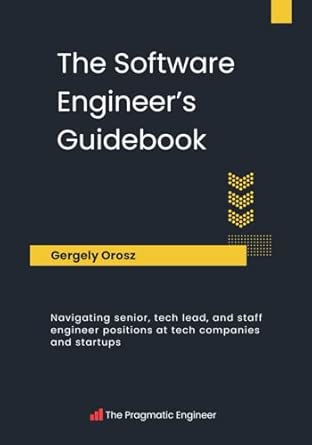 | Best for Senior-Level Career Growth | Title: The Software Engineer’s Guidebook: Navigating Senior, Tech Lead, and Staff Engineer Positions at Tech Companies and Startups | ASIN: 908338182X | Category: Software engineering career guide | VIEW LATEST PRICE | See Our Full Breakdown |
| The Software Developers’ Guidebook: A Collection of Modern Engineering Practices |  | Best for Modern Practices | Title: The Software Developers’ Guidebook: A Collection of Modern Engineering Practices | ASIN: B0FGSDFRKZ | Category: Software development guidebook | VIEW LATEST PRICE | See Our Full Breakdown |
| Code: The Hidden Language of Computer Hardware and Software |  | Best for Understanding Computing Foundations | Title: Code: The Hidden Language of Computer Hardware and Software | ASIN: 0137909101 | Stated subject: Computer hardware and software | VIEW LATEST PRICE | See Our Full Breakdown |
| The Software Developer’s Handbook: Mastering Core Skills and Advanced Practices |  | Best for Broad Skills Coverage | Title: The Software Developer’s Handbook: Mastering Core Skills and Advanced Practices | ASIN: B0DSZ7KHZD | Category: Software development handbook | VIEW LATEST PRICE | See Our Full Breakdown |
| The Pragmatic Programmer: Your Journey to Mastery, 20th Anniversary Edition |  | Best Overall for Broad Developer Craft | ASIN: B07VRS84D1 | Edition: 20th Anniversary Edition | Title: The Pragmatic Programmer: Your Journey to Mastery | VIEW LATEST PRICE | See Our Full Breakdown |
| Object-Oriented Programming: The Complete Guide for Developers |  | Best for Structured OOP Learning | ASIN: B0G1K6F2SK | Series: The CodeCraft Series | Topic: Object-Oriented Programming | VIEW LATEST PRICE | See Our Full Breakdown |
| Designing Secure Software: A Guide for Developers |  | Best for a Security-Focused Reading List | ASIN: 1718501927 | Title: Designing Secure Software: A Guide for Developers | Stated subject: Secure software design | VIEW LATEST PRICE | See Our Full Breakdown |
| Clean Architecture: A Craftsman’s Guide to Software Structure and Design |  | Best for Architecture and Design Principles | ASIN: B075LRM681 | Author: Robert C. Martin | Stated subject: Software architecture and design | VIEW LATEST PRICE | See Our Full Breakdown |
| Python Crash Course, 3rd Edition: A Hands-On, Project-Based Introduction to Programming |  | Best for Beginners Learning by Building | ASIN: 1718502702 | Edition: 3rd Edition | Format: Book | VIEW LATEST PRICE | See Our Full Breakdown |
| programming books for software developer | ASIN | Title |
|---|---|---|
| The Rust Programming Language | 1718504446 | The Rust Programming Language |
| A Philosophy of Software Desig | 173210221X | A Philosophy of Software Design |
| Claude Code Programming: A Com | B0G69X49TX | Claude Code Programming: A Comprehensive Handbook for Software Developers |
| Rust Programming for Intermedi | B0GNNB3TB2 | Rust Programming for Intermediate Developers: Error Handling, Lifetimes, Traits, and Concurrency |
| Rust for Rustaceans: Idiomatic | 1718501854 | Rust for Rustaceans: Idiomatic Programming for Experienced Developers |
| The Complete Software Develope | B078J67VNF | The Complete Software Developer’s Career Guide |
| The Software Engineer’s Guideb | 908338182X | The Software Engineer’s Guidebook: Navigating Senior, Tech Lead, and Staff Engineer Positions at Tech Companies and Startups |
| The Software Developers’ Guide | B0FGSDFRKZ | The Software Developers’ Guidebook: A Collection of Modern Engineering Practices |
| Code: The Hidden Language of C | 0137909101 | Code: The Hidden Language of Computer Hardware and Software |
| The Software Developer’s Handb | B0DSZ7KHZD | The Software Developer’s Handbook: Mastering Core Skills and Advanced Practices |
| The Pragmatic Programmer: Your | B07VRS84D1 | The Pragmatic Programmer: Your Journey to Mastery |
| Object-Oriented Programming: T | B0G1K6F2SK | — |
| Designing Secure Software: A G | 1718501927 | Designing Secure Software: A Guide for Developers |
| Clean Architecture: A Craftsma | B075LRM681 | Clean Architecture |
| Python Crash Course | 1718502702 | Python Crash Course |
More Details on Our Top Picks
The Rust Programming Language, 3rd Edition
I’d place The Rust Programming Language, 3rd Edition first for developers who want a structured entry into Rust rather than a narrow treatment of one advanced topic. Its broad language focus makes it a more suitable starting point than Rust for Rustaceans, which is aimed at experienced programmers, and more foundational than the intermediate-focused Rust Programming for Intermediate Developers. That breadth is useful when a reader needs to build a working map of Rust before choosing what to study next. The tradeoff is that a general language book may not satisfy readers seeking specialized guidance on production architecture or idiomatic patterns for seasoned Rust users. The provided product data confirms the title and edition, but does not supply chapter details or other features, so I would not treat it as a verified guide to any specific topic.
Pros:- Broad Rust-focused starting point based on the book title
- Third edition is clearly identified
- A more approachable first choice than the experienced-developer focus of Rust for Rustaceans
- Can serve as a foundation before studying intermediate Rust topics
Cons:- The supplied product information does not list chapter topics or learning projects
- May be too introductory or broad for readers already comfortable with Rust
- No format or length details are provided
Best for: Developers new to Rust who want a general language-focused book before moving on to specialized or intermediate material
Not ideal for: Experienced Rust programmers seeking focused guidance on idiomatic design, lifetimes, or concurrency
- Title:The Rust Programming Language
- Edition:3rd Edition
- Subject:Rust programming
- Product type:Programming book
- ASIN:1718504446
- Format:Not provided
Our verdict“Choose this as a general Rust starting point, but look elsewhere if you already need advanced, topic-specific guidance.”
A Philosophy of Software Design, 2nd Edition
A Philosophy of Software Design, 2nd Edition earns a distinct place here because its title points to software design principles rather than instruction in a particular language. I’d choose it over The Rust Programming Language, 3rd Edition when the goal is to think about how software is structured, not how to write Rust syntax. That makes it relevant to developers working across languages, though the supplied information confirms only the book’s subject area and edition—not its specific arguments, examples, or chapter coverage. Compared with The Pragmatic Programmer, which is also in this roundup, this title signals a narrower focus on design philosophy rather than a broad developer-practice remit. The tradeoff is that readers looking for coding exercises or hands-on language instruction may find a design-oriented book less directly actionable.
Pros:- Software-design focus can apply across programming languages
- The second edition is explicitly identified
- Offers a different focus from Rust-specific learning titles in this roundup
- A design-oriented complement to broader developer-practice books
Cons:- The supplied product details do not identify its specific design principles or examples
- Not presented as a programming-language tutorial
- No format, length, or exercise details are provided
Best for: Software developers who want a language-independent book focused on thinking about software design
Not ideal for: Readers seeking beginner programming lessons, language syntax, or verified hands-on exercises
- Title:A Philosophy of Software Design
- Edition:2nd Edition
- Subject:Software design
- Intended audience:Software developers
- Product type:Book
- ASIN:173210221X
Our verdict“Pick this for language-independent design thinking, not for step-by-step instruction in writing code.”
Claude Code Programming: A Comprehensive Handbook for Software Developers
Claude Code Programming: A Comprehensive Handbook for Software Developers is the lineup’s tool-specific choice: the supplied description identifies it as a handbook about software development with Claude Code. I’d consider it only when that tool is central to the reader’s work or learning, rather than as a general programming foundation. In contrast, The Rust Programming Language, 3rd Edition is language-focused, while A Philosophy of Software Design, 2nd Edition points toward concepts that are not tied to a named coding assistant. The tradeoff is focus: a Claude Code handbook may be more directly relevant to its intended users, but less useful to developers who want transferable language or design instruction. No details are provided about workflows, examples, coverage, or edition, so the title’s “comprehensive” claim cannot be verified from the available data.
Pros:- Clearly identifies Claude Code as its subject
- Written for a software-developer audience according to the description
- Offers a tool-specific alternative to language-focused books such as The Rust Programming Language
- Could suit readers seeking a dedicated handbook for this named development tool
Cons:- The supplied details do not specify workflows, examples, or topics covered
- Its tool-specific focus may be less transferable than general software-design material
- No edition, format, or length information is provided
Best for: Software developers who specifically want a handbook about developing software with Claude Code
Not ideal for: Readers seeking general programming instruction or guidance that is not tied to Claude Code
- Title:Claude Code Programming: A Comprehensive Handbook for Software Developers
- Subject:Software development with Claude Code
- Intended audience:Software developers
- Product type:Handbook
- Edition:Not provided
- ASIN:B0G69X49TX
Our verdict“Choose this only if Claude Code is the specific tool you want to study; for broader programming skills, choose a language or design book instead.”
Rust Programming for Intermediate Developers: Error Handling, Lifetimes, Traits, and Concurrency
This book has the clearest topic-level promise among the Rust titles: error handling, lifetimes, traits, and concurrency are named directly, and it is identified as the second book in the Rust Programming for Practical Software Development series. That makes it a stronger fit for readers who already know the basics and want to work through specific areas than The Rust Programming Language, 3rd Edition, whose supplied listing gives no topic breakdown. It also differs from Rust for Rustaceans: this title foregrounds four intermediate subjects, while that book is positioned for experienced developers seeking idiomatic Rust. The tradeoff is its assumed starting level. Beginners may encounter too much too soon, and the provided information does not describe exercises, project work, or how deeply each subject is covered.
Pros:- Names four specific intermediate Rust topics
- Explicitly positioned for intermediate developers
- Part of a practical software development series
- Provides a more defined topic scope than the general Rust title in this batch
Cons:- Its intermediate focus may leave beginners without the groundwork they need
- No details are provided about exercises, examples, or project work
- The supplied listing does not state how deeply each topic is treated
Best for: Rust programmers past the basics who want focused study of error handling, lifetimes, traits, and concurrency
Not ideal for: New programmers who still need an introductory explanation of Rust, or advanced developers seeking verified coverage beyond the listed topics
- Title:Rust Programming for Intermediate Developers: Error Handling, Lifetimes, Traits, and Concurrency
- Format:Book
- Series:Rust Programming for Practical Software Development
- Series number:2
- Topics:Error handling, lifetimes, traits, and concurrency
- Intended level:Intermediate Rust developers
- ASIN:B0GNNB3TB2
Our verdict“Choose this after learning Rust basics if the listed intermediate topics are your priority.”
Rust for Rustaceans: Idiomatic Programming for Experienced Developers
Rust for Rustaceans: Idiomatic Programming for Experienced Developers is the most clearly advanced Rust pick in this group. Its stated audience and focus make it a better match for developers who already know the language and want to write more idiomatic Rust than The Rust Programming Language, 3rd Edition, which is presented as a general Rust book. It also differs from Rust Programming for Intermediate Developers: that title names four specific topics, while this one signals a broader emphasis on experienced practice and idiom. The tradeoff is a high entry bar; readers still learning Rust may get more value from the general title first. The supplied information does not detail chapters, examples, or prerequisites beyond the experienced-developer positioning, so buyers cannot confirm the depth or exact scope from these details alone.
Pros:- Explicitly targets experienced developers
- Focuses on idiomatic Rust programming
- Offers a more advanced counterpart to The Rust Programming Language
- Distinct from the intermediate book’s named topic-by-topic focus
Cons:- Likely a poor starting point for readers new to Rust
- The supplied product information does not detail chapters or examples
- No format, edition, or length details are provided
Best for: Experienced software developers who already know Rust and want a book focused on idiomatic programming
Not ideal for: Rust beginners or intermediate learners who need a clearly itemized topic path such as lifetimes, traits, and concurrency
- Title:Rust for Rustaceans: Idiomatic Programming for Experienced Developers
- Subject:Idiomatic Rust programming
- Intended audience:Experienced developers
- Product type:Programming book
- Edition:Not provided
- ASIN:1718501854
Our verdict“Choose this if you already write Rust and want an experienced-level focus on idiomatic code; beginners should start elsewhere.”
The Complete Software Developer’s Career Guide
Career preparation is the focus here: the supplied description says the book covers learning programming languages, preparing for programming interviews, and pursuing software development jobs. That makes it a different kind of choice from Python Crash Course, which is framed as a hands-on introduction to coding rather than a route into employment. I’d pick this guide when the reader needs career topics alongside programming study, not just another language tutorial. The limitation is that the available details do not identify specific languages, exercises, interview formats, or job-search methods, so buyers cannot judge how current or practical its advice is from this information alone. Compared with the senior-career focus of The Software Engineer’s Guidebook, this is aimed at people pursuing their first developer role.
Pros:- Covers learning programming languages as part of a broader career path
- Includes programming interview preparation
- Addresses pursuing software development jobs
- Targets aspiring developers rather than only established engineers
Cons:- The supplied information does not identify which languages or learning methods it covers
- Interview topics and job-search guidance are not described in enough detail to judge their depth
Best for: Aspiring software developers who want one book to address language learning, interview preparation, and pursuing their first programming job.
Not ideal for: Readers seeking a detailed tutorial in a named programming language or a clearly documented set of coding projects, since the supplied description does not specify either.
- Title:The Complete Software Developer’s Career Guide
- ASIN:B078J67VNF
- Category:Software development career guide
- Intended audience:Aspiring software developers
- Programming topic:Learning programming languages
- Career topic:Programming interview preparation
- Career topic:Pursuing software development jobs
Our verdict“Choose this for a career-oriented starting point that pairs programming study with interview and job-search topics.”
Advancing into senior engineering roles is this book’s stated territory, including tech lead and staff engineer positions at both tech companies and startups. That gives it a distinct audience from The Complete Software Developer’s Career Guide, which focuses on language learning, interviews, and pursuing developer jobs. I’d favor this guide when the reader is already in software development and is weighing what growth beyond an individual contributor role can involve. Its scope also makes it more career-focused than The Pragmatic Programmer, which is presented as a guide to development craft and mastery. The tradeoff is limited visibility into the actual guidance: the supplied data gives no chapter topics, methods, or format details, making it hard to assess how concretely it handles the differences between these roles.
Pros:- Focuses on senior, tech lead, and staff engineer positions
- Explicitly covers career paths at tech companies and startups
- Offers a role-specific alternative to general programming craft books
Cons:- The supplied data does not describe its advice or chapter-level coverage
- No format or learning activities are specified, limiting buyers’ ability to judge its depth
Best for: Working software developers considering a move into senior, tech lead, or staff engineer roles at a tech company or startup.
Not ideal for: New programmers seeking language instruction, coding exercises, or entry-level interview preparation; those topics are not identified in the supplied description.
- Title:The Software Engineer’s Guidebook: Navigating Senior, Tech Lead, and Staff Engineer Positions at Tech Companies and Startups
- ASIN:908338182X
- Category:Software engineering career guide
- Roles covered:Senior engineer
- Roles covered:Tech lead
- Roles covered:Staff engineer
- Workplaces covered:Tech companies and startups
Our verdict“Choose this if your next career question is how to grow into senior, tech lead, or staff engineering work.”
The Software Developers’ Guidebook: A Collection of Modern Engineering Practices
Modern engineering practices are the sole stated focus, making this guidebook a potential fit for developers who want a practices-oriented read rather than a career roadmap. It sits closer to the professional-development concerns of The Pragmatic Programmer than to Python Crash Course, whose description emphasizes a project-based introduction to programming. The title also distinguishes it from The Software Developer’s Handbook, which claims coverage of core skills and advanced practices but supplies no further detail. That breadth is both the appeal and the risk: the available information does not name any practices, tools, languages, or examples, so I can’t tell whether it offers actionable guidance or a broad overview. Buyers seeking a specific method or technical subject should look for a more clearly documented option.
Pros:- States a clear focus on modern software engineering practices
- Is aimed at software developers rather than general technology readers
- Offers a practices-centered alternative to books focused on one language or career stage
Cons:- No specific practices, tools, or technical topics are identified in the supplied data
- The available description does not establish whether the book uses examples, exercises, or step-by-step instruction
Best for: Software developers seeking a general guidebook about modern engineering practices rather than an introductory programming course.
Not ideal for: Readers who need a named language tutorial, detailed coding exercises, or confirmation that a particular engineering practice is covered.
- Title:The Software Developers’ Guidebook: A Collection of Modern Engineering Practices
- ASIN:B0FGSDFRKZ
- Category:Software development guidebook
- Stated focus:Modern engineering practices
- Intended audience:Software developers
- Format:Not specified in supplied product data
Our verdict“Consider this for a broad practices-focused read, but choose a more specific title if you need guidance on a particular technique.”
Code: The Hidden Language of Computer Hardware and Software
Hardware and software foundations are the distinct subject signaled by this title, setting it apart from the career guides in this roundup. Compared with The Complete Software Developer’s Career Guide, which addresses interviews and job pursuits, this book is the more relevant choice for a developer curious about how computer systems connect beneath the code they write. It also contrasts with Python Crash Course: the latter is described as a hands-on programming introduction, while the available information here does not establish that this book teaches a programming language or includes exercises. Since the source provides only the title and ASIN, the exact scope, teaching approach, and edition details are not available. I’d treat it as a foundations-oriented candidate, not a substitute for a practical coding course.
Pros:- The title identifies computer hardware and software as its subject
- Offers a foundations-oriented contrast to job-search and language-learning guides
- May suit developers looking beyond day-to-day application coding
Cons:- No description was supplied to confirm the book’s scope or teaching approach
- The available data does not specify languages, exercises, or practical coding coverage
Best for: Software developers who want to explore the relationship between computer hardware and software alongside their language-specific study.
Not ideal for: Beginners looking for a clearly documented, exercise-based programming tutorial or readers who need confirmed coverage of a particular language.
- Title:Code: The Hidden Language of Computer Hardware and Software
- ASIN:0137909101
- Stated subject:Computer hardware and software
- Category:Computing foundations
- Programming language coverage:Not specified in supplied product data
- Format:Not specified in supplied product data
Our verdict“Choose this as a possible computing-foundations read, not as a confirmed replacement for a hands-on programming textbook.”
The Software Developer’s Handbook: Mastering Core Skills and Advanced Practices
Core skills and advanced practices give this handbook a wider stated scope than The Software Developers’ Guidebook, whose description mentions modern practices without naming a broader skills focus. That breadth may suit developers looking for a general reference point rather than an entry-level course like Python Crash Course. But the title alone cannot show which skills or advanced practices appear, how they are taught, or whether the book includes examples and exercises. I’d rank it as a broad professional-development option, with less certainty about its fit than the more clearly targeted career guides: The Software Engineer’s Guidebook names the senior roles it addresses, while this handbook does not specify a reader level beyond its core-to-advanced framing. Its main tradeoff is breadth without verifiable detail.
Pros:- States coverage of core software development skills
- Also signals attention to advanced development practices
- Has a broader stated remit than a single-language programming textbook
Cons:- The supplied data does not name the skills or practices covered
- Format, examples, and instructional approach are not specified
Best for: Software developers who want a general handbook spanning foundational professional skills and more advanced practices.
Not ideal for: Readers seeking a specific language course, a clearly defined career-stage guide, or verified coverage of a particular engineering technique.
- Title:The Software Developer’s Handbook: Mastering Core Skills and Advanced Practices
- ASIN:B0DSZ7KHZD
- Category:Software development handbook
- Stated coverage:Core software development skills
- Stated coverage:Advanced development practices
- Format:Not specified in supplied product data
Our verdict“Pick this for a broadly framed skills handbook only if its general scope matters more to you than confirmed topic-level detail.”
The Pragmatic Programmer: Your Journey to Mastery, 20th Anniversary Edition
The Pragmatic Programmer earns this role as a broad-minded choice for developers who want to improve how they approach software work, rather than learn one language or framework. Its anniversary edition gives it a clear place among the lineup, while Python Crash Course is a more direct fit for readers who want guided coding projects and a defined language. The supplied product details do not specify its topics, structure, or examples, so I would not choose it on the assumption that it covers a particular technology or current tool. That uncertainty is the tradeoff: it may suit developers seeking general programming guidance, but buyers wanting a clearly scoped curriculum have better-matched options here, including Object-Oriented Programming for a stated design focus.
Pros:- The title positions it around broad software development rather than a single programming language.
- The 20th Anniversary Edition is explicitly identified in the product data.
- Its generalist scope can complement focused books such as Python Crash Course or Clean Architecture.
Cons:- The supplied description gives no topic list, chapter outline, or teaching approach.
- The product data does not identify a language, project format, or intended experience level.
Best for: Developers seeking a general programming book rather than instruction tied to one language, with the understanding that the supplied details do not outline its contents.
Not ideal for: Beginners who need a clearly described, project-based path or developers shopping for specific language, architecture, or security coverage.
- ASIN:B07VRS84D1
- Edition:20th Anniversary Edition
- Title:The Pragmatic Programmer: Your Journey to Mastery
- Product type:Programming book
- Stated subject:Programming and software development
- Language coverage:Not specified in supplied product data
Our verdict“Choose this anniversary edition for a broad programming read, but pick a more specifically described book if you need a defined learning path.”
Object-Oriented Programming: The Complete Guide for Developers
Object-Oriented Programming is the clearest choice here for developers who want a step-by-step route through a named design paradigm. Its stated focus on core principles of modern software design makes it more targeted than The Pragmatic Programmer, whose supplied details do not establish a specific curriculum, and less architecture-centered than Clean Architecture. That focus should help readers build a conceptual foundation before tackling larger design questions. The limitation is that the available description names no programming language, examples, or advanced topics; readers cannot tell how directly the lessons map to their codebase. I would shortlist it for learners who want structured OOP study, but choose Python Crash Course instead if learning through language-specific projects matters more.
Pros:- A step-by-step approach gives the subject an explicit learning structure.
- Focuses on core principles of modern software design.
- The CodeCraft Series identifies it as part of a developer education series.
Cons:- The supplied details do not name a programming language or framework.
- The depth of advanced topics and practical examples is unclear.
Best for: Developers who want a step-by-step introduction to object-oriented programming principles and modern software design.
Not ideal for: Readers seeking language-specific exercises, framework instruction, or confirmed coverage of advanced OOP topics.
- ASIN:B0G1K6F2SK
- Series:The CodeCraft Series
- Topic:Object-Oriented Programming
- Target audience:Developers
- Teaching approach:Step-by-step
- Stated focus:Core principles of modern software design
Our verdict“Pick this for a structured OOP foundation, but favor Python Crash Course if you want a clearly named language and project-based practice.”
Designing Secure Software: A Guide for Developers
Designing Secure Software is the most clearly specialized title in this group: its name frames software security as a developer concern, rather than a general programming or architecture topic. That makes it a possible complement to Clean Architecture, which is explicitly about software structure and design, while The Pragmatic Programmer carries a broader title. The supplied product data includes no description, author, edition, examples, or security topics, however, so I cannot judge whether it teaches threat modeling, secure coding, or another specific area. This is a meaningful buying risk for readers choosing a technical reference. I would consider it when security is the intended subject, but developers who need a confirmed curriculum should compare its listing details before selecting it over a book with a stated learning approach.
Pros:- The title gives security a direct, developer-oriented focus.
- Its stated subject differentiates it from general programming books such as The Pragmatic Programmer.
- It can sit alongside Clean Architecture for readers building a topic-focused software design shelf.
Cons:- No description or topic breakdown was supplied.
- The available data does not confirm examples, exercises, intended experience level, or edition.
Best for: Developers specifically looking for a book whose stated subject is designing secure software, after verifying its contents and edition details.
Not ideal for: Readers who need confirmed coverage of particular security practices, hands-on exercises, or a clearly described beginner-to-advanced progression.
- ASIN:1718501927
- Title:Designing Secure Software: A Guide for Developers
- Stated subject:Secure software design
- Intended audience:Developers
- Format:Not specified in supplied product data
- Edition:Not specified in supplied product data
Our verdict“Consider it for a security-centered reading list only after confirming the contents, since the supplied details do not show what practices it teaches.”
Clean Architecture: A Craftsman’s Guide to Software Structure and Design
Clean Architecture stands out for developers ready to think about how software is organized, not for readers seeking a first programming course. The supplied description identifies Robert C. Martin and frames the book around software structure and design, giving it a more architectural role than Object-Oriented Programming, which is described as a step-by-step guide to a specific paradigm. It also differs from Python Crash Course: that title teaches through practical programming projects, while this one is positioned around design at a broader structural level. The tradeoff is that the product data offers no chapter outline, language coverage, or level guidance, so beginners cannot tell how accessible it will be. I would place it on the shortlist for developers evaluating architectural ideas, not as a substitute for hands-on coding instruction.
Pros:- Its stated subject is software structure and design.
- The product description identifies Robert C. Martin as the author.
- It offers a distinct architecture-focused alternative to the OOP fundamentals in Object-Oriented Programming.
Cons:- The supplied details do not provide a chapter list or explain its teaching approach.
- No programming language, exercise format, or intended experience level is specified.
Best for: Working developers who want to study software structure and design rather than learn a programming language from the beginning.
Not ideal for: New programmers seeking guided coding exercises or readers who need confirmed language-specific examples and a detailed topic outline.
- ASIN:B075LRM681
- Author:Robert C. Martin
- Stated subject:Software architecture and design
- Subtitle:A Craftsman’s Guide to Software Structure and Design
- Title:Clean Architecture
- Language coverage:Not specified in supplied product data
Our verdict“Choose Clean Architecture to focus on software structure and design, not to get a beginner-friendly, project-based programming course.”
Python Crash Course, 3rd Edition: A Hands-On, Project-Based Introduction to Programming
Python Crash Course is the most concrete beginner pick in this set: it names Python and promises a hands-on, project-based introduction. That gives new programmers a clearer starting point than The Pragmatic Programmer, whose supplied details do not specify a learning path, and makes it a better fit for readers who learn by making working programs. Projects can turn syntax into practice, though the available description does not name the projects, explain their difficulty, or indicate how much prior experience is expected. Its language focus is also a limit: developers seeking general design or architecture guidance will get a different kind of value from Clean Architecture or Object-Oriented Programming. I would choose this for a first structured programming experience, not as a language-neutral guide to software engineering.
Pros:- Names Python as its programming language, giving beginners a defined starting point.
- Uses a hands-on, project-based approach to connect concepts with building programs.
- The 3rd Edition is explicitly identified in the product data.
Cons:- Its focus on Python may not suit readers learning another language.
- The supplied description does not specify project topics, difficulty, or assumed prior experience.
Best for: New programmers who want to learn Python through practical projects rather than begin with language-neutral design theory.
Not ideal for: Experienced developers seeking architecture or design guidance, and learners committed to a language other than Python.
- ASIN:1718502702
- Edition:3rd Edition
- Format:Book
- Programming language:Python
- Teaching approach:Hands-on and project-based
- Stated level:Introduction to programming
- Title:Python Crash Course
Our verdict“Choose this for a Python-first, project-based start; select Clean Architecture or Object-Oriented Programming for design concepts instead.”

How We Picked
I compared these books by the job they help a developer do: learn programming from the ground up, build skill in a language, make better design decisions, improve security, or grow professionally. I also weighed the stated audience and scope, the likely value of practical examples or projects, and whether a book appears to offer a distinct perspective rather than repeat another title in the list. Because this roundup spans very different experience levels, a book’s fit for its intended reader mattered more than breadth alone.
The order gives priority to books with broad, durable usefulness across software development, then places focused books according to how clearly they serve a specific need. That puts The Pragmatic Programmer first as a cross-language reference, while beginner texts, Rust guides, design books, security resources, and career titles rank higher for readers whose goals match their narrower focus. Some titles overlap in subject; I distinguish them by audience and purpose, not by treating them as interchangeable.
Factors to Consider When Choosing Programming Books For Software Developers
Before choosing a programming book, match its teaching style and scope to the problem you want to solve. A technically respected title can still be a poor fit if it assumes experience you do not have or focuses on a topic you are not ready to use.
Match the Book to Your Current Skill Level
Start with the abilities you want to gain, not a label such as beginner or advanced. New programmers often benefit from a guided sequence of concepts and exercises; experienced developers may prefer a book that tackles design judgment or language details directly. A book that assumes too much can turn reading into reference hunting, while an introductory text may feel repetitive if you already write and debug code comfortably. Check the stated audience and sample chapters before choosing. If you are between levels, favor a book with practical problems you can attempt before reading the explanation.
Choose Between Language Skills and Portable Principles
A language-specific book is a strong choice when your goal is to contribute to a project, learn a new ecosystem, or understand unfamiliar syntax and tools. Broader engineering books can apply across languages, but they will not replace documentation or hands-on practice with a particular stack. A common mistake is buying a general software design title when the real obstacle is basic fluency in the language you use every day. Another is collecting language books without a project to apply them to. Pick the scope that addresses your most immediate work, then add broader material when you can connect it to real decisions.
Look for the Learning Format You Will Actually Use
Projects and exercises help turn concepts into working habits, while explanatory texts can be better for learning why a design choice matters. Neither format is automatically superior: a project-based introduction may not explore architecture deeply, and a conceptual book may offer little practice with syntax. Think about how you learn when code fails or a concept feels abstract. If you benefit from building, seek exercises you can modify rather than copy verbatim. If you need judgment and context, choose a book that explains tradeoffs, and plan to pair it with a small project of your own.
Separate Overlapping Subjects by the Problem They Solve
Several books in this roundup touch software design, but similar subject labels do not make them substitutes. Complexity management, architecture, object-oriented programming, and secure design each frame a different set of decisions. Before choosing among them, write down a recent problem you want to handle better: tangled code, system boundaries, object modeling, or threat exposure. Then check whether the book focuses on that problem rather than assuming a familiar title will cover every aspect. Buying multiple adjacent books at once can lead to repeated ideas and less time applying any of them.
Pay for Depth Only When You Can Put It to Work
A specialized or advanced book makes sense when you have a clear use for its detail, such as working with Rust’s ownership model or making security decisions in a product. Without that context, a broad practical guide or beginner-friendly text may produce more immediate progress. The mistake is treating technical density as a measure of usefulness: depth matters only when the reader can connect it to code or decisions. Consider whether you have a project, codebase, or team problem that will let you test the material. If not, start with a wider foundation and return to specialist material when the need becomes concrete.
Treat Career Guides as a Different Kind of Investment
Books about career development, seniority, and engineering practice address professional decisions rather than programming syntax. They can help readers think about communication, responsibility, and growth, but they are not a shortcut to technical ability or a guaranteed route to a particular role. Choose one when your current question concerns career direction or how engineering work is organized, not when you need help implementing a feature. Compare the book’s intended audience with your current stage, since advice for a staff engineer may not map cleanly to an early-career developer. Pair career reading with feedback and work experience so general guidance has a real setting.
Frequently Asked Questions
Which book should I choose if I am new to programming?
Python Crash Course is the most direct starting point in this lineup because it is presented as a hands-on introduction built around projects. Choose it if you want to learn by writing code and can use Python for your goals. If your main aim is understanding how software relates to computer hardware, Code offers a different kind of foundation rather than a conventional first programming course. Avoid starting with the Rust intermediate or experienced-developer titles unless you already know the basics. A clear goal and regular practice matter more than buying several beginner books at once.
Should I buy The Pragmatic Programmer or a book focused on my language?
Choose The Pragmatic Programmer when you want ideas about software work that can travel across languages and projects. Pick a language-focused title when your immediate challenge is writing, understanding, or maintaining code in that language. The broad book can shape how you approach work, but it will not teach the same structured language details as a dedicated text. A useful rule is to address your current bottleneck first: language fluency if you cannot yet build confidently, broader engineering judgment if you can. Many developers can benefit from both over time, but they solve different problems.
Which Rust book fits an experienced developer who is new to Rust?
The Rust Programming Language, 3rd Edition is the most suitable entry among the Rust titles for learning the language itself. Rust Programming for Intermediate Developers is a better follow-up when error handling, lifetimes, traits, and concurrency become the sticking points. Rust for Rustaceans targets experienced developers seeking idiomatic Rust, so its focus may be premature if you are still learning core syntax and ownership. Your background in another language helps, but Rust’s distinctive concepts still take practice. Choose by what you can already explain and implement, not by how advanced a title sounds.
Are the design and architecture books redundant?
Not necessarily, because the titles point to different concerns. A Philosophy of Software Design focuses on managing complexity, while Clean Architecture addresses software structure and design; Designing Secure Software centers on security. A reader may encounter related ideas, but the books are not presented as identical treatments. Identify the decision you need help with before buying more than one. If your concern is a specific codebase, start with the topic closest to that issue and judge whether another perspective would add something distinct.
Which book is a better choice for career growth rather than coding technique?
For career questions, compare The Complete Software Developer’s Career Guide with The Software Engineer’s Guidebook, which specifically names senior, tech lead, and staff positions. The latter is the more targeted match if you are thinking about progression into those roles; the former has a broader career-guide framing. The Software Developers’ Guidebook and The Software Developer’s Handbook are framed around modern practices and engineering skills, so they may suit readers seeking wider professional habits rather than a career path alone. Check each book’s stated scope against your present question. None of these replaces feedback from colleagues or experience taking on new responsibilities.
Conclusion
For the best overall choice, I recommend The Pragmatic Programmer for developers who want durable guidance across languages and roles. Code is my pick for readers drawn to the foundations beneath software, while Python Crash Course is the clearest fit for beginners who want a project-led introduction. For a best value in breadth, start with a book that addresses the widest current need you can apply, rather than buying several overlapping titles; the practical, cross-language scope of The Pragmatic Programmer makes it a strong single-book choice. I would reserve premium, specialist attention for books such as Rust for Rustaceans or Designing Secure Software when your work calls for that depth. For specific needs, choose the Rust title that matches your experience, a design or architecture book that matches your codebase problem, or a career guide that fits your next professional step.