TL;DR
Docestra’s developer says an AI coding agent produced a working PDF editor in a day, but tests on real documents exposed save, encryption and redaction problems. By version 1.5.1, the private tool had 745 unit tests and 32 browser test suites; its developer has not measured time or cost savings, and version 2.0 remains in development.
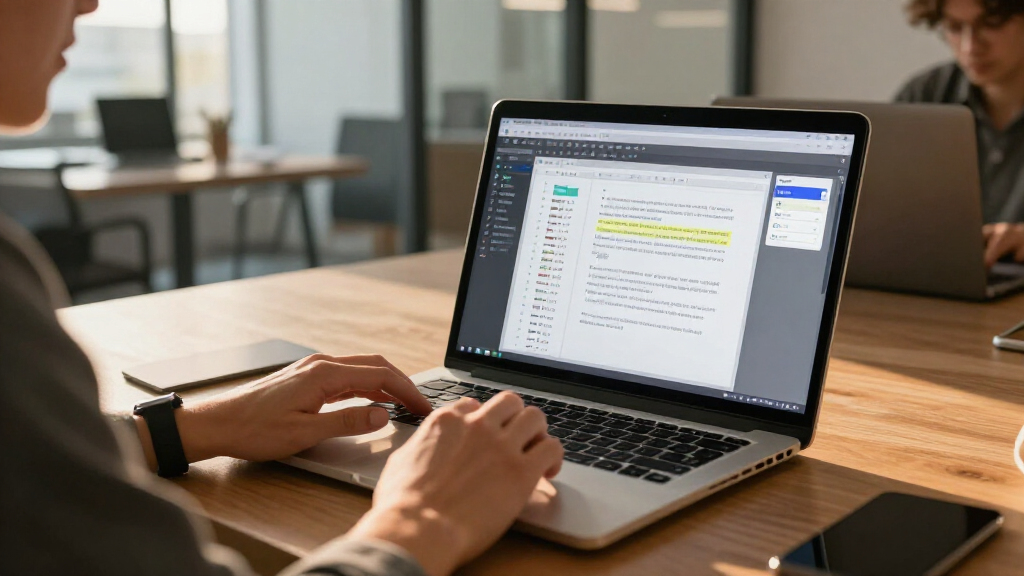
Thorsten Meyer says his AI-coded PDF editor, Docestra, went from a one-sentence brief to a working first version on November 6, 2026, but tests on real documents quickly exposed reliability problems. In a development account published November 13, Meyer describes changes to saving, encrypted-file handling and redaction, illustrating the gap between a tool that works in an initial demonstration and one tested against a wider range of files.

Get business pricing on monitors, keyboards and dev gear
- Business-only prices and quantity discounts
- Tax-exempt purchasing
- Multiple users, one account, clear invoices
Meyer says the first version could open PDFs, add highlights, drawings, notes and signatures, fill forms, rearrange pages and save files. He built it as a local TypeScript web app running in a browser on his Mac. According to his account, AI coding agents wrote the code, with OpenAI’s Codex reviewing it from the start. The first version was committed on the evening of November 6.
A run over 930 real PDFs found that saving could produce a malformed cross-reference table in a file generated by a common PDF tool. The result, Meyer says, was that markups disappeared from the saved document. He changed the save process to avoid compressed object streams. Testing also found that 52 of 69 encrypted PDFs barred annotations under restrictions set by their authors. Because the PDF library could not re-encrypt edited files, Meyer says Docestra now asks for confirmation before unlocking such a file and saves an unprotected copy, leaving the original untouched. He reports that all 69 test files then unlocked.
Redaction required a separate redesign. The first version’s “white-out” tool covered text without removing it from the PDF. Meyer says an independent AI review found 14 issues in the first real-redaction design and 13 in a second review. He then replaced the approach with a simpler design; his account reports no leaks across 917 PDFs. The project reached version 1.5.1 on November 12, with 745 unit tests and 32 browser test suites, according to Meyer’s development records.

Why PDF Reliability Takes More Work
PDF editors handle documents that can contain contracts, personal information, signatures and form entries. A save defect that drops markups or a redaction that only hides text could leave a user with a file that looks finished but does not preserve the intended changes. The examples Meyer gives show why basic feature demonstrations do not establish that a document tool is dependable across different files.
The account also shows where review and testing changed the product’s design. In the encrypted-file case, the limitation was not just technical: saving without encryption would have removed protections chosen by the document’s author. In redaction, repeated review findings prompted a change in method rather than another round of fixes. These are project-specific examples, not evidence that AI-built tools generally succeed or fail at the same rate.
Meyer says he has not measured time or cost savings from building Docestra. The project is private and not available to download, so readers cannot independently reproduce the tests or assess the editor themselves. The development log offers a case study in the work after an AI-generated first version, rather than a public product evaluation.
Products Worth Considering

Samsung Galaxy Tab A11 8.7-Inch Wi-Fi Tablet, 64GB, 4GB RAM, 90Hz, Gray, with 20W Charger

Bose TV Speaker (2nd Gen) Compact Soundbar

DJI Mini 5 Pro Fly More Combo with DJI RC 2
As an affiliate, we earn on qualifying purchases.
From First Build to Version 1.5.1
Meyer describes “vibe coding” as building software by explaining desired behavior in plain language to an AI model, which then writes code. In this project, he says, Claude Code running Claude Opus generated the code, while OpenAI’s Codex reviewed it. Docestra was designed to run locally in a browser, with files staying on the developer’s Mac.
The recorded development period runs from November 6, when the first version was committed, through November 12, when version 1.5.1 was reached. The source material says the editor’s initial “white-out” feature was explicitly understood to cover content rather than remove underlying text. On November 8, Meyer says he introduced real redaction, then changed its design after two rounds of review findings. On November 13, development began on version 2.0, intended to use a shared PDF engine for AI agents; that version is still in progress.
“Vibe coding gets you a working tool quickly. Turning it into a tool you can rely on is the real work.”
— Thorsten Meyer, Docestra developer
What the Test Results Cannot Show
The reported results come from Meyer’s own development log. The source material does not provide the PDF test set, test procedures, review findings, or independent replication, so readers cannot verify how representative the files were or how the redaction leak check was conducted. The figure of zero leaks in 917 PDFs is a reported test result, not proof that redaction is secure in every document or workflow.
It is also unclear how Docestra performs across operating systems, PDF generators or usage conditions outside the developer’s tests. Meyer says the tool is private and unavailable to download, and he has not measured whether it saves time or money. The next version’s shared PDF engine is a plan under development, not a completed capability.
Version 2.0 Remains in Development
Meyer says work on Docestra version 2.0 began on November 13, with the aim of using one shared PDF engine for AI agents. The source material does not give a release date or say which features will be included, and describes the version as unfinished.
For now, the development account ends with version 1.5.1 and its reported test counts. Further evidence about reliability would depend on how the tool performs on additional files and whether the results can be independently checked. No public download is available, according to Meyer.
Key Questions
What is Docestra?
Docestra is a PDF editor built by Thorsten Meyer with code written by AI coding agents. Meyer says it runs locally in a browser on his Mac and is private, with no public download available.
What problems did testing find?
Meyer reports that a test over 930 PDFs found a save issue that could make markups disappear. He also found that 52 of 69 encrypted files did not permit annotations, and that the original white-out tool covered text without removing it.
Does Docestra’s redaction remove underlying content?
Meyer says he replaced the initial redaction design after two rounds of independent AI review identified problems. His account reports no leaks in a test of 917 PDFs, but the source does not include materials that would let readers independently assess the method or result.
Is Docestra available to use?
No public download is available, according to Meyer. The editor is a private project, so readers cannot independently test the reported results.
Has the developer measured savings?
No. Meyer says he has not measured time or cost savings. Version 2.0, which is intended to use a shared PDF engine for AI agents, began development on November 13 and is not finished.
Source: Thorsten Meyer AI