

To evaluate risk levels using a risk matrix, start by gathering extensive data from project requirements and defect reports. Assign likelihood and impact scores to each risk, categorizing them from rare to frequent and minor to catastrophic. Plot these risks on the matrix based on their scores, which helps you quickly identify high-priority issues. This visual approach focuses your testing efforts and supports better resource allocation. Exploring further will show you how to optimize your risk management strategies effectively.
Key Takeaways
- Assign likelihood and impact scores to each risk based on project data and potential issues.
- Plot risks on the matrix according to their likelihood and impact scores for visual assessment.
- Focus on risks in the high likelihood/high impact zone for prioritized testing and mitigation.
- Regularly update the matrix as new risks emerge or existing risks change in severity.
- Use the matrix to communicate risk levels clearly and guide resource allocation effectively.
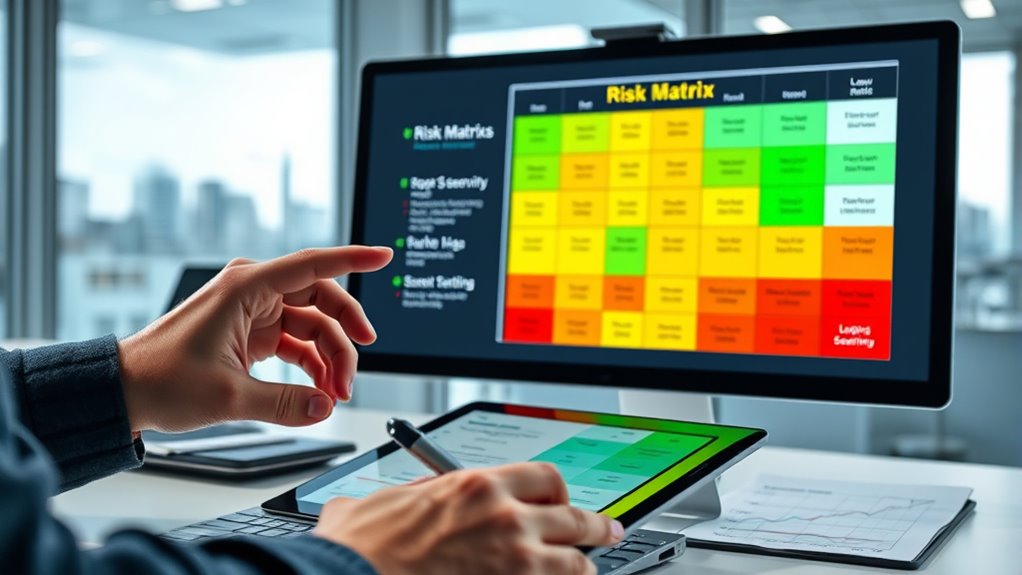
Risk matrices are vital tools in testing that help you identify, evaluate, and prioritize potential issues. When you’re managing a testing process, understanding how to properly use a risk matrix can markedly improve your risk assessment and guarantee you’re focusing on the most critical areas. By visually mapping out risks based on their likelihood and impact, you gain a clearer picture of what could go wrong and where to allocate your testing resources. This process isn’t just about spotting problems; it’s about strategic decision-making, guaranteeing that your testing strategies align with the severity and probability of risks.
Risk matrices enhance testing by visualizing and prioritizing potential issues for strategic risk management.
To effectively evaluate risk levels using a risk matrix, you first need to gather complete information about possible issues. This involves digging into your project requirements, past defect data, and potential failure points. As you identify these risks, you’ll assign each a likelihood score—ranging from rare to frequent—and an impact score, from minor inconvenience to catastrophic failure. This step is vital because it transforms abstract concerns into measurable data, making it easier to compare and prioritize risks. Your testing strategies should then be tailored based on these scores, focusing more effort on risks with high likelihood and severe impact.
Once risks are scored, you plot them on the matrix, which typically consists of a grid with axes representing likelihood and impact. Risks falling into the high-risk zone demand immediate attention, prompting you to design targeted test cases to verify their mitigation. Lower-risk issues might be scheduled for later stages or monitored without immediate action. The visual aspect of the matrix allows you to quickly communicate risk levels to stakeholders, fostering better understanding and support for your testing priorities. Incorporating comprehensive risk data ensures your assessments are thorough and accurate, enhancing the effectiveness of your testing plan.
Using a risk matrix also encourages a proactive approach. Instead of reacting to issues after they surface, you can anticipate potential problems and incorporate preventive measures into your testing strategies. This foresight helps you allocate your resources more efficiently, focusing on areas that could cause the most harm if left unaddressed. Additionally, as testing progresses and new risks emerge, you can update the matrix, keeping your risk assessment current and relevant. This dynamic process ensures your testing efforts remain aligned with the evolving project landscape, reducing the chances of overlooked vulnerabilities.

Google TV Streamer 4K - Fast Streaming Entertainment on Your TV with Voice Search Remote - Watch Movies, Shows, Live TV, and Netflix in 4K HDR - Smart Home Control - 32 GB of Storage - Hazel
The Google TV Streamer (4K) delivers your favorite entertainment quickly, easily, and personalized to you[1,2]
As an affiliate, we earn on qualifying purchases.
Frequently Asked Questions
How Do I Update Risk Matrices Over Time?
You should regularly perform risk matrix updates to keep your risk assessment current. Incorporate new data, recent testing results, and project changes to guarantee your risk levels reflect the latest information. Embrace a dynamic risk assessment approach, updating the matrix whenever significant shifts occur. This proactive process helps you prioritize testing efforts effectively, reduce overlooked risks, and maintain an accurate understanding of evolving threats throughout your project lifecycle.
What Are Common Pitfalls When Using Risk Matrices?
You should watch out for common pitfalls like overusing risk aversion, which can lead to overly cautious testing and missed opportunities. Bias mitigation is essential, as personal or organizational biases may skew risk assessments. Avoid relying solely on subjective judgments; instead, combine data-driven insights with clear criteria. This balanced approach helps make sure your risk matrix accurately reflects real risks, leading to better prioritization and more effective testing strategies.
How Do Risk Matrices Integrate With Agile Testing?
Picture a dynamic dance floor where risk assessment guides your every move. In agile testing, you integrate risk matrices by continuously updating them with real-time data, helping you spot high-risk areas swiftly. This visual flow allows you to prioritize testing efforts and develop mitigation strategies efficiently, keeping the process flexible and responsive. It’s about staying in sync with evolving risks, ensuring your testing adapts seamlessly to project changes.
Can Risk Matrices Be Customized for Different Projects?
Yes, you can customize risk matrices for different projects. You should tailor the project-specific customization to reflect your unique risks, priorities, and context. Use visual representation techniques like color coding and adjustable scales to make the matrix intuitive and relevant. This way, you guarantee the risk assessment aligns with your project’s specific needs, improving decision-making and resource allocation effectively.
What Tools Are Best for Creating Risk Matrices?
You need the ultimate tools for creating risk matrices that blow your mind! Try Excel for its unbeatable flexibility, visualization, and custom risk assessment features. Or explore dedicated software like RiskWatch or RiskLens, which offers advanced matrix visualization and real-time risk analysis. These tools streamline risk assessment, making it easy to visualize and prioritize risks effectively. With them, you’ll turn complex data into clear, actionable insights in seconds!

UGREEN 8K@60Hz Displayport KVM Switch 2 Monitors 2 Computers, Aluminum with 4 USB 3.0 Ports for 2 Computers Share Dual Monitors Keyboard Mouse Printer with 2 USB Cables/Power Adapter/Controller
Displayport KVM Switch 2 Monitors 2 Computers: This KVM switch allows you to easily manage and switch between...
As an affiliate, we earn on qualifying purchases.
Conclusion
By using risk matrices, you’ll naturally identify potential issues before they escalate. It’s interesting how a simple tool can reveal vulnerabilities you might overlook, almost like a coincidence guiding your testing focus. When you consistently evaluate risks this way, you might find that the most overlooked danger suddenly becomes clear—showing that sometimes, the key to effective testing lies in trusting these intuitive insights. In the end, risk matrices aren’t just tools—they’re your testing allies.
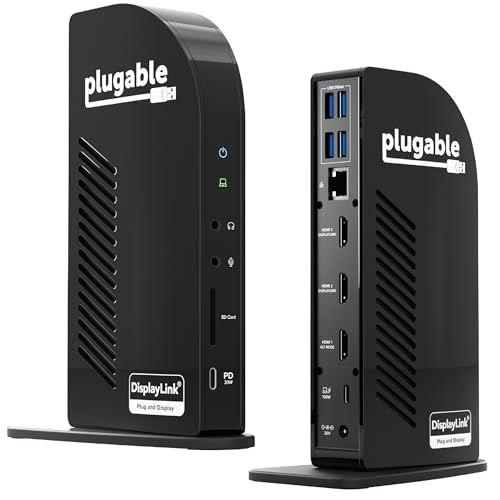
Plugable USB-C Triple Monitor Docking Station: 13-in-1 Laptop Dock with 100W Charging for Mac (DisplayLink Driver Required), Windows, Chrome, 3 HDMI, Gigabit Ethernet, SD, USB-C 20W, 4 USB - UD-ULTCDL
13-in-1 Laptop Docking Station: Expand your workspace with a powerful USB-C docking station featuring 13 essential ports. This...
As an affiliate, we earn on qualifying purchases.
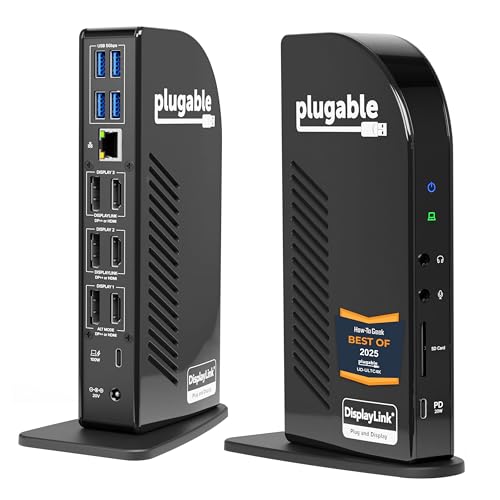
Plugable 13-in-1 USB C Docking Station 4K Triple Monitor with 100W Power Delivery | USB C Dock for Windows, Mac, ChromeOS, Thunderbolt | Driver Required | 3X HDMI and 3X DisplayPort (UD-ULTC4K)
All in One USB C Docking Station with Power: This multi monitor docking station features 13 powerful ports...
As an affiliate, we earn on qualifying purchases.