

Implementing ITIL best practices with solid quality assurance helps you deliver reliable and efficient IT services. By controlling change management and streamlining workflows, you reduce risks and improve service consistency. A strong service desk guarantees quick incident resolution, boosting user satisfaction. Regular evaluation and continuous improvement keep your IT environment resilient and adaptable. If you keep exploring, you’ll uncover how these practices can transform your IT service management even further.
Key Takeaways
- Implement structured Change Management to evaluate, approve, and document all modifications, minimizing risks and ensuring quality.
- Adopt continuous improvement practices aligned with ITIL to enhance service processes and maintain high standards.
- Use standardized procedures and automation in the Service Desk to increase efficiency and reduce errors.
- Foster effective communication and collaboration across teams to ensure transparency and better quality assurance.
- Regularly monitor, measure, and review IT service performance to identify areas for improvement and sustain service quality.
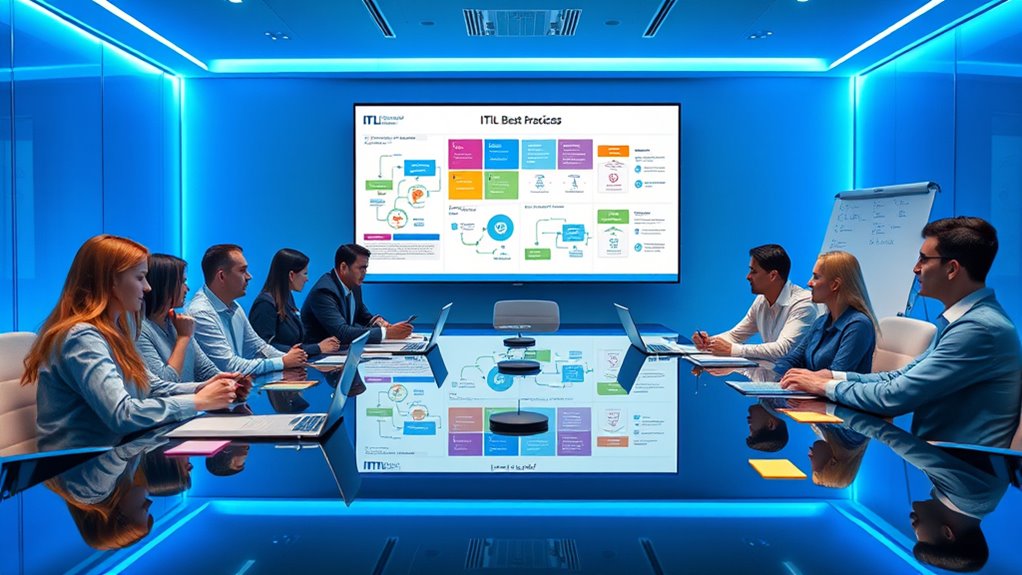
Implementing ITIL best practices is vital for delivering reliable and efficient IT services. One of the core components of these practices is change management, which helps you control and coordinate changes within your IT environment. When you establish a structured change management process, you reduce the risk of disruptions and minimize downtime. This process ensures that every change, whether minor or major, is thoroughly evaluated, approved, and documented before implementation. By doing so, you prevent unauthorized or poorly planned changes that could compromise service quality. Effective change management also enhances communication between teams, keeping everyone informed about upcoming changes and their potential impact. This transparency builds trust and helps you respond swiftly to any issues that arise during or after the change process. As a result, your organization experiences fewer service interruptions, leading to higher customer satisfaction.
Alongside change management, improving service desk efficiency is vital for maintaining high-quality IT service delivery. Your service desk acts as the frontline support, and its effectiveness directly influences user experience. To boost efficiency, you should implement clear workflows, prioritize tickets based on severity, and automate routine tasks where possible. These steps allow your support team to handle incidents faster and more accurately, freeing up resources for more complex issues. Empowering your service desk staff with detailed knowledge bases and ongoing training also ensures they have the tools and expertise needed to resolve issues promptly. When your service desk operates smoothly, users experience quicker resolutions, which reinforces their confidence in your IT support. Additionally, integrating ITIL best practices into your service desk operations helps establish consistent procedures, ensuring everyone follows the same standards and reduces errors. This consistency not only improves response times but also makes tracking and measuring performance easier, enabling continuous improvement. Incorporating proven change management techniques can further minimize risks associated with modifications, ensuring smoother transitions and sustained service quality.
Incorporating ITIL best practices into your IT service management framework creates a cycle of ongoing improvement. By focusing on change management to control modifications and enhancing service desk efficiency, you lay a solid foundation for delivering reliable, high-quality services. These practices help you proactively identify potential issues, streamline workflows, and foster better communication across teams. As you develop a culture of continual improvement, your IT services become more resilient, adaptable, and aligned with your organization’s goals. Ultimately, this results in better user experiences, increased productivity, and a more agile IT environment. Staying committed to these principles ensures that your organization not only meets current demands but also adapts effectively to future challenges, maintaining high standards of quality and service excellence.

ServiceNow for IT Service Management: Manage, Transform, and Deliver IT Operations and Services with Incident, Problem and Change Management Using ServiceNow and ITSM Framework (English Edition)
As an affiliate, we earn on qualifying purchases.
As an affiliate, we earn on qualifying purchases.
Frequently Asked Questions
How Does ITIL Integrate With Other Service Management Frameworks?
You can seamlessly integrate ITIL with other service management frameworks by focusing on framework integration and process alignment. By mapping processes across frameworks, you guarantee consistency and streamline operations. This approach helps you leverage the strengths of each framework, improve collaboration, and reduce redundancies. When you align processes properly, you create a unified service management approach that enhances efficiency, supports business goals, and fosters continuous improvement across your organization.
What Are Common Challenges in Implementing ITIL Best Practices?
You’ll find that implementing ITIL’s change management and staff training can turn into a comedic dance of chaos. Resistance from staff, insufficient training, and poorly executed change management often trip you up. It’s like herding cats while trying to teach them to do complex IT tasks. You’ll struggle with aligning everyone’s efforts and ensuring the staff actually understands the processes, making success feel more like a distant dream than a reachable goal.
How Can Organizations Measure the ROI of ITIL Adoption?
You can measure ROI by tracking performance metrics that reflect improvements in service delivery, cost reductions, and customer satisfaction. Start by setting clear ROI measurements, such as faster incident resolution or decreased downtime, then monitor these over time. Regularly evaluate how ITIL adoption enhances efficiency and reduces expenses. This way, you’ll have concrete data to demonstrate the value of your efforts, making it easier to justify ongoing investment.
What Tools Best Support Itil-Based Quality Assurance Processes?
You can use automated monitoring tools to track service performance and identify issues proactively. Compliance tools help make certain processes adhere to standards and regulations. These tools support ITIL-based quality assurance by providing real-time data, automating routine checks, and maintaining documentation. Implementing such tools streamlines your quality management, reduces human error, and boosts overall service reliability, making it easier to meet quality benchmarks and improve customer satisfaction.
How Frequently Should ITIL Processes Be Reviewed and Updated?
A stitch in time saves nine, so you should review and update your ITIL processes regularly. Typically, conduct process audits and review cycles every 6 to 12 months to ensure they stay aligned with your evolving business needs. Frequent reviews help identify gaps, improve efficiency, and keep your processes effective. Don’t wait for issues to pile up—stay proactive and adapt your process improvements accordingly.

Mount-It! Laptop Desk Mount with Pole, Height Adjustable Laptop Stand Mount for Desk with Vented Tray, Full Motion Laptop Arm for 11–17 Inch Laptops, 22 lb Capacity, Clamp or Grommet Base
ERGONOMIC LAPTOP DESK MOUNT – Raise your laptop to eye level with this adjustable laptop stand for desk…
As an affiliate, we earn on qualifying purchases.
As an affiliate, we earn on qualifying purchases.
Conclusion
Embracing ITIL best practices and quality assurance can seem overwhelming, but you’ll find they’re designed to make your IT service management more efficient and reliable. Remember, you don’t have to implement everything at once—start small, adapt as you go, and see how these practices boost your team’s performance. With patience and commitment, you’ll turn complex processes into streamlined solutions, ensuring your IT services meet expectations and deliver real value.

Incident Management for I.T. Departments
As an affiliate, we earn on qualifying purchases.
As an affiliate, we earn on qualifying purchases.
Software Monitoring Tools A Complete Guide – 2021 Edition
As an affiliate, we earn on qualifying purchases.
As an affiliate, we earn on qualifying purchases.