
🔍 Read the full analysis: A 2027 Roundup Of 10 Graphics Cards For Gaming And Work on ThorstenMeyerAI.com

Get business pricing on monitors, keyboards and dev gear
- Business-only prices and quantity discounts
- Tax-exempt purchasing
- Multiple users, one account, clear invoices
TL;DR
The source presents 10 graphics cards for different needs, led by the ASUS ROG Astral RTX 5080 for premium gaming and creative work and the ASUS Dual RTX 5060 Ti for a mid-range option. It also includes older, low-cost cards for basic display tasks, but provides no benchmark data, prices, or independent testing to verify its performance rankings.
A 2027 graphics-card roundup from ThorstenMeyerAI.com, the original analysis, names the ASUS ROG Astral GeForce RTX 5080 its leading option for high-end gaming and creative work, while recommending the ASUS Dual RTX 5060 Ti series for buyers seeking a less expensive modern card. The list also includes older models such as the RX 550 and GT 730, which the source describes as suited to basic display needs rather than current gaming.
The roundup compares cards by architecture generation, memory, cooling, and connectivity, factors also covered in this graphics-card guide for gaming, AI, and creative work. It favors newer NVIDIA Blackwell and AMD RDNA 4 products for newer features, including ray tracing and AI-assisted upscaling. The source highlights 16GB configurations on the RTX 5060 Ti and RX 9070 family, but supplies no test results or comparable frame-rate measurements.
Its 10 selections span several price and workload categories: the ASUS ROG Astral RTX 5080; the PNY RTX 5080; the ASUS Dual RTX 5060 Ti; an RX 9070 XT; an RX 9070; an RTX 3060; a VisionTek RX 580; an RX 550; a GT 730; and another unspecified card in the roundup’s list, with additional options discussed in this 2027 graphics-card roundup. The source gives limited model-level detail for some entries, so the precise configuration and rationale for every pick cannot be independently assessed from the supplied material.
The article also stresses practical compatibility. Larger, high-power cards can require more case clearance and a suitable power supply, while compact models may have different cooling tradeoffs. Older cards may still serve narrow display or workstation roles, but the source warns that they lack the feature support and gaming performance of newer generations.
The 10 picks
- 1
 ASUS ROG Astral GeForce RTX 5080 OC Edition 16GB GDDR7 Graphics CardView on Amazon →
- 2
 PNY NVIDIA GeForce RTX 5080 OC Triple-Fan Graphics CardView on Amazon →
- 3
 ASUS Prime Radeon RX 9070 XT 16GB GDDR6 OC Edition Gaming Graphics CardView on Amazon →
- 4
 ASUS Prime Radeon RX 9070 EVO 16GB GDDR6 OC Gaming Graphics CardView on Amazon →
- 5
 ASUS Dual GeForce RTX 5060 Ti 16GB GDDR7 White OC Edition Graphics CardView on Amazon →
- 6
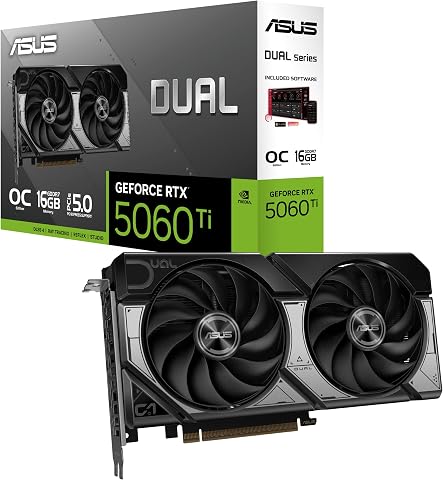 ASUS Dual GeForce RTX 5060 Ti 16GB GDDR7 OC Edition Gaming Graphics CardView on Amazon →
- 7
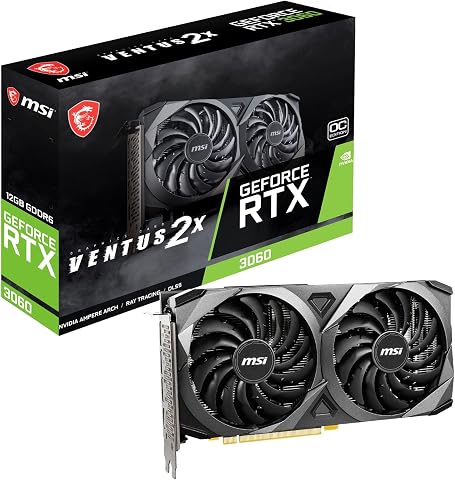 MSI GeForce RTX 3060 Ventus 2X 12G OC V1 Graphics CardView on Amazon →
- 8
 VisionTek AMD Radeon RX 580 8GB Graphics Card with 6 Mini DisplayPort OutputsView on Amazon →
- 9
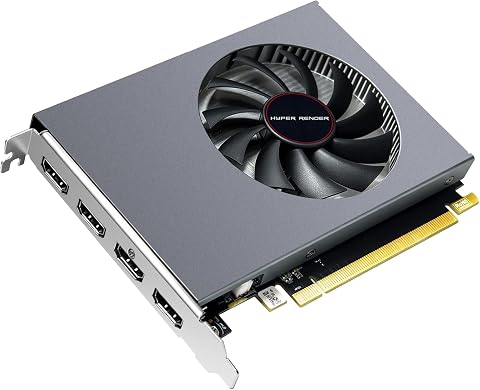 RX 550 4GB GDDR5 Graphics Card 4 HDMI GPU Tarjeta Gráfica 4 Port Video cardView on Amazon →
- 10
 Vandossy GeForce GT 730 4GB GDDR5 Graphics Card with 4 HDMI PortsView on Amazon →
Matching GPUs to Different Workloads
The list is useful chiefly as a category-based shopping guide: it distinguishes premium gaming and creative hardware from mid-range choices and cards intended for basic output. That distinction matters because a low purchase price does not make an older GPU a practical option for modern games, and a high-end card may bring costs beyond its sticker price, including power supply and case requirements.
Readers should treat the rankings as the source’s editorial judgment, not as a verified performance hierarchy. Without prices, benchmarks, power measurements, or named application tests, the roundup cannot establish which card offers the best value or quantify how much faster one is than another. Buyers comparing products should use the list as a starting point and check independent testing for their games and software.
Products Worth Considering

Sony WH-1000XM6 Wireless Noise Cancelling Headphones – Midnight Blue

Logitech MX Master 4 for Mac

Sonos Roam Portable Bluetooth and Wi-Fi Speaker, Black
As an affiliate, we earn on qualifying purchases.
How the List Frames GPU Choices
The source says it assessed architecture, memory bandwidth, and thermal efficiency, and favored gaming cards with at least 8GB of VRAM. It also points to cooling design and physical fit, noting that triple-fan and vapor-chamber models can be larger than compact alternatives. These are relevant selection factors, though the supplied material does not document a repeatable test method or explain how the criteria were weighted.
Its broader comparison is between newer cards with current hardware features and older products that may remain useful for narrower tasks. The source says NVIDIA cards can appeal to users of CUDA- and NVENC-supported creative workflows, while AMD cards may be attractive for rasterization-heavy gaming. Those are general platform considerations; performance varies by application, driver, card model, and configuration.
“The main tradeoff lies between paying for cutting-edge architecture and accepting older technology for cost savings.”
— ThorstenMeyerAI.com roundup
What the Roundup Does Not Verify
The supplied source does not include prices, availability, benchmark results, or testing conditions. It is unclear when the cards were tested, which games and creative applications were used, or whether the listed products refer to particular board-partner configurations. Those omissions limit any claim that one card is faster or a better value than another.
There is also an apparent gap in the supplied list: it refers to 10 selections, but the material does not identify a tenth model clearly beyond the nine named above. The source’s broad statements about VRAM needs, driver support, and power supply sizing are not tied to specific test data or every card configuration. Buyers should verify current specifications and compatibility with the manufacturer before purchasing.
What Buyers Should Check Before Purchase
The roundup does not announce a follow-up test or a date for updated recommendations. Readers considering a card should compare current local pricing and independent benchmarks, then confirm the exact model’s memory capacity, dimensions, connectors, power requirements, and software support. These details can differ among versions sold under the same GPU name.
For a work system, check whether the applications in use support the card’s vendor-specific features and acceleration tools. For gaming, match benchmarks to the intended resolution and titles rather than relying on a general ranking. The source’s list may help narrow the field, but its recommendations remain unverified without that additional information.
Key Questions
Which card does the roundup recommend for high-end gaming?
It names the ASUS ROG Astral GeForce RTX 5080 as its premium overall pick, citing cooling and ray-tracing capabilities. The source provides no benchmark data to independently confirm that ranking.
Does the source recommend the RX 550 for modern games?
No. The roundup describes the RX 550 as a low-cost option for basic display output and light tasks, not modern gaming.
Why does the roundup highlight 16GB of VRAM?
It presents 16GB as useful for higher-resolution gaming and points to configurations in the RTX 5060 Ti and RX 9070 family. Actual memory needs depend on the game, settings, and resolution; the article includes no tests establishing a universal requirement.
Can the roundup establish which card is the best value?
No. It does not provide prices or comparative performance tests, so readers cannot use it alone to calculate value. Check current prices and independent benchmarks for the intended workload.
Source: ThorstenMeyerAI.com