
🔍 Read the full analysis: A 2027 List Of 10 High Refresh Gaming Monitors For Fast Action on ThorstenMeyerAI.com

Get business pricing on monitors, keyboards and dev gear
- Business-only prices and quantity discounts
- Tax-exempt purchasing
- Multiple users, one account, clear invoices
TL;DR
A ThorstenMeyerAI.com buying guide ranks 10 gaming monitors across 240Hz, 180Hz and 144Hz options, including QHD, Full HD, curved and ultrawide models. It favors the Acer Nitro XV272U W2bmiiprx as its best overall balance, but the recommendations are editorial judgments, not independently verified test results.
ThorstenMeyerAI.com has published a 10-monitor roundup for gamers choosing between high refresh rates, resolution and screen format, naming the Acer Nitro XV272U W2bmiiprx its top all-around pick. The guide highlights a 27-inch QHD IPS display at 240Hz, while also including Full HD 240Hz models, 180Hz QHD options, curved displays and a compact 144Hz screen. Its rankings are editorial recommendations based on listed specifications, not reported comparative lab tests.
The guide’s leading recommendation combines QHD resolution, an IPS panel and a 240Hz refresh rate in a 27-inch screen, in a category also covered by other high-refresh monitor guides. It places the AOC Q27G41ZE close behind, describing it as another QHD, IPS, 240Hz option. The source says buyers should compare the rest of each model and their own setup rather than treating the refresh-rate figure as the deciding factor; it does not provide a detailed head-to-head test.
For competitive play where high frame rates take priority over pixel detail, the roundup points to the Dell SE2426HG and ASUS TUF Gaming VG259QM5A, both listed as Full HD models with 240Hz refresh rates. The Acer Nitro KG271U and Samsung Odyssey G5 represent QHD alternatives at 180Hz. Other picks trade some resolution or refresh-rate headroom for screen shape or size, including curved SANSUI models and a 34-inch Sceptre ultrawide.
The final entry is the Sceptre E225W-FW144G, a 22-inch monitor listed at 144Hz for buyers seeking a more compact option. The source does not provide prices, availability, complete specifications, or measured performance for the models, so the list is best read as a starting point for comparison rather than a definitive buying verdict.
The 10 picks
- 1
 SANSUI 32-Inch Curved 240Hz FHD Gaming MonitorView on Amazon →
- 2
 New! Sceptre Curved 34-inch Prime Gaming Monitor 3440 x 1440 up to 240Hz 1500…View on Amazon →
- 3
 SANSUI 27-Inch Curved FHD 240Hz Gaming MonitorView on Amazon →
- 4
 Samsung 32-inch Odyssey G5 QHD 180Hz Gaming MonitorView on Amazon →
- 5
 Acer Nitro XV272U W2bmiiprx 27-Inch QHD 240Hz IPS Gaming MonitorView on Amazon →
- 6
 AOC 27" Gaming Monitor QHD 240Hz Overclocked IPS NVIDIA G‑Sync Q27G41ZEView on Amazon →
- 7
 ASUS TUF Gaming VG259QM5A 24.5-Inch 1080p 240Hz Gaming MonitorView on Amazon →
- 8
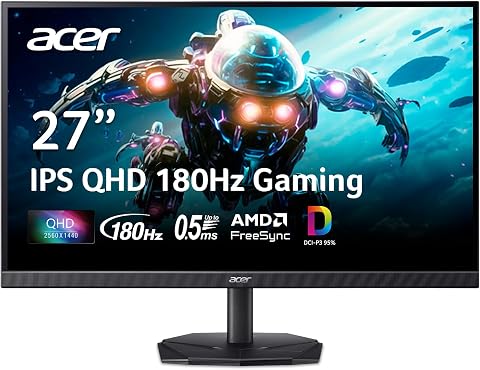 Acer Nitro KG271U 27-Inch QHD IPS Gaming Monitor, 180HzView on Amazon →
- 9
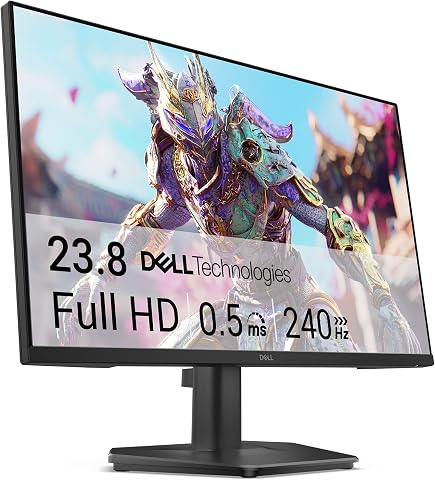 Dell 24 240Hz Gaming Monitor – SE2426HG – 23.8-inch FHD (1920×1080) 240Hz Dis…View on Amazon →
- 10
 Sceptre E225W-FW144 22-Inch FHD 144Hz Gaming MonitorView on Amazon →
Match Refresh Rate to Your PC
The practical value of a high-refresh display depends on whether a computer or console can deliver enough frames in the games being played. A 240Hz specification is not a guarantee of 240 frames per second; demanding games and higher resolutions can place greater demands on graphics hardware. The guide’s distinction between QHD and Full HD options gives readers a useful way to frame that tradeoff: sharper detail can come with a heavier performance burden.
The recommendations also show why “high refresh” does not describe one single kind of purchase. A player focused on competitive games may prefer Full HD at 240Hz, while someone seeking more detail at a 27-inch size may favor QHD at 180Hz or 240Hz. Curved and ultrawide models prioritize viewing format and screen area. Buyers still need to confirm the exact model’s connections, supported refresh rates at their chosen resolution, adaptive-sync support and stand adjustments before ordering.
Products Worth Considering

Samsung 49-Inch Odyssey OLED G9 (G91SD) Dual QHD Curved Gaming Monitor

LG UltraGear 27-inch QHD OLED Gaming Monitor, 240Hz

Samsung 27-inch Odyssey OLED G6 QD-OLED QHD Gaming Monitor (G61SH)
As an affiliate, we earn on qualifying purchases.
Ten Picks Across Three Refresh Tiers
The source says it ranked the monitors by refresh rate, resolution, panel type where specified, screen size and format, considering how the combinations might suit different gaming setups. It characterizes the Acer Nitro XV272U W2bmiiprx as a balance of speed and detail, and the Dell and ASUS Full HD models as more focused options for frame-rate-minded play. Those characterizations reflect the guide’s selection criteria; no independent benchmarks or testing methodology are supplied.
The lineup spans 240Hz, 180Hz and 144Hz, with QHD and Full HD resolutions as well as curved and ultrawide formats. The guide advises matching a monitor to the games, hardware and desk rather than selecting the highest number on a product listing. It also cautions that buyers should verify features not covered in the roundup for the exact model and configuration.
“The Acer Nitro XV272U W2bmiiprx stands out as the strongest all-around balance in this group: QHD detail, an IPS panel, and 240Hz in a 27-inch format.”
— ThorstenMeyerAI.com buying guide
Specifications and Testing Still Need Checks
The supplied material does not identify a publication date, prices, retailer availability, or the basis for confirming that every listed specification applies to the exact model version sold in each market. It also does not report hands-on testing, response-time measurements, input lag, brightness, contrast, or motion-clarity results. The ranking should not be treated as proof that one display performs better than another in measured use.
The source names the 10 models but does not provide full specifications for each, including the details needed to compare connectivity, adaptive sync, ergonomics and supported refresh rates by connection. It is also unclear what specific curved SANSUI models are included. Those gaps matter because product revisions and configuration details can affect compatibility and value; shoppers should verify the exact listing before buying.
Verify Models Before You Buy
The next step for readers is to compare the exact monitor listings against their graphics hardware, games and desk setup. Check the native resolution and refresh rate supported over the intended connection, along with price, warranty, adaptive-sync support and stand adjustments. For high-refresh gaming, consider the frame rates the system can sustain in the games that matter, rather than assuming it will reach a monitor’s maximum rate.
The source provides no announced follow-up testing, updated prices or availability checks. Until those details are available, the roundup can help narrow the field by format and headline specifications, but it cannot settle which model offers the best measured performance or value in 2027.
Key Questions
Which monitor does the guide rank first?
ThorstenMeyerAI.com names the Acer Nitro XV272U W2bmiiprx its best all-around pick, citing its 27-inch QHD IPS display and 240Hz refresh rate. That is the guide’s editorial judgment; the supplied source does not include comparative test results.
Do I need a 240Hz monitor for gaming?
Not necessarily. The source says the benefit depends on whether the system can deliver enough frames in the games being played. A 180Hz or 144Hz option may better fit a PC that cannot sustain higher frame rates, or a buyer who prioritizes resolution, size or format.
What is the tradeoff between QHD and Full HD in this list?
The guide presents QHD as an option for more detail, including on 27-inch displays, and Full HD as a practical choice for high-frame-rate-focused play. QHD can require more graphics performance, so buyers should weigh image detail against the frame rates their hardware can produce.
Does the roundup include independent monitor testing?
No independent test results are included in the supplied material. The ranking is described as based on listed specifications and likely use cases; response time, input lag and other measured performance details remain unreported.
Source: ThorstenMeyerAI.com