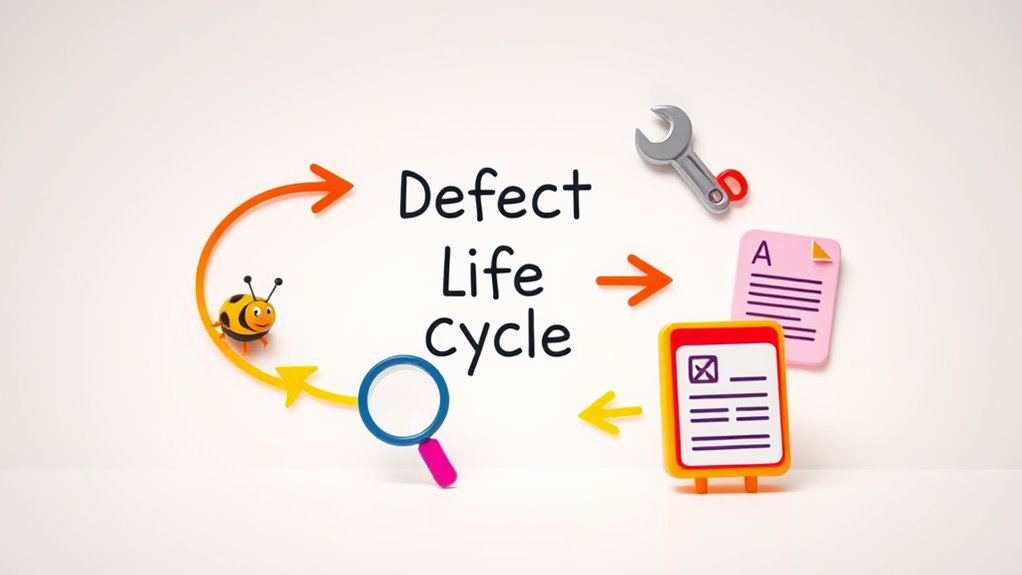

Imagine when you find a bug in your game or app, it’s like discovering a tiny problem that needs fixing. The defect life cycle is how this problem gets tracked, assigned to someone who can fix it, tested to see if it’s gone, and then closed when everything works right. Every step keeps everyone caught up and organized. If you want to see how each part of this process works together, there’s more to explore.

Get business pricing on monitors, keyboards and dev gear
- Business-only prices and quantity discounts
- Tax-exempt purchasing
- Multiple users, one account, clear invoices
Key Takeaways
- A defect life cycle is like a bug’s journey from being found to being fixed.
- When someone finds a bug, it gets recorded so everyone knows about it.
- Then, a developer looks into the bug to understand what caused it.
- The developer fixes the bug, and testers check if it’s really gone.
- Once fixed and checked, the bug is closed, making the software better.
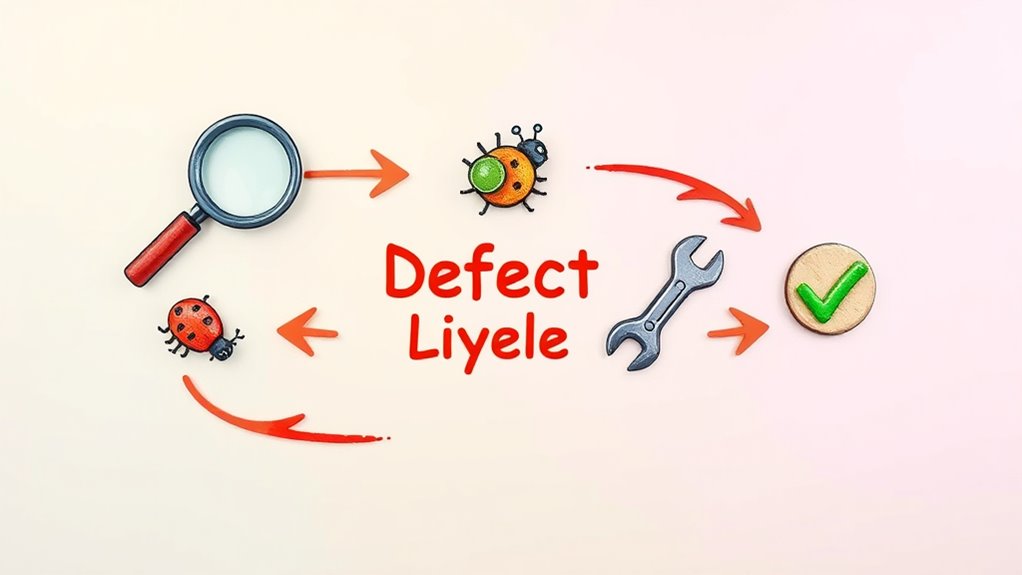
The defect life cycle is a essential process in software testing that outlines the various stages a defect or bug goes through from discovery to resolution. When you’re testing software, you might find something isn’t working right — maybe a button doesn’t respond, or a page loads incorrectly. That’s when bug tracking becomes indispensable. You record all the details about the bug, like what caused it and how to reproduce it. This helps everyone on the team understand what’s wrong and keeps track of the bug as it moves through the process. Bug tracking acts like a big to-do list that everyone can see, making sure no bugs get forgotten or ignored.
Once you’ve reported a bug, it gets assigned to a developer or a team who will investigate it. They look at the bug report, try to understand what caused the problem, and figure out how to fix it. This part of the process is essential because it sets the stage for the resolution process. The developer might need to look at the code, run tests, or ask you questions if something isn’t clear. During this time, the bug’s status is updated in the bug tracking system, so everyone knows whether it’s being worked on, waiting for more information, or fixed. Clear communication is key here to make sure everyone stays on the same page.
Once the developer finds a solution, they implement a fix. After fixing the bug, they mark it as “ready for testing” or “fixed” in the bug tracking system. Now, it’s time for the testing team or quality assurance to verify that the problem is really gone. They test the specific scenario again to make sure the bug no longer occurs and that no new issues were created during the fix. If the bug still appears, it goes back to the developer with additional details, and the cycle continues. If it’s confirmed fixed, the bug moves into the closure stage, completing the resolution process.
Throughout this entire cycle, proper bug tracking keeps everything organized and transparent. It guarantees that bugs don’t slip through the cracks and that everyone involved knows what’s happening at each stage. The bug tracking system acts as a record of the entire defect life cycle, from the moment you first spot the bug to when it’s finally resolved and the software is ready for release. Understanding this cycle helps you realize how significant organization, communication, and thorough testing are in making software reliable and bug-free. In addition, knowing the defect life cycle helps teams improve their testing processes and release higher quality software efficiently.
Products Worth Considering

Bose QuietComfort Headphones (2nd Gen), Wireless Noise-Cancelling Over-Ear Headphones, Eucalyptus Green

DJI Osmo Mobile 8 Phone Gimbal with Mic Mini Transmitter, Infinity Black

Jackery Explorer 2000 v2 Portable Power Station with Two 200W Solar Panels
As an affiliate, we earn on qualifying purchases.
Frequently Asked Questions
How Do Defects Get Discovered in Software?
You discover defects in software through thorough testing strategies, where you actively look for bugs. By implementing effective bug prevention methods, you catch issues early before they reach users. During testing, you simulate real-world scenarios, identify vulnerabilities, and fix problems promptly. This proactive approach helps guarantee your software is reliable, reducing the chances of bugs slipping through, and ultimately delivering a smoother experience for users.
Who Is Responsible for Fixing Defects?
When a defect is found, you’re responsible for defect ownership and accountability in fixing it. Typically, the developer or the relevant team takes charge of resolving the issue, but everyone involved, including testers and project managers, plays a role in ensuring it gets fixed promptly. Your job is to communicate clearly, prioritize the defect, and work efficiently to resolve it, maintaining overall project quality and timelines.
What Tools Are Used to Track Defects?
Imagine a detective with a magnifying glass, hunting for clues—this is defect tracking in bug management. You use tools like Jira, Bugzilla, or Trello to keep track of bugs, like a master organizer with a map. These tools help you see where issues hide, assign them to the right team members, and monitor progress. They turn chaos into clarity, ensuring every defect is caught and fixed before it causes trouble.
Can a Defect Be Ignored After Reporting?
Yes, you can overlook a defect after reporting, but it’s not ideal. Prioritization strategies help you decide which defects need immediate attention and which can wait. Proper defect documentation ensures everyone understands its impact. Ignoring a defect might save time initially, but it could cause bigger problems later. Always assess the defect’s severity and use your prioritization strategies to determine if it’s safe to delay fixing it.
How Long Does a Defect Typically Take to Fix?
The time it takes to fix a defect depends on its severity and the fix timeframe set by your team. Critical defects usually get addressed quickly, often within hours or days, while minor issues might take longer. You should prioritize fixing high-severity defects first, but always communicate expected timelines. Ultimately, the fix timeframe varies based on complexity, resources, and urgency, so stay updated with your development team for the most accurate estimates.
Conclusion
So, now you see how a defect goes through its life cycle, from discovery to resolution. It might seem complicated at first, but understanding this process helps you catch issues early and fix them faster. Even if you think it’s just technical talk, knowing these steps makes you more confident in managing problems. Remember, every defect is just a little bug waiting to be fixed—you’re now equipped to handle it smoothly!