
TL;DR

Get business pricing on monitors, keyboards and dev gear
- Business-only prices and quantity discounts
- Tax-exempt purchasing
- Multiple users, one account, clear invoices
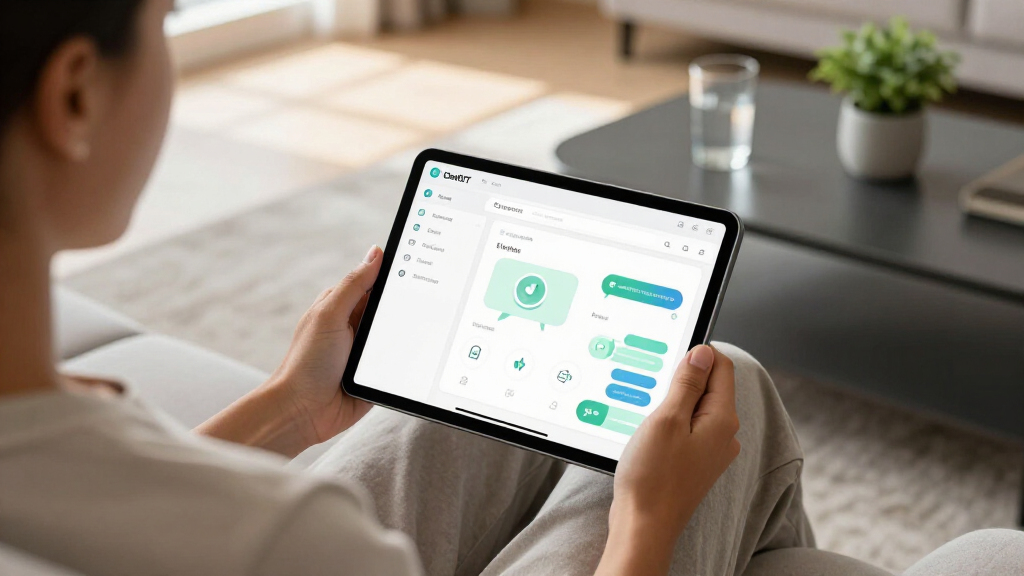
OpenAI has introduced ChatGPT Health, a new feature enabling users to link medical records and wellness apps for personalized health advice. Currently limited to early users, the service emphasizes privacy and aims to improve health-related interactions.
OpenAI has introduced ChatGPT Health, a dedicated feature inside its chatbot that allows users to connect medical records and wellness apps for more personalized health responses. The development process involved over 260 physicians across 60 countries and utilized the HealthBench framework for evaluation. The launch marks the company’s most direct entry into consumer health, with initial access limited to a select group of early users, emphasizing privacy and data security.
The new feature enables users to link data from services such as Apple Health, MyFitnessPal, Peloton, and others, including medical records through a partnership with b.well in the U.S. OpenAI states that health conversations are stored separately, encrypted, and are not used to train its AI models. The development process involved over 260 physicians across 60 countries and utilized the HealthBench framework for evaluation.
At launch, access is restricted to a small group on web and iOS, with plans to expand via a waitlist. The service is not yet available in the European Economic Area, Switzerland, or the UK, due to stricter data protection laws. OpenAI emphasizes that ChatGPT Health is designed as a wellness tool, not for diagnosis or treatment. For more details, see the original analysis.
Implications of AI-Linked Personal Health Data
This development signifies a major step toward integrating artificial intelligence with personal healthcare management. For patients, it offers the potential for more tailored, accessible health insights and improved communication with healthcare providers. For OpenAI, it positions the company at the forefront of digital health innovation, but also raises important privacy and regulatory questions. The move could influence how AI tools are used in healthcare, prompting regulatory scrutiny and competitive responses from rivals like Anthropic. Overall, it could reshape consumer engagement with health data and AI-driven health advice, making it more personalized but also more sensitive in terms of privacy and safety.Apple Health compatible fitness tracker
As an affiliate, we earn on qualifying purchases.
As an affiliate, we earn on qualifying purchases.
Background on AI in Consumer Healthcare
Over the past few years, AI chatbots like ChatGPT have become common tools for health-related queries, with hundreds of millions of weekly interactions. Despite this, AI’s role in personal health management has remained limited and largely unregulated. OpenAI’s new launch builds on prior efforts, including the release of HealthBench in 2025, an evaluation framework for health AI models, and reflects ongoing industry interest in integrating AI with personal health data. The move also follows competitors’ efforts, such as Anthropic’s expansion of Claude’s health capabilities, signaling a broader industry push into consumer health AI.
While the technology has shown promise in understanding and explaining health information, questions remain about accuracy, safety, and regulatory oversight—especially as these tools handle sensitive personal data and potentially influence health decisions.
“Linking medical records to AI chatbots could improve patient engagement but raises significant questions about data security and regulation.”
— Dr. Lisa Chen, healthcare technology expert
As an affiliate, we earn on qualifying purchases.
Unanswered Questions About Safety and Regulation
It is not yet clear how accurately ChatGPT Health will interpret complex medical data outside controlled evaluations or how it will perform across diverse patient populations. The timeline for broader rollout remains uncertain, especially outside the U.S., and regulatory responses, particularly in Europe and the UK, could impact future availability. Additionally, the handling and governance of data once it leaves connected third-party apps are still unclear, raising privacy concerns that have yet to be addressed comprehensively.
As an affiliate, we earn on qualifying purchases.
Next Steps in Deployment and Oversight
OpenAI plans to expand access gradually, starting with the waitlist, and will likely announce new integrations and regional availability in the coming months. Monitoring regulatory responses, especially from European authorities, and independent evaluations of answer accuracy will be key milestones. The company may also introduce additional features and partnerships, shaping how AI is integrated into consumer health management and regulation in the near future.
As an affiliate, we earn on qualifying purchases.
Key Questions
Can I currently use ChatGPT Health?
At present, access is limited to a small group of early users on web and iOS, with a waitlist for broader availability. It is not yet available outside the U.S. in regions like the EU, UK, or Switzerland.
Will OpenAI use my health data to improve its AI models?
OpenAI states that health conversations are stored separately, encrypted, and are not used to train its AI models, prioritizing user privacy.
Is ChatGPT Health meant to replace medical advice?
No. OpenAI emphasizes that ChatGPT Health is a wellness tool designed to assist with understanding health data, not for diagnosing or treating medical conditions.
What privacy protections are in place for my health data?
Health data is stored separately from other chats, protected by purpose-built encryption, and handled according to strict privacy standards, though full governance details are still emerging.
When might ChatGPT Health be available in Europe?
OpenAI has not specified a timeline; regional availability will depend on regulatory approvals and compliance with local data protection laws.
Source: ThorstenMeyerAI.com
Halloween Picks
halloween
As an affiliate, we earn on qualifying purchases.