📊 Full opportunity report: Vocal-strain load tracking for working singers on IdeaNavigator AI — validation score, market gap, and execution plan.

Get business pricing on monitors, keyboards and dev gear
- Business-only prices and quantity discounts
- Tax-exempt purchasing
- Multiple users, one account, clear invoices
TL;DR
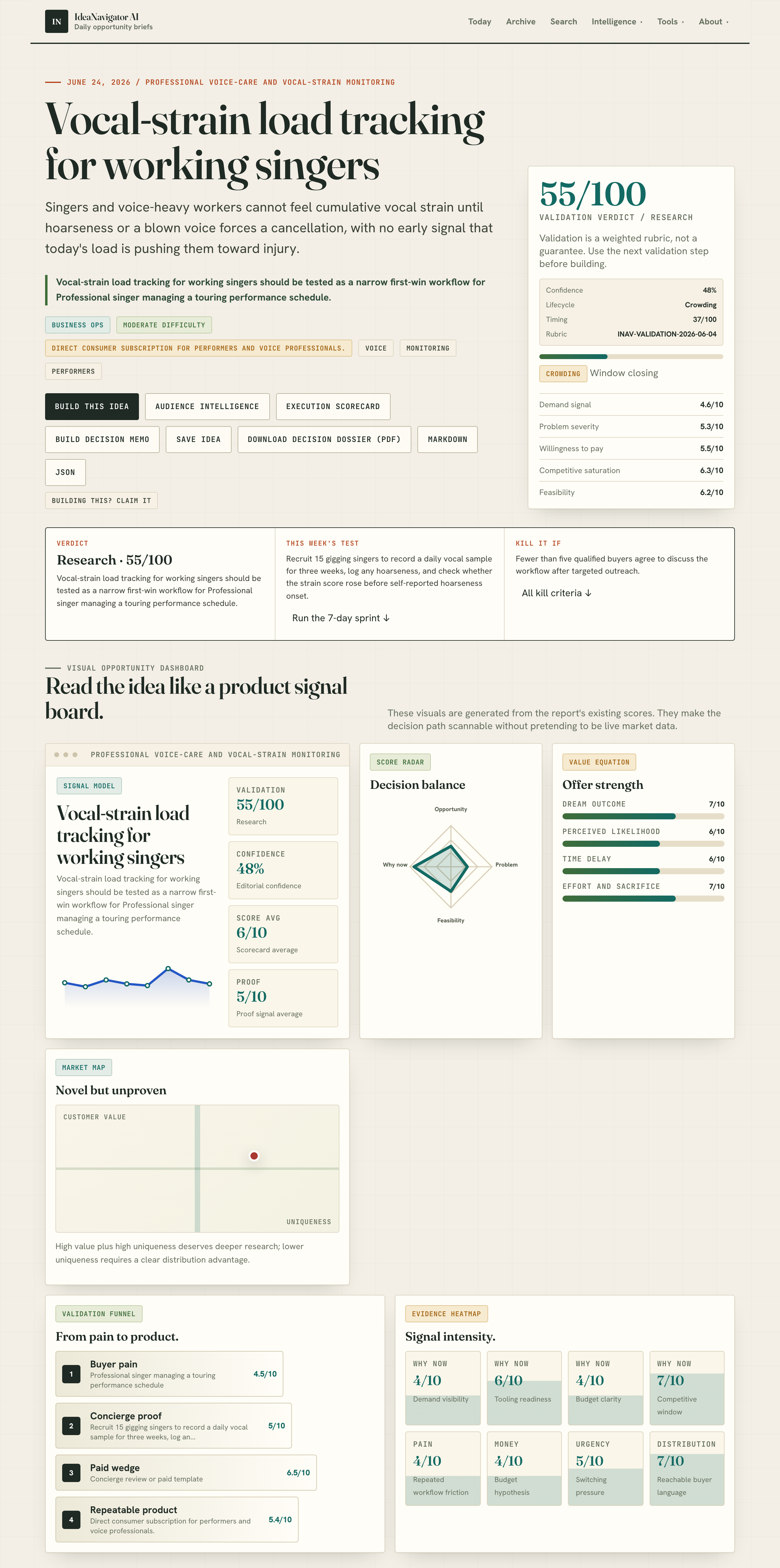
A new vocal strain tracking app for touring singers is being tested with a small group to monitor cumulative vocal load. The goal is to provide early signals of strain to prevent injury and improve vocal health management.
A new vocal strain tracking app designed for professional touring singers is entering a testing phase, aiming to provide early warnings of vocal fatigue and injury risk through post-performance analysis.
The app, currently in prototype stage, prompts singers to record a short vocal sample after each performance. It then analyzes the recording to score the singer’s cumulative vocal strain relative to their personal baseline. The system flags tone shifts that have historically preceded hoarseness or vocal injury, and suggests warm-up routines to mitigate strain.
This development responds to the challenge faced by voice-heavy performers who often only realize they’ve pushed their vocal limits after experiencing hoarseness or voice loss, which can lead to cancellations or damage. The tool aims to give singers an early, objective indicator of their vocal health, especially as many now self-manage schedules without immediate access to a voice coach.
Potential Impact on Vocal Health Management
If successful, this technology could transform how touring singers monitor their vocal health, reducing injury risk and improving performance longevity. By providing real-time, personalized feedback, it empowers performers to make informed decisions about rest and warm-up routines, potentially lowering cancellations and long-term vocal damage.
Products Worth Considering

LG UltraGear evo 27-inch 5K Mini-LED Gaming Monitor

LG UltraGear 34-inch Curved OLED Gaming Monitor, WQHD 1440p, 240Hz, 0.03ms, 800R

Bose Smart Dolby Atmos Soundbar, All-in-One Soundbar for TV, A.I. Dialogue Mode, Voice Control and Amazon Alexa Built-in, Supports Bluetooth
As an affiliate, we earn on qualifying purchases.
Rise of Self-Managed Vocal Care Tools
Vocal health has traditionally relied on subjective feedback and professional guidance, with limited tools for real-time monitoring. Recent advances in audio analysis technology now make it feasible to develop apps that assess vocal strain objectively. The concept aligns with broader trends in gig economy workers managing their health independently, especially as more performers operate without on-call vocal coaches.
Initial validation involves recruiting 15 gigging singers to record daily samples over three weeks, tracking whether their strain scores increase before self-reported hoarseness. This pilot aims to establish whether the app can reliably predict vocal fatigue.
“The ability to analyze vocal characteristics after each performance opens new avenues for early intervention in vocal health.”
— an anonymous researcher
Unclear Effectiveness and User Adoption
It is not yet confirmed whether the app’s strain scores will reliably predict hoarseness or injury across diverse voices and performance styles. The pilot study is still in planning, and user acceptance of daily recording routines remains to be tested.
Next Steps in App Validation and Development
The initial testing phase will involve recruiting 15 singers to use the app daily for three weeks, recording vocal samples and logging their vocal health. Results will determine if the app can serve as a practical tool for vocal injury prevention. Developers plan to refine the algorithm based on pilot data and prepare for broader testing or commercialization.
Key Questions
How does the app analyze vocal strain?
The app records a short vocal sample after each performance and uses audio analysis algorithms to score vocal characteristics, comparing them to the singer’s baseline to identify tone shifts and potential strain.
Can this app replace professional vocal coaching?
No, it is designed as a supplementary tool to help singers monitor their vocal health between coaching sessions or when coaching isn’t available.
Will this technology work for all singing styles?
Its effectiveness may vary depending on voice type and style; validation studies are ongoing to determine its reliability across different performers.
When will the app be available for general use?
The current focus is on pilot testing; a commercial release timeline has not been announced yet.
Is this technology safe for all singers?
As a non-invasive audio analysis tool, it poses minimal risk, but users should consult with vocal health professionals for personalized advice.
Source: IdeaNavigator AI