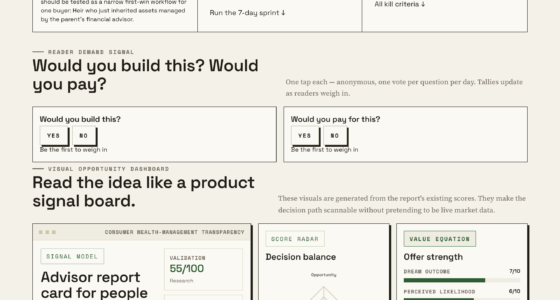

📊 Full opportunity report: The United Kingdom: The Pragmatist’s Hedge on ThorstenMeyerAI.com — validation score, market gap, and execution plan.

Get business pricing on monitors, keyboards and dev gear
- Business-only prices and quantity discounts
- Tax-exempt purchasing
- Multiple users, one account, clear invoices
TL;DR
The United Kingdom has adopted a pragmatic, middle-ground approach post-Brexit, balancing welfare reform, flexible labor markets, and light AI regulation. This strategy aims to maintain adaptability amid economic shifts, but faces challenges if job opportunities decline.
The United Kingdom is continuing its post-Brexit approach of balancing welfare, labor market flexibility, and AI regulation, emphasizing moderation over maximalism. This strategy aims to keep the economy adaptable and attractive, but faces questions about its sustainability amid potential shifts in the job market.
Since Brexit, the UK has avoided adopting the EU’s comprehensive regulation approach or the US’s market-driven model. Instead, it has crafted a pragmatic middle ground, exemplified by the 2012 Universal Credit reform, which consolidates benefits into a single, gradually tapering payment designed to incentivize work. This system has supported approximately four million households, reducing the benefits trap and encouraging employment.
The UK also maintains a flexible labor market with lighter employment protections compared to European counterparts, although recent legislative proposals suggest some tightening. Its approach to AI regulation is similarly moderate: a principles-based sectoral model managed by existing regulators, with a focus on safety and transparency rather than sweeping legislation. The government has deferred a comprehensive AI bill, prioritizing investment and innovation over regulation.
This multi-layered, cautious stance reflects a strategic choice to remain adaptable and attractive to global firms, balancing social support with labor market flexibility and technological innovation. However, this approach faces potential stress if the demand for labor diminishes due to automation or economic contraction, challenging the system’s core assumptions about work availability.
The Pragmatist’s Hedge
Not Brussels’ rules-first maximalism, not Washington’s market. Britain’s settlement: a leaner-but-real welfare state, a light touch on AI, and a relentless emphasis on work — partial on every lever, all-in on none.
Independent commentary, produced with AI assistance under human editorial oversight. The views are the author’s own and may change. This is analysis, not policy, economic, investment, or legal advice. Descriptions of Universal Credit and its 2026 reforms, the UK’s AI approach and AI Security Institute, and the Employment Rights Bill reflect publicly reported information as of mid-2026 and may change. This phase maps differing approaches and endorses none; contested reforms are presented with competing views, not a verdict. Country and program names are referenced for analysis and imply no affiliation.
Implications of the UK’s Balanced Post-Brexit Model
This approach matters because it shapes the UK’s economic resilience and attractiveness in a rapidly changing global landscape. Its emphasis on flexibility and moderation aims to foster innovation and investment, but may also leave the country vulnerable if job opportunities shrink. Policymakers must monitor labor demand trends closely to adapt the system accordingly, ensuring it remains effective and sustainable in the face of automation and economic shifts.
Universal Credit benefit calculator
As an affiliate, we earn on qualifying purchases.
As an affiliate, we earn on qualifying purchases.
Background of UK’s Post-Brexit Policy Strategy
Following Brexit, the UK sought to craft a distinct policy identity, avoiding the EU’s regulatory rigor and the US’s market laissez-faire. Its welfare reform, exemplified by Universal Credit, aimed to eliminate work disincentives. Simultaneously, the UK adopted a flexible labor market and a cautious approach to AI regulation, focusing on principles and sectoral oversight rather than comprehensive legislation. These choices reflect a deliberate strategy to maintain economic agility while controlling social and technological risks.
“We are committed to fostering a competitive, innovative economy that safeguards safety and fairness without over-regulation.”
— UK government spokesperson
As an affiliate, we earn on qualifying purchases.
Uncertain Future of UK Labour Demand and AI Regulation
It remains unclear whether the UK’s flexible, moderate policies will withstand future economic shocks or technological disruptions. The potential contraction of entry-level jobs due to automation could challenge the assumption that work will always be available, testing the resilience of Universal Credit and labor market policies. Additionally, the delayed comprehensive AI legislation leaves questions about future regulation and safety standards.
AI safety and transparency regulation books
As an affiliate, we earn on qualifying purchases.
As an affiliate, we earn on qualifying purchases.
Next Steps in UK Policy Adjustments and Economic Monitoring
Policymakers are expected to continue balancing fiscal constraints with social and technological needs. Key developments include monitoring labor market trends for signs of demand contraction, implementing targeted adjustments to welfare and employment regulations, and finalizing the AI bill. Ongoing debates will shape whether the UK maintains its moderate stance or shifts toward more interventionist policies if economic or technological challenges intensify.
As an affiliate, we earn on qualifying purchases.
Key Questions
How sustainable is the UK’s balanced approach in the long term?
The sustainability depends on future economic conditions and labor demand. If automation reduces entry-level jobs significantly, the current system may face stress, requiring policy recalibration.
What impact does the UK’s AI regulation approach have on innovation?
The principles-based, sectoral model aims to foster innovation by avoiding overly restrictive legislation, but it leaves some questions about safety standards and enforcement open as AI advances.
Could the UK tighten welfare or labor protections in response to economic shifts?
Yes, recent reforms suggest some capacity for adjustment, but any significant tightening might conflict with the current emphasis on flexibility and work incentives.
How does the UK’s approach compare to the EU or US models?
The UK’s model is more moderate than the EU’s comprehensive regulation and more flexible than the US’s market-driven approach, aiming to balance innovation with social stability.
Source: ThorstenMeyerAI.com
Columbus Day / Indigenous Peoples' Day Picks
long weekend sales
As an affiliate, we earn on qualifying purchases.