
TL;DR

Get business pricing on monitors, keyboards and dev gear
- Business-only prices and quantity discounts
- Tax-exempt purchasing
- Multiple users, one account, clear invoices
IBM has been selected for Stage C of DARPA’s Quantum Benchmarking Initiative, moving from plan review to independent technical evaluation. The program is examining whether an industrially useful fault-tolerant quantum computer can be built by 2033; IBM says it plans to deliver its Quantum Starling system in 2029.
IBM has advanced to Stage C of the U.S. Defense Advanced Research Projects Agency’s Quantum Benchmarking Initiative, entering a phase in which independent experts will test its quantum hardware and examine its approach to building a fault-tolerant system. The review is part of DARPA’s effort to determine whether a quantum computer with computational value greater than its cost can be built by 2033.
IBM said it was selected for the initiative’s third phase after completing the first two assessment stages. Stage A asked participants for an initial technical concept with a plausible path to a cost-effective, fault-tolerant quantum computer. Stage B required a detailed research and development plan, including identified risks and ways to address them.
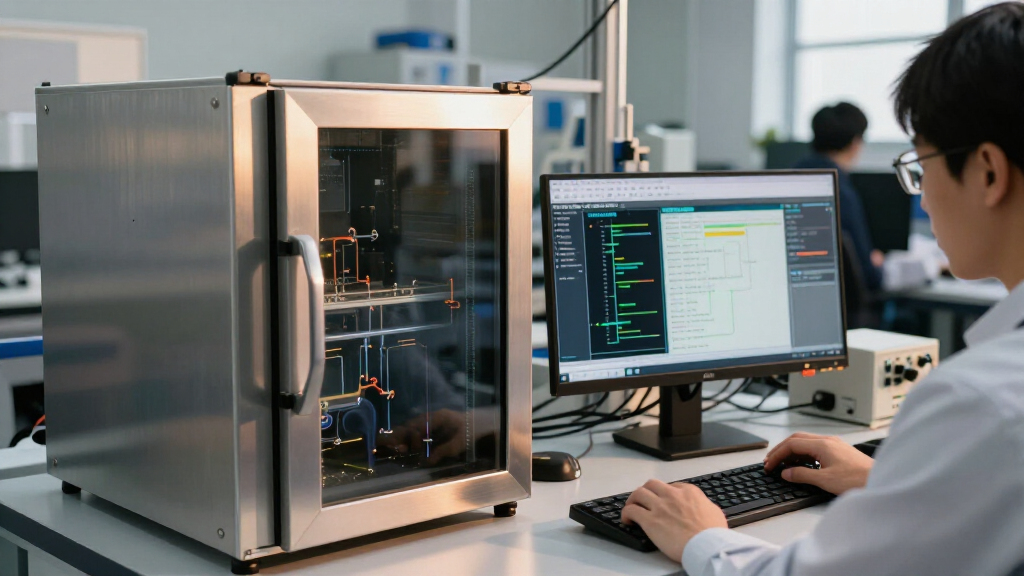
Stage C moves the process beyond written plans. According to IBM and the report by The Quantum Insider, DARPA’s independent verification and validation team will test participating companies’ hardware and assess their technology, systems engineering and architectures. The source material does not give a schedule for IBM’s testing or describe specific test results.
IBM’s stated goal is to deliver Quantum Starling in 2029. The company says the planned system will combine work in error correction, processor design and systems engineering. IBM also reports progress on hardware components for fault tolerance and on error-correction decoding, but those are company descriptions of its work, not results from the Stage C review.
Independent Testing Begins for IBM
Stage C matters because it brings external technical evaluation into a field where companies’ roadmaps and performance claims can be difficult for customers, researchers and policymakers to compare. Testing by DARPA’s independent team may provide evidence about whether IBM’s hardware and engineering plans can support the move from today’s quantum systems toward fault-tolerant computing.
The assessment is not a finding that IBM has built a fault-tolerant computer, nor does selection establish that its 2029 target will be met. Rather, it marks the next step in a government-backed process focused on technical feasibility and economic usefulness. That distinction matters to organizations deciding how much to invest in quantum research and when to expect practical applications.
DARPA’s benchmark is also framed around value, not capability alone: the initiative asks whether computational benefits can exceed the system’s cost. Its 2033 objective gives the field a defined target against which technical progress and the prospects for industrial use can be judged.
As an affiliate, we earn on qualifying purchases.
How DARPA’s Three Stages Work
DARPA launched the Quantum Benchmarking Initiative in 2024 to examine whether an industrially useful fault-tolerant quantum computer could be built by 2033. Its stated definition emphasizes a system whose computational value exceeds its cost. The program is intended to assess proposed paths to that goal rather than simply count qubits or compare headline hardware specifications.
The initiative’s stages move from concept to planning and then technical scrutiny. Stage A involved initial concepts; Stage B asked for detailed development plans and risk mitigation; Stage C introduces evaluation by the independent verification and validation team. DARPA announced Stage A performers in April 2025, according to the supplied report.
IBM’s participation is part of a broader company program. IBM says its quantum computers are used by a network of more than 340 organizations in areas including finance, health care, materials science, academia and government. That figure describes organizations using IBM systems, not demonstrated users of fault-tolerant quantum applications.
“Advancing to the third stage of DARPA’s Quantum Benchmarking Initiative validates the strength of IBM’s path to building a fault-tolerant quantum computer.”
— Jay Gambetta, director of IBM Research and IBM Fellow
As an affiliate, we earn on qualifying purchases.
Testing Scope and Results Await
The announcement does not specify when Stage C testing will begin or conclude, what measurements DARPA will publish, or when the team may issue findings. It also does not identify the hardware configurations or performance thresholds that will be assessed.
IBM’s 2029 delivery target remains a company projection. The materials supplied do not include independent confirmation that Quantum Starling will meet that date, nor do they provide a cost estimate or evidence that the planned system will deliver computational value greater than its cost. Advancing in the initiative should not be read as proof that those goals have already been achieved.
error correction quantum processor
As an affiliate, we earn on qualifying purchases.
As an affiliate, we earn on qualifying purchases.
DARPA’s Hardware Review
The next reported step is evaluation by DARPA’s independent verification and validation team. That review is expected to test IBM hardware and examine the company’s technology, architecture and systems engineering as it pursues fault tolerance. No public timetable, detailed protocol or result date was included in the announcement.
Readers can look for updates from DARPA and IBM on the review’s scope, testing milestones and any published findings. Separately, IBM’s stated 2029 Quantum Starling target remains a future milestone; progress toward it will need to be distinguished from outcomes of DARPA’s assessment.
As an affiliate, we earn on qualifying purchases.
Key Questions
What does IBM’s move to Stage C mean?
It means IBM has advanced from concept and development-plan reviews to a phase involving independent hardware testing and technical evaluation under DARPA’s initiative. It does not mean IBM has already demonstrated a fault-tolerant computer.
What is DARPA trying to determine?
DARPA’s initiative aims to assess whether an industrially useful fault-tolerant quantum computer can be built by 2033, with computational value that exceeds its cost.
When does IBM expect Quantum Starling to be ready?
IBM says it expects to deliver its planned Quantum Starling system in 2029. That is a company target, not a confirmed delivery or a schedule endorsed in the supplied DARPA material.
What is not yet known about the Stage C review?
The announcement does not provide a testing timetable, detailed assessment criteria or publication date for results. It also does not report any Stage C findings about IBM’s hardware.
Source: rss
Halloween Picks
halloween
As an affiliate, we earn on qualifying purchases.