
📊 Full opportunity report: DDR5 Now, DDR6 Soon: A Buyer’s Field Guide on ThorstenMeyerAI.com — validation score, market gap, and execution plan.

Get business pricing on monitors, keyboards and dev gear
- Business-only prices and quantity discounts
- Tax-exempt purchasing
- Multiple users, one account, clear invoices
TL;DR
Despite rumors of DDR6 arriving soon, experts advise buyers to purchase DDR5 now for current needs. DDR6 is not expected to be mainstream until 2027, and waiting may cost more.
Market analysts confirm that DDR5 memory remains the recommended choice for most consumers in 2026, with DDR6 not expected to reach mainstream desktops until 2027. This development is critical for builders and upgraders facing high prices and supply shortages, as waiting for DDR6 could delay performance improvements and increase costs.
Experts, including industry sources, state that DDR5-6000 CL30 remains the ideal configuration for most modern platforms, offering the best balance of performance and price. Higher-speed DDR5 kits, such as DDR5-8000, are considered a waste of money for typical workloads, given their minimal real-world benefit.
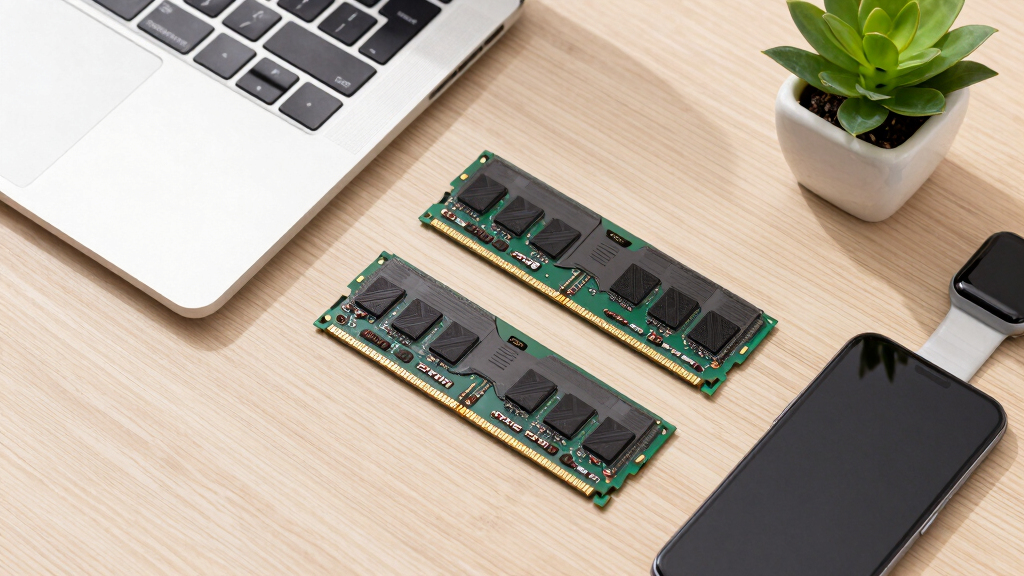
On capacity, the prevailing advice is to buy what suits current needs—32GB for gaming and general use, 64GB for content creation—rather than overspending on 128GB kits, which are unlikely to be fully utilized for years. Platform specifics, like support for CUDIMMs and RDIMM configurations, are also important considerations for stability and future-proofing.
Regarding DDR4, manufacturers have largely phased out production, and prices have aligned with DDR5, making DDR4 a poor choice for new builds. Building on DDR4 now would mean investing in a platform with no future upgrade path, as DDR4 is effectively end-of-life.
As for DDR6, it is still in development, with specifications promising significant bandwidth improvements—up to triple current DDR5 speeds—and a new physical form factor, CAMM2. However, DDR6 is not backward compatible, requires new CPUs and motherboards, and is expected to be staged across enterprise, workstation, and consumer markets from 2026 through 2030.
Industry sources emphasize that most users should not wait for DDR6, as early adoption involves high costs, immature technology, and limited capacities. Instead, a well-chosen DDR5 system purchased now will outperform a first-generation DDR6 setup in 2027, at a lower cost.
DDR5 now, DDR6 soon
A buyer’s field guide. The 20-year instinct — wait for prices to drop, or wait for the next generation — is broken this cycle. Buy the DDR5 you actually need now; don’t wait for DDR6. Here’s the reasoning.
Driven to end-of-life, production slashed. Same money, dead-end socket. Leave a working DDR4 box alone — but never start a new build on DDR4 to “save.”
A framework, not a gamble. Buy the DDR5 you need now, at the sweet spot, in the capacity you’ll actually use — don’t buy DDR4, don’t wait for DDR6. The two costliest mistakes in this market are the ones that feel prudent: waiting for a price drop that isn’t coming, and waiting for a next-gen part that launches dearer than what’s on the shelf. Next: The SSD Squeeze.
Why Buying DDR5 Now Is the Smarter Move
This guidance matters because it helps consumers avoid unnecessary delays and overspending. Waiting for DDR6 could mean missing out on current platform improvements, while early adoption of DDR6 involves risks like higher prices, limited availability, and unproven stability. For most users, investing in DDR5 now ensures performance gains without the added cost and uncertainty of early DDR6 adoption.
Products Worth Considering

LG UltraGear 32GX850A-B 32-Inch 4K UHD Glossy OLED Gaming Monitor

Samsung 27 Odyssey OLED G5 (G50SF) QHD QD-OLED Gaming Monitor

LG 34GX90SA-W 34-inch Ultragear WQHD OLED Curved Gaming Monitor
As an affiliate, we earn on qualifying purchases.
Market Trends and Future Memory Developments
Historically, memory upgrades follow a cycle where new standards gradually replace older ones, often with price drops and increased capacities. DDR4, introduced around 2014, took several years to become ubiquitous, with prices dropping significantly by 2018. DDR5 emerged in 2021, but supply shortages and high demand have kept prices elevated through 2026.
Meanwhile, DDR6, initially announced as a future standard, is still in development, with formal specifications expected to be finalized soon. Its adoption is staged, starting with enterprise and high-end workstation markets before reaching mainstream desktops around 2027. The physical form factor, CAMM2, is a departure from current modules, designed to support higher speeds but requiring new hardware compatibility.
Manufacturers and industry analysts agree that the first DDR6 modules will be expensive, with limited capacities initially, and that early adopters face substantial risks. The current market favors building on mature DDR5 platforms, which are now stable and cost-effective.
“Waiting for DDR6 in 2027 could cost you more in delayed upgrades and higher prices. DDR5 offers the best value today.”
— Tech hardware expert
Uncertainties Surrounding DDR6 Adoption Timeline
While specifications for DDR6 are nearing finalization, actual availability, pricing, and stability of early modules remain uncertain. The staged rollout means that mainstream adoption might not occur until 2027 or later, with early modules likely to be expensive and limited in capacity. Compatibility issues and immature ecosystem support could also pose challenges for early adopters.
Next Steps for Consumers and Industry Participants
Consumers should focus on building or upgrading with DDR5 now, selecting configurations aligned with their workloads. Industry watchers will monitor JEDEC standard finalization and the appearance of compatible DDR6 modules on motherboard QVLs, signaling readiness for early adoption. Meanwhile, manufacturers are expected to continue refining DDR6 technology, with preview modules possibly appearing by late 2026, but widespread availability remains at least two years away.
Key Questions
Should I buy DDR5 now or wait for DDR6?
Most users should buy DDR5 now, as DDR6 is not expected to be mainstream until 2027. Waiting may result in higher costs and missing out on current platform improvements.
Is DDR4 still a good choice in 2026?
No. DDR4 is effectively phased out, and building on DDR4 now would mean investing in a platform with no future upgrade path. DDR5 is the recommended standard for new builds.
What are the main advantages of DDR6 over DDR5?
DDR6 promises significantly higher bandwidth, with speeds reaching up to 17,600 MT/s, and a new physical form factor, CAMM2, designed for higher signal integrity. However, it requires new hardware and is not backward compatible.
What should I look for in DDR5 memory modules?
The best value is DDR5-6000 CL30 kits, suitable for most workloads. Higher speeds like DDR5-8000 are unnecessary for typical gaming and productivity tasks.
Will early DDR6 modules be compatible with current systems?
No. DDR6 modules will require new CPUs and motherboards supporting the DDR6 standard, as they are not backward compatible.
Source: ThorstenMeyerAI.com