
🔍 Read the full analysis: What Does IP Protection Mean For AI Game Clones? on ThorstenMeyerAI.com

Get business pricing on monitors, keyboards and dev gear
- Business-only prices and quantity discounts
- Tax-exempt purchasing
- Multiple users, one account, clear invoices
TL;DR
Take-Two CEO Strauss Zelnick said AI companies should protect their own intellectual property and that of others, responding to an IGN question about game cloning. Anthropic’s Claude Code has a rule against recreating specific existing games, while OpenAI’s general policy bars IP infringement; neither company had publicly responded to Zelnick as of Nov. 14, 2026.
Take-Two Interactive CEO Strauss Zelnick said AI companies should protect other people’s intellectual property as well as their own, responding to an IGN question about AI tools and game cloning. His comments came as Anthropic’s Claude Code included a rule against recreating a specific existing game; Zelnick did not accuse either Anthropic or OpenAI of cloning a Take-Two title.
In an interview published Nov. 9, IGN asked Zelnick whether he welcomed Anthropic’s steps to block Claude from reverse-engineering video games and whether OpenAI should take similar action. Zelnick replied: “I think all companies should be protecting intellectual property, their own and everyone else’s.” He added that it seemed ironic for companies in the intellectual-property business to “stomp on someone else’s IP” while hoping their own was protected.
The response did not identify a particular product, game, incident or type of conduct. The companies’ names were raised in the interviewer’s question. Zelnick also did not specify whether his criticism referred to AI-generated outputs, the way models are developed, or another practice. The interview provides no evidence that Claude or ChatGPT had been used to clone a Take-Two game.
Asked separately about AI-assisted piracy, Zelnick said he did not see it as a financial threat to Take-Two’s business, but did see it as a creative concern. On the company’s earnings call that day, he said piracy would become “more of a challenge” and that Take-Two was “enhancing our technical defenses and enhancing our legal activities appropriately.”
AI coding agents and existing games · as of Nov 14, 2026
Prompt in, game out: where the line runs
Three example requests (illustrative, not real cases) and what each vendor’s published rules say about them.
- Example request
“An original racing game with my own art”own idea, own assets
Claude Code (Anthropic)AllowedRule text: build original games and games from the user’s own designs and assets
Codex / policies (OpenAI)No objectionNothing in the published usage policies against it
- Example request
“A heist game with mechanics like [a named hit]”a game named as a reference
Claude Code (Anthropic)Allowed since v2.1.317Builds an original game in that genre, per Anthropic
Codex / policies (OpenAI)No game rule foundNo game-specific instruction in the Codex CLI code
- Example request
“Rebuild [a specific game], just rename it”a copy under a new name
Claude Code (Anthropic)Not allowedCovers its name, characters, art, music, levels or look; offers to build something similar
Codex / policies (OpenAI)General IP banUsage policies bar attempts to infringe IP; no game-specific rule found
Outside the tools: Take-Two says it relies on its own “technical defenses” and “legal activities”. Copyright and trademark law apply whichever tool writes the code.
The requests are our own illustrations. The rows summarize published rules, not tests of how the tools behave. ChatGPT’s and Codex Web’s server-side instructions are not public.
Sources: Claude Code program text, versions 2.1.317 to 2.1.325, and Anthropic’s statement of Nov 4, 2026 (via Tom’s Hardware); OpenAI usage policies, version effective Nov 20, 2026 (Internet Archive copy of Oct 28, 2026); Codex CLI repository on GitHub, checked Nov 14, 2026; Take-Two fiscal Q2 2027 earnings call, Nov 9, 2026.
Graphic: Powered by Thorsten Meyer AI
Rules Shape AI Game Recreation
The exchange highlights a difference in the published limits described for AI companies: Anthropic has a game-specific instruction in Claude Code, while OpenAI’s cited policy addresses intellectual-property infringement more generally. Such rules can guide how a coding assistant responds to requests, but the published wording alone does not establish how a model handles every prompt or whether a resulting game infringes anyone’s rights.
Zelnick described AI-assisted piracy as a creative concern rather than a direct financial threat to Take-Two. He said the company was strengthening its technical defenses and legal activity. The interview does not quantify the risk, identify a particular clone, or establish that an AI-generated game has affected Take-Two.
Anthropic’s instruction distinguishes requests to recreate a named game and its specific elements from other coding requests. Whether a particular output infringes rights depends on the material generated and the relevant rights. A policy against infringement does not, by itself, resolve that legal question.
Products Worth Considering

Samsung 37-inch Odyssey G7 4K UHD Curved Gaming Monitor

DJI Osmo 360 Motorcycle Handlebar POV Combo
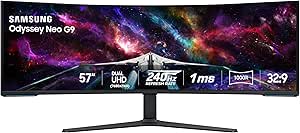
Samsung 57 Odyssey Neo G9 (G95NC) Dual 4K UHD 1000R Curved Gaming Monitor
As an affiliate, we earn on qualifying purchases.
What the Published Rules Say
Anthropic’s Claude Code instruction, present since version 2.1.317, published Nov. 2, tells the model not to build “a recreation of a specific existing game,” including its name, characters, art, music, levels or look, even if the result is renamed or described as original. Anthropic links the instruction to its usage policy, which bars infringement of third-party intellectual property.
OpenAI’s usage policies prohibit “attempts to infringe on intellectual property rights of others.” The source report said it found no game-specific instruction in the open-source code of OpenAI’s Codex CLI. That finding concerns the examined code; it does not show that OpenAI lacks other safeguards or establish how every OpenAI product behaves.
The interview followed Take-Two’s report of its fiscal second-quarter results for the quarter ended Sept. 30, 2026. On the earnings call, Zelnick said technical limitations, file sizes and server connections had historically made piracy difficult, but acknowledged that the challenge could grow. The available statements describe company policies and concerns, not a reported enforcement case involving a specific AI-generated game.
“I think all companies should be protecting intellectual property, their own and everyone else’s.”
— Strauss Zelnick, Take-Two Interactive chairman and CEO, speaking to IGN
Limits of the Public Record
As of 21:30 UTC on Nov. 14, the source report found no public response from Anthropic or OpenAI to Zelnick’s remarks. It is also unclear what conduct he meant by “stomp on someone else’s IP”; he did not define the phrase or connect it to a specific model, company action or game.
The evidence cited does not show that either company’s tools created a Take-Two clone, nor does it establish how consistently the published policies are applied in practice. Anthropic’s instruction concerns recreating a specific game; it does not itself describe a ban on reverse engineering or decompilation. The interview’s question used the term “reverse engineering,” but that wording should not be treated as the text of Anthropic’s rule.
Company Responses and Enforcement
The next developments to watch are any public clarification from Anthropic or OpenAI, changes to their coding-tool policies, and further details from Take-Two about its defenses. Zelnick said the company was strengthening technical protections and legal activity, but did not give a timetable or describe specific measures.
Any concrete dispute would require more than a general policy statement or a resemblance between games: the relevant facts would include what was requested, what the tool produced, how the material was used and which rights were implicated. Until a company or a legal filing provides those details, the current record supports a discussion of stated principles and safeguards—not a finding that a particular AI company or user infringed Take-Two’s rights.
Key Questions
What did Strauss Zelnick say about AI companies and game IP?
He said companies should protect their own intellectual property and that of others. In the IGN interview, he described it as ironic for a company in the IP business to infringe on someone else’s rights while expecting its own rights to be protected.
Does Claude Code have a rule against recreating existing games?
Yes. The cited instruction tells Claude Code not to build a recreation of a specific game, including its name, characters, art, music, levels or look, even if renamed or called original. The source says the rule has been present since version 2.1.317, published Nov. 2, 2026.
Does OpenAI have a game-specific rule?
OpenAI’s usage policies prohibit attempts to infringe others’ intellectual-property rights. The source report found no game-specific instruction in the open-source Codex CLI code it examined; that does not establish whether other safeguards exist in OpenAI products.
Did Zelnick say an AI tool had cloned a Take-Two game?
No. He did not identify a cloned Take-Two title or accuse either company of a specific infringement. His remarks addressed general concerns about AI, piracy and intellectual property.
What remains unknown?
Zelnick did not define what he meant by “stomp on someone else’s IP,” and the public record cited here does not establish how consistently the tools apply their policies. As of Nov. 14, 2026, the source report had found no public response from Anthropic or OpenAI to his comments.
Source: ThorstenMeyerAI.com