TL;DR

Get business pricing on monitors, keyboards and dev gear
- Business-only prices and quantity discounts
- Tax-exempt purchasing
- Multiple users, one account, clear invoices
Middle Tennessee State University led a three-day Interstate Quantum Hackathon designed to introduce students to quantum computing. Organizers reported 250 registrants from 14 U.S. states and 29 countries; more than 40% said they had no previous experience with the field.
Middle Tennessee State University led a three-day Interstate Quantum Hackathon that brought together 250 registrants from 14 U.S. states and 29 countries to work on beginner-level quantum computing challenges. The event, organized with universities and other partners, aimed to broaden access to hands-on education in a field where developing a skilled workforce is part of the challenge.
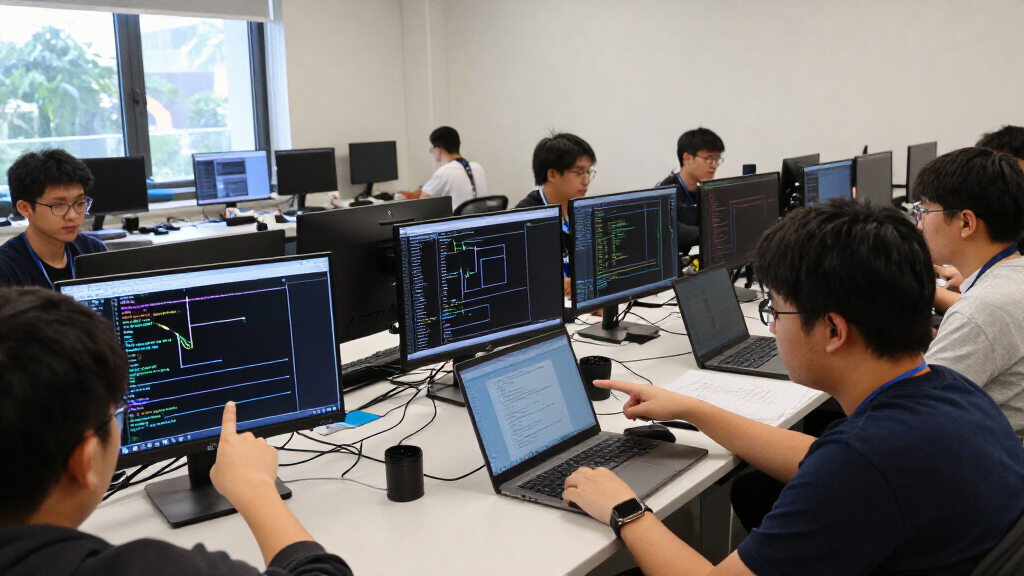
The hackathon was led by MTSU’s Quantum Research, Interdisciplinary Science and Education Center, or QRISE, in collaboration with universities in Tennessee, Indiana, Missouri, Florida and Alabama. Hanna Terletska and Abhijit Chakraborty of MTSU led the event with David Liu of Purdue University Fort Wayne. The organizers used a hybrid format: students worked at local university sites and connected online with teams, mentors and speakers.
Before the competition, participants received four weeks of introductory training in quantum computing fundamentals, IBM’s Qiskit programming tools, quantum algorithms and possible applications. Organizers said more than 40% of registrants reported no previous quantum computing experience. During the three-day event, interdisciplinary teams tackled challenges involving molecular simulation, quantum machine learning and optimization.
The event also involved universities, industry partners and government representatives, including IBM Quantum and the Tennessee Department of Economic and Community Development, according to the report. The source describes the hackathon as a workforce-development and education effort; it does not report competition results, specific projects selected as winners, or evidence that the challenges produced usable quantum applications.
Building Entry Points Into Quantum
The event offered students an organized route into a technical area that may otherwise be difficult to access without specialized courses, equipment or research connections. Its beginner-focused training and participation across different institutions could help more students encounter quantum programming and research problems before pursuing advanced study or related work.
That educational work matters because quantum computing’s progress depends not only on hardware and algorithms, but also on people able to identify worthwhile problems and evaluate proposed solutions. The hackathon gave participants practice in defining problems, testing algorithms and interpreting results, as well as working across institutions. Those activities are educational benefits, but the available report does not show whether participants later entered quantum-related study or employment.
The challenges also touched areas such as materials and drug discovery, energy systems, manufacturing and logistics. These are potential research applications, not proof that current quantum computers outperform conventional systems in those fields. The event’s immediate importance is therefore access to training and collaboration, rather than a reported technical breakthrough.
Products Worth Considering

Amazon Kindle Scribe (64GB) with Premium Pen, Metallic Jade

Bose SoundLink Flex Bluetooth Speaker (2nd Gen) – Portable Outdoor Speaker with Hi‑Fi Audio, Waterproof and Dustproof, USB‑C, Up to 12 Hours

LG UltraGear 32GS60QC-B 32-inch Curved QHD Gaming Monitor (180Hz, 1ms, 1000R, AMD FreeSync, HDR10)
As an affiliate, we earn on qualifying purchases.
Four Weeks Before Competition
The Interstate Quantum Hackathon was designed for students who were new to the subject, rather than only experienced quantum programmers. The four-week preparation period introduced participants to core concepts and Qiskit before they worked on team challenges. That structure linked introductory instruction with a short, practical competition.
MTSU’s QRISE Center worked with institutions that included Missouri State University, the University of West Florida, the University of Alabama, the University of Alabama in Huntsville, Fisk University, Tennessee State University, Meharry Medical College and Purdue University Fort Wayne. The collaboration included public universities, research institutions and historically Black colleges and universities, according to the source. The source presents this mix as a way to connect students with mentors and peers beyond their home campuses.
Quantum computing remains an emerging field, and many proposed uses are still under research. The organizers’ challenges in simulation, machine learning and optimization were intended to give students experience with relevant questions; the report does not establish that quantum methods are already more effective than classical computing for those tasks.
Results and Follow-Up Still Unreported
The report gives registration totals and a share of registrants who said they had no previous experience, but it does not specify how many people completed the training or took part in the final competition. It also does not give a breakdown of participants by institution, state, country or academic level.
Details about team outcomes are absent: the source does not identify winners, describe solutions judged successful, or say whether any projects will continue as research. It also provides no evaluation of changes in participants’ skills or longer-term education and employment outcomes. The number of registrants indicates interest, but the report does not provide a comparison with other events or a measure of demand over time.
The potential applications discussed by organizers remain research directions. The report does not establish a practical advantage for quantum computing in the challenge areas, nor does it provide performance comparisons with conventional computing.
Whether Training Continues
The source does not announce a date for another hackathon, a follow-up program or publication of competition results. MTSU and its partners may use the event to inform future education and workforce initiatives, but no specific next milestone is confirmed in the available report.
Further information that would clarify the event’s longer-term impact includes participation and completion figures, details of team projects, plans for continued mentoring, and whether students move into additional quantum courses or research. Until organizers provide those details, the confirmed outcome is the event itself: a three-day, multi-state learning opportunity preceded by four weeks of introductory instruction.
Key Questions
What was the Interstate Quantum Hackathon?
It was a three-day, beginner-focused quantum computing event led by MTSU’s QRISE Center with university partners. Students worked in teams on challenges in molecular simulation, quantum machine learning and optimization.
How many people registered?
Organizers reported 250 registrants from 14 U.S. states and 29 countries. The source does not say how many registrants completed the training or participated in the competition.
Did participants need prior quantum computing experience?
No. The event was designed for beginners, and organizers said more than 40% of registrants reported no prior experience. Participants received four weeks of introductory training before the hackathon.
Did the hackathon prove quantum computers are useful for these challenges?
No such result is reported. The challenges covered research areas with possible applications, but the source does not provide evidence that current quantum computers outperform conventional systems or delivered practical solutions during the event.
Source: thequantuminsider.com