
📊 Full opportunity report: What Makes An Audio Walking App Feel Personal? on IdeaNavigator AI — validation score, market gap, and execution plan.

Get business pricing on monitors, keyboards and dev gear
- Business-only prices and quantity discounts
- Tax-exempt purchasing
- Multiple users, one account, clear invoices
TL;DR
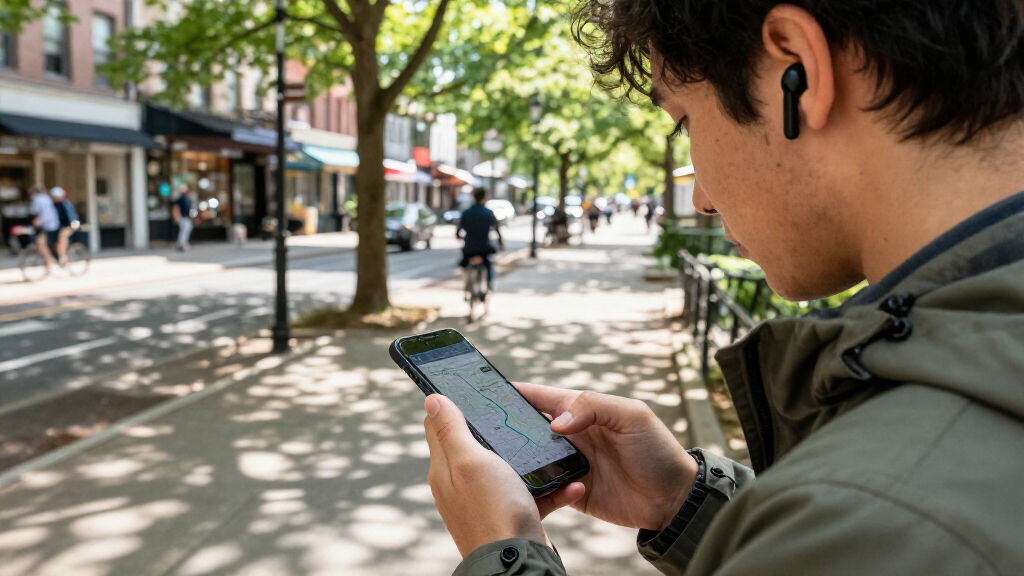
IdeaNavigator AI proposes testing an audio walking app that generates narration about a person’s live route, including local history, buildings and natural features. The concept is a product proposal, not a report of a launched service or measured results; its suggested test would track week-four retention in two cities and audit narration accuracy.
IdeaNavigator AI has proposed testing an audio walking app that generates narration about a user’s route and responds as they pass corners and landmarks. The proposal frames the product as a narrow first test for people who want their neighborhood walks or trips narrated, with a two-city pilot measuring repeat use and checking the accuracy of the audio.
The proposed app would let a user start a walk and hear route-based narration about local history, architecture and unusual details. It could react to locations along the way and offer themed modes, including history, architecture and nature. Users would also be able to save favorite routes, according to the concept.
IdeaNavigator AI argues that language models could generate location-grounded narration on demand using open information such as historical records, architecture references and place data. That approach, the proposal says, could reduce the cost of producing audio for each route compared with recording tours in advance. The proposal does not document a working app, a technical test or a cost comparison.
The suggested business model combines a consumer subscription with a licensing option for tourism boards. To assess demand, the concept recommends launching in two cities, measuring walks per week among users who remain active at week four, and auditing a sample of route narration for accuracy. No cities, pilot dates, pricing or evaluation results are specified.
What Makes an Audio Walking App Feel Personal?
A proposed app would narrate the places along someone’s live route—local history, architecture, and natural details. Its next step is a two-city test of repeat use and narration accuracy, not a claim of a launched service.
Make the route the story
The concept aims to connect narration to where a person is walking, extending listening beyond packaged visitor trails.
Respond to the walk
Start a route and hear narration that can react as the user passes corners, buildings, and landmarks.
Choose a lens
Possible modes include local history, architecture, and nature, with unusual details along the way.
Keep favorite routes
Users could save routes they enjoy, making familiar neighborhood walks easier to revisit.
From fixed recordings to generated routes
Traditional tours often need selected stops, research, scripts, and recorded audio for a specific route. That format can serve landmarks well while leaving everyday streets without a ready-made tour.
The proposal suggests using open information—such as historical records, architecture references, and place data—to generate route-grounded narration on demand. It argues this could reduce route-by-route recording work, but provides no working technical test or cost comparison.
The first audience is deliberately focused: people who want neighborhood walks or travel routes narrated.
A two-city pilot would test the idea
The proposal names a test approach, but no cities, dates, or committed pilot organization.
Choose two cities
Set an initial pilot footprint. Locations are not yet named.
Invite walkers
Test the experience with people seeking narrated neighborhood or travel routes.
Track returns
Measure weekly walks among participants active at week four.
Audit the audio
Check sample narration for accuracy and document the errors found.
Evidence to look for: return visits, completed walks, location relevance, and the findings of the accuracy review.
Still open: data sources, privacy safeguards, safe listening near traffic, accessibility, offline behavior, and how corrections would be made.
Personal only works if it earns trust
Errors about local history or buildings could weaken confidence. The proposal leaves key product and business questions unanswered.
Has the app launched?
No. The source describes a concept and suggested test, not a working product or completed pilot.
Would people come back?
That is the core demand question. Week-four activity is suggested as an early repeat-use signal.
Can its stories be trusted?
An accuracy audit is proposed, but the sample size, reviewer, data standards, and pass threshold are unspecified.
Who might pay?
The suggested model pairs a consumer subscription with tourism-board licensing; no prices or paying customers are reported.
Testing Repeat Use Beyond Tourist Routes
The proposal targets a gap between general audio content and conventional guided tours. Podcasts are usually not tailored to a listener’s location, while many audio tours focus on established visitor districts. A route-aware service could, if it works as proposed, make the streets people already walk part of the listening experience, including places without a packaged tour.
The key test is not just whether an app can produce narration. It is whether people find the material useful enough to return to it and whether the information is trustworthy. Week-four retention would offer an early signal of repeat use, while an accuracy audit could reveal problems in the underlying place data or generated explanations. Those measures matter because errors about local history or buildings could undermine confidence in the product.
The proposed tourism-board tier also points to a potential institutional customer alongside individual subscribers. But the concept does not establish that either group would pay, or that generated routes can be maintained accurately at a price that supports the service. The idea remains a product hypothesis, not evidence of demand or commercial viability.
Products Worth Considering

Bose QuietComfort Headphones (2nd Gen), Wireless Noise-Cancelling Over-Ear Headphones, Black

Bose QuietComfort True Wireless Noise-Cancelling Earbuds, Black

Apple AirPods Pro 3 Wireless Earbuds with Active Noise Cancellation
As an affiliate, we earn on qualifying purchases.
From Recorded Tours to Generated Routes
Traditional audio tours generally require someone to select stops, research the material, write a script and record narration for a particular route. That can work well at a landmark or in a destination with a defined visitor trail, but it limits coverage of ordinary neighborhoods and routes that change from one walk to another.
IdeaNavigator AI’s proposal treats on-demand generation as a way to broaden that coverage. It suggests using open data to create narration tied to where a person is walking, rather than relying only on a pre-recorded track. The suggested first audience is deliberately narrow: walkers who want their neighborhood or travel routes narrated. The proposal does not identify a product team, operating service, partner city or completed trial.
Accuracy, Safety and User Demand
No app launch or pilot results are reported. The concept does not say how often narration would play, how it would handle gaps or contradictions in local data, or how the service would distinguish reliable records from incomplete information. It also provides no accuracy threshold for the proposed audit and no detail on who would review the sample.
Practical questions remain about how the app would respond when a route changes, whether narration would work without a stable connection, and how it would avoid distracting someone who is walking near traffic. The proposal does not describe privacy safeguards for location data, accessibility features, supported languages or how generated claims would be corrected. These are open product questions, not confirmed shortcomings of an existing service.
There is also no evidence yet that users would choose a subscription, that tourism boards would license the product, or that people would use it regularly after trying it. A two-city test could offer an initial indication, but its results would depend on how the cities and participants are selected and what counts as an active walk.
A Two-City Pilot Would Test the Idea
The next step described in the proposal is to run a test in two cities, then examine weekly walking activity among users who reach week four and audit narration across a sample of routes. The concept does not name a launch date, locations or an organization that has committed to carrying out the trial, so no pilot should be treated as underway based on the information available.
If a test proceeds, the useful evidence will include how many participants return, whether they finish walks, how often narration is relevant to the location, and what errors the audit finds. Details on data sources, privacy practices and safety design would also help readers judge whether the experience is suitable for ordinary streets as well as visitor routes. Until those details and results are available, the app is best understood as a proposed workflow awaiting validation.
Source: IdeaNavigator AI
Key Questions
What is the proposed audio walking app?
It is a proposed app that would narrate places along a user’s live walking route, with material on topics such as history, architecture and nature.
Has the app launched?
The proposal does not report a launch, a working product or a completed pilot. It describes an idea and a way to test it.
How would the concept be tested?
IdeaNavigator AI suggests a two-city pilot that measures walks per week among users still active at week four and checks a sample of narration for accuracy.
How might the service make money?
The proposed model combines a consumer subscription with a licensing tier for tourism boards. No prices, paying customers or licensing agreements are reported.
What remains uncertain?
Demand, repeat use, narration accuracy, privacy protections, safety design and operating costs have not been established. The proposal provides no pilot findings or launch timetable.
Source: IdeaNavigator AI