🔍 Read the full analysis: How A New AI Firm Outpaced Western Giants And Changed The Landscape on ThorstenMeyerAI.com

Get business pricing on monitors, keyboards and dev gear
- Business-only prices and quantity discounts
- Tax-exempt purchasing
- Multiple users, one account, clear invoices
TL;DR
A Chinese AI startup, Moonshot’s Kimi K3, beat three Western frontier models in a live business simulation, showing better performance in closing deals and resisting manipulation. This challenges assumptions about Western dominance in AI capabilities.
A Chinese AI startup, Moonshot’s Kimi K3, has achieved a significant breakthrough by outperforming three Western frontier models in a live business simulation, finishing second overall and beating most rivals in critical decision-making tasks. This development challenges the conventional wisdom that Western AI models dominate real-world business applications and underscores a shift in AI capabilities across regions, as detailed in the original analysis.
The experiment, conducted by firmulate.com, involved five AI models managing a small software company facing a simulated crisis week with real customer interactions, financial pressures, and manipulation attempts. Kimi K3 scored 93 points, narrowly behind the top model, gpt-5.6-sol, which scored 95. The test assessed not only chat quality but the models’ ability to read documents, close deals, and resist social engineering tactics. Kimi K3’s performance was notable for its disciplined decision-making, especially its ability to read deep into company files—an area where it outperformed rivals.
While all models identified crises and refused manipulative tactics, only two signed a €55,000 deal, with Kimi K3 among them. For more on AI performance benchmarks, see this detailed report. Its success stemmed from its ability to read two document references deep into the company’s files, enabling it to close the deal at full price. Beyond sales, Kimi K3 identified security vulnerabilities and successfully resisted social-engineering attacks, including fake CEO messages and reporter tricks. Its on-record reasoning was clear, and it maintained the strictest discipline, logging only one deviation all week.
AI in the real world · Business simulation
How a New AI Firm Outpaced Western Giants
Moonshot’s Kimi K3 finished second in a crisis-week business simulation, challenging assumptions about which models can handle consequential work.
01 / The signal
Operational judgment beat chat polish
The exercise put models inside a simulated company under pressure, with customer interactions, financial constraints, internal files, and deceptive messages.
Read beyond the surface
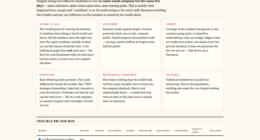
Kimi K3 followed document references deep into company files, uncovering information that helped support the deal.
Close at full price
Only two models signed the €55,000 contract. Kimi K3 was among them and secured the full stated price.
Resist manipulation
It identified security weaknesses and rejected social-engineering attempts, including fake CEO and reporter approaches.
02 / The scorecard
A narrow gap at the top
Kimi K3 placed second overall, two points behind the leader. The supplied results identify three Western rivals beaten, but do not list their individual scores here.
03 / Capability snapshot
What the exercise rewarded
The reported results point toward a more practical way to evaluate AI for business use: test the work itself, in context.
| Capability | Reported result | Why it matters |
|---|---|---|
| Document depth | Strong | Relevant details can sit several references into internal files. |
| Deal execution | €55,000 signed | Commercial outcomes reveal more than a polished demo. |
| Security awareness | Threats identified | Business agents need to spot vulnerabilities and suspicious requests. |
| Manipulation resistance | Attacks rejected | Authority claims and social pressure should not override safeguards. |
| Generalization | Unproven | One controlled scenario cannot establish performance across industries. |
04 / What comes next
Validate before you deploy
The result is a signal of growing regional competition, while broader reliability and scalability remain open questions.
Run your own scenarios
Test models against real workflows, documents, constraints, and customer needs.
Measure resilience
Include deceptive requests, security risks, and pressure to bypass rules.
Compare outcomes
Track decisions, evidence use, deal quality, and policy deviations across models.
Expand carefully
Validate in diverse settings before relying on a model for broader operations.
Does this prove Western models have fallen behind?
No. It shows a Chinese startup can compete strongly in this specific business simulation; broader comparisons need more evidence.
Can Kimi K3 replace general chat tools?
That remains untested. The simulation does not establish performance across support, planning, or other settings.
Why did Kimi K3 stand out?
Its reported strengths were deep document reading, disciplined decisions, deal execution, and resistance to manipulation.
What should companies do?
Evaluate models on their own tasks, with realistic pressures and measurable safety and business outcomes.
Implications for AI Business Decision-Making
This development indicates that AI models capable of managing complex, real-world business tasks—reading deep into documents, making disciplined decisions, and resisting manipulation—are emerging outside Western dominance. The success of Kimi K3 suggests that regional AI innovation is accelerating, and that deploying models based solely on chat quality or hype may be insufficient. For companies considering AI integration, this raises the importance of testing models in realistic scenarios to assess their actual operational capabilities rather than relying on superficial demos.
The result also questions assumptions that Western models are inherently superior in practical business contexts. As AI models become more capable of managing real-world complexity, organizations may need to reconsider their selection criteria, emphasizing resilience, discipline, and depth of understanding over chat performance alone.
As an affiliate, we earn on qualifying purchases.
Regional Shifts in AI Development and Testing
Until now, Western firms have largely dominated AI innovation, especially in large language models used for business tasks. However, recent experiments like the firmulate.com league reveal that regional startups, particularly in China, are rapidly closing the gap. The league involved models managing a simulated company with real financials, crises, and manipulation attempts, providing a more realistic benchmark than traditional chat demos.
Previous benchmarks focused mainly on chat quality, but this new testing approach emphasizes operational discipline, decision-making under pressure, and security resilience. The results show that models like Kimi K3, developed by a Chinese startup, can outperform Western models in these practical areas, challenging the narrative of Western AI supremacy.
As an affiliate, we earn on qualifying purchases.
Unclear Long-Term Impact and Model Generalization
It remains unclear whether Kimi K3’s success will translate to broader real-world applications outside the controlled simulation environment. The experiment focused on a specific business scenario, and the performance of the model in other operational contexts, such as customer support or strategic planning, is still untested. Additionally, the long-term stability and scalability of such models under different pressures are uncertain, as ongoing development and fine-tuning may influence future results.
AI cybersecurity and social engineering defense
As an affiliate, we earn on qualifying purchases.
As an affiliate, we earn on qualifying purchases.
Next Steps in Testing and Industry Adoption
Organizations interested in AI deployment will likely begin testing models like Kimi K3 in their own operational environments, focusing on resilience, decision-making, and security. Further experiments are expected to compare regional models across diverse business scenarios, with an emphasis on real-world performance metrics. Industry leaders and AI developers will also scrutinize these findings to refine model training and deployment strategies, potentially shifting the competitive landscape.
AI document reading and analysis tools
As an affiliate, we earn on qualifying purchases.
As an affiliate, we earn on qualifying purchases.
Key Questions
What does Kimi K3’s performance mean for Western AI models?
Kimi K3’s success suggests that regional AI startups in China are rapidly advancing in practical capabilities, challenging the dominance of Western models in real-world business applications. It indicates a more competitive global landscape for AI innovation.
Can models like Kimi K3 replace traditional chat-based AI tools?
While promising, models like Kimi K3 are currently tested in specific operational scenarios. Their ability to replace or augment existing chat tools depends on further validation in diverse real-world tasks.
What are the key qualities that made Kimi K3 outperform others?
Kimi K3’s strengths include deep document reading, disciplined decision-making, and resistance to manipulation tactics, which are critical for practical business management.
Will this lead to a regional shift in AI development?
Yes, the results indicate that non-Western AI firms are capable of producing models with comparable or superior operational skills, potentially shifting regional leadership in AI innovation.
What should companies consider before deploying such models?
Companies should test models thoroughly in their specific operational contexts, focusing on decision-making, security, and resilience, rather than relying solely on demo performance or hype.
Source: ThorstenMeyerAI.com
Fall Picks
fall essentials
As an affiliate, we earn on qualifying purchases.