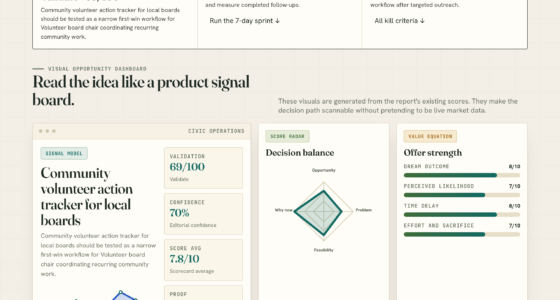

📊 Full opportunity report: Navigating The Complexity Of Regulating An Alien Intelligence on ThorstenMeyerAI.com — validation score, market gap, and execution plan.
TL;DR
A drone carrying explosives was intercepted near Leipzig/Halle airport, linked to hybrid threats targeting critical infrastructure. Europe’s AI regulation advances but its defense capabilities lag behind adversaries, risking security gaps.
On Tuesday, a small drone carrying explosives was spotted near Leipzig/Halle airport’s south runway in Germany, prompting a bomb disposal operation and a counterterrorism investigation. The incident, linked to a hybrid threat scenario, underscores the growing danger of deniable attacks on critical infrastructure, amid broader concerns about Europe’s technological and strategic vulnerabilities.
The drone was detected in the cargo zone of Europe’s major freight hub, which also serves as a NATO and German military logistics center, and the European base for Ukraine’s Antonov fleet. Authorities confirmed the drone was defused and destroyed by police using a bomb-disposal robot. Simultaneously, a DHL cargo aircraft departing from the same airport struck an unknown object mid-air and diverted to Hanover, intensifying security concerns.
Germany has launched a counterterrorism probe into the incident, with Interior Minister Alexander Dobrindt describing it as a professional hybrid threat, indicating a sophisticated, state-linked operation. While no official attribution has been made, suspicion points toward Russia, given the target’s strategic significance and recent pattern of hybrid attacks in the region. Experts note that such actions exemplify hybrid warfare—deniable, multi-domain campaigns involving sabotage, cyber intrusion, and disinformation, designed to operate below the threshold of open conflict.
Meanwhile, this incident has reignited debates over Europe’s technological preparedness, particularly its capacity to defend against such threats using advanced AI. Despite Europe’s leading AI regulations, notably the AI Act, the continent’s AI development lags behind the US and China, with European models trailing in frontier capabilities. This gap raises concerns about the ability to build autonomous, trusted defense systems capable of countering sophisticated hybrid attacks.
An explosive drone on a military cargo hub’s runway. A “professional hybrid threat,” said the interior minister — “a new level of danger.” It’s a moment to say something uncomfortable about how Europe is meeting the era it has entered.
▲ Opinion · strategic argument is the author’s ownEurope’s reflex to a new technology is to regulate it — and it’s genuinely good at it. The AI Act is the most comprehensive AI law on Earth. The discomfort is what sits underneath.
The sloppy version of this argument is wrong, and I won’t make it. The real connection runs one level deeper — through the word “hybrid.”
The rebuttal: just use American AI. For many things, today, Europe can. But defense is the specific case where you can’t.
The strongest version of the other side, because parts of it are right and it deserves to be heard.
- Regulation and capability aren’t zero-sum — Europe is investing (InvestAI, gigawatt data centers)
- Drone defense is mostly physical security and intelligence, not frontier LLMs — I overweight my own field
- Sovereign defense AI may need a smaller controllable model, not a leaderboard chase
- Setting global norms has real value, capability or not
Only capability does that — and it’s the thing we’ve been legislating around instead of building.
Implications for European Security and AI Sovereignty
The incident highlights the critical importance of having sovereign AI capabilities for national defense. While Europe has made strides in regulating AI, its ability to build and deploy cutting-edge models domestically remains limited, creating a strategic vulnerability. As hybrid threats evolve, reliance on foreign AI providers could compromise operational independence and security, especially if adversaries possess more capable AI tools.
Developing trusted, frontier AI is now essential for effective cyber defense, threat detection, and autonomous countermeasures. The current gap between European AI capabilities and those used by potential adversaries could limit response times and effectiveness in future hybrid conflicts, risking escalation and damage to critical infrastructure.

Police Drone & Pilot Detection Kit– Handheld Drone Detection & Tracking Tool | Real-Time Alerts for Law Enforcement, Event Security & Emergency Response | Portable Airspace Awareness Device
- Real-Time Drone Detection: Detects drones via remote ID signals instantly
- Portable & Compact Design: Handheld device for easy mobility and use
- Immediate Threat Alerts: Provides instant drone presence notifications
As an affiliate, we earn on qualifying purchases.
As an affiliate, we earn on qualifying purchases.
Europe’s AI Regulation and the Growing Hybrid Threat Landscape
Over recent years, Europe has prioritized regulating emerging technologies, culminating in the AI Act, which aims to set global standards for AI governance. However, despite these efforts, European AI models remain behind US and Chinese counterparts in frontier capabilities, as measured by indices like the Artificial Analysis Intelligence Index. This disparity is particularly concerning given the increasing sophistication of hybrid threats—covert operations that blend cyber, electronic, and physical attacks.
The recent drone incident at Leipzig/Halle is part of a broader pattern of hybrid tactics observed in the region, often attributed to Russia. These operations aim to destabilize, weaken, or coerce targeted nations without crossing the threshold into open warfare, exploiting vulnerabilities in infrastructure and information systems.
Meanwhile, European policymakers face a dilemma: continue to regulate while lagging in technological development or accelerate investment in sovereign AI to close the capability gap. The current trajectory suggests Europe’s regulatory focus has not translated into the technological edge necessary for autonomous defense systems.
"This was not amateurish; it was a professional hybrid threat scenario, a new level of danger."
— German Interior Minister Alexander Dobrindt
As an affiliate, we earn on qualifying purchases.
Unresolved Questions About Attribution and Capabilities
While suspicion points toward Russia, there is no official attribution of responsibility for the drone incident. Details about the specific actors, their motives, and whether the attack was part of a larger campaign remain unclear. Additionally, the exact capabilities of the adversaries’ AI tools used in hybrid operations are not publicly confirmed, though intelligence suggests they are more advanced than Europe’s current models.
As an affiliate, we earn on qualifying purchases.
European Defense and AI Development Priorities Moving Forward
European authorities are expected to enhance counter-hybrid measures, including deploying more autonomous drone detection and cyber defense systems. Simultaneously, policymakers are under pressure to accelerate the development and deployment of sovereign AI models capable of supporting rapid, autonomous responses to future hybrid threats. The upcoming months will likely see increased investment and strategic initiatives aimed at closing the capability gap.
As an affiliate, we earn on qualifying purchases.
Key Questions
Could this drone incident lead to an escalation of conflict?
While the incident raises concerns about hybrid warfare, it is currently viewed as a covert attack rather than an escalation to open conflict. However, sustained or more aggressive attacks could increase tensions.
Why is Europe’s AI capability so important for national security?
Advanced AI is critical for autonomous threat detection, cyber defense, and rapid response systems. Without sovereign AI, Europe risks dependency on foreign technology that may not meet security standards during crises.
What measures are European countries taking to improve AI sovereignty?
European nations are investing in domestic AI research, establishing dedicated defense AI centers, and updating regulations to foster trusted, sovereign AI development and deployment.
Is there a risk that regulation could hinder technological progress?
While regulation aims to ensure safety and ethics, critics argue it may slow innovation. Balancing safety with competitiveness remains a key challenge for policymakers.
Source: ThorstenMeyerAI.com