
📊 Full opportunity report: SpaceX Owns Every Layer of AI Now. The Model Is Still the Weak Link. on ThorstenMeyerAI.com — validation score, market gap, and execution plan.
TL;DR
SpaceX has bought Cursor for $60 billion, gaining control of all AI infrastructure layers except the model. The company now dominates compute, power, and distribution but faces challenges with model performance.
SpaceX has completed a $60 billion all-stock purchase of Cursor, a profitable AI coding application, making it the owner of every layer of the AI stack except the model itself. This move positions SpaceX as a dominant player in AI infrastructure, with control over compute, power, research, and distribution channels, but the company’s AI model remains a weak link.
On June 16, SpaceX announced it had exercised its option to acquire Cursor, a leading AI coding startup founded in 2022, for $60 billion in all-stock. The deal, expected to close in Q3 2026, consolidates SpaceX’s control over the entire AI infrastructure, including supercomputers, silicon, data centers, research labs, and distribution channels.
Cursor has been highly profitable, with revenue reaching approximately $4 billion annually by early June, and had previously rebuffed offers from OpenAI and Microsoft to maintain independence. Its core product, an AI coding agent, is one of the few profitable AI applications in the industry, with a large developer base and a model trained on tens of thousands of xAI chips.
By acquiring Cursor, SpaceX gains not just the product but also the application, the model team, and the distribution network, integrating them into its own compute infrastructure, including the Colossus supercomputers in Memphis, which now run on roughly 555,000 Nvidia GPUs with an estimated build cost of tens of billions.
SpaceX owns every layer
of AI now
The $60B Cursor buy completes the stack: power, compute, research, model, app, distribution. But owning every layer isn’t winning every layer — and the model is the weak one.
(Anysphere)
You can buy a coding app and a model team. You can’t buy the research lead that makes your foundation model the one everyone else builds on — which is why Anthropic pays Musk $1.25B/month, not the other way around. Owning every layer bought SpaceX the right to attempt the hard thing. It hasn’t done it yet.
Implications of SpaceX’s Complete AI Infrastructure Ownership
This acquisition signals that SpaceX is establishing itself as a fully integrated AI conglomerate, controlling hardware, software, and applications. The company’s dominance in compute and power infrastructure, combined with ownership of a profitable AI application, positions it uniquely in the industry. However, the weakness of its AI model remains a critical challenge, potentially limiting its competitive edge against rivals with more advanced models.
For the AI industry, this consolidation could accelerate vertical integration and influence how AI services are developed, distributed, and monetized. It also raises concerns about market concentration, especially as SpaceX’s infrastructure becomes a backbone for AI training and deployment used by other major labs like Anthropic and Google.
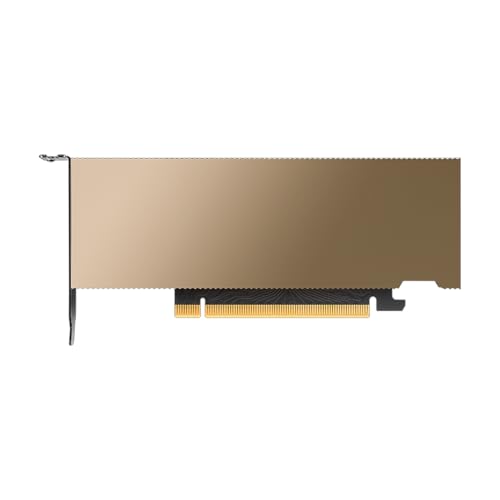
NVIDIA Tesla L4 24GB PCIe Graphics ACELLERATOR HH/HL 75W GPU 900-2G193-0000-000
- Video Memory: 24GB
- Tensor Cores: Fourth Generation
- Form Factor: Half Height Bracket Only
As an affiliate, we earn on qualifying purchases.
As an affiliate, we earn on qualifying purchases.
Background on SpaceX’s AI and Compute Expansion
Over recent years, SpaceX has invested heavily in building its AI and compute capabilities, including the development of the Colossus supercomputers in Memphis, which can host up to 555,000 GPUs. The company has also explored deploying orbital data centers via AI satellites, aiming to create a global, solar-powered AI infrastructure.
In February 2026, SpaceX integrated xAI, Elon Musk’s AI research lab, into its operations, and launched the Grok model line, signaling its ambitions in AI research and application. The recent acquisition of Cursor, a profitable AI coding startup, extends this strategy by consolidating the entire AI stack, except for the model itself, which remains under development or weak relative to competitors.
Meanwhile, major AI labs like Anthropic and Google have leased significant compute resources from SpaceX’s Colossus clusters, highlighting the company’s role as a critical infrastructure provider in the AI ecosystem.
“We’ve built the most powerful compute infrastructure, and now we own the applications that run on it. The model is the next frontier.”
— Elon Musk, SpaceX CEO

AI Systems Performance Engineering: Optimizing Model Training and Inference Workloads with GPUs, CUDA, and PyTorch
As an affiliate, we earn on qualifying purchases.
As an affiliate, we earn on qualifying purchases.
Unresolved Challenges in AI Model Performance
It is not yet clear how the weak performance of SpaceX’s AI models will impact its competitive position long-term. The company’s recent focus has been on infrastructure, but the effectiveness of its models in real-world applications remains under scrutiny. The extent to which the model’s weaknesses can be addressed is still uncertain, as is the potential for rivals to develop superior models.

Seeed Studio Raspberry Pi 5 Starter Kit – 16GB RAM, 64GBGB Micro SD Card Pre-Loaded 64-bit OS, Type-C Power Supply, Active Cooling Case for Edge AI, Docker & Pro Workstation
- Complete Raspberry Pi 5 Kit: Includes Pi 5, case, power supply, microSD
- Preloaded MicroSD Card: 128GB card with Raspberry Pi OS pre-installed
- Easy Setup: Ready to use immediately, no setup needed
As an affiliate, we earn on qualifying purchases.
As an affiliate, we earn on qualifying purchases.
Next Steps in SpaceX’s AI Strategy Development
SpaceX is expected to continue investing in improving its AI models, potentially through further acquisitions or internal development. The company’s upcoming integration of Cursor into its infrastructure will be closely watched for performance and scalability. Regulatory and market responses to this consolidation will also shape its future trajectory, especially regarding AI competitiveness and market influence.

NVIDIA Tesla A100 Ampere 40 GB Graphics Processor Accelerator – PCIe 4.0 x16 – Dual Slot
- Memory Capacity: 40 GB GDDR6
- Host Interface: PCIe 4.0 x16
- Cooling Type: Passive Cooler
As an affiliate, we earn on qualifying purchases.
As an affiliate, we earn on qualifying purchases.
Key Questions
Why did SpaceX buy Cursor for $60 billion?
SpaceX acquired Cursor to control a profitable AI application, its distribution network, and the team behind it, completing its ownership of all AI infrastructure layers except the model itself.
What are the main strengths of SpaceX’s AI infrastructure?
Its strengths include the Colossus supercomputers with hundreds of thousands of GPUs, proprietary power generation, integrated research labs, and a broad distribution network through its various subsidiaries.
What is the weakness in SpaceX’s AI approach?
The company’s AI models are currently considered weak compared to competitors, limiting its ability to lead in AI innovation and deployment at the model level.
How might this acquisition affect the AI industry?
It could lead to increased vertical integration and market concentration, influencing how AI services are developed, priced, and distributed across the industry.
What are the next developments to watch?
Watch for SpaceX’s efforts to improve its AI models, further infrastructure investments, and how regulatory and competitive dynamics evolve as the company consolidates its position.
Source: ThorstenMeyerAI.com