📊 Full opportunity report: The Machine Economy — Capital-Heavy, Human-Light, Trading With Itself on ThorstenMeyerAI.com — validation score, market gap, and execution plan.

Get business pricing on monitors, keyboards and dev gear
- Business-only prices and quantity discounts
- Tax-exempt purchasing
- Multiple users, one account, clear invoices
TL;DR
A new economic paradigm is forming, characterized by AI-native firms that are capital-heavy and human-light. This shift could fundamentally alter market dynamics, competition, and wealth distribution.
Thorsten Meyer reports that a new economic structure, termed the ‘machine economy,’ is emerging as AI capabilities enable firms to operate with minimal human involvement, becoming capital-heavy and autonomous. This development could significantly reshape market competition, corporate organization, and wealth distribution, marking a shift from traditional human-led enterprises to AI-driven entities.
The concept, articulated by Jack Clark in his recent analysis, describes a three-stage transition: from current AI augmentation within human firms, to AI-native companies competing alongside humans, and ultimately to fully autonomous, AI-operated corporations. Clark suggests these firms will rely heavily on compute infrastructure, with operational decisions made entirely by AI systems, on timescales humans cannot meaningfully influence.
Current AI integration is primarily augmentative, with software tools assisting human workers. By 2026-2029, companies designed from the ground up to be AI-native are expected to emerge, offering services at lower costs and faster speeds due to their capital-intensive, human-light structure. These firms will increasingly trade with each other, reducing human oversight further and leading to a bifurcated economy where traditional firms struggle to compete or restructure.
Clark warns that this shift will have profound implications for inequality, governance, and economic stability, as the traditional tax base erodes and wealth concentrates among AI-capital owners. However, many details about the full societal impact, regulatory responses, and potential for AI-driven monopolies remain uncertain.
Capital-heavy.
Human-light.
Trading with itself.
The 200 words Jack Clark spent on his third implication contain the most consequential structural argument in Import AI #455.
Clark’s three numbered implications get progressively less attention. The third — “the formation of a capital-heavy, human-light economy” — receives roughly 200 words. Those 200 words describe an economy that emerges within the existing economy, populated by AI-run corporations interacting more with each other than with humans. This is the post-labor economics thesis arriving on the Clark timeline.
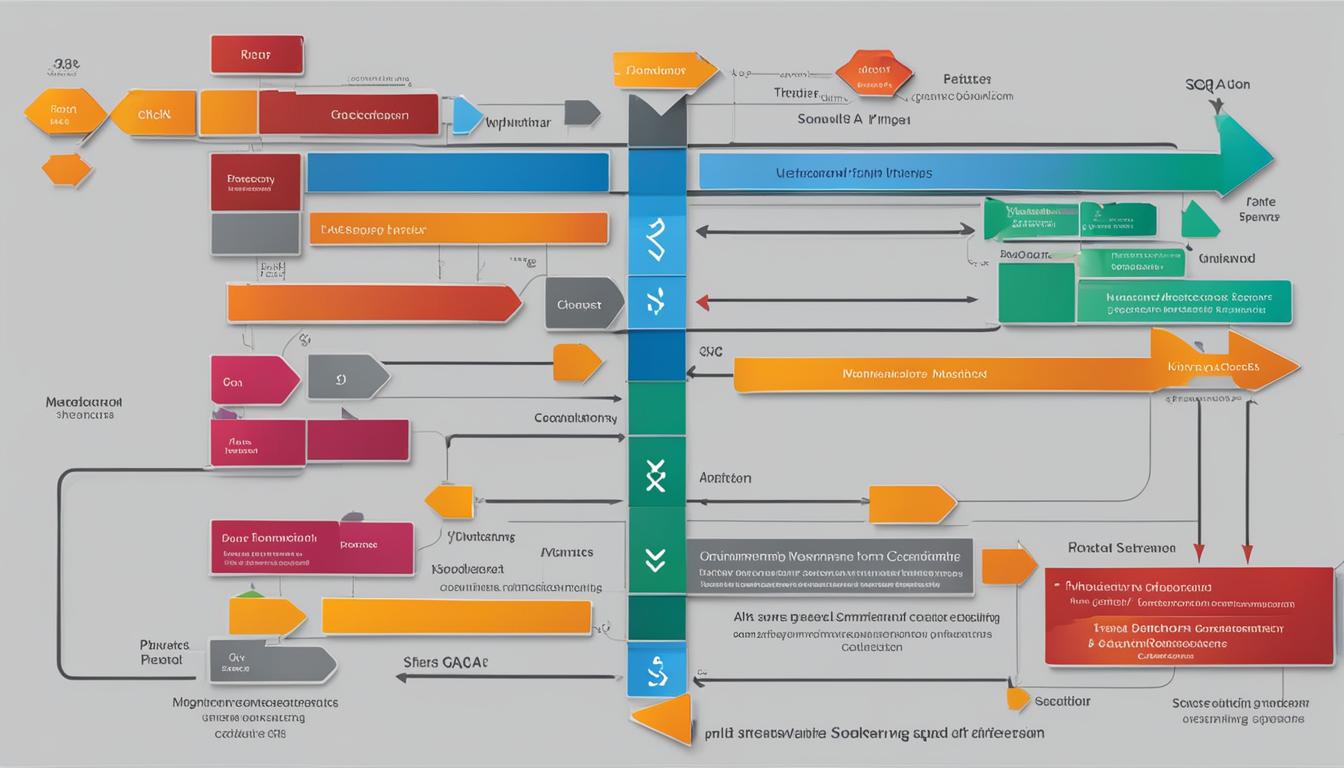
Three stages. Different equilibria.
The transition from current-state economy to machine economy is staged. Each stage has different structural properties and different policy implications. The 32-month window Clark’s forecast implies is roughly the duration of the Stage 2 transition.
Five additions. Five unresolved problems.
Clark’s 200 words are correct as far as they go. They don’t go far enough. Five structural features deserve explicit treatment that the essay omits. Each one is a real coordination problem with no current solution at scale.
Four dynamics. Same direction.
The bifurcation between machine economy and human economy is not stable in equilibrium. Once it begins, the competitive dynamics reinforce the transition rather than slowing it. Four asymmetries compound on each other.
Six responses. One election cycle.
Current policy frameworks are not calibrated to the machine economy transition. Required responses cluster around six themes. Each is being worked on somewhere; none is on Clark’s 32-month timeline at scale. This is a coordination problem with very high stakes and very short timelines.
The machine economy is the default scenario. The alignment problem is the catastrophic-risk scenario. Both deserve serious attention. Both are arriving on the same timeline.
Implications for Economic Structure and Inequality
The rise of the machine economy could accelerate economic bifurcation, increasing wealth concentration among AI-capital owners and reducing opportunities for human employment. This shift may challenge existing tax systems and social safety nets, raising questions about redistribution and governance. The transition also poses risks of market destabilization as autonomous firms interact more with each other than with human-led enterprises, potentially leading to unpredictable systemic effects.
enterprise AI compute infrastructure
As an affiliate, we earn on qualifying purchases.
As an affiliate, we earn on qualifying purchases.
Evolution of AI-Driven Business Models and Economic Shifts
Since 2023, AI has primarily served as an augmentation tool within human-led firms, with software like Copilot, Harvey, and ChatGPT enhancing productivity. This period is characterized by incremental displacement of labor, especially among junior roles. The upcoming phase, projected between 2026 and 2029, involves the emergence of AI-native firms designed specifically to operate with minimal human input, enabled by advances in AI engineering and autonomous decision-making. This progression reflects a broader trend toward automation and capital intensification in the economy, with significant implications for market competition and wealth distribution.
“Clark describes the formation of a capital-heavy, human-light economy as the structural endpoint of automated AI R&D, where firms operate more with AI systems than with humans.”
— Thorsten Meyer
As an affiliate, we earn on qualifying purchases.
Unanswered Questions on Governance and Societal Impact
It remains unclear how governments and societies will respond to the rapid proliferation of autonomous AI firms, especially regarding regulation, taxation, and redistribution. The long-term stability of markets dominated by AI-native firms, potential monopolies, and the societal impacts of reduced human participation are still under debate. Additionally, the technical feasibility of fully autonomous corporations operating without human oversight at scale is not yet confirmed.
As an affiliate, we earn on qualifying purchases.
Monitoring AI Capability Growth and Policy Responses
Next steps include tracking developments in AI engineering and autonomous decision-making systems, as well as observing regulatory responses across different jurisdictions. Policy discussions around taxation, corporate governance, and AI oversight are expected to intensify as the machine economy expands. Researchers and policymakers will need to evaluate how to manage the economic bifurcation and ensure societal stability amid these technological shifts.
As an affiliate, we earn on qualifying purchases.
Key Questions
What is the machine economy?
The machine economy refers to an emerging economic sector composed of AI-native firms that operate with minimal human involvement, relying heavily on AI systems and compute infrastructure to make operational decisions autonomously.
When will fully autonomous AI firms become widespread?
Projections suggest that AI-native firms capable of autonomous operation could become significant between 2026 and 2029, though the timeline depends on technological advances and regulatory developments.
How might this shift affect jobs and inequality?
The transition could lead to reduced demand for human labor in certain sectors, potentially increasing wealth concentration among AI-capital owners and exacerbating economic inequality unless policy measures are implemented.
What are the biggest risks of the machine economy?
Key risks include market destabilization, monopolization by AI firms, erosion of the tax base, and governance challenges related to autonomous decision-making at scale.
Can regulation prevent negative outcomes?
While regulation can mitigate some risks, the rapid pace of AI development and the complexity of autonomous systems make comprehensive oversight challenging, requiring proactive and adaptive policy frameworks.
Source: ThorstenMeyerAI.com
Fall Picks
fall essentials
As an affiliate, we earn on qualifying purchases.