
To guarantee your medical device software meets IEC 62304 standards, you need a robust QA approach that integrates risk management and verification processes. Focus on early hazard identification, performing rigorous testing, and maintaining traceability between requirements, design, and testing outcomes. This helps you confirm your software’s safety, quality, and compliance throughout development. If you continue exploring, you’ll discover how to build a thorough strategy that aligns with industry regulations and best practices.

Get business pricing on monitors, keyboards and dev gear
- Business-only prices and quantity discounts
- Tax-exempt purchasing
- Multiple users, one account, clear invoices
Key Takeaways
- IEC 62304 provides a structured framework for developing and maintaining medical device software, emphasizing risk management and quality assurance.
- QA processes must align with IEC 62304 requirements, including comprehensive verification, validation, and documentation practices.
- Verification activities in IEC 62304 ensure software meets specified safety and performance criteria throughout its lifecycle.
- Risk management is integrated into QA, guiding testing priorities and ensuring high-risk features are thoroughly validated.
- Compliance with IEC 62304 enhances regulatory approval, safety, and reliability of medical device software.
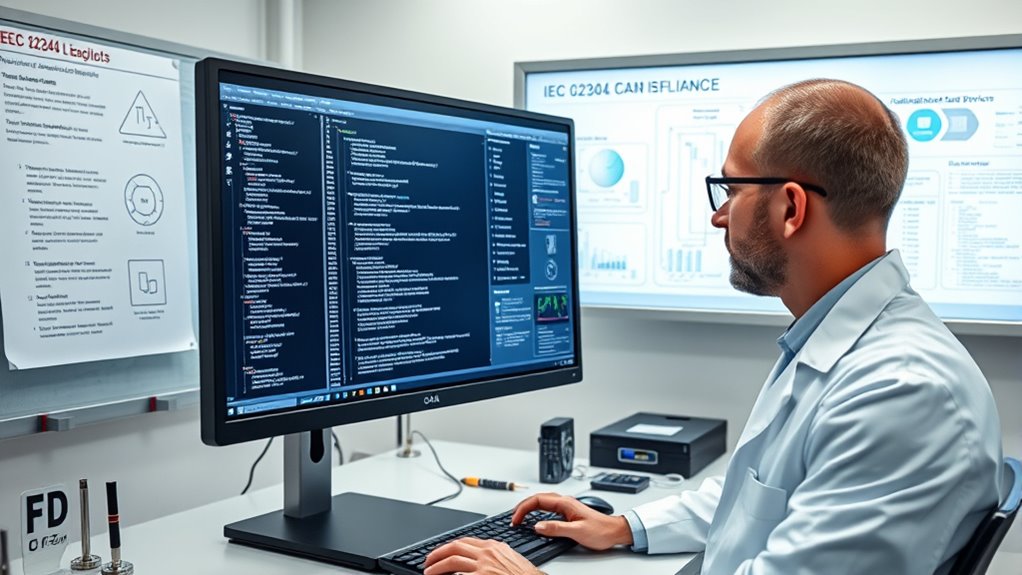
Quality assurance (QA) plays a critical role in the development of medical device software, ensuring that the products meet strict safety and performance standards. When you’re working within the framework of IEC 62304, QA isn’t just a helpful addition—it’s a essential component that safeguards patient safety and regulatory compliance. Central to this process is effective risk management, which helps you identify, evaluate, and mitigate potential hazards throughout the software development lifecycle. By integrating risk management early and continuously, you proactively address issues that could compromise the device’s safety or functionality. This approach minimizes unforeseen failures and aligns your development efforts with regulatory expectations.
Verification processes form the backbone of your QA strategy, serving as concrete checks that confirm each development stage meets specified requirements. As you progress through design and implementation, verification ensures that the software performs as intended and adheres to safety standards. This involves rigorous testing, reviews, and inspections at various milestones, which help catch defects early before they escalate into critical problems. By systematically validating each component and feature, you build confidence that the software is reliable and safe for clinical use.
In practice, integrating verification processes into your workflow means establishing clear test plans, documenting test results meticulously, and maintaining traceability between requirements, design, and testing outcomes. These measures not only support compliance with IEC 62304 but also provide evidence during audits and regulatory submissions. Furthermore, thorough verification helps you uncover subtle issues that might otherwise go unnoticed, reducing the risk of software failures once the device is in the hands of healthcare providers.
Risk management and verification are interconnected; risk assessments guide your verification activities by highlighting areas that require the most scrutiny. When you identify a high-risk feature, you can prioritize comprehensive testing and validation efforts around it. This targeted approach ensures that you allocate resources effectively while maintaining high safety standards. Regular risk reviews and verification updates are essential, especially as the software evolves or new hazards emerge. Additionally, compliance with standards ensures that your QA practices align with internationally recognized safety and quality benchmarks.
medical device software verification testing tools
As an affiliate, we earn on qualifying purchases.
As an affiliate, we earn on qualifying purchases.
Frequently Asked Questions
How Does IEC 62304 Integrate With Other Medical Device Standards?
IEC 62304 seamlessly integrates with other medical device standards to guarantee regulatory alignment and thorough standards integration. You’re encouraged to align IEC 62304 with standards like ISO 13485 for quality management and ISO 14971 for risk management, creating a cohesive regulatory framework. This integration helps you meet multiple compliance requirements efficiently, reducing redundancies and streamlining your device development process while maintaining high safety and quality standards.
What Are Common Challenges in Implementing IEC 62304 Compliance?
You might face documentation challenges because maintaining detailed, up-to-date records can be complex and time-consuming. Staff training is also a common issue, as your team needs to fully understand IEC 62304 requirements and implement them consistently. Balancing thorough documentation with project timelines and ensuring everyone is adequately trained can be tricky, but addressing these challenges is vital for achieving compliance and ensuring your medical device software’s safety and quality.
How Often Should QA Processes Be Audited for Medical Software?
You should conduct QA process reviews regularly, ideally every 6 to 12 months, to guarantee continuous compliance with IEC 62304 standards. Frequent audits help you identify potential process improvements early, maintaining your software’s safety and effectiveness. While the exact audit frequency may vary based on your project scope, maintaining a consistent schedule demonstrates your commitment to quality and helps you adapt swiftly to evolving regulatory expectations.
What Tools Assist in IEC 62304 Compliance Verification?
You should use compliance tools and automated testing to verify IEC 62304 compliance effectively. These tools help automate documentation, risk management, and testing processes, ensuring thorough coverage and consistency. Automated testing accelerates validation and verification, while compliance tools facilitate traceability and audit readiness. By integrating these tools into your workflow, you streamline adherence to IEC 62304 standards, reduce errors, and maintain high-quality medical device software throughout development.
How Is Risk Management Incorporated Into QA Workflows?
You incorporate risk management into QA workflows by conducting thorough risk analysis early in development, identifying potential hazards. You then implement hazard mitigation strategies to reduce risks, integrating these steps into testing and validation processes. Continuously monitor and document risk levels, ensuring compliance with IEC 62304 standards. This proactive approach helps you maintain safety, improve quality, and demonstrate effective risk management throughout the software lifecycle.
IEC 62304 compliance documentation software
As an affiliate, we earn on qualifying purchases.
As an affiliate, we earn on qualifying purchases.
Conclusion
By following IEC 62304 standards, you guarantee your medical device software meets rigorous QA requirements, reducing risks and enhancing safety. Embrace these guidelines as your trusted compass, much like a ship’s chronometer in uncharted waters. Staying vigilant and thorough in your testing today prevents disasters down the line—think of it as avoiding a modern-day Trojan horse. Keep quality at the forefront, and your device will stand the test of time, just like a well-preserved artifact.
medical device risk management software
As an affiliate, we earn on qualifying purchases.
As an affiliate, we earn on qualifying purchases.
medical device software traceability tools
As an affiliate, we earn on qualifying purchases.
As an affiliate, we earn on qualifying purchases.
Fall Picks
fall essentials
As an affiliate, we earn on qualifying purchases.