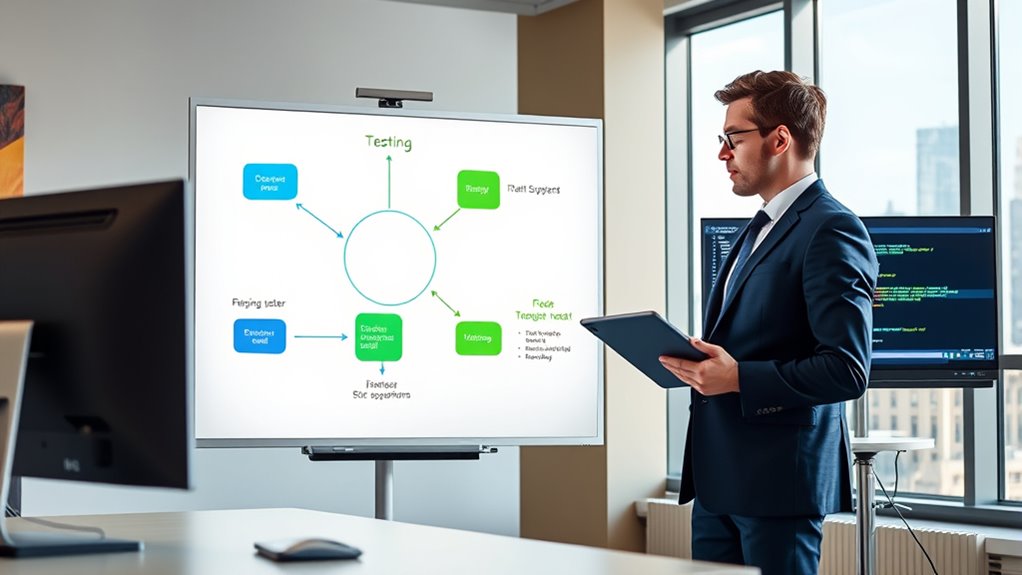

In the V-Model, QA is integrated from the start by aligning testing activities with each development phase. You plan testing early, defining objectives, acceptance criteria, and test cases alongside design and coding. As development progresses, corresponding testing stages verify each component, catching defects early when they’re easier to fix. This structured approach emphasizes continuous quality, enabling you to systematically manage issues and guarantee requirements are met—if you look further, you’ll uncover how this process keeps projects efficient and high-quality.

Get business pricing on monitors, keyboards and dev gear
- Business-only prices and quantity discounts
- Tax-exempt purchasing
- Multiple users, one account, clear invoices
Key Takeaways
- QA is integrated early through comprehensive test planning aligned with development stages in the V-Model.
- Testing activities are directly mapped to specific development phases for immediate feedback and validation.
- Early test case preparation ensures thorough coverage and reduces late-stage defects.
- Continuous defect management occurs at each phase, promoting prompt resolution and quality control.
- The V-Model fosters a structured workflow where QA and development progress hand-in-hand for improved quality assurance.
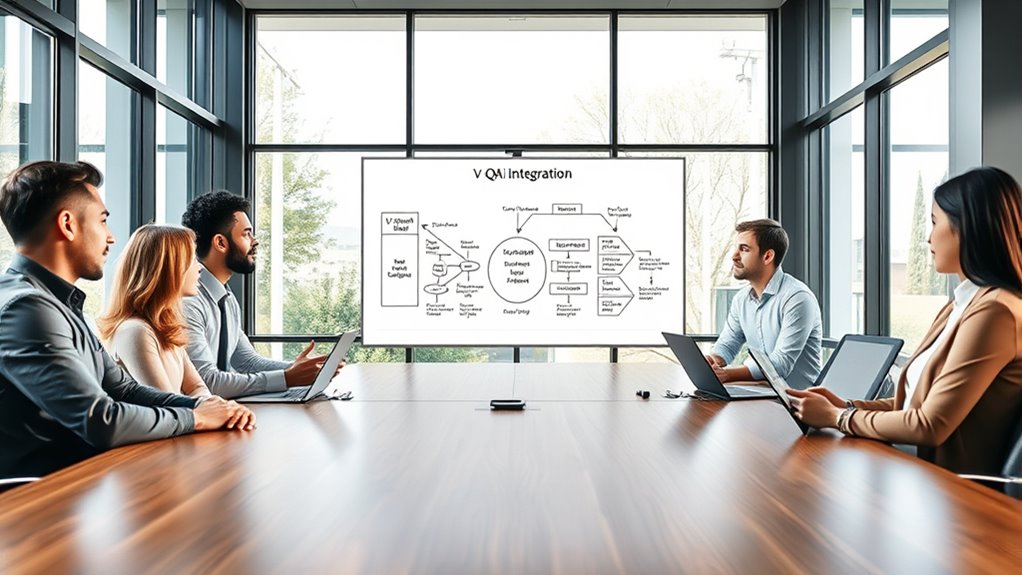
The V-Model in software testing is a straightforward and efficient development approach that emphasizes early testing and quality assurance. When you adopt this model, you start with thorough test planning, which serves as the foundation for the entire testing process. During test planning, you define clear objectives, testing scope, resources, and schedules, ensuring everyone involved understands their roles and responsibilities. This proactive approach helps you identify potential issues early, reducing the risk of costly fixes later in the development cycle. As you progress, you establish specific testing phases aligned directly with development stages, promoting a systematic and organized workflow.
In this model, defect management becomes a critical focus. Because testing activities are planned in tandem with development activities, you can detect defects early when they are easier and cheaper to fix. When a defect is found, you log it systematically, track its resolution, and verify that the fix addresses the root cause. This tight integration between defect management and testing ensures that issues don’t slip through the cracks, maintaining high quality throughout the project. The structured nature of the V-Model makes it easier to prioritize defect resolution based on severity and impact, enabling you to focus resources where they’re needed most. Furthermore, since testing phases are directly linked to corresponding development stages, you get immediate feedback on the quality of each component, preventing defects from propagating into later stages.
The early emphasis on test planning also helps you define acceptance criteria upfront, which streamlines validation and verification processes later on. You can prepare test cases, scripts, and data well in advance, saving time and effort during actual testing. This organized approach minimizes surprises and ensures thorough coverage, allowing you to verify that each requirement is met before moving forward. When you follow the V-Model, defect management isn’t just reactive; it’s integrated into your development process, making quality a continuous, shared goal. As each development phase concludes, corresponding testing confirms the work’s integrity, and any defects found are managed promptly, maintaining a steady flow of quality assurance. Additionally, incorporating early testing practices helps reduce rework and accelerates project timelines by catching issues sooner.

Hands-On Automated Testing with Playwright: Create fast, reliable, and scalable tests for modern web apps with Microsoft's automation framework
As an affiliate, we earn on qualifying purchases.
Frequently Asked Questions
How Does the V-Model Compare to Agile Development Methodologies?
You find that the V-Model is more linear and emphasizes sequential phases like planning, design, and testing. In contrast, agile development prioritizes iterative planning and continuous stakeholder collaboration, allowing for flexibility and quick adjustments. While the V-Model ensures thorough testing at each stage, agile promotes ongoing feedback, making it more adaptable to changing requirements. Both approaches aim to deliver quality but differ markedly in process structure and collaboration style.
What Are the Main Challenges in Implementing the V-Model?
You might face challenges like maintaining stakeholder communication throughout each phase, which can slow progress if expectations aren’t clear. Additionally, creating and updating testing documentation demands meticulous effort; any gaps can lead to missed defects or delays. Rigid structure limits flexibility, making it tough to adapt to changes. Balancing thorough documentation with timely execution is key, but often tough, especially when managing multiple teams and evolving requirements.
Can the V-Model Be Adapted for Non-Software Projects?
Yes, you can adapt the V-Model for cross industry applications and non-software projects. Its structured, step-by-step approach helps manage complex processes by ensuring each development phase aligns with corresponding testing or validation activities. By customizing the stages to fit your project’s specific requirements, you can effectively integrate quality assurance, risk management, and verification, making the V-Model a versatile framework beyond traditional software development.
How Does Risk Management Integrate Within the V-Model?
Think of risk management as your trusty lighthouse guiding you through stormy seas. You’ll perform risk assessments early, identifying potential hazards, then craft mitigation strategies to steer clear of pitfalls. Within the V-Model, risk management runs parallel to development and testing, ensuring each phase has safeguards. This proactive approach helps you navigate uncertainties, reducing surprises and keeping your project sailing smoothly toward success.
What Tools Best Support V-Model-Based Testing Processes?
You should use test management tools like Jira or TestRail to organize and track your V-Model testing activities efficiently. Automation tools like Selenium, QTP, or TestComplete support script development for early test phases, guaranteeing consistency and speed. These tools streamline your testing process, improve collaboration, and ensure traceability throughout the V-Model, helping you identify issues early and maintain high-quality standards across all development stages.
Conclusion
By understanding how the V-Model integrates testing into your development process, you can guarantee higher quality and fewer surprises down the line. This structured approach keeps testing aligned with development stages, making your QA efforts more effective. Are you ready to implement the V-Model and see how it transforms your testing strategy? Embracing this method not only streamlines your workflow but also boosts your confidence in delivering reliable software.
Fall Picks
fall essentials
As an affiliate, we earn on qualifying purchases.